
|
|
Baler Feed ConveyorsREMCON BALER FEED CONVEYORS are designed specifically for feeding recyclables into balers
Four styles of baler feed conveyors are available, in sizes, capacities, and configurations to suit a range of baler sizes (and budgets) from small, low capacity, to the largest, high capacity balers. Special attention is given to ease of maintenance, cleanliness of operation, resistance to damage, and safety. Some of these features are shown below.
Contact us today to discuss your project with us. |
Belt Styles:
SLIDER BED
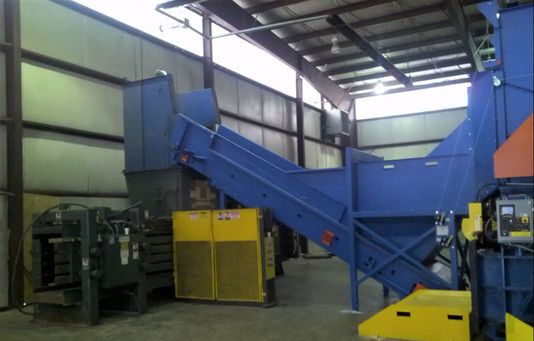
Slider Bed Style Baler Feed Conveyor which feeds a back-up baler via a diverter chute from main baler if it is down for maintenance.
|
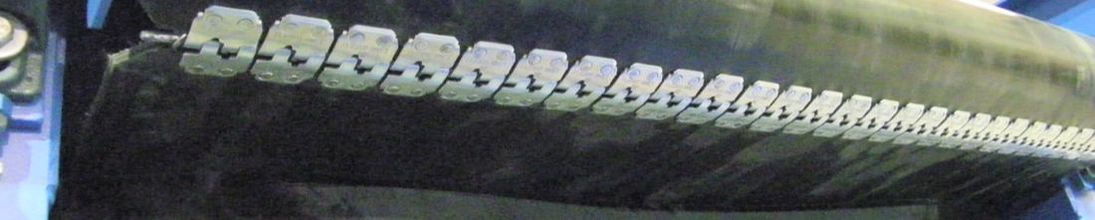
Slider bed conveyors employ a rubber or PVC belt which is driven around the conveyor by the friction of the belt on the drive pulley. The belt slides on steel slats, instead of idler rollers, making for fewer moving parts to wear out and replace. Remcon's slider bed design allows widths of up to six feet in all orientations (see orientation options below).
Advantages of Using a Slider Bed Conveyor:
|
DRAG CHAIN WITH RUBBER/PVC BELT
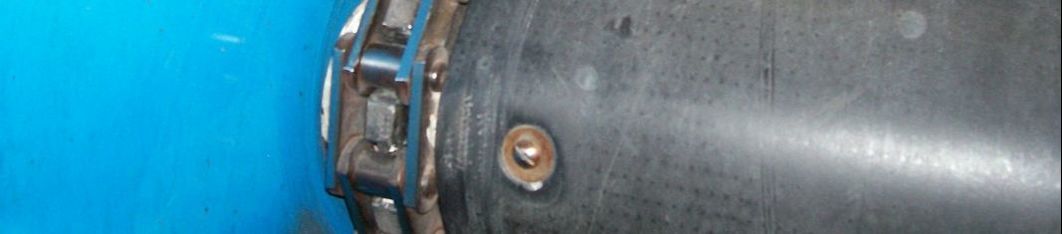
This is the most basic type of chain belt conveyor. The chain lies flat on its side as it slides on tracks made of angle iron with UHMW plastic wear surfaces, to reduce friction. The chain belt is guided around both ends of the conveyor on sprockets. The sprockets at the discharge end of the conveyor grab the chain as the shaft and sprockets are turned by a motor with a reducer.
Advantages of Using a Rubber/PVC Belt style Drag Chain Conveyor:
|
DRAG CHAIN WITH STEEL FLIGHTS (BELTLESS)
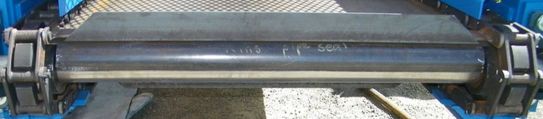
This is one of the most basic types of drag chain conveyor. The chain lies flat on its side as it slides on tracks made of angle iron with UHMW plastic wear surfaces, to reduce friction. Two strands of chain are connected by bolt-on cross angle flights, which slide on a solid conveyor bed and pull material along. The chain belt is guided around both ends of conveyor on sprockets. The sprockets at the discharge end of the conveyor grab the chain as the shaft and sprockets are turned by a motor with a reducer.
Advantages of Using a Drag Chain with Open Belt Conveyor:
|
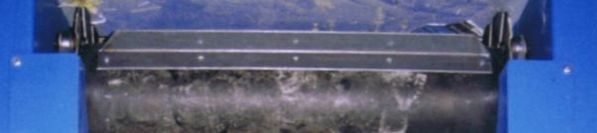
ROLLER CHAIN WITH RUBBER/PVC BELT CONVEYOR
This type of belt is similar to a Drag Chain belt, except that the chain has steel rollers built into each link which roll on rail tracks instead of slide on UHMW. This reduces the drag of the belt as it travels along the conveyor.
Advantages of Using a Roller Chain with Rubber/PVC Belt Conveyor:
|
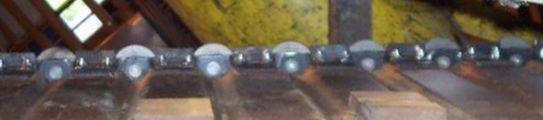
ROLLER CHAIN WITH STEEL BELT CONVEYOR
This type of belt is the same as the Roller Chain with Rubber Belt, except steel panels are substituted for the rubber belting. Remcon offers a variety of steel belt options (piano hinge, apron, etc.); contact us to discuss which configuration would work best for your needs.
Advantages of Using a Roller Chain with Steel Belt Conveyor:
|
Conveyor Orientation Options
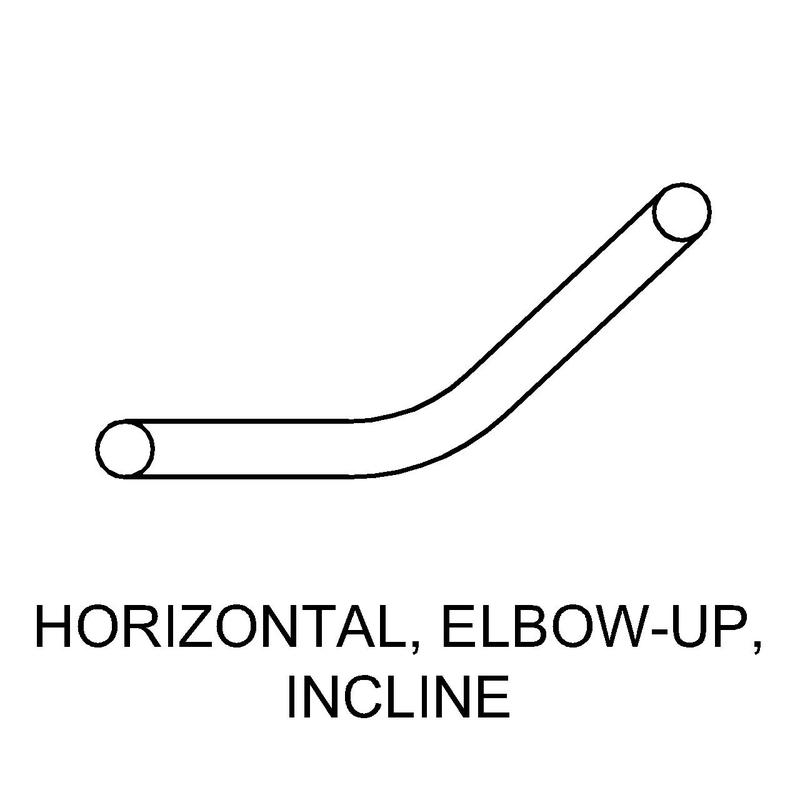
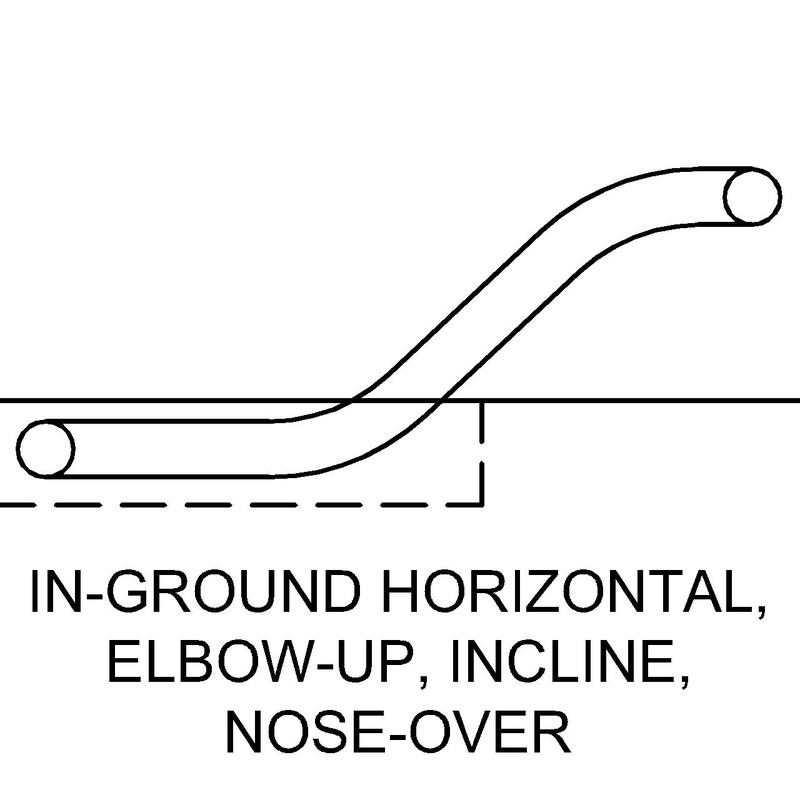
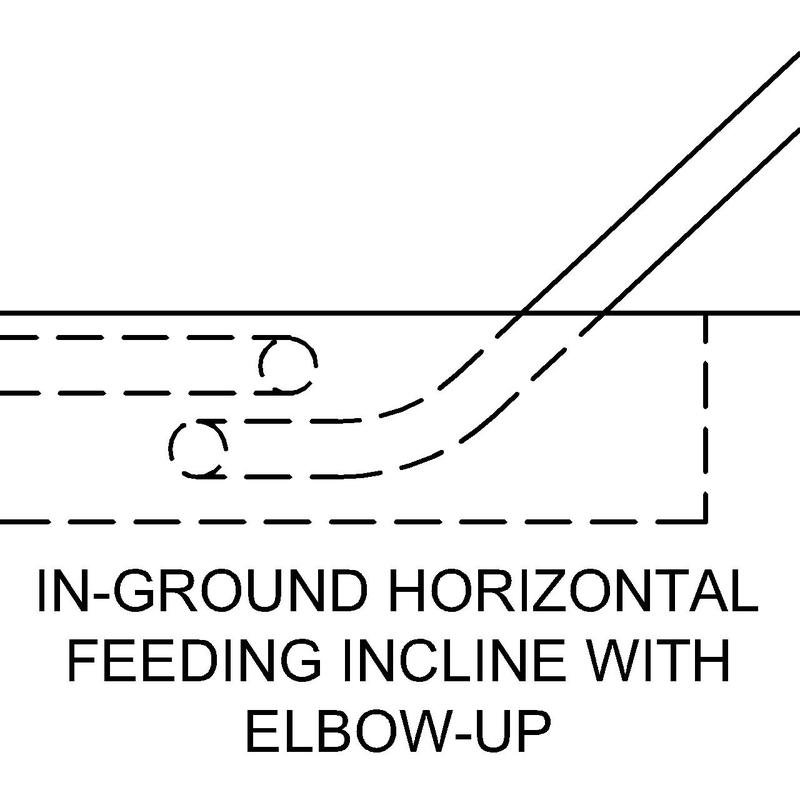
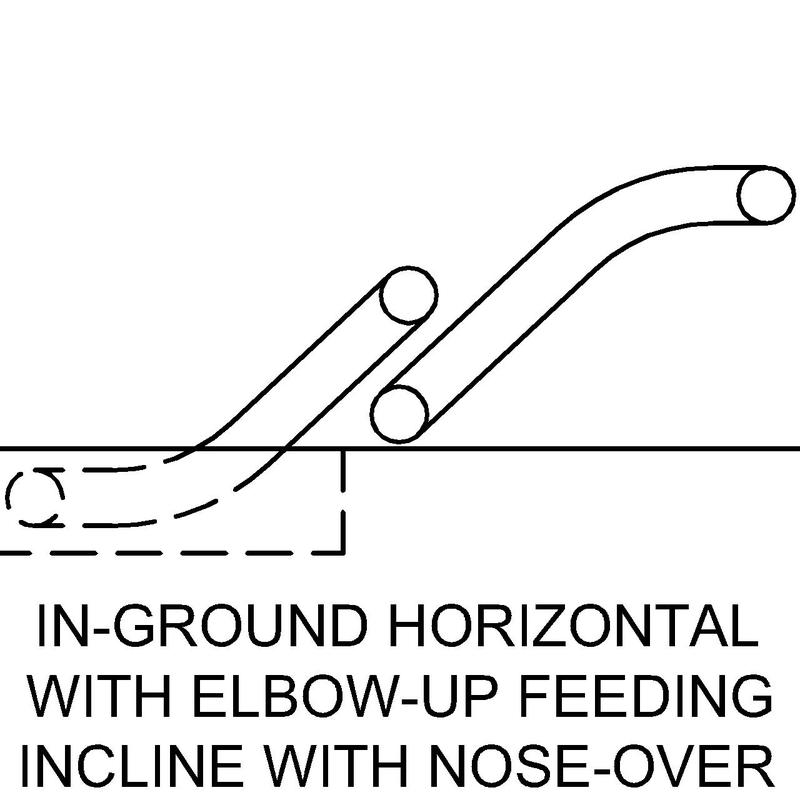
Remcon can build conveyors to feed balers in many different orientations, depending on the layout requirements, etc. We also can build two separate conveyors that run in series, to simplify installation, separate clumps better, or to be able to use two different types of conveyors (e.g. a roller chain feeding a slider bed, etc.). Contact us to discuss what layout options would work best for your situation.
Single Conveyor Options:
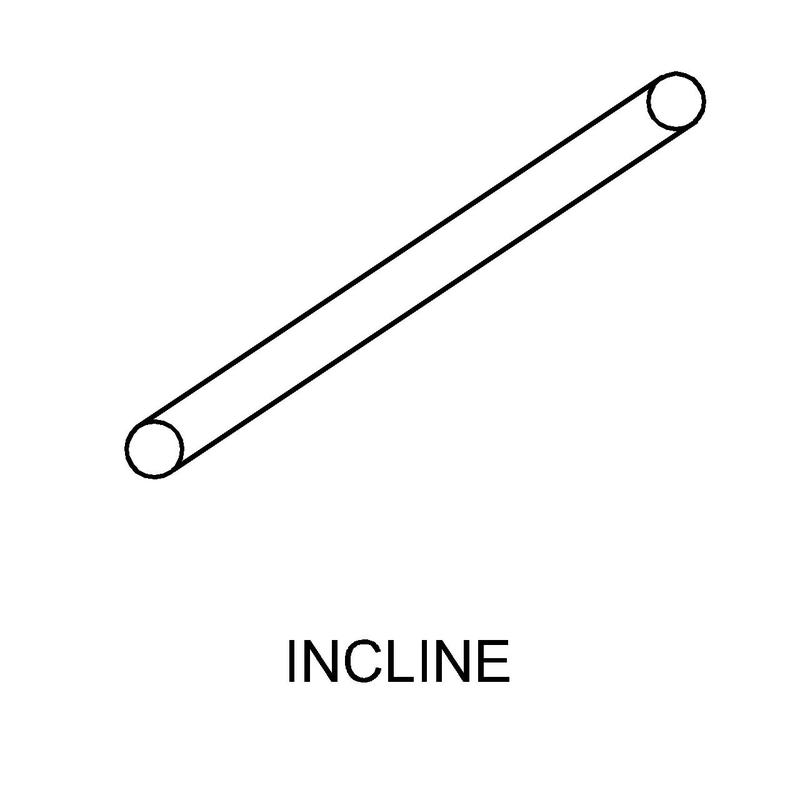

Incline angle changes from steep (to help with metering) to shallower (to prevent rollback)
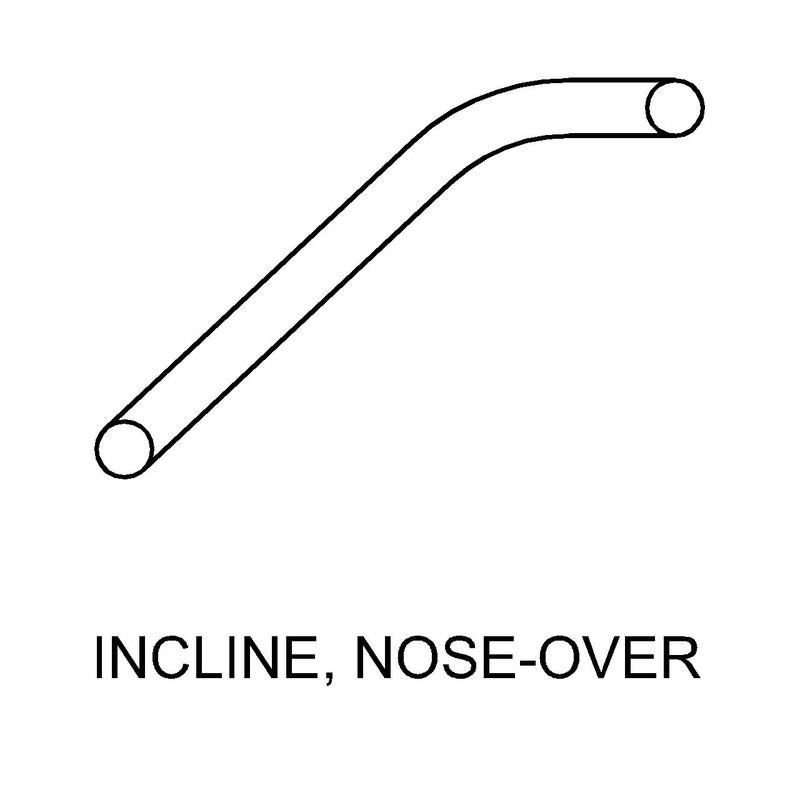

Dual Conveyor Options:

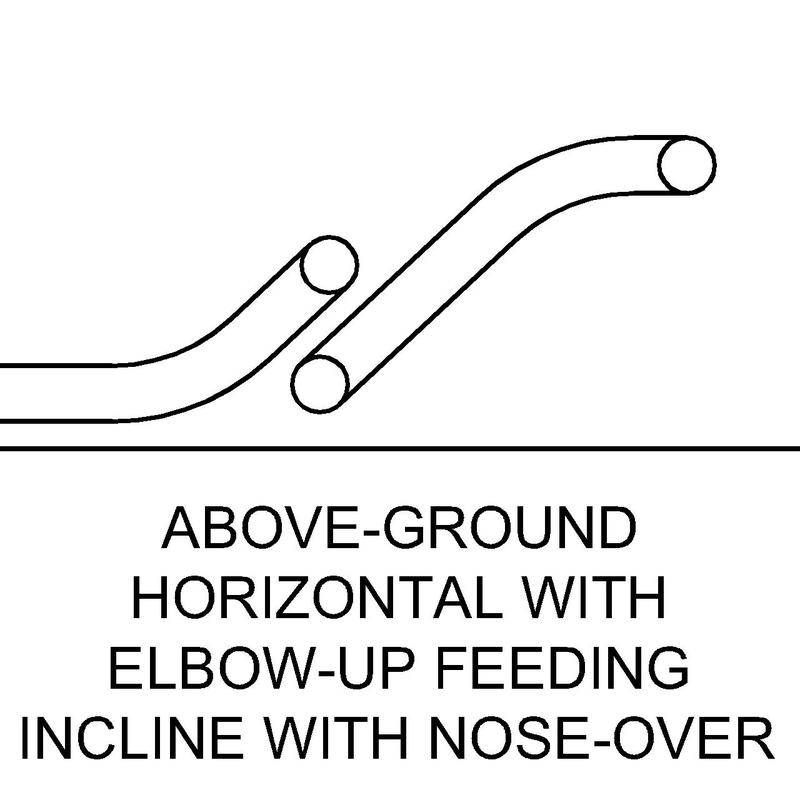
Custom Remcon Solutions for Baler Feed Specific Applications:
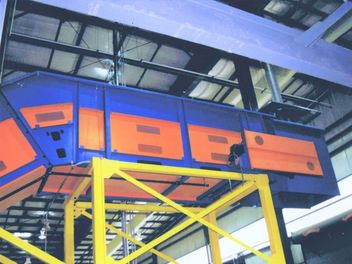
CUSTOM BALER HOOD TO ALLOW FOR FUTURE BALER INSTALLATION
READ MORE
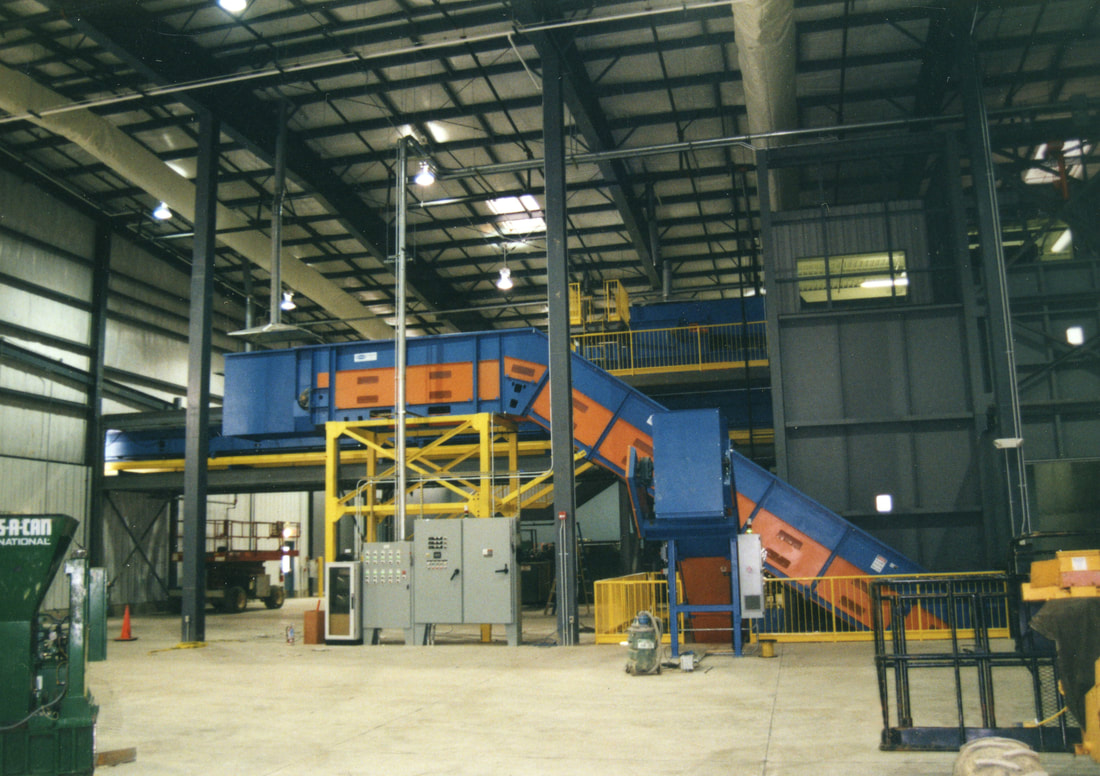
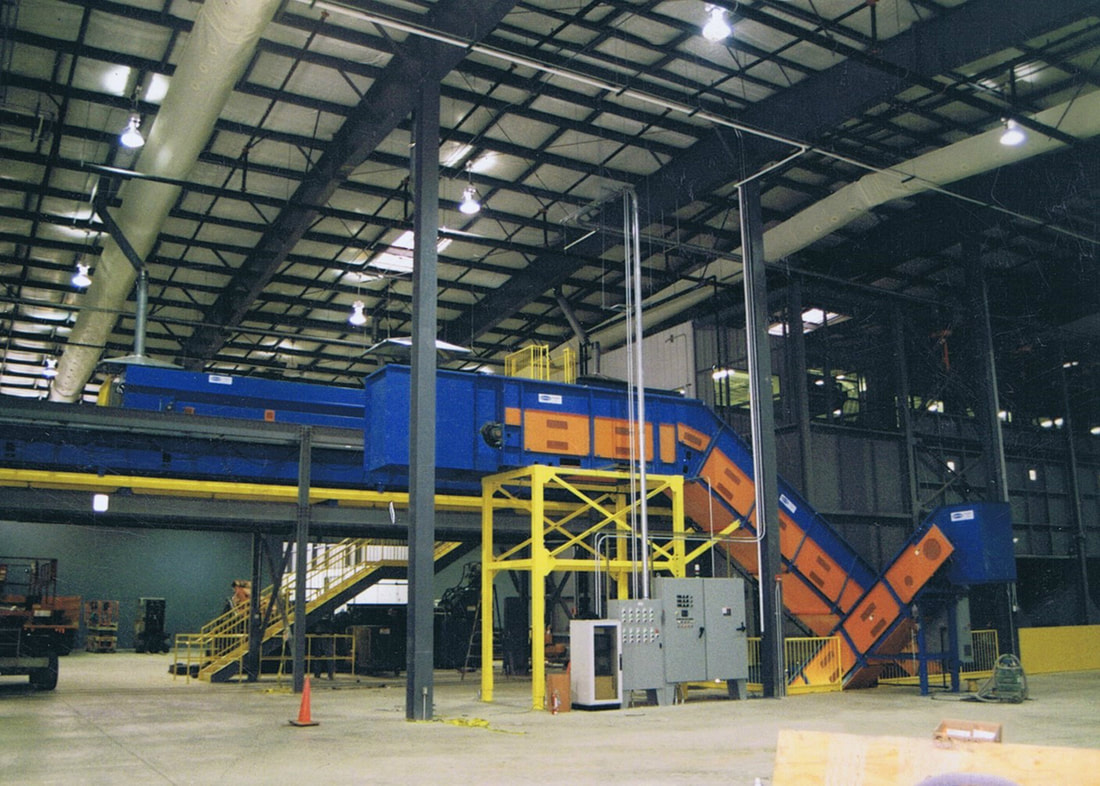
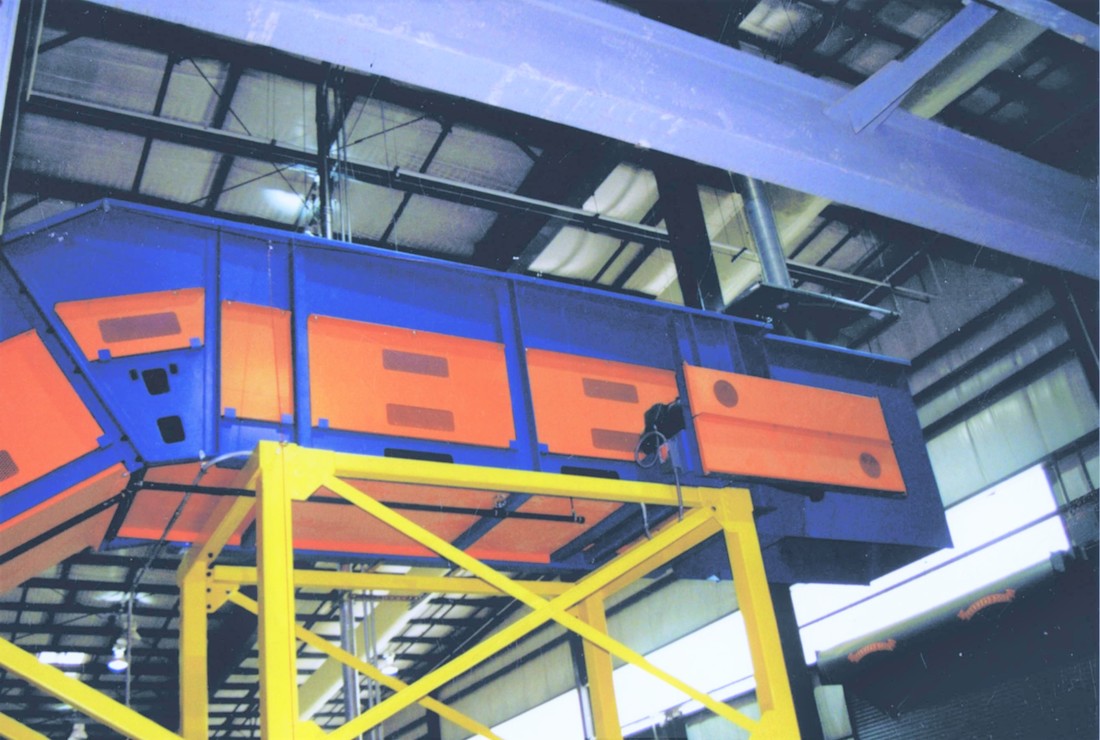
The Baler Feed Conveyor pictured above was designed with a special hood to allow the baler to be installed after the conveyor was already in place. It also features an extended horizontal section after nose-over to allow the conveyor to discharge into the baler at the proper location. |
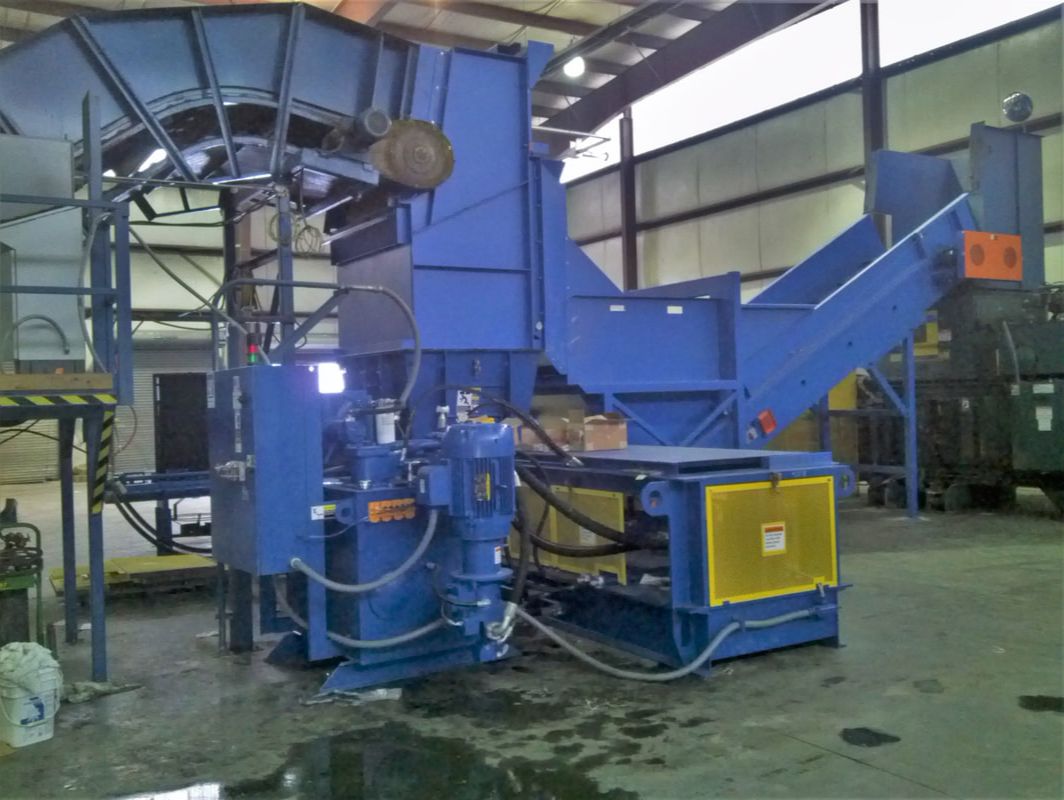
CUSTOM TWO-WAY REDIRECTION CHUTE & SECONDARY BALER FEED CONVEYOR
READ MORE
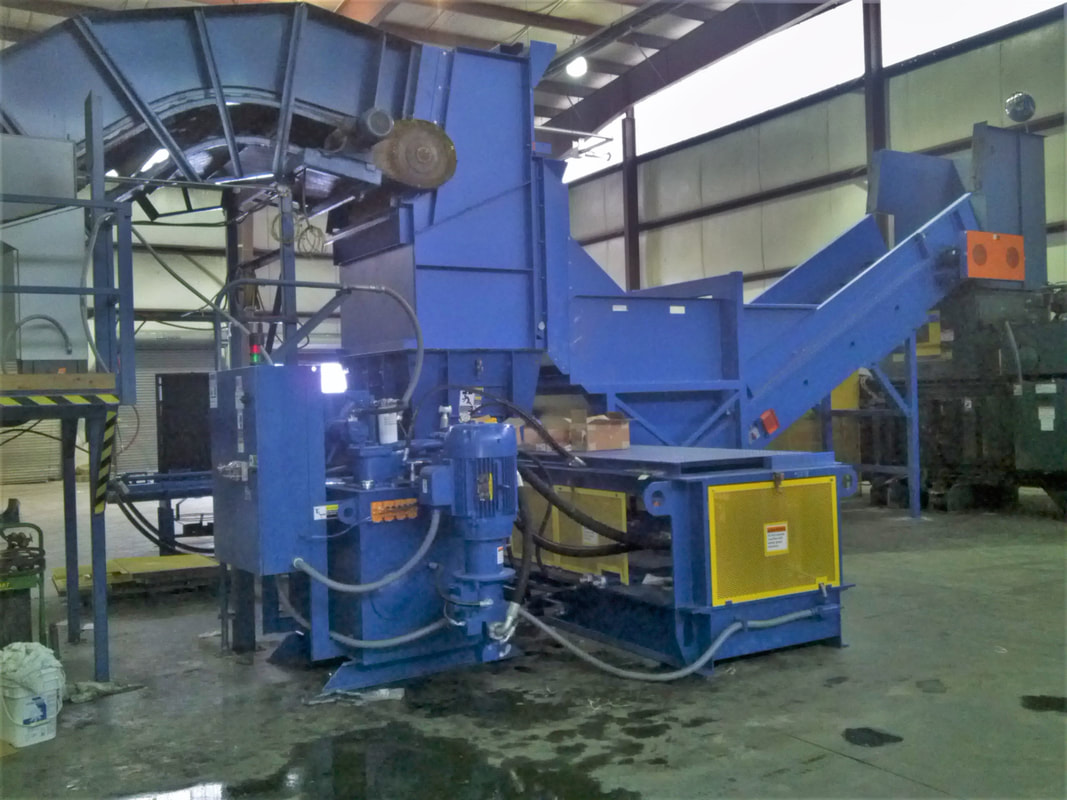
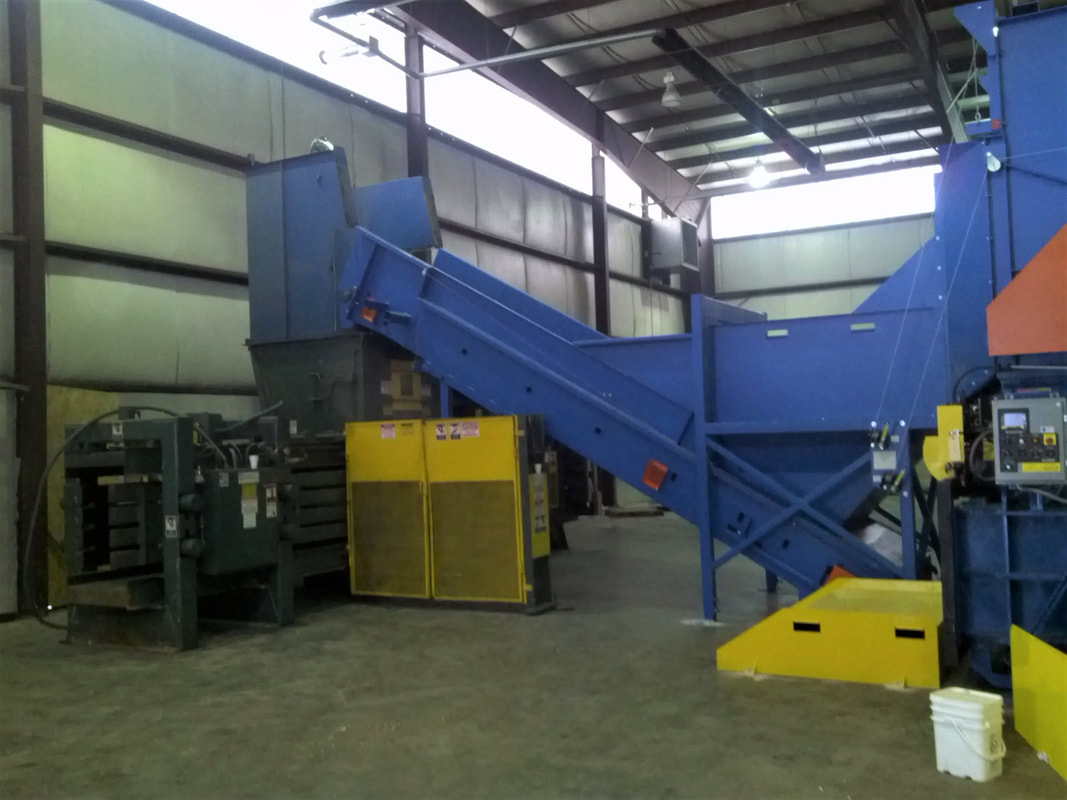
The photos above show a Custom Baler Hood with Two-Way Redirection Chute and Baler Feed Conveyor designed and built for a past customer who upgraded to a new baler, but still wanted to use their old baler as a back-up during maintenance or break-downs of the new baler. 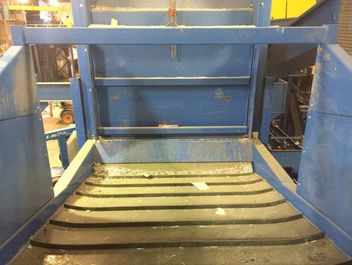
CUSTOM BALER HOOD WITH BYPASS CONVEYOR
READ MORE
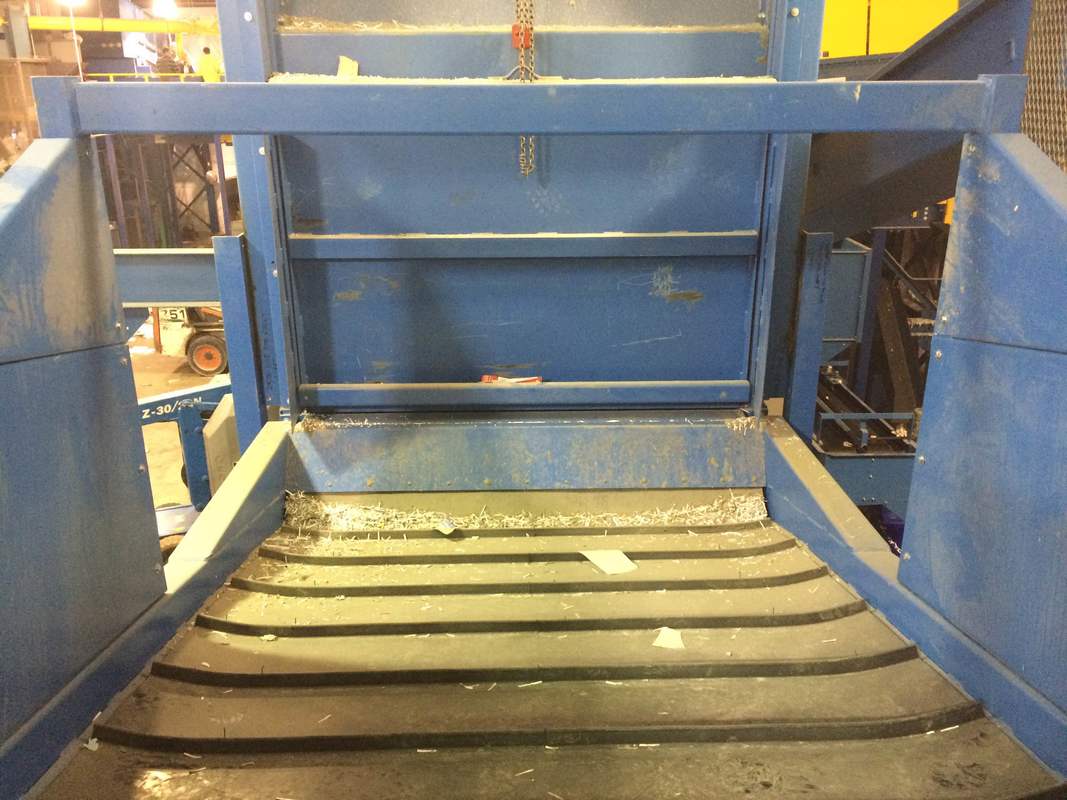
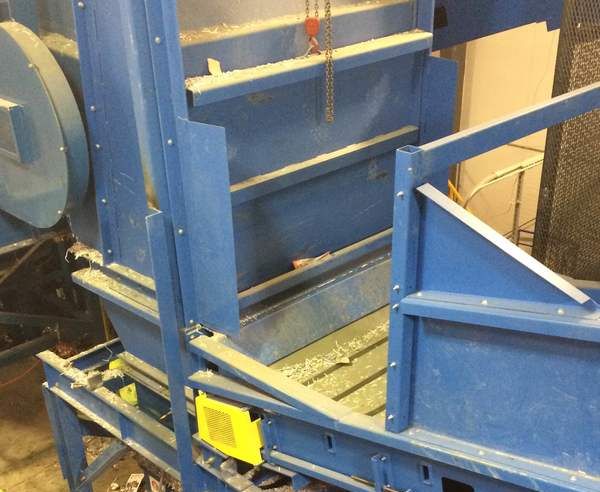
The above photos show a Custom Baler Hood with a Bypass Conveyor to feed a secondary baler when the primary baler is being worked on. In Normal mode, the primary baler feed conveyor feeds through a filler chute attached to the rear of the Bypass Conveyor. In Bypass Mode, the Bypass Conveyor slides underneath the discharge of the primary baler feed conveyor to receive the material and feed it into the secondary baler. |
CUSTOM DUST CONTROL HOOD
READ MORE
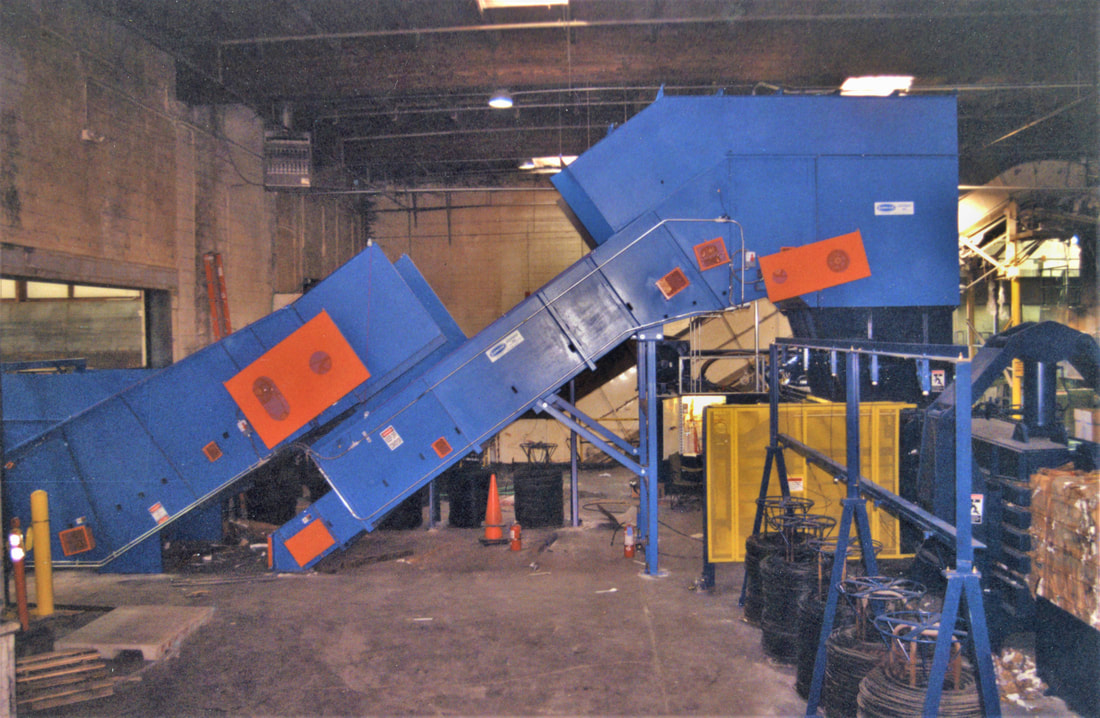
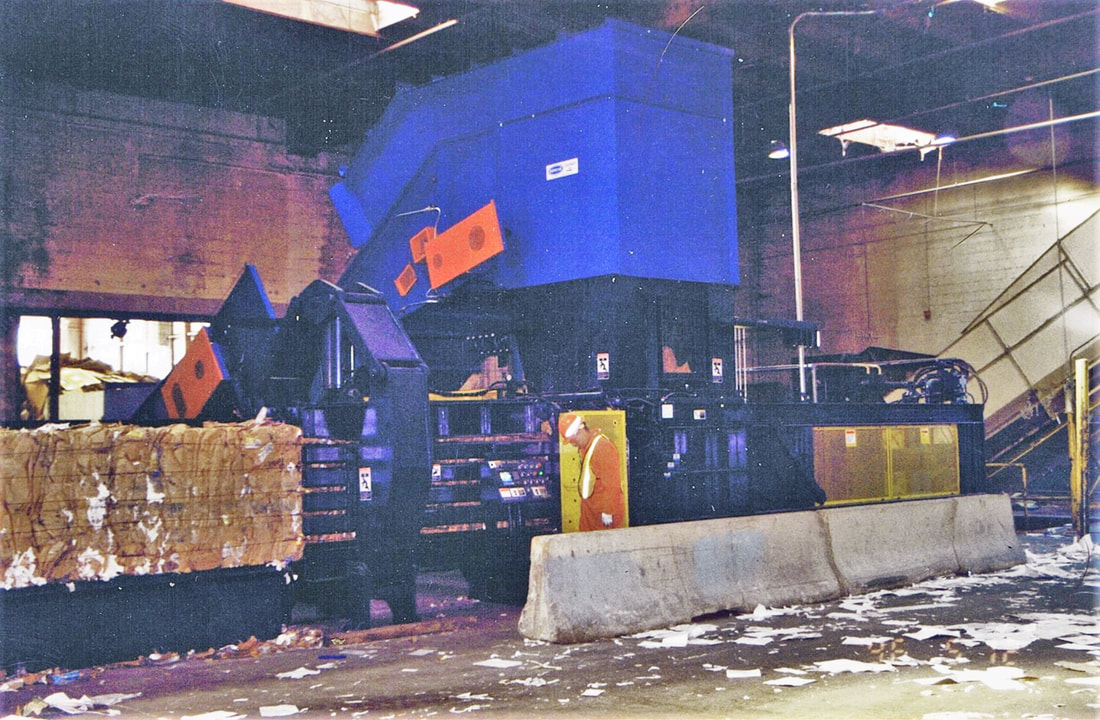
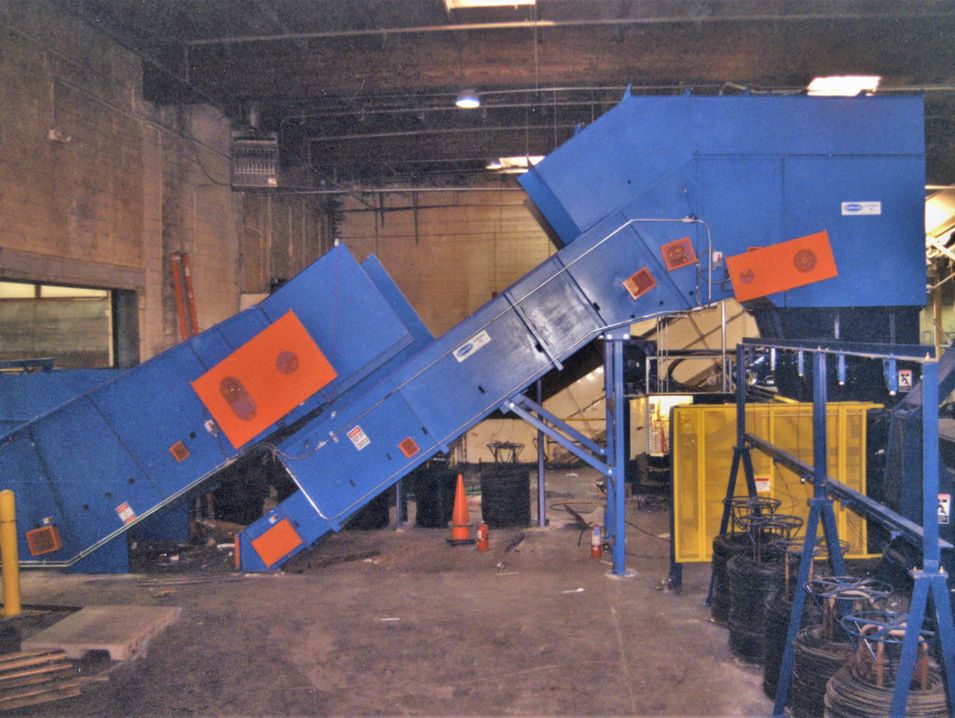
The photos above show a Custom Dust Control Hood on a slider bed incline with nose-over baler feed conveyor. The baler feed conveyor is fed by an above-ground low-profile slider bed conveyor with elbow-up. |
Special Features & Specifications
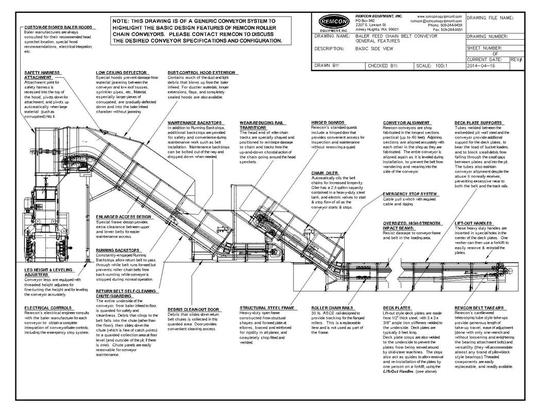

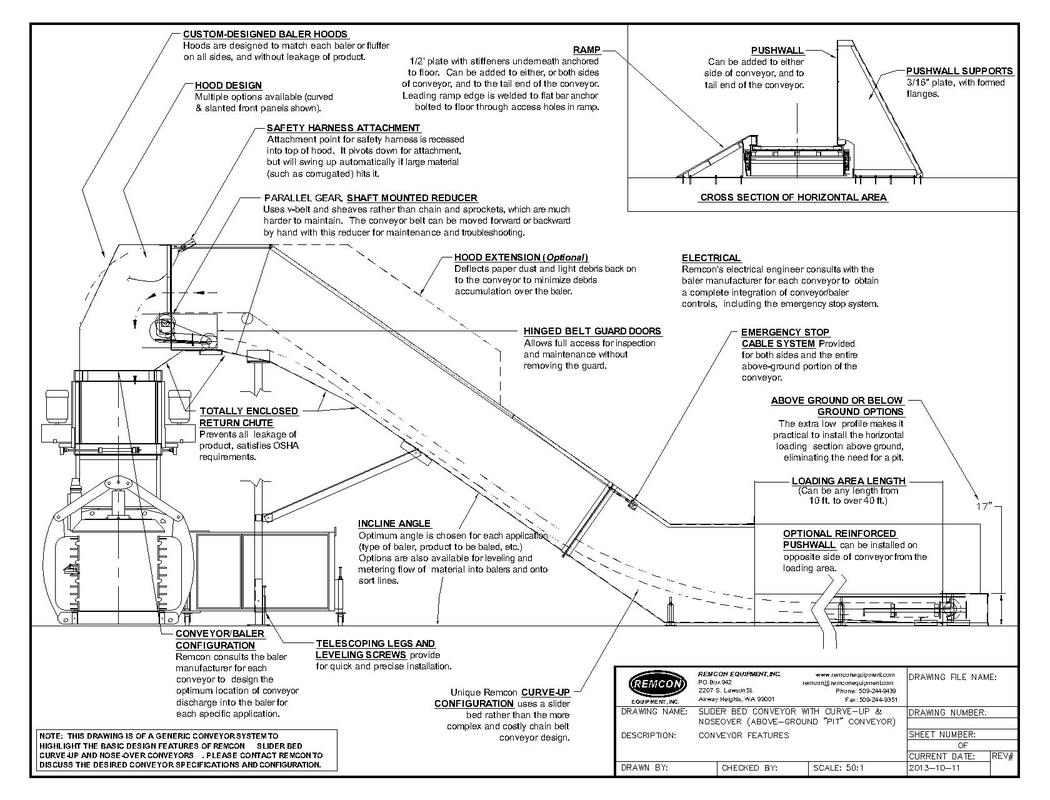

For Chain Belt Style Conveyors:
STRUCTURAL STEEL CONVEYOR FRAME
Heavy-duty open frame construction from structural shapes and formed plate at elbows, braced and reinforced for rigidity in all places and completely shop fitted and welded. Frame is specially designed to allow more access between upper and lower belts and includes special expanded maintenance openings.
OVERSIZED, HIGH-STRENGTH IMPACT BEAMS
Remcon impact beams are parallel to the belt, custom fabricated channels, formed from 1/4" plate, with 3" flanges and a 6" web. This design provides a shape that is stronger and is made from a material that has a higher yield strength and is straighter than structural channel. These high-strength beams have additional support in the loading area, where there is more potential for abuse.
UHMW PLASTIC WEAR SURFACES ON IMPACT BEAMS
1/2" thick x 6" wide black reprocessed UHMW polyethylene plastic is attached to the conveyor impact beams. (Reprocessed UHMW is used due to the improved wear properties achieved by the cross-linking that happens during the production process.) When sufficient load is applied to the belt to cause the impact channels to flex, the impact shoes will ride on the UHMW wear strips rather than directly on the steel impact beams. The plastic is attached with bolts, is easily replaced, and has slotted holes that allow for thermal expansion to prevent buckling in warm weather.
For Roller Chain Belt Style Conveyors:
ROLLER CHAIN RAILS
30 lb. ASCE rail designed to provide tracking for the rollers. This is a replaceable item and is not used as part of the conveyor frame.
RUNNING BACKSTOPS
Constantly-engaged Running Backstops allow return belt to pass through while belt runs forward, but prevents roller chain belts from back-running while conveyor is stopped during normal operation.
WEAR-REDUCING RAIL TRANSITIONS
The head end of Remcon's roller chain tracks are specially shaped and positioned to minimize damage to chain and tracks from the up-and-down chordal action of the chain going around the head sprockets.
For Drag Chain Belt and Slider Bed Style Conveyors:
HOLD-DOWN GUIDES
Remcon's special UHMW hold-down guides eliminate the need for hold-down rollers and special cross-rigid belting
For All Conveyor Styles:
CONVEYOR ALIGNMENT
Remcon conveyors are shop fabricated in the longest sections practical (up to 40 ft.). Adjoining sections are aligned accurately with each other in the shop as they are fabricated. The entire conveyor is aligned (and leveled) a second time during the installation, to prevent the belt from wandering and wearing into the side of the conveyor.
LEG HEIGHT AND LEVELING ADJUSTERS
Conveyor legs are equipped with threaded height adjusters for fine-tuning the height and for leveling the conveyor accurately.
REMCON BELT TAKE-UPS
Remcon's cantilevered telescoping tube style take-ups, with manual screw adjustment, offer the following advantages:
TRACKING ADJUSTMENTS ON BOTH ENDS OF CONVEYOR
Additional belt tracking adjustments are provided for the non-take-up end of each conveyor, for ease of tracking adjustments.
DRIVE METHOD – PARALLEL GEAR, SHAFT-MOUNTED, TORQUE ARM GEAR REDUCERS (DODGE TORQUE ARM II)
These reducers have been used almost exclusively in sand, rock, gravel, mining, etc. industries for many years, and are well proven. Remcon has used them since 1990, with good success. The new generation has been re-engineered throughout with features designed to improve performance, extend service life, and reduce maintenance. Remcon normally configures these reducers to be driven by a separate motor by v-belts, using different combinations of sheaves for additional speed reduction.
The advantages of using the Dodge Torque Arm II shaft mount reducer with v-belt drive are as follows:
VARIABLE FREQUENCY DRIVE (VFD)
A VFD can be a very worthwhile component to have on a conveyor, and is especially recommended to include on chain belt conveyors. VFD's offer:
STRUCTURAL STEEL CONVEYOR FRAME
Heavy-duty open frame construction from structural shapes and formed plate at elbows, braced and reinforced for rigidity in all places and completely shop fitted and welded. Frame is specially designed to allow more access between upper and lower belts and includes special expanded maintenance openings.
OVERSIZED, HIGH-STRENGTH IMPACT BEAMS
Remcon impact beams are parallel to the belt, custom fabricated channels, formed from 1/4" plate, with 3" flanges and a 6" web. This design provides a shape that is stronger and is made from a material that has a higher yield strength and is straighter than structural channel. These high-strength beams have additional support in the loading area, where there is more potential for abuse.
UHMW PLASTIC WEAR SURFACES ON IMPACT BEAMS
1/2" thick x 6" wide black reprocessed UHMW polyethylene plastic is attached to the conveyor impact beams. (Reprocessed UHMW is used due to the improved wear properties achieved by the cross-linking that happens during the production process.) When sufficient load is applied to the belt to cause the impact channels to flex, the impact shoes will ride on the UHMW wear strips rather than directly on the steel impact beams. The plastic is attached with bolts, is easily replaced, and has slotted holes that allow for thermal expansion to prevent buckling in warm weather.
For Roller Chain Belt Style Conveyors:
ROLLER CHAIN RAILS
30 lb. ASCE rail designed to provide tracking for the rollers. This is a replaceable item and is not used as part of the conveyor frame.
RUNNING BACKSTOPS
Constantly-engaged Running Backstops allow return belt to pass through while belt runs forward, but prevents roller chain belts from back-running while conveyor is stopped during normal operation.
WEAR-REDUCING RAIL TRANSITIONS
The head end of Remcon's roller chain tracks are specially shaped and positioned to minimize damage to chain and tracks from the up-and-down chordal action of the chain going around the head sprockets.
For Drag Chain Belt and Slider Bed Style Conveyors:
HOLD-DOWN GUIDES
Remcon's special UHMW hold-down guides eliminate the need for hold-down rollers and special cross-rigid belting
For All Conveyor Styles:
CONVEYOR ALIGNMENT
Remcon conveyors are shop fabricated in the longest sections practical (up to 40 ft.). Adjoining sections are aligned accurately with each other in the shop as they are fabricated. The entire conveyor is aligned (and leveled) a second time during the installation, to prevent the belt from wandering and wearing into the side of the conveyor.
LEG HEIGHT AND LEVELING ADJUSTERS
Conveyor legs are equipped with threaded height adjusters for fine-tuning the height and for leveling the conveyor accurately.
REMCON BELT TAKE-UPS
Remcon's cantilevered telescoping tube style take-ups, with manual screw adjustment, offer the following advantages:
- Cleaning Access – The support tubes are positioned to provide access to the area between the upper and lower belts, for cleaning and inspection of the tail pulley on slider bed conveyors, or tail sprockets and shaft of chain/belt conveyors.
- Replaceable Parts – The bearings are commonly available pillow block style. The threaded working parts of the take-up are commonly available from local fastener or hardware stores, and are replaced easily.
- Take-up Travel – Generous length of take-up travel 12" on the shorter conveyors and up to 18" on the longest. On slider bed conveyors, the belt will be cut so that the majority of the take-up is used for ease of belt installation, repair and replacement, since good quality belts with polyester carcasses have virtually no stretch after initial tensioning, and in some cases will shrink slightly.
- Ease of Adjustment – Tracking and tension adjustment are made with one wrench, with no need to loosen and re-tighten the bearing attachment bolts. The moving parts of the take-up have generous amounts of clearance, to prevent binding in the frame or against the bearings (side load) as the take-up moves through its full range.
- Versatility – Remcon take-ups will accommodate almost any brand of bearing, in the most common, pillow block style.
TRACKING ADJUSTMENTS ON BOTH ENDS OF CONVEYOR
Additional belt tracking adjustments are provided for the non-take-up end of each conveyor, for ease of tracking adjustments.
DRIVE METHOD – PARALLEL GEAR, SHAFT-MOUNTED, TORQUE ARM GEAR REDUCERS (DODGE TORQUE ARM II)
These reducers have been used almost exclusively in sand, rock, gravel, mining, etc. industries for many years, and are well proven. Remcon has used them since 1990, with good success. The new generation has been re-engineered throughout with features designed to improve performance, extend service life, and reduce maintenance. Remcon normally configures these reducers to be driven by a separate motor by v-belts, using different combinations of sheaves for additional speed reduction.
The advantages of using the Dodge Torque Arm II shaft mount reducer with v-belt drive are as follows:
- Low maintenance – There are no chains to oil, tension, or shorten and reconnect.
- Ease of adjustment – Rather than moving the entire gearbox and motor to adjust the chain tension, adjusting the Dodge Torque Arm II reducer only requires opening the hinged door on the belt guard, loosening the two lock nuts, and turning the turnbuckle by hand.
- Fewer wear parts – There are no sprockets or chain to wear out. Although v-belts will wear out, they commonly do not wear out until they are protecting the conveyor from jamming, if it jams (see following item). They are inexpensive and easy to replace. V-belt sheaves last much longer than drive chain sprockets and drive chain.
- Jamming Protection – The need for mechanical shear pins is eliminated. The motor drives the reducer by v-belt(s). If the conveyor jams, the v-belt slips, preventing the jam from causing damage to the conveyor. As the v-belt is slipping, it typically makes a loud squealing noise that draws attention to the problem. If the conveyor is not turned off, the v-belt will eventually be ruined, and there will be nothing driving the jammed conveyor. The cost of replacing the v-belt is typically $20 or less. Replacing the belt involves opening the hinged belt guard door, loosening the turnbuckle and slipping the new belt on. If the conveyor is prone to jamming (for example wrong product, or too much product), the v-belt can be kept looser than normal to minimize the potential for damage. In the past 12 years that we have used these reducers, we are unaware of any Remcon conveyor equipped with these reducers that suffered damage resulting from jamming. As additional jamming protection an electronic shear pin may be added to the electrical system.
- Parallel gears – The gears are parallel, rather than right angle. Parallel gears are more efficient and produce less friction.
- Operating and maintenance convenience – When working on a conveyor, such as doing maintenance, un-jamming product or diagnosing problems, there is often a need to move the belt a short distance either forward or backward. This is impossible electrically, since the power should be locked out at this time. But this can be accomplished easily and safely without power when using a shaft-mounted reducer, by turning the spokes on the input sheave by hand.
- Excellent availability – Unlike other reducers, the Dodge Torque Arm II reducers are so commonly used in other industries that they are quite often in stock at many local dealers, and are almost always available somewhere in the country. Other brands (Link, Browning, etc.,) may also be substituted without modification.
- Separate motor – The motor is mounted separately from the reducer, and is connected only by V-belts. Therefore, any brand of motor can be used, and a motor breakdown does not affect the reducer, or vice-versa.
- Ease of changing reduction ratios – Reduction ratios of up to 5 to 1 are easily obtained from the motor-to-reducer V-belts and sheaves. These ratios are easily changed by swapping out sheaves, which is more difficult and expensive with a drive chain & sprockets.
VARIABLE FREQUENCY DRIVE (VFD)
A VFD can be a very worthwhile component to have on a conveyor, and is especially recommended to include on chain belt conveyors. VFD's offer:
- Soft Start – Decreases wear & tear on motor and other drive parts
- Jam Protection – Replaces old technology (shear pins, clutches, etc.) and works better
- Many other programmable settings for speed, acceleration & deceleration, etc.
Below are some standard belt specifications that are available for each type of conveyor. Many of the components can be adjusted to suit your needs. Contact us to discuss these specifications in detail.
For Slider Bed Style Conveyors:
(Hinge Pan specifications given, contact us for other options.
For Slider Bed Style Conveyors:
- Belt Construction – 3 ply, 330 lbs. per inch width (P.I.W.) with a moderately oil-resistant (MOR) rubber top cover
- Belt Lacing – Flexco R2 heavy-duty rivet style mechanical lacing, available in galvanized steel for corrosion resistance or "Megalloy" for added abrasion resistance.
- Belt Width – 18" to 72"
- Cleats – Angle Iron; 2 x 2 x 1/4" for widths under to 60"; 2 x 2 x 3/8" for widths over 60"
- Belt Material – 3 ply, 330 lbs. per inch width (P.I.W.) MOR Rubber top cover or 450 lb. PVC
- Belt Cross Members – 4" x 3/8" steel flat bar, bolted to chain and belt every other pitch
- Belt Width – 24" to 72"
- Cleats – 3 x 4 x 1/4" Angle Iron (other options also available)
- Chain – 4" pitch or larger, welded; several options available depending on type of material, and load on belt
- Belt Material – 3 ply, 330 lbs. per inch width (P.I.W.) MOR Rubber, 3/16" top cover; 1/16" bottom cover
- Belt Cross Members – 4" x 5.4 lb. channel (6" pitch) or 6" x 8.2 lb. channel (9" pitch), bolted to chain and belt every other pitch
- Belt Width – 24" to 72"
- Chain Bushings – Solid .760" I.D. x 1.120" O.D. x 2.31" long, 1018 solid machined; carburized, hardened to RC55-60; press fit into inner sidebars
- Chain Sidebars – Double row, 2" wide x 3/8" thick precision die punched 1045 bar
- Chain Pins – 4142 Stl. 3/4" diameter headed stub pin; pin ends milled flat to lock into outer side bars and ends are drilled for 1/4" x 1" solid locking pin
- Chain Pitch – Available in either 6" or 9" pitch
- Cleats – 3 x 3 x 3/8 coped angle on 48" center (other options also available)
- Impact Shoes – 3" x 6" x 3/8" thick plate, welded to underside of cross channels in line with impact beams
- Rollers – Single flange, 3" diameter x 1 1/2" width, through hardened sintered steel wheel
- Side Wings – 1/4" thick steel x 4" tall, precision die formed interlocking offset wing
- Sprockets – 6 tooth, 12" pitch diameter (for 6" pitch chain) or 18" pitch diameter (for 9" pitch chain), flame-cut with hardened teeth at tail and head ends of conveyor
(Hinge Pan specifications given, contact us for other options.
- Belt Width – 24" to 72"
- Chain Bushings – Solid .760" I.D. x 1.120" O.D. x 2.060" long, 1018 alloy, machined, carburized, hardened to RC55-60, press fit into inner sidebars
- Chain Sidebars – Double row, 2" wide x 1/4" thick precision die punched 1045 alloy steel
- Chain Pins – 1045 cold rolled steel, .750" diameter, pin ends milled flat to lock into outer side bars and ends drilled for 1/4" x 1" extended prong cotter pin
- Chain Pitch – Available in either 6" or 9" pitch
- Chain Rollers – Single flange, 3" diameter x 1 1/2" width, face sintered steel
- Cleats – 3 x 3 x 3/8 coped angle iron on 48" centers (other options also available)
- Hinge Pans – 1/4" steel plate, precision die-formed pan, with fully closed loops, 2 loops welded closed on each side of the belt
- Hinge Sleeve – 0.975" O.D. x .760" I.D. tube, 1008/1010 hot rolled pickled and oiled steel. This is a thicker wall than other conveyor belt manufacturers use. While still being interchangeable, it offers superior wear characteristics, and spans the entire width of the belt.
- Impact Shoes - 1" plate, 3" x 6" spaced every 12", welded on underside of steel belt pans in line with impact beams
- Side Wings – 1/4" thick steel x 4" tall, precision die formed, interlocking, off set wing, fully welded to hinge pan to prevent leakage of product
- Sprockets – 6 tooth, 12" pitch diameter (for 6" pitch chain) or 18" pitch diameter (for 9" pitch chain), flame cut with hardened teeth at tail and head ends of conveyor
Remcon's Baler Feed Conveyors are designed to allow the safest and easiest access to maintenance areas to ensure a smooth running operation.
ENLARGED MAINTENANCE ACCESS
Special open frame design maximizes access between upper and lower belts and includes special expanded maintenance openings.
HINGED GUARDS FOR DRIVE COMPONENTS
Remcon's standard guards include a hinged door that provides convenient access for inspection and maintenance without removing a guard. For conveyors that have insufficient clearance for a hinging door at the drive, the door--rather than the entire guard--is unbolted to gain access.
MAINTENANCE BACKSTOPS (for roller chain belts only)
In addition to backstops that prevent roller chain belts from back-running during normal operation, additional maintenance backstops are provided for safety and convenience during maintenance work such as belt installation.
SELF-CLEANING BELT RETURN CHUTES/GUARDING
The entire underside of the conveyor, from the discharge then to the floor, is guarded for safety and cleanliness. Debris that clings to the belt falls into the chutes (rather than the floor), then slides down the chutes, which are free of catch-points. It then collects in a guarded collection point at floor level (and outside of the pit, if there is one). The chutes are easily removed for maintenance.
DEBRIS CLEAN-OUT DOOR
Debris that slides down return belt chutes is collected in this guarded area. Door provides convenient cleaning access.
CHAIN OILER (not needed on slider bed conveyors)
Automatically oils the belt chains for increased longevity. The heavy duty steel tank has a 2.5 gallon capacity and features electric valves to start and stop the flow of oil as the conveyor starts and stops.
EMERGENCY STOP SYSTEM
Cable-pull switch with required cable and rigging
ENLARGED MAINTENANCE ACCESS
Special open frame design maximizes access between upper and lower belts and includes special expanded maintenance openings.
HINGED GUARDS FOR DRIVE COMPONENTS
Remcon's standard guards include a hinged door that provides convenient access for inspection and maintenance without removing a guard. For conveyors that have insufficient clearance for a hinging door at the drive, the door--rather than the entire guard--is unbolted to gain access.
MAINTENANCE BACKSTOPS (for roller chain belts only)
In addition to backstops that prevent roller chain belts from back-running during normal operation, additional maintenance backstops are provided for safety and convenience during maintenance work such as belt installation.
SELF-CLEANING BELT RETURN CHUTES/GUARDING
The entire underside of the conveyor, from the discharge then to the floor, is guarded for safety and cleanliness. Debris that clings to the belt falls into the chutes (rather than the floor), then slides down the chutes, which are free of catch-points. It then collects in a guarded collection point at floor level (and outside of the pit, if there is one). The chutes are easily removed for maintenance.
DEBRIS CLEAN-OUT DOOR
Debris that slides down return belt chutes is collected in this guarded area. Door provides convenient cleaning access.
CHAIN OILER (not needed on slider bed conveyors)
Automatically oils the belt chains for increased longevity. The heavy duty steel tank has a 2.5 gallon capacity and features electric valves to start and stop the flow of oil as the conveyor starts and stops.
EMERGENCY STOP SYSTEM
Cable-pull switch with required cable and rigging
Remcon also manufactures deck plates and supporting framework custom designed to fit each pit conveyor. We offer a system that allows the easiest access to inside of the pit for maintenance, while keeping the loading floor safe and secure during operation.
DECK PLATES
1/2" thick plate, with 3 x 3 x 3/8" angle stiffeners, 5 feet typical length. Pit deck stops are welded to the underside of the deck plates prevent the plates from being slid apart by a skid steer machine. They also act as guides to allow removal and re-installation of the plates by one person on a forklift, using the Lift-Out Deck Plate Handles.
LIFT-OUT DECK PLATE HANDLES
These heavy duty handles are inserted into special holes in the center of the plates. A forklift is then used to remove and re-install the plate, all by one person.
DECK PLATE SUPPORTS
Steel tube, 3 x 3 x 1/4" or larger, with one end welded to the steel embedded in the top of the concrete pit wall (curbing angle) and the other end welded to the conveyor. These tubes are installed underneath the 1/8" gaps between all the deck plates, and are spaced 4 to 5 feet apart. The deck support tubes serve the following functions:
DECK PLATES
1/2" thick plate, with 3 x 3 x 3/8" angle stiffeners, 5 feet typical length. Pit deck stops are welded to the underside of the deck plates prevent the plates from being slid apart by a skid steer machine. They also act as guides to allow removal and re-installation of the plates by one person on a forklift, using the Lift-Out Deck Plate Handles.
LIFT-OUT DECK PLATE HANDLES
These heavy duty handles are inserted into special holes in the center of the plates. A forklift is then used to remove and re-install the plate, all by one person.
DECK PLATE SUPPORTS
Steel tube, 3 x 3 x 1/4" or larger, with one end welded to the steel embedded in the top of the concrete pit wall (curbing angle) and the other end welded to the conveyor. These tubes are installed underneath the 1/8" gaps between all the deck plates, and are spaced 4 to 5 feet apart. The deck support tubes serve the following functions:
- Provide additional support for the deck plates, to bear the load of bucket loaders, etc.
- Block small debris from falling through the small gaps between plates and into the pit
- Act as strong stops to keep the removable pit plates locked into place
- Protect conveyor from damage by bucket loaders by tying the conveyor into the concrete pit wall every 5 feet.
- Provide a positive means of locking the conveyor into a very accurate alignment despite all the abuse it normally receives. A misaligned conveyor results in excessive wear to both the belt and the rails that the belt rides on.