
Remcon can fabricate custom storage bins, bunkers, and hoppers for holding and storing sorted materials until needed for baling or other processing. These can be added to an existing system if more storage is needed, or incorporated into a new system.
What Bins, Bunkers & Hoppers Each Do in a Plant
The three terms get used loosely in the trade, but in a plant layout each has its own job. All of them are surge storage — a place for material to accumulate so the sort line never has to wait on the baler.
Storage Bins
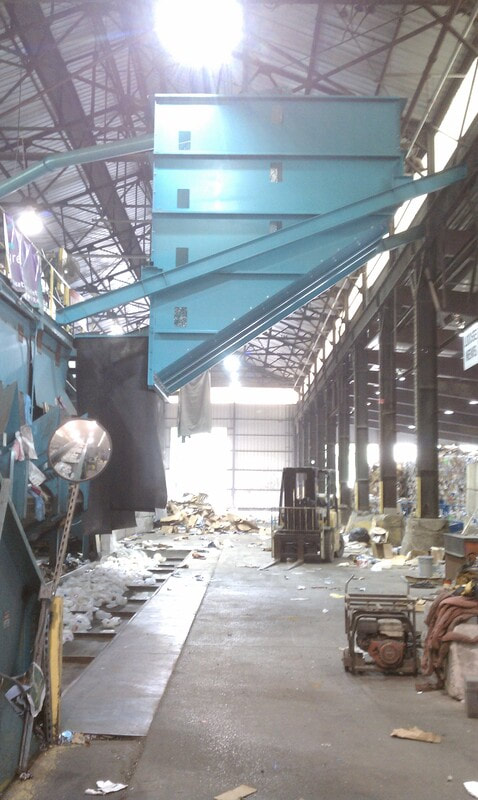
Steel storage bins hold a single sorted material — bottles, cans, paper — until there is enough of it to justify a baler run or a truckload. Bins can sit on the floor or be elevated on engineered supports; the silo-style bin in FIG. 01 was supported to leave clear drive-thru space underneath it.
Storage Bunkers
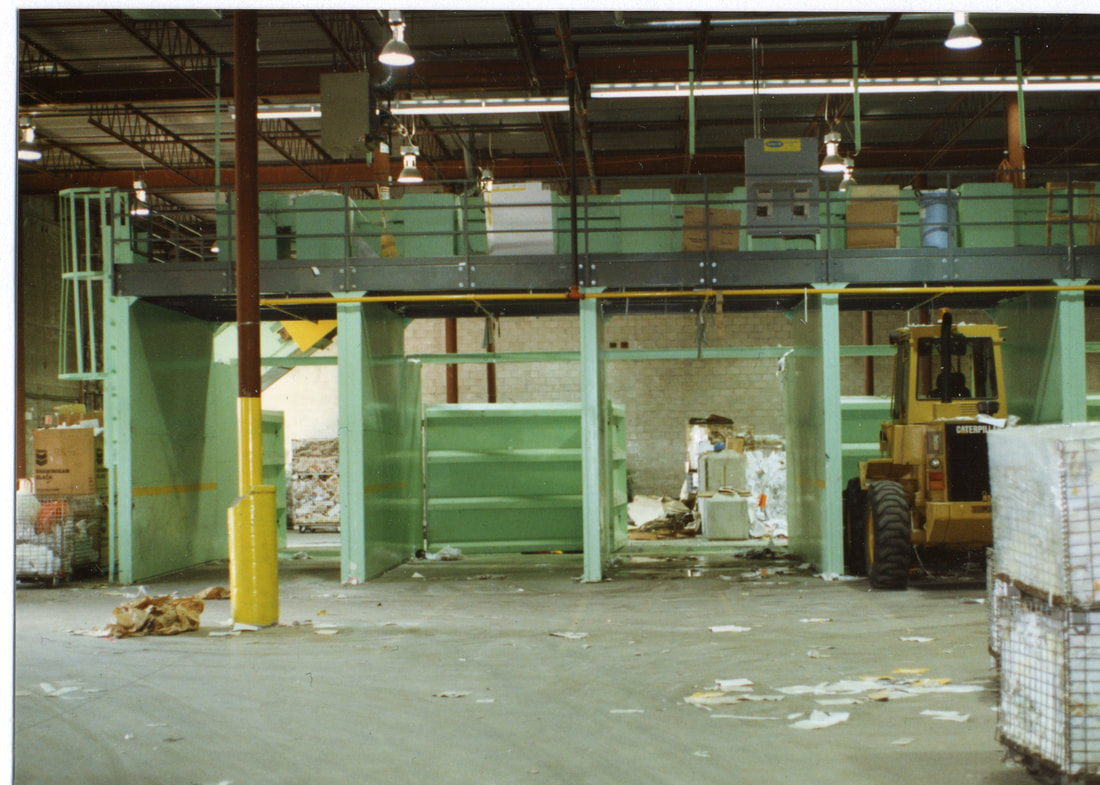
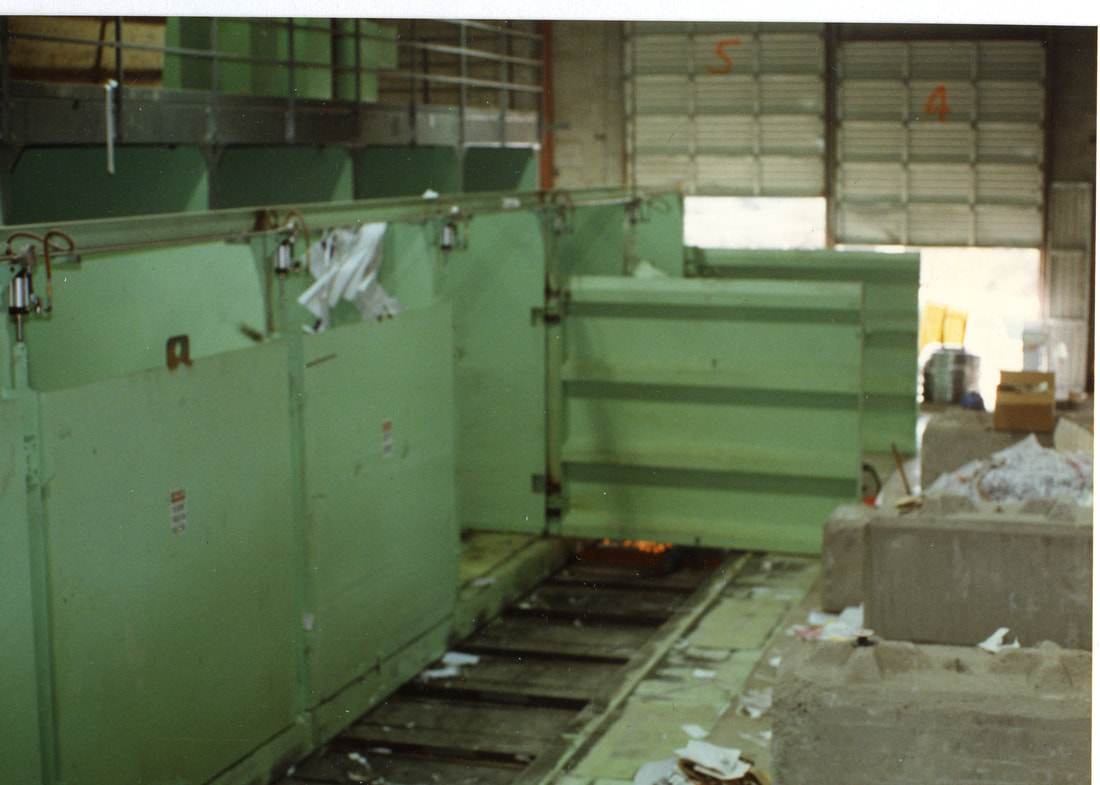
Storage bunkers are floor-level bays built from heavy steel walls, usually open on one side so a bucket loader can push material in and carry it back out. Under a sort line, bunker walls divide the floor so each material drops into its own bay instead of mixing back together, and doors in the walls can open to discharge directly onto an in-ground baler feed conveyor. Because the walls are structural steel, they can also be built to carry a sorting platform and conveyor overhead — the same steel doing two jobs.
Hoppers
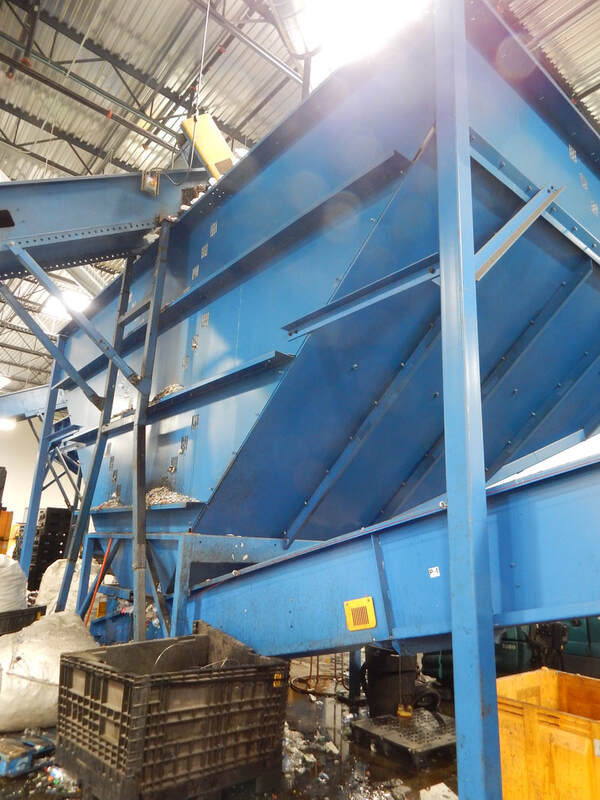
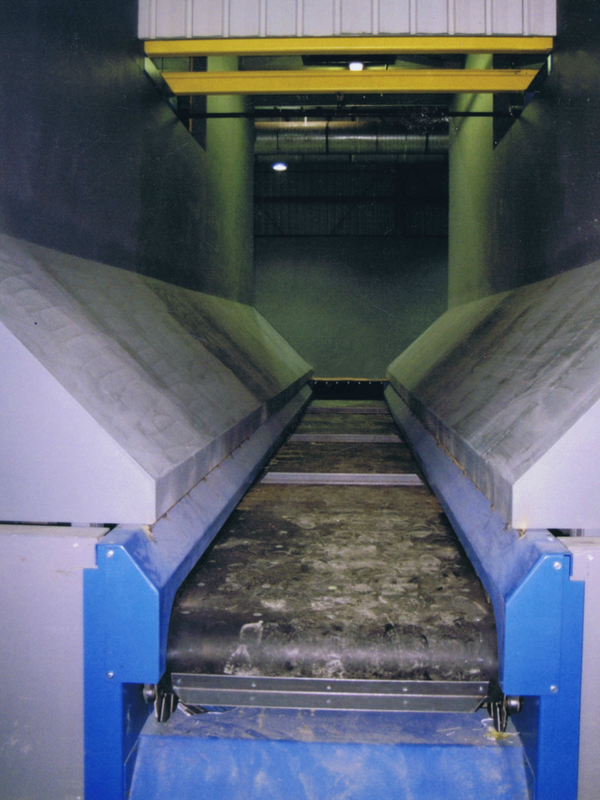
A hopper is a funnel: sloped steel sides that converge on an opening, so everything loaded in the top leaves through one controlled discharge point. Custom hoppers show up at both ends of a system — receiving hoppers that catch material from a dumper or loader and center it onto a conveyor, and discharge hoppers that direct stored material into a baler, a container, or the next machine.
Options for Storage of Recyclables and Other Materials
There are many different options available for the design of storage structures, and Remcon can work with you to come up with the best solution that will work with your system.
- Custom live floor bins
- Sloping floor, gravity out-feed
- Self-emptying, walking floor out-feed
- Self-emptying, conveyor out-feed
- Bunker walls and doors, which can also be built to support a sorting platform and conveyor
Sizing & Capacity — Matched to the Material and the Layout
There is no catalog capacity for these structures. Every bin, bunker, and hopper Remcon builds is sized to the application and quoted per job. The sizing questions are practical ones: what the material is and how it flows, how fast the sort line produces it, how often the baler or the truck takes it away, and what the building allows — ceiling height, column spacing, and the turning room a loader needs. The discharge method shapes the structure too: a gravity out-feed needs floor slopes steep enough to keep the material moving, while a walking floor or conveyor out-feed lets the bin stay long and low.
Getting Material Back Out — Metered Discharge and Feeding
Storage is only half the job; the other half is feeding material out at the rate the next machine wants it. When downstream equipment needs a steady, controlled feed — a baler, most commonly — a live floor bin is the usual answer: the bottom of the bin moves slowly and meters material onto the take-away or baler feed conveyor at a controlled rate, in either a walking floor or conveyor-style design. Sloping-floor gravity bins and bunker doors discharge in batches instead, which suits materials handled by loader or dumped a bay at a time. And at the front end of a system, custom tote & container dumpers empty tote bins and bulk boxes into a receiving hopper or onto a conveyor for feeding the sort line.
Materials These Structures Are Built For
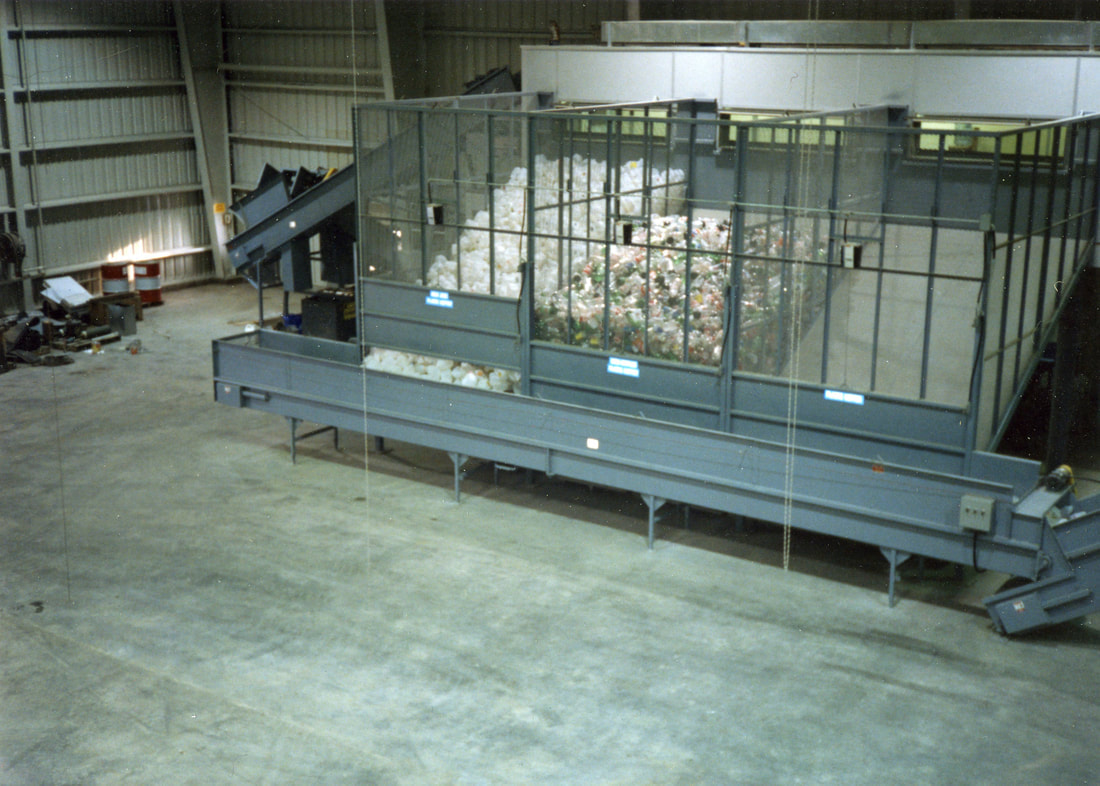
Remcon storage structures serve recycling and processing plants, so the typical contents are sorted commodities: PET bottles and aluminum cans (as in FIG. 02), tin cans, mixed paper, cardboard, film plastic, glass, and general solid waste and construction debris. The material drives the design — light, springy materials need volume more than strength; dense or abrasive ones need heavier walls and floors; materials that bridge or pack need steeper slopes or a live floor to keep flowing. That is why the material list is the first thing we ask for on a quote.
Installation Options from DIY to Let Us Do the Work
Remcon offers custom designed storage bins partially or fully assembled (if feasible) for easy customer installation. We also offer structures that are shop fabricated in practical sections for shipping and custom installed by our experienced installation crew.
About our installation services →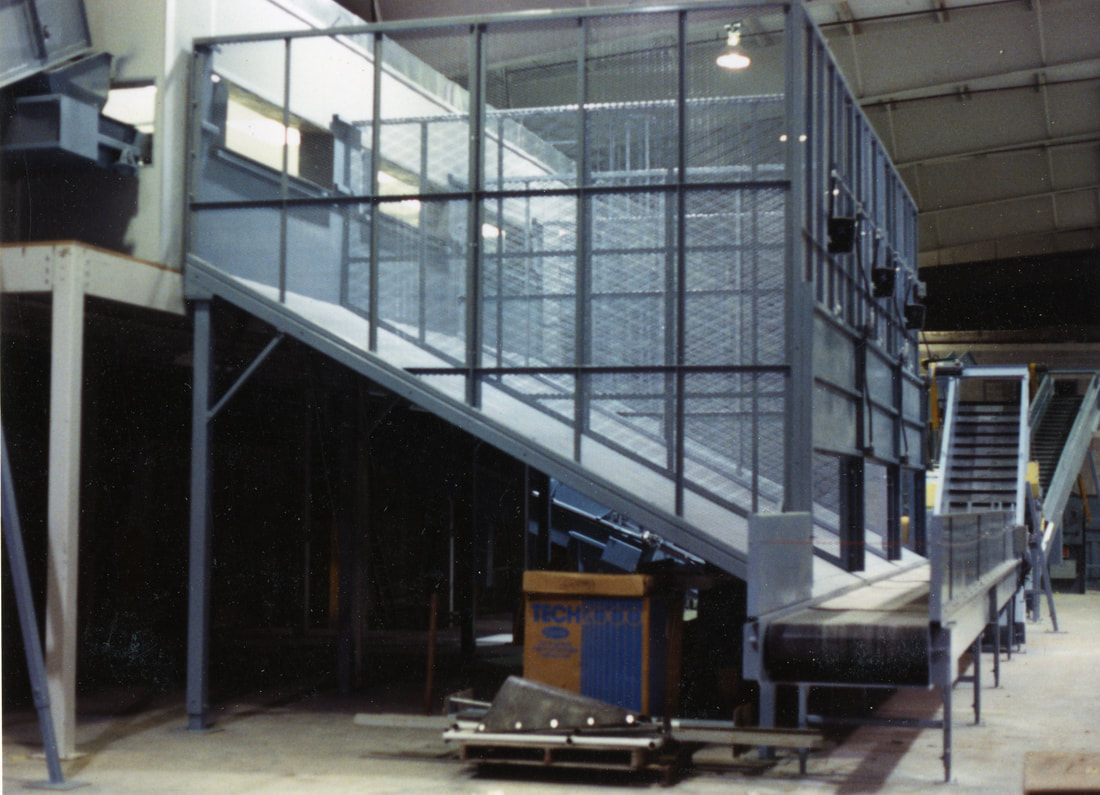
Storage Bins, Bunkers & Hoppers FAQ
What is the difference between a storage bin, a bunker, and a hopper?
A storage bin is an enclosed steel container that holds one sorted material until it is baled or shipped; a bunker is floor-level storage built from heavy steel walls, usually loader-accessible from one side; a hopper is a funnel that channels material down to one controlled discharge opening. Many real structures combine them — a bin with a hoppered bottom, or bunker walls with discharge doors.
How much material can a Remcon storage bin hold?
There is no standard capacity — every bin, bunker, and hopper is custom-sized to the material and the layout, and quoted per job. Sizing is driven by how fast the sort line fills the storage, how often it is emptied, and what the building's height, columns, and loader access allow.
How does material get out of a storage bin or bunker?
Three ways: gravity out-feed through a sloping floor, doors that open to discharge onto a conveyor, or a self-emptying live floor — walking floor or conveyor-style — that meters material out at a controlled rate. The right choice depends on whether the next machine wants a steady feed or a batch.
Does Remcon install storage bins and bunkers nationwide?
Yes. Structures are shop-fabricated in practical sections for shipping and installed by our experienced crews anywhere in the country — or supplied partially or fully assembled, where feasible, for customer installation.
Every bin, bunker, and hopper is designed and fabricated at our Airway Heights (Spokane), Washington shop, then shipped and installed nationwide.
We specialize in custom designed and fabricated equipment and can work with you to design a solution that will work well for your needs. Contact us to discuss options or to get a quote.
Contact us for more information →