
Remcon baler feed conveyors are designed specifically for feeding recyclables into balers. Four styles are available, in sizes, capacities, and configurations to suit a range of baler sizes (and budgets) — from small, low-capacity balers to the largest high-capacity machines. Special attention is given to ease of maintenance, cleanliness of operation, resistance to damage, and safety.
Baler Feed Conveyors by Material Stream
A baler infeed conveyor is matched to the material as much as to the baler — the belt style, width, and orientation change with the stream:
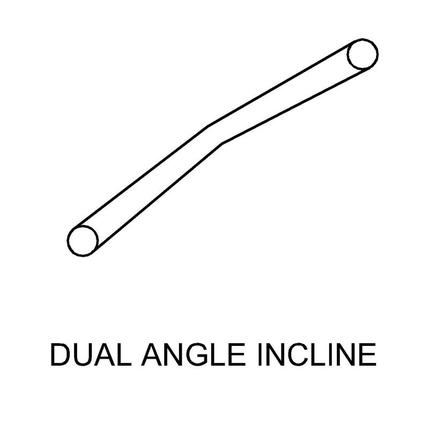
OCC (old corrugated containers). Baled cardboard is bulky and springy, so OCC lines get wide belts and cleats to keep material climbing the incline. A dual-angle incline — steep for metering, shallower at the top to prevent rollback — is a common OCC layout.
Mixed paper. Paper is a light to medium load, so an affordable slider bed conveyor usually does the job — fewer moving parts, and a low-profile loading section for above-ground installations.
Plastics. Film and containers are light but can be dusty. A slider bed or drag chain belt carries them, and a custom dust control hood can be added at the discharge (see the example further down this page).
Metals. Tin and aluminum cans run fine on a rubber or PVC belt. Sharper, heavier scrap calls for a beltless drag chain with steel flights or a roller chain with steel belt — no belt surface to puncture or tear.
Mixed streams. Mixed and residue streams are heavier and less predictable, so they usually get a chain belt conveyor — and sometimes two conveyors in series, which separates clumps better before they reach the baler.
Match the Conveyor to Your Baler
Remcon does not build balers. We build the conveyor that keeps one full, and we do it all the time. Feeding balers is core work here, not a sideline.
The baler is the fixed point in the layout. It sits where it sits, its throat is the height it is, and its ram sets the rate. Everything about the baler infeed conveyor gets worked out from those three facts. Which baler you run changes the answer more than most buyers expect, and four machine types cover almost everything in recycling.
Two-Ram Balers
A two-ram baler uses one ram to compress the material and a second ram, moving perpendicular to the first, to eject the finished bale. The consequence for the conveyor is in the hopper. On a two-ram, the width of the hopper is also the length of the bale, normally 60 inches, and the opening can run as large as 60 inches wide by 110 inches long. Narrow-box machines drop that hopper to about 43 inches.
That is the part people miss. On a two-ram, the conveyor's discharge geometry has to fill a whole bale length at once. Bale size on these machines is normally fixed, so the conveyor cannot change the dimension. It can only fail to fill it. If the belt and the hood drop everything into one end of a 60-inch opening, the charge box loads unevenly across the full 60 inches and the ram compresses a lighter, less consistent bale than the machine is built to make. That is not a spillage problem. That is a product problem.
The offsetting advantage is size. A two-ram has a bigger hopper and a bigger charge box than a single-ram, so it tolerates a wider and a faster conveyor, and it generally does not need a fluffer or a shredder ahead of it to condition the stream. That is why a two ram baler conveyor is normally wider and faster than the belt feeding a single-ram machine on the same stream.
Single-Ram Balers
A single-ram baler compresses with one ram and extrudes the bale down a long chamber attached to the charge box. Bale width is capped by the machine and the hopper cannot be wider than the bale, so hopper widths generally run 33 to 43 inches with lengths from about 50 inches to more than 80. Finished bale length varies with how the machine is run; some processors extrude bales eight feet long.
So the opening is narrow and long, and the conveyor has to meter into it rather than dump into it. A belt much narrower than the throat piles material up the middle in a pyramid and never fills the corners of the chamber. A belt matched too closely to the throat spills over the sides at the transition. The hood reconciles the two, which is why Remcon builds a custom hood for the machine it feeds instead of a standard one.
Closed-Door Balers
A closed-door baler, also called closed-end, has a single ram and no extrusion chamber. Material is compressed against a door, and the door opens once the bale is finished. On most of these machines the wire is tied by hand.
The conveyor implication is the door. Baling stops while the door swings, the bale is ejected, and the operator resets. The feed has to stop with it or material stacks up in the throat. A closed-door machine wants a clean interlock with the conveyor, or a surge point ahead of it such as a bin or hopper, so the line upstream does not have to stop every cycle.
Auto-Tie Balers
Auto-tie is not a class of baler. It is a tying system, wire or other banding applied automatically, fitted to horizontal single-ram and two-ram machines. What it changes for the conveyor is duty cycle. On a fully automatic machine the tie happens without stopping the feed, so the conveyor is expected to run continuously and the metering job moves off the operator and onto the conveyor and its controls.
An auto-tie line is where automated feed control earns its keep. It is also where an underfed baler shows up fastest, because the machine will cycle on air all shift and the only sign is a light bale count at the end of it.
| Baler type | Feed opening | What the conveyor has to do |
|---|---|---|
| Two-ram | Large. Hopper width sets bale length, normally 60"; openings up to 60" x 110". Narrow-box machines about 43". | Spread material across the whole opening, not into one end. Wide belt, wide hood, higher belt speed tolerated. |
| Single-ram (extrusion) | Narrow and long. Width capped by bale width, typically 33" to 43"; length 50" to 80"+. | Meter a steady stream into a narrow throat. Hood funnels belt width down without spilling at the edges. |
| Closed-door (closed-end) | Smaller. Material compressed against a door that opens to eject the bale. | Start and stop with the baler. Interlock the conveyor, or put a surge point upstream. |
| Auto-tie (a system, on either) | Set by the host machine, single-ram or two-ram. | Run continuously through the tie cycle. Metering moves to the conveyor and its controls. |
The Baler's Cycle Governs the Feed
Cycle time is how long the ram takes to complete one stroke and retract. That number belongs to the baler, not to the conveyor. The conveyor's whole job is to have the right amount of material sitting in the charge box when the ram comes back.
Wrong in either direction costs you. Feed too little and the ram cycles on air: low bale density, wasted hydraulic time, and a baler running well under what you paid for it. Feed too much and material bridges, interlocking above the ram instead of dropping into the compression zone. That happens most with large flat sheets of cardboard, and it ends with somebody standing on the deck with a pole.
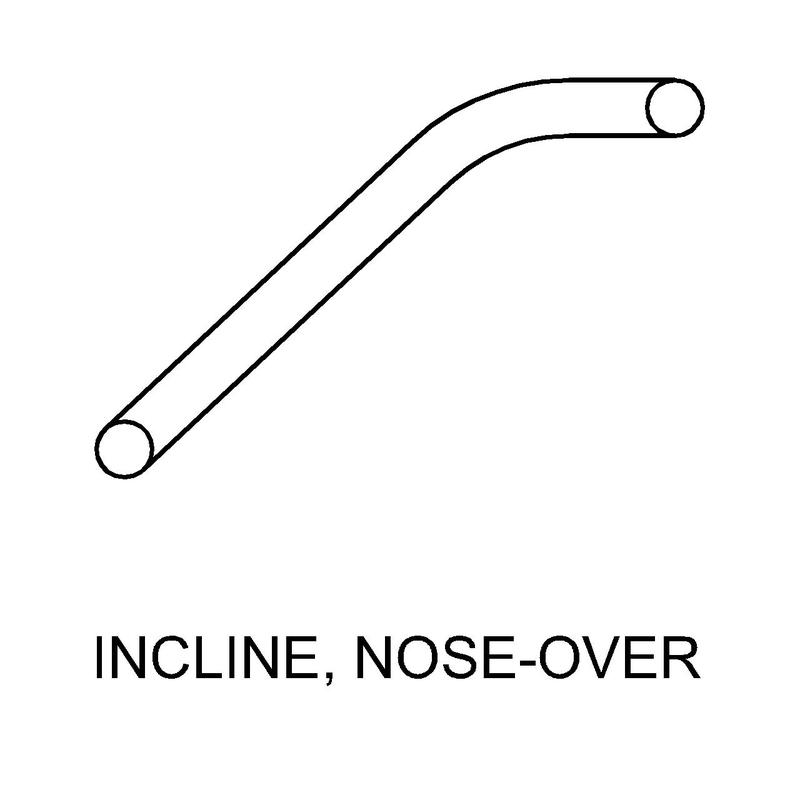
Two things in the conveyor's geometry help. Do not put a ninety-degree turn immediately before the hopper, and give the material enough drop to separate as it falls. That is part of why Remcon builds nose-overs, and why the discharge end gets laid out to the baler rather than to the shortest path across the building.
Belt Speed
Belt speed is the lever that matches a conveyor to a baler's cycle, and it is the specification almost nobody publishes.
Across the conveyors Remcon has supplied, belt speeds run from 60 fpm at the slow end up to 900 fpm on the fastest acceleration conveyors. A baler feed conveyor is picked from inside that range, set by the material, the belt width, the incline, and the baler's appetite. A heavy chain belt climbing a steep incline under springy OCC is a slow machine. A conveyor built to accelerate and thin out a stream before a transfer is not.
Speed does not have to be fixed either. Remcon's optional automated feed control monitors material on the belt and varies belt speed from 20% of normal up to 200% of normal. Simpler installations do a coarse version of the same thing with photocells in the hopper: low level, run at full speed; high level, slow down or stop. Varying speed continuously instead of switching between run and stop keeps the charge box loaded without the stop-start wear, and it is the difference between a conveyor that feeds a baler and one that merely delivers to it.
What a Clean-Running Feed Looks Like
"That is the cleanest running conveyor I have ever seen."
A two-ram on OCC is not the easy case, either: the widest opening described above, and the springiest material that commonly goes through one. Three things were behind that, and none of them is exotic. The belt tracked true, with the tracking adjustments at the non-take-up end where a crew can reach them. The tension was right: the take-up had travel to spare, so the belt was neither slipping on the drive pulley nor pulled hard against the bearings. And nothing spilled at the throat, because the hood was built for that baler's opening rather than taken off a shelf, so material dropped into the charge box instead of over the side of it. A feed conveyor that does those three things runs clean for years. One that does not is the one somebody is shovelling around every shift.
The Conveyor Is Rarely the Only Machine
Buyers often ask for a conveyor system for a baler rather than for a conveyor, and that is usually the more accurate way to put it. What feeds a baler is a short chain of machines: something that holds the surge, something that carries it across the building, and something that meters it into the throat.
On a small line all three jobs land on one conveyor out of a pit. On a larger one the surge sits in a bin or hopper, an infeed conveyor or a transfer conveyor moves it across the floor, and the baler feed conveyor does the last lift, with the controls tied together so the chain stops when the baler stops. Remcon has built systems with as many as twenty conveyors in them, and has produced more than 1,500 complete systems.
More on infeed conveyors →Conveyors for Sheared Scrap
Remcon does not build shears. It builds the conveyors that carry what comes out of one — what a yard usually calls a shear conveyor. Sheared scrap is heavy, sharp-edged and irregular, and the conveyor under it takes some of the roughest duty on the property. It is the same family of machine as a baler feed, specified for the weight of what lands on it and the impact when it does. If the load is sheared scrap rather than baler feed, say so on the quote: the bed, the belt and the drive are chosen for the load, and the two are not interchangeable.
Belt Styles
Slider Bed
The affordable choice for light to medium loads — a rubber or PVC belt sliding on steel slats instead of idler rollers, in widths up to six feet, with a low-profile loading section that works well above ground.
More on slider bed conveyors →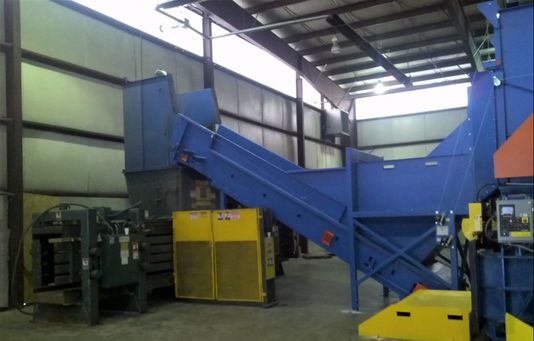
Drag Chain with Rubber/PVC Belt
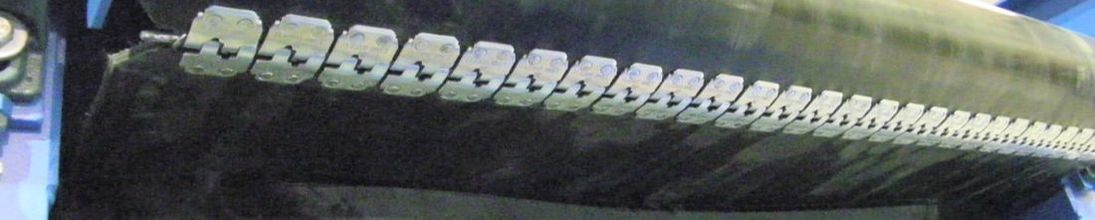
The simplest of the chain belt conveyors — a heavy-duty belt for medium to heavy loads, with lower initial and maintenance costs than a roller chain belt and a durable rubber/PVC surface that carries all types of material.
More on drag chain belt conveyors →Drag Chain with Steel Flights (Beltless)
For medium to heavy loads of hard objects — bolt-on steel cross flights pull material along a solid bed, and the beltless design eliminates the possibility of damaging a belt surface with heat or sharp objects. Lowest maintenance cost of the chain belt conveyors.
More on beltless drag chain conveyors →
Roller Chain with Rubber/PVC Belt
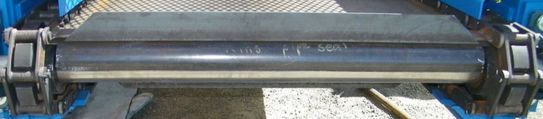
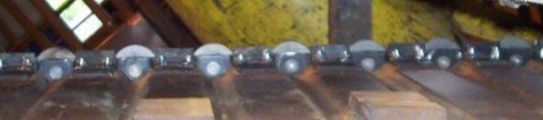
For large amounts of heavy material on longer conveyors — steel rollers built into each chain link reduce drag, giving a greater working load than a drag chain, with side wings at the belt edges to prevent material leakage.
Roller chain belt conveyor details →Roller Chain with Steel Belt
The same roller chain platform with steel panels (piano hinge, apron, etc.) in place of rubber belting — much more puncture resistant, for the hardest-wearing streams.
More on roller chain belt conveyors →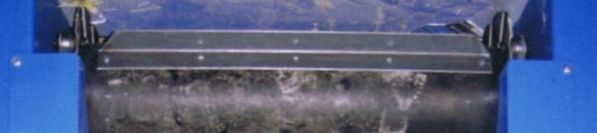
Baler Feed Conveyor Specifications at a Glance
Every conveyor is built to order, so these are Remcon standards rather than catalog limits — the detailed belt specifications for each style are further down this page.
| Specification | Remcon standard |
|---|---|
| Belt styles | Slider bed; drag chain with rubber/PVC belt; drag chain with steel flights (beltless); roller chain with rubber/PVC or steel belt |
| Belt width | 18" to 72" (slider bed); 24" to 72" (chain belts) |
| Belting | 3 ply, 330 P.I.W. rubber with MOR top cover, or 450 lb. PVC; steel hinge pans on steel belt conveyors |
| Chain | Welded chain, 4" pitch or larger (drag chain); 6" or 9" pitch roller chain |
| Capacity | Sized to the baler and the material — from small, low-capacity balers to the largest high-capacity machines |
| Frame | Heavy-duty structural steel, shop fitted and welded in sections up to 40 ft. |
| Impact zone | Oversized beams formed from 1/4" plate with replaceable UHMW wear strips, reinforced in the loading area |
| Drive | Shaft-mounted Dodge Torque Arm II reducer, v-belt driven; VFD optional (recommended on chain belts) |
| Belt take-up | Cantilevered telescoping tube style, 12" travel on shorter conveyors up to 18" on the longest |
| Orientations | Incline, dual-angle incline, incline with nose-over, horizontal elbow-up incline — single conveyor or two in series |
| Loading | In-ground (pit) with 1/2" deck plates, or above ground with low-profile loading section |
| Safety | Cable-pull emergency stop, hinged drive guards, guarded self-cleaning return chutes |
Conveyor Orientation Options
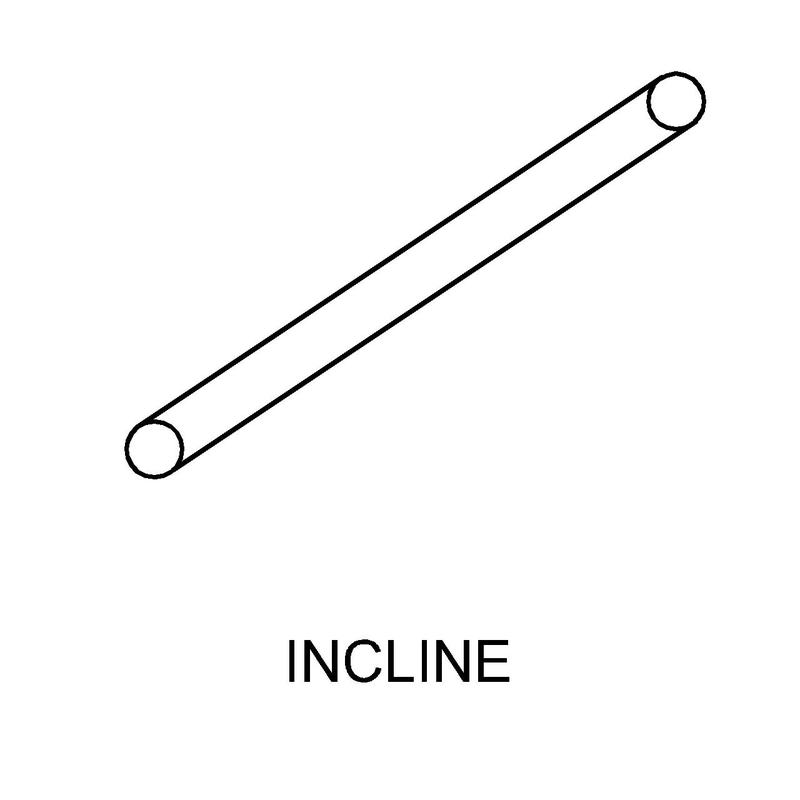
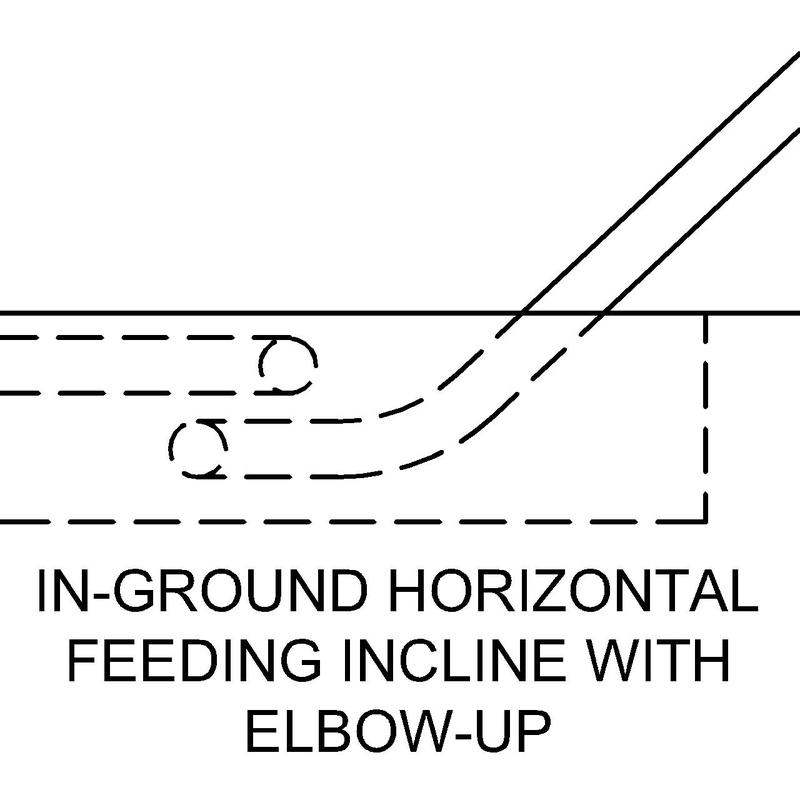
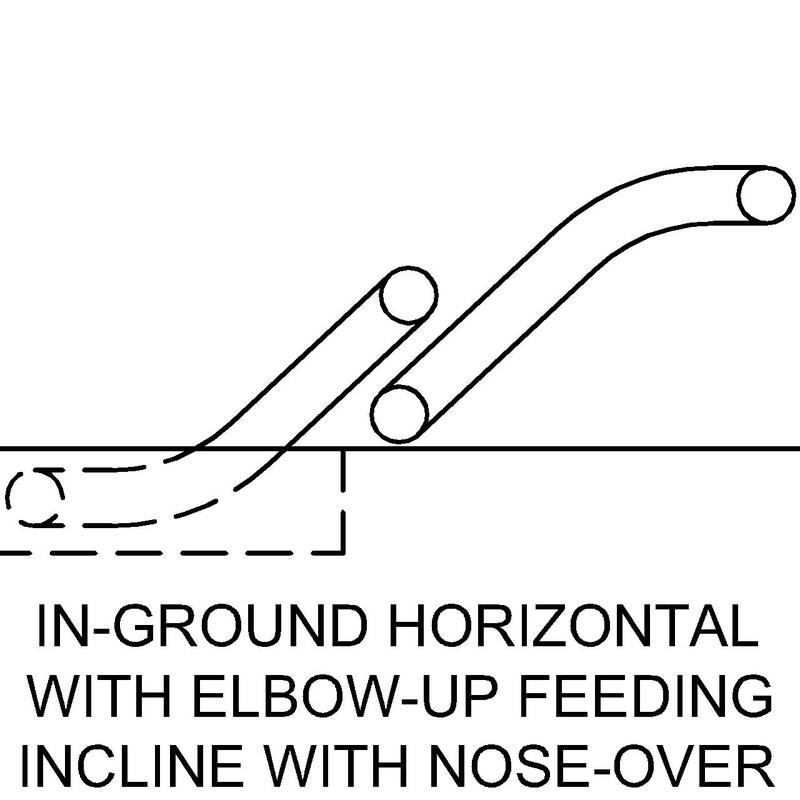
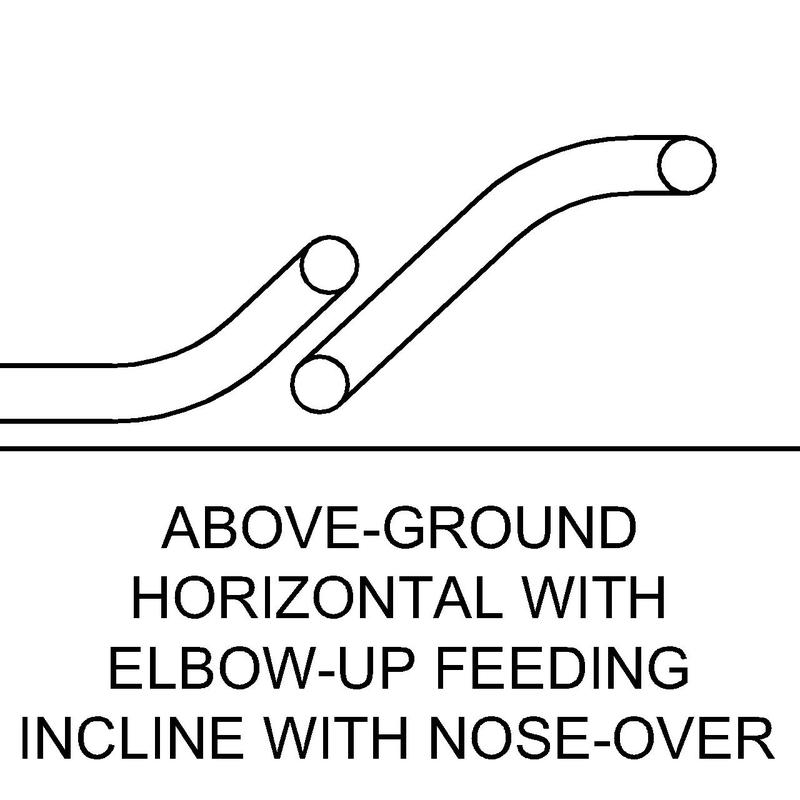
Remcon can build conveyors to feed balers in many different orientations, depending on the layout requirements. We can also build two separate conveyors that run in series — to simplify installation, separate clumps better, or use two different types of conveyors (for example, a roller chain feeding a slider bed). Contact us to discuss what layout options would work best for your situation.
Single conveyor options:
- Incline angle changes from steep (to help with metering) to shallower (to prevent rollback)
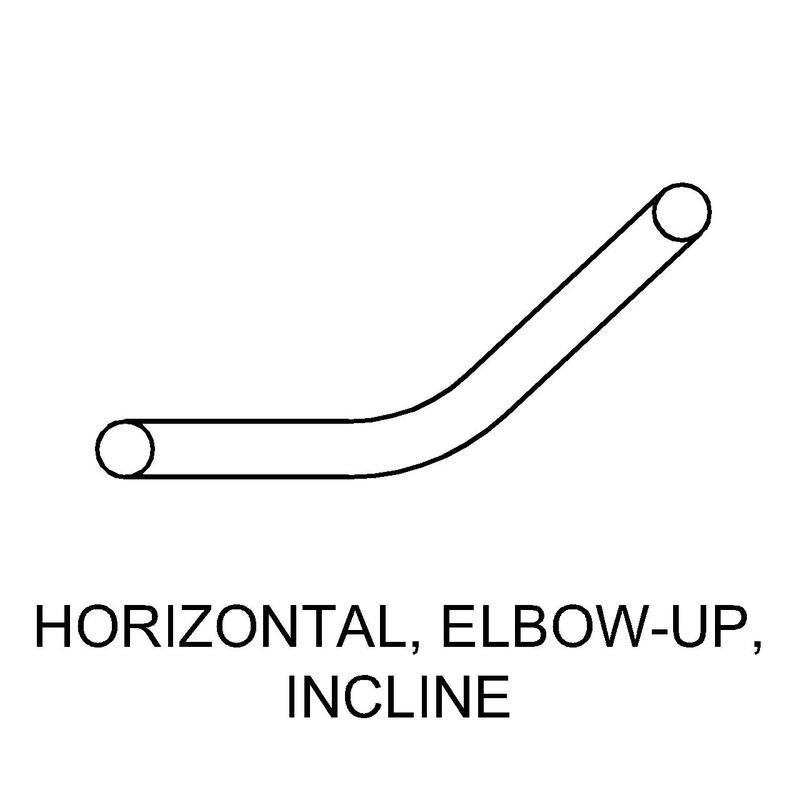
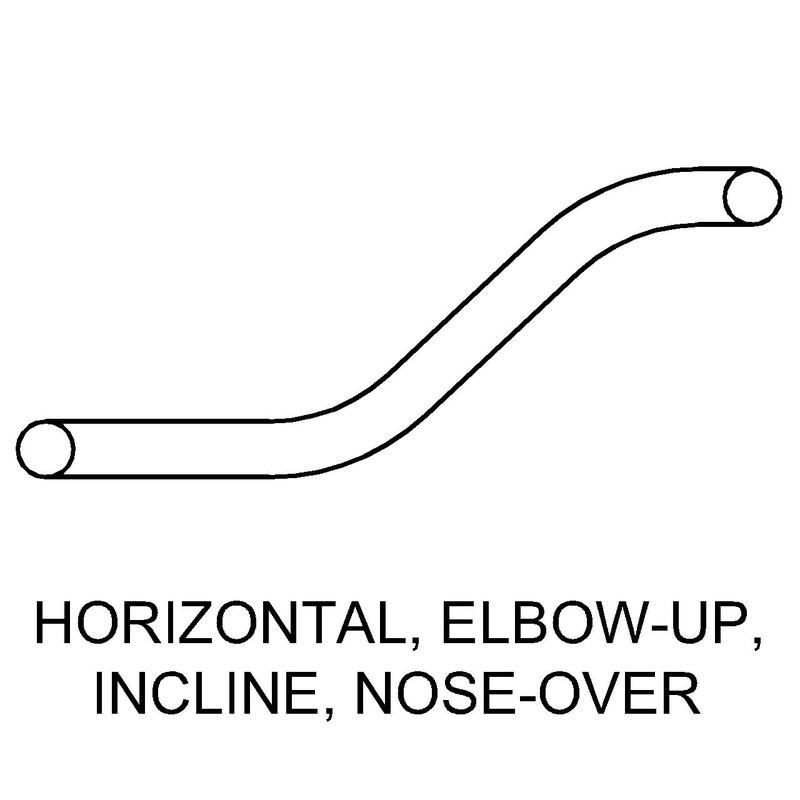
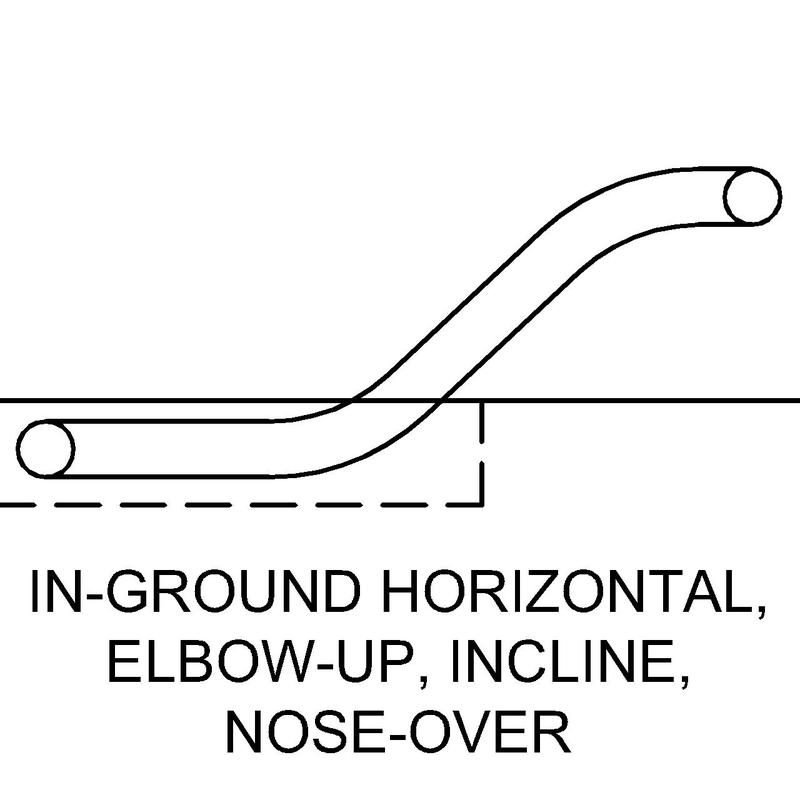
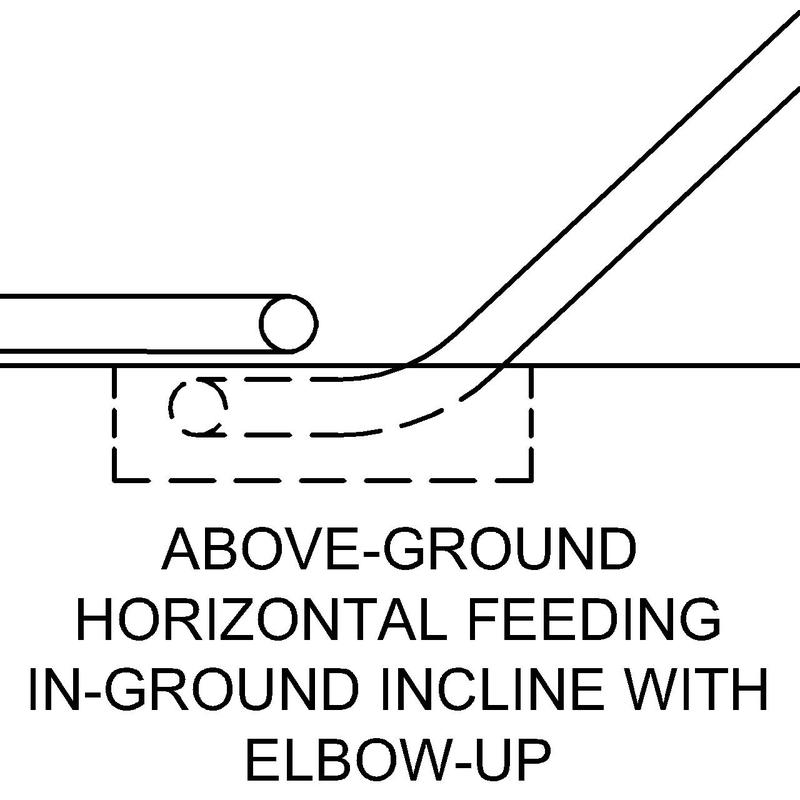
Feeding a Baler You Already Own
Most of these calls are not greenfield. There is a baler on the floor already. Either the conveyor feeding it is worn out, or you upgraded the baler and the old conveyor no longer reaches the new throat, or there was never a conveyor and somebody has been feeding it with a loader bucket and a lot of patience.
All three are normal work. A retrofit is harder to quote than a new line because the geometry is already fixed and it is somebody else's geometry. It is not harder to build. Here is what has to be measured on an existing installation before we can size a replacement baler infeed conveyor, and why each measurement changes the machine.
Start at the Throat
The baler's feed opening is the one dimension that cannot move. Measure:
- Clear opening, width and length, at the narrowest point. Not the flare at the top of the hopper.
- Height from finished floor to the top edge of the opening. The discharge has to clear it and the hood has to seal to it.
- Where the ram face sits relative to the opening, and which end of the opening drops into the charge box. Material landing over the ram face bridges. Material landing into the charge box goes in.
- Anything above the opening: the existing hood, the wire feed on an auto-tie machine, guarding, catwalk framing, sprinkler heads, roof steel.
Belt width comes straight out of that clear opening, by the same reasoning set out further up this page. What changes on a retrofit is how much of the work falls to the hood. It has to take up the difference between where the conveyor can physically discharge, given a loading point and a floor run you did not choose, and where the baler wants the material. The machine shown further down this page, with an extended horizontal section after the nose-over, exists for exactly that reason.
The Angle You Can Actually Get
On a retrofit the incline is not a choice. Floor-to-throat height and the floor run you have available set it between them, and then you find out whether the material will climb it.
Published limits do not agree, and it is worth knowing why before you take any single figure as settled:
- General belting practice puts a plain smooth belt at roughly 18 to 20 degrees for dry, well-behaved bulk material, and lower than that for loose mixed recyclables, which roll instead of slide. Cleats carry material up physically rather than by friction and are generally effective to about 30 degrees, with recycling and waste feed lines commonly running 25 to 35.
- At least one integrator that builds baler feed conveyors publishes 30 to 35 degrees for rubber belt, and says steel chain conveyors with cleats handle slightly steeper.
- At least one shredder manufacturer caps its own slider bed infeed conveyor at 25 degrees.
That spread is not sloppiness. The real limit moves with the material: bulk density, particle size and shape, moisture, and how badly the stream wants to roll back on itself. Springy OCC behaves nothing like wet mixed paper, and neither behaves like loose film. Cleat height and spacing move it again. So the angle for your job comes out of your material and your geometry together, not off a chart, and that is the conversation to have before the conveyor is drawn.
When the run is too short for the height, which is the usual retrofit problem, the answer is a dual-angle incline, an elbow-up, or two conveyors in series rather than a steeper single climb. The layouts above show what each of those looks like.
The Existing Pit
If there is a pit, it was sized for the conveyor sitting in it, and it is rarely the right size for the next one. Measure and photograph:
- Inside length, inside width, and depth at both ends
- Whether there is curbing angle embedded in the top of the pit wall, and whether it is sound
- Floor slope and any drain
- Whether the walls are square and plumb, honestly
Remcon fabricates deck plates and their supporting framework custom to each pit conveyor, and the deck support tubes weld to the steel embedded in the top of the pit wall. If that embedded steel is not there it can be added, but that is concrete work and it belongs in the plan early rather than on install day.
The Rest of the Building
Loader travel and where material lands today. Column lines and overhead doors. Whether the head end can still be reached for belt and drive work once the new machine is in. And the part people leave until last: the old conveyor has to come out. In a running plant that is a shutdown window, so it is worth deciding early whether the replacement can be staged in sections and set in one weekend.
Remcon integrates third-party equipment as well as fabricating its own. If part of the line stays and part gets replaced, that is a normal job. If the baler is one station in a larger plant, it becomes a turn-key conveyor system conversation instead of a single machine.
What We Need to Quote It
Photographs are the fastest thing you can send, and they answer questions a dimension list never will. Send:
- The baler throat, photographed from the loading side and from directly above
- The head and tail ends of the existing conveyor, if there is one
- A wide shot showing the loading point and the run between it and the baler
- Floor-to-throat height, with a tape in the shot
- Pit inside dimensions, if there is a pit
- Baler make, model, and type, plus the material stream
- The baler's general arrangement drawing, if you have it
From that we can tell you what will fit, what it will be built from, and where the existing geometry is going to cost you. Installation is by our own crews, nationwide, and we supply belt replacement and repair and parts for the machine afterward.
Send photos and dimensions →Custom Remcon Solutions for Baler Feed Applications
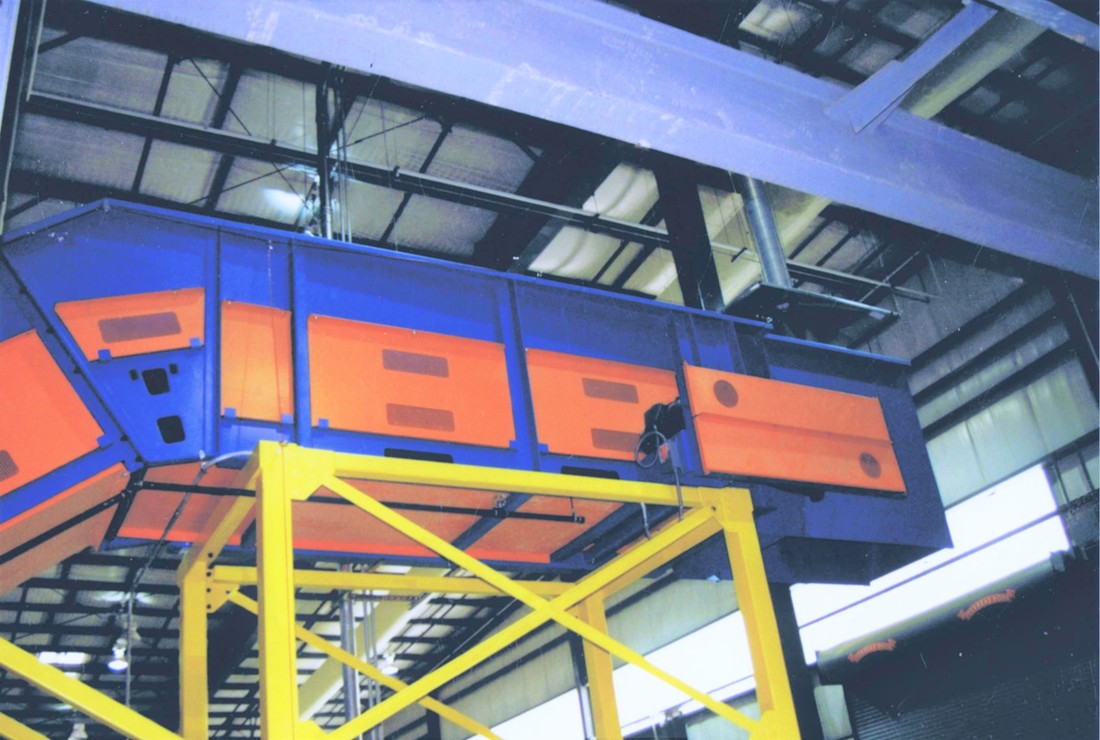
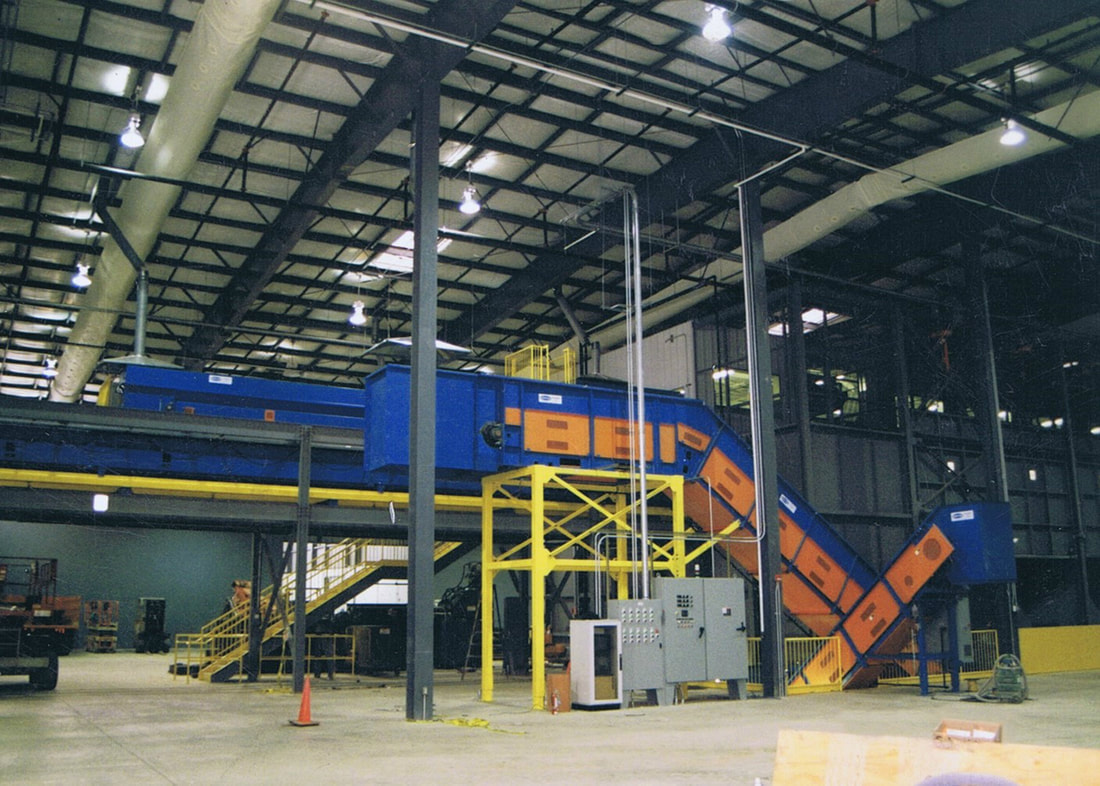
Custom Baler Hood for Future Baler Installation
This baler feed conveyor was designed with a special hood to allow the baler to be installed after the conveyor was already in place. It also features an extended horizontal section after the nose-over, to allow the conveyor to discharge into the baler at the proper location.
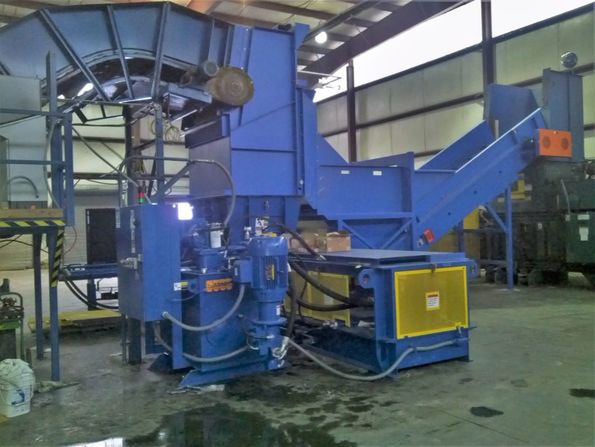
Custom Two-Way Redirection Chute & Secondary Baler Feed Conveyor
These photos show a custom baler hood with two-way redirection chute and baler feed conveyor, designed and built for a past customer who upgraded to a new baler but still wanted to use their old baler as a back-up during maintenance or break-downs of the new baler.
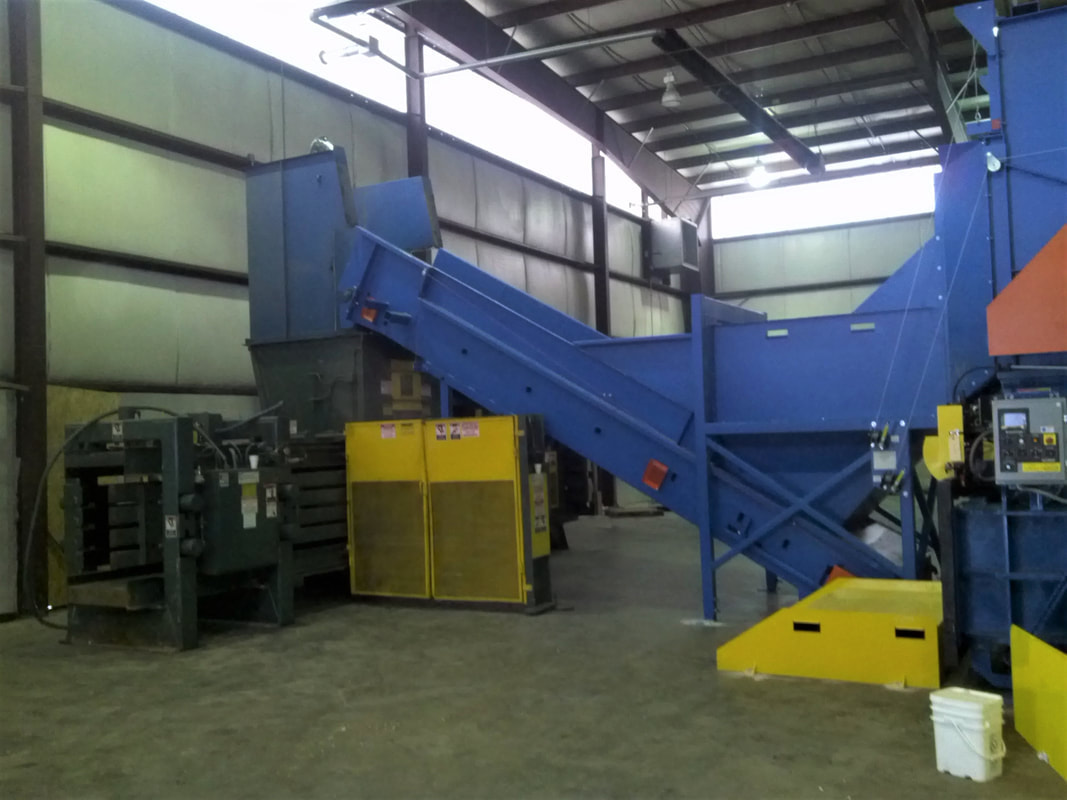
Custom Baler Hood with Bypass Conveyor
These photos show a custom baler hood with a bypass conveyor to feed a secondary baler when the primary baler is being worked on. In normal mode, the primary baler feed conveyor feeds through a filler chute attached to the rear of the bypass conveyor. In bypass mode, the bypass conveyor slides underneath the discharge of the primary baler feed conveyor to receive the material and feed it into the secondary baler.
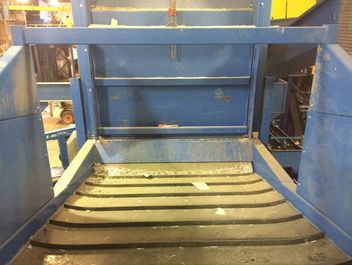
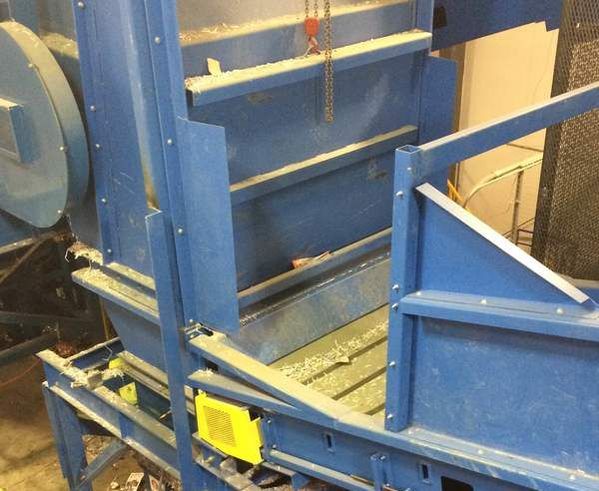
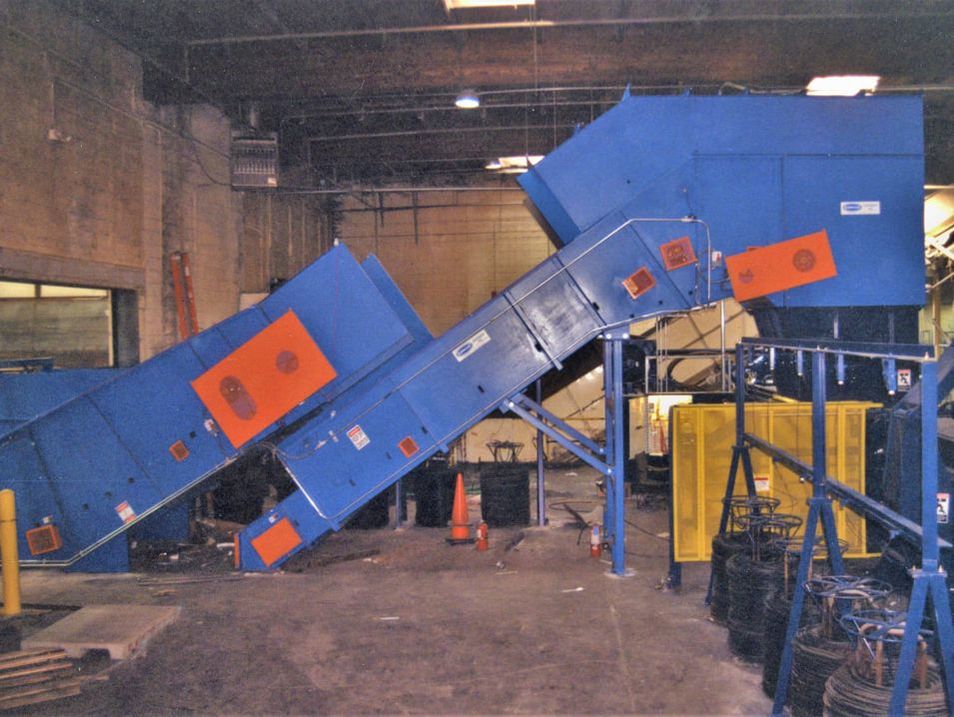
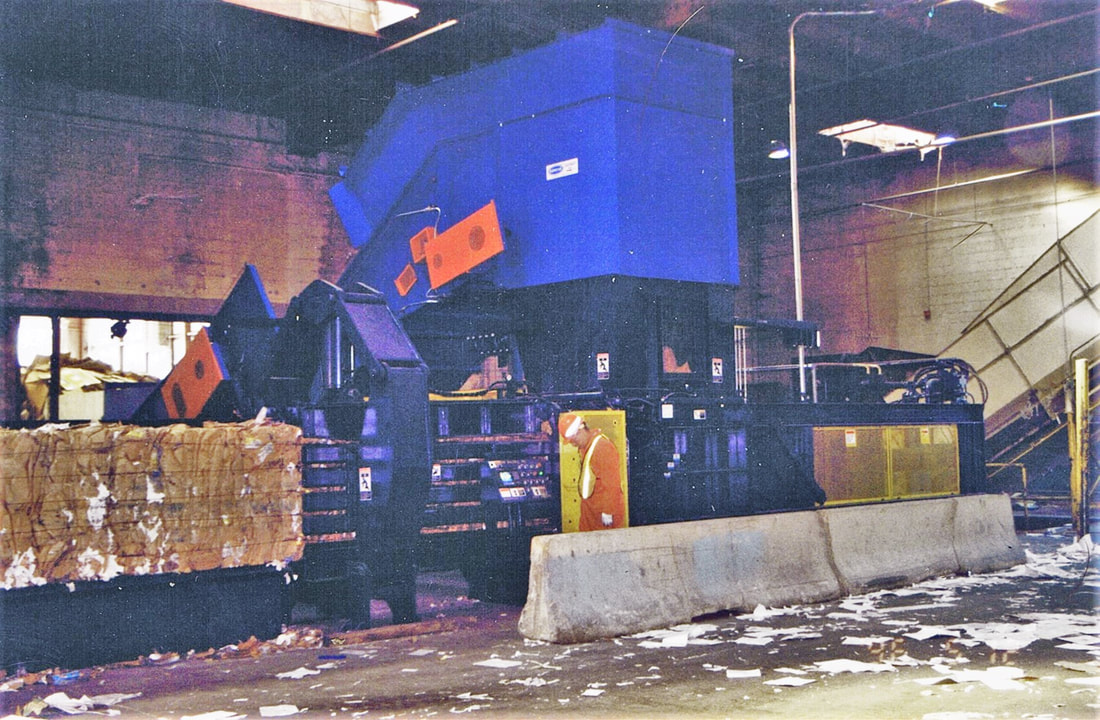
Custom Dust Control Hood
These photos show a custom dust control hood on a slider bed incline with nose-over baler feed conveyor. The baler feed conveyor is fed by an above-ground low-profile slider bed conveyor with elbow-up.
What Drives the Cost of a Baler Infeed Conveyor
Price is usually the first question and it is a fair one. There is no honest answer to it until the machine is defined. Every Remcon conveyor is built to order and none of it is catalog stock, so there is no list to read a number off. What we can do is tell you exactly what moves the number, so you can put the information together before you call and get a real quote instead of a guess.
If you would rather skip to the number than read the list, call (509) 244-9439 with the baler make and model and the height from your floor to the top of the throat. That is enough to start, and we will ask for the rest on the call.
These are the drivers on a baler infeed conveyor, roughly in the order they move the total.
Length and Lift
The two biggest, and they are linked. Lift is the vertical distance from the loading point up to the baler throat. Lift plus the incline you can actually get in the space sets the length, and length then sets everything downstream: frame steel, belt or chain, drive horsepower, take-up travel, guarding, return chutes, and how many loads it ships in. A conveyor to a low throat and a conveyor to a high one are not a small step apart.
Belt Width
Remcon builds belts from 12 to 72 inches across the conveyor line. On baler feed work that is 18 to 72 inches for slider beds and 24 to 72 inches for chain belts. Width drives the belt itself, the chain strands, the cross members, the frame, and the drive. It is set by the baler's throat and the material, not by preference.
Belt Style
Slider bed is the least expensive of the platforms on this page. Among the chain belt conveyors, drag chain with a rubber or PVC belt is less to buy and less to maintain than roller chain, and beltless drag chain with steel flights has the lowest maintenance cost of the chain belts. Which one you need is set by the material, not by that order. Each style is described in detail above, and if a less expensive style will do the job, we will tell you so.
Geometry
A straight incline is the simplest thing we can build. Every departure from it costs fabrication hours: a dual-angle incline, a nose-over, an elbow-up, a horizontal run with an elbow-up and a nose-over on the same machine. Formed plate at the transitions, extra structure, extra alignment. Two conveyors in series costs two drives, two take-ups, and two frames, and it is still frequently the right answer, because it simplifies installation, breaks up clumps between the two belts, and lets you use different belt styles for different parts of the run.
Pit or Above Ground
An in-ground machine carries the pit package: hoods, deck plates and their supporting framework, clean-out doors at the bottom of the return chutes, adjustable legs, and safety harness attachment points. It also carries excavation and concrete, which are not on our quote but are firmly on your project. Above ground, a low-profile loading section skips all of that and spends floor space instead.
Hood and Chute Work
A plain discharge hood is straightforward. A hood with a two-way redirection chute so you can feed a back-up baler, a bypass conveyor that slides underneath the primary discharge, or a hood built to fit a baler that has not been delivered yet, are engineering and fabrication. The examples above show what that work involves.
Dust control sits here too. A dust control hood, sealed transitions, and a duct connection are additions to the base machine, and whether you need them is decided by the stream. Film and light plastics are the usual reason.
Controls
A motor starter and a cable-pull emergency stop are the floor. Above that: a VFD for soft start and jam protection, an electronic shear pin, automated feed control, interlocks so the conveyor stops with the baler, and a chain oiler on chain belt machines. Each is a line on the quote, and on a continuously fed auto-tie line most of them pay for themselves.
Support Structure and Access
Legs standing on a floor are inexpensive. Ceiling hangers, mezzanine steel, and platforms and catwalks to reach the head end for belt and drive work are more steel and more installation time. Decide early whether the head end needs a permanent platform, because adding one later means working around a running line.
Belt Specification
Carcass and cover grade, cleat size and spacing, and lacing all move the number. Three-ply 330 P.I.W. rubber with an MOR cover, 450 lb. PVC, and steel hinge pans are not the same money, and neither are galvanized and Megalloy lacing. Full specifications for each style are listed above.
Installation Scope
Remcon ships and installs nationwide with its own crews. Some jobs want us to do all of it: set, align, level, guard, and wire. Some want the conveyor delivered and their own millwright sets it. Some are a shutdown weekend with a crane already on site. Scope is a real part of the number and it is worth deciding before you ask.
What to Have Ready When You Call
Bring these and we can talk about a real machine instead of a category:
- Baler make and model, whether it is two-ram, single-ram, or closed-door, and whether it is auto-tie
- The feed hopper's clear opening, width and length, measured at the narrowest point
- Height from finished floor to the top of the baler throat
- The material stream or streams, and roughly how much of it you move in a day
- Where the material comes from now: floor and loader, a sort line, a bin, or another transfer conveyor
- Building constraints: ceiling height, column lines, overhead doors, floor drains, forklift routes
- Whether there is an existing pit, and if so its inside length, width, and depth
- Power available at the location
- Whether the baler is installed, on order, or still being chosen
None of that is a price. It is what a price is made of. If you are still comparing machines, the guide to buying a conveyor covers the same ground from the other direction.
Request a quote for a baler feed conveyor →Special Features & Specifications
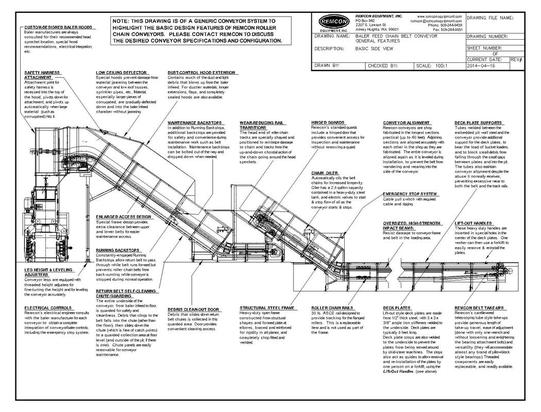
The general features drawings below show how a Remcon baler feed conveyor is put together. The sections that follow cover the features and specifications in detail.
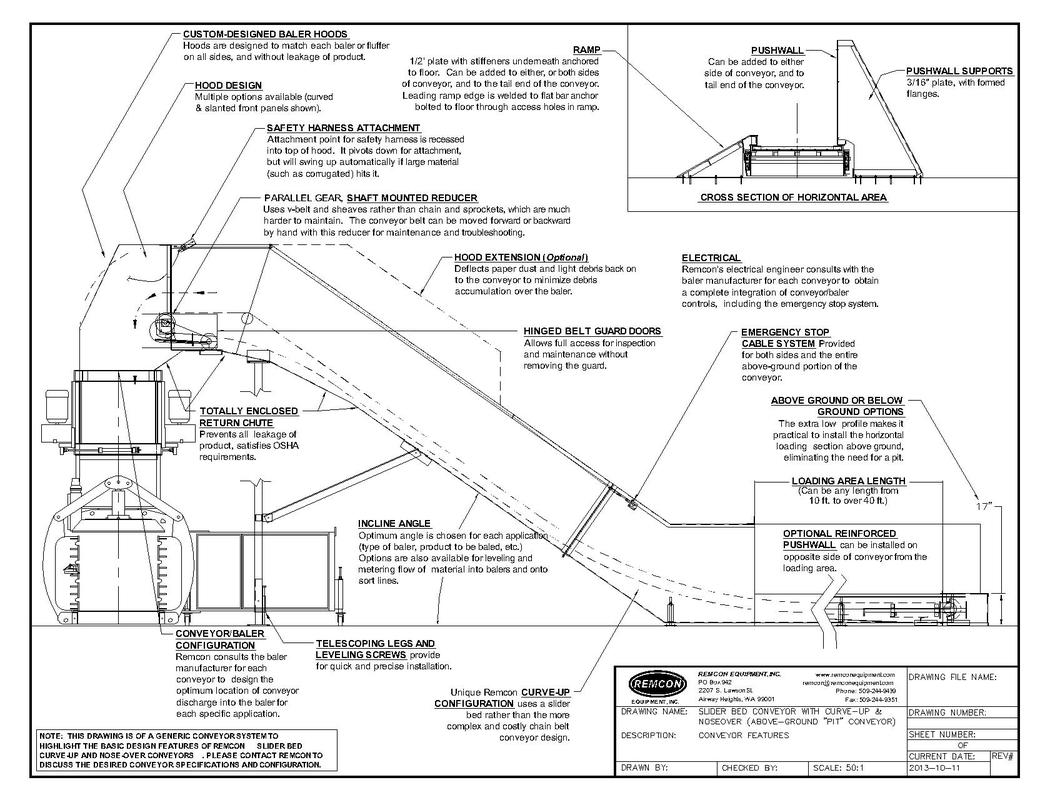
Conveyor Features
For chain belt style conveyors:
Structural steel conveyor frame. Heavy-duty open frame construction from structural shapes and formed plate at elbows, braced and reinforced for rigidity in all places and completely shop fitted and welded. The frame is specially designed to allow more access between upper and lower belts and includes special expanded maintenance openings.
Oversized, high-strength impact beams. Remcon impact beams are parallel to the belt — custom fabricated channels, formed from 1/4" plate, with 3" flanges and a 6" web. This design provides a shape that is stronger, made from a material with a higher yield strength, and straighter than structural channel. These high-strength beams have additional support in the loading area, where there is more potential for abuse.
UHMW plastic wear surfaces on impact beams. 1/2" thick x 6" wide black reprocessed UHMW polyethylene plastic is attached to the conveyor impact beams. (Reprocessed UHMW is used due to the improved wear properties achieved by the cross-linking that happens during the production process.) When sufficient load is applied to the belt to cause the impact channels to flex, the impact shoes ride on the UHMW wear strips rather than directly on the steel impact beams. The plastic is attached with bolts, is easily replaced, and has slotted holes that allow for thermal expansion to prevent buckling in warm weather.
For roller chain belt style conveyors:
Roller chain rails. 30 lb. ASCE rail designed to provide tracking for the rollers. This is a replaceable item and is not used as part of the conveyor frame.
Running backstops. Constantly-engaged running backstops allow the return belt to pass through while the belt runs forward, but prevent roller chain belts from back-running while the conveyor is stopped during normal operation.
Wear-reducing rail transitions. The head end of Remcon's roller chain tracks is specially shaped and positioned to minimize damage to chain and tracks from the up-and-down chordal action of the chain going around the head sprockets.
For drag chain belt and slider bed style conveyors:
Hold-down guides. Remcon's special UHMW hold-down guides eliminate the need for hold-down rollers and special cross-rigid belting.
For all conveyor styles:
Conveyor alignment. Remcon conveyors are shop fabricated in the longest sections practical (up to 40 ft.). Adjoining sections are aligned accurately with each other in the shop as they are fabricated. The entire conveyor is aligned (and leveled) a second time during installation, to prevent the belt from wandering and wearing into the side of the conveyor.
Leg height and leveling adjusters. Conveyor legs are equipped with threaded height adjusters for fine-tuning the height and for leveling the conveyor accurately.
Remcon belt take-ups. Remcon's cantilevered telescoping tube style take-ups, with manual screw adjustment, offer the following advantages:
- Cleaning access – The support tubes are positioned to provide access to the area between the upper and lower belts, for cleaning and inspection of the tail pulley on slider bed conveyors, or tail sprockets and shaft of chain/belt conveyors.
- Replaceable parts – The bearings are commonly available pillow block style. The threaded working parts of the take-up are commonly available from local fastener or hardware stores, and are replaced easily.
- Take-up travel – Generous length of take-up travel: 12" on the shorter conveyors and up to 18" on the longest. On slider bed conveyors, the belt will be cut so that the majority of the take-up is used for ease of belt installation, repair, and replacement, since good quality belts with polyester carcasses have virtually no stretch after initial tensioning, and in some cases will shrink slightly.
- Ease of adjustment – Tracking and tension adjustments are made with one wrench, with no need to loosen and re-tighten the bearing attachment bolts. The moving parts of the take-up have generous amounts of clearance, to prevent binding in the frame or against the bearings (side load) as the take-up moves through its full range.
- Versatility – Remcon take-ups will accommodate almost any brand of bearing, in the most common, pillow block style.
Tracking adjustments on both ends of conveyor. Additional belt tracking adjustments are provided for the non-take-up end of each conveyor, for ease of tracking adjustments.
Drive method – parallel gear, shaft-mounted, torque arm gear reducers (Dodge Torque Arm II). These reducers have been used almost exclusively in the sand, rock, gravel, and mining industries for many years, and are well proven. Remcon has used them since 1990, with good success. The new generation has been re-engineered throughout with features designed to improve performance, extend service life, and reduce maintenance. Remcon normally configures these reducers to be driven by a separate motor by v-belts, using different combinations of sheaves for additional speed reduction.
The advantages of the Dodge Torque Arm II shaft mount reducer with v-belt drive:
- Low maintenance – There are no chains to oil, tension, or shorten and reconnect.
- Ease of adjustment – Rather than moving the entire gearbox and motor to adjust the chain tension, adjusting the Dodge Torque Arm II reducer only requires opening the hinged door on the belt guard, loosening the two lock nuts, and turning the turnbuckle by hand.
- Fewer wear parts – There are no sprockets or chain to wear out. Although v-belts will wear out, they commonly do not wear out until they are protecting the conveyor from jamming, if it jams (see following item). They are inexpensive and easy to replace. V-belt sheaves last much longer than drive chain sprockets and drive chain.
- Jamming protection – The need for mechanical shear pins is eliminated. The motor drives the reducer by v-belt(s). If the conveyor jams, the v-belt slips, preventing the jam from causing damage to the conveyor. As the v-belt is slipping, it typically makes a loud squealing noise that draws attention to the problem. If the conveyor is not turned off, the v-belt will eventually be ruined, and there will be nothing driving the jammed conveyor. The v-belt is the cheapest part in the drive to replace. Replacing the belt involves opening the hinged belt guard door, loosening the turnbuckle, and slipping the new belt on. If the conveyor is prone to jamming (for example, wrong product or too much product), the v-belt can be kept looser than normal to minimize the potential for damage. We are unaware of any Remcon conveyor equipped with these reducers that suffered damage resulting from jamming. As additional jamming protection, an electronic shear pin may be added to the electrical system.
- Parallel gears – The gears are parallel, rather than right angle. Parallel gears are more efficient and produce less friction.
- Operating and maintenance convenience – When working on a conveyor, such as doing maintenance, un-jamming product, or diagnosing problems, there is often a need to move the belt a short distance either forward or backward. This is impossible electrically, since the power should be locked out at this time. But it can be accomplished easily and safely without power when using a shaft-mounted reducer, by turning the spokes on the input sheave by hand.
- Excellent availability – Unlike other reducers, the Dodge Torque Arm II reducers are so commonly used in other industries that they are quite often in stock at many local dealers, and are almost always available somewhere in the country. Other brands (Link, Browning, etc.) may also be substituted without modification.
- Separate motor – The motor is mounted separately from the reducer, and is connected only by v-belts. Therefore, any brand of motor can be used, and a motor breakdown does not affect the reducer, or vice-versa.
- Ease of changing reduction ratios – Reduction ratios of up to 5 to 1 are easily obtained from the motor-to-reducer v-belts and sheaves. These ratios are easily changed by swapping out sheaves, which is more difficult and expensive with a drive chain and sprockets.
Variable frequency drive (VFD). A VFD can be a very worthwhile component to have on a conveyor, and is especially recommended on chain belt conveyors. VFDs offer:
- Soft start – Decreases wear and tear on the motor and other drive parts
- Jam protection – Replaces old technology (shear pins, clutches, etc.) and works better
- Many other programmable settings for speed, acceleration, deceleration, etc.
Belt Specifications
Below are some standard belt specifications available for each type of conveyor. Many of the components can be adjusted to suit your needs. Contact us to discuss these specifications in detail.
For slider bed style conveyors:
- Belt construction – 3 ply, 330 lbs. per inch width (P.I.W.) with a moderately oil-resistant (MOR) rubber top cover
- Belt lacing – Flexco R2 heavy-duty rivet style mechanical lacing, available in galvanized steel for corrosion resistance or "Megalloy" for added abrasion resistance
- Belt width – 18" to 72"
- Cleats – Angle iron; 2 x 2 x 1/4" for widths under 60"; 2 x 2 x 3/8" for widths over 60"
For drag chain style conveyors:
- Belt material – 3 ply, 330 lbs. per inch width (P.I.W.) MOR rubber top cover or 450 lb. PVC
- Belt cross members – 4" x 3/8" steel flat bar, bolted to chain and belt every other pitch
- Belt width – 24" to 72"
- Cleats – 3 x 4 x 1/4" angle iron (other options also available)
- Chain – 4" pitch or larger, welded; several options available depending on the type of material and load on the belt
For roller chain conveyors with rubber belting:
- Belt material – 3 ply, 330 lbs. per inch width (P.I.W.) MOR rubber, 3/16" top cover; 1/16" bottom cover
- Belt cross members – 4" x 5.4 lb. channel (6" pitch) or 6" x 8.2 lb. channel (9" pitch), bolted to chain and belt every other pitch
- Belt width – 24" to 72"
- Chain bushings – Solid .760" I.D. x 1.120" O.D. x 2.31" long, 1018 solid machined; carburized, hardened to RC55-60; press fit into inner sidebars
- Chain sidebars – Double row, 2" wide x 3/8" thick precision die punched 1045 bar
- Chain pins – 4142 steel, 3/4" diameter headed stub pin; pin ends milled flat to lock into outer side bars and drilled for a 1/4" x 1" solid locking pin
- Chain pitch – Available in either 6" or 9" pitch
- Cleats – 3 x 3 x 3/8 coped angle on 48" centers (other options also available)
- Impact shoes – 3" x 6" x 3/8" thick plate, welded to the underside of cross channels in line with the impact beams
- Rollers – Single flange, 3" diameter x 1 1/2" width, through hardened sintered steel wheel
- Side wings – 1/4" thick steel x 4" tall, precision die formed interlocking offset wing
- Sprockets – 6 tooth, 12" pitch diameter (for 6" pitch chain) or 18" pitch diameter (for 9" pitch chain), flame-cut with hardened teeth at tail and head ends of conveyor
For roller chain conveyors with steel belting (hinge pan specifications given; contact us for other options):
- Belt width – 24" to 72"
- Chain bushings – Solid .760" I.D. x 1.120" O.D. x 2.060" long, 1018 alloy, machined, carburized, hardened to RC55-60, press fit into inner sidebars
- Chain sidebars – Double row, 2" wide x 1/4" thick precision die punched 1045 alloy steel
- Chain pins – 1045 cold rolled steel, .750" diameter, pin ends milled flat to lock into outer side bars and drilled for a 1/4" x 1" extended prong cotter pin
- Chain pitch – Available in either 6" or 9" pitch
- Chain rollers – Single flange, 3" diameter x 1 1/2" width, face sintered steel
- Cleats – 3 x 3 x 3/8 coped angle iron on 48" centers (other options also available)
- Hinge pans – 1/4" steel plate, precision die-formed pan, with fully closed loops, 2 loops welded closed on each side of the belt
- Hinge sleeve – 0.975" O.D. x .760" I.D. tube, 1008/1010 hot rolled pickled and oiled steel. That is a 0.1075" wall. The sleeve is interchangeable with standard hinge sleeves and spans the entire width of the belt.
- Impact shoes – 1" plate, 3" x 6" spaced every 12", welded on the underside of steel belt pans in line with the impact beams
- Side wings – 1/4" thick steel x 4" tall, precision die formed, interlocking, offset wing, fully welded to the hinge pan to prevent leakage of product
- Sprockets – 6 tooth, 12" pitch diameter (for 6" pitch chain) or 18" pitch diameter (for 9" pitch chain), flame cut with hardened teeth at tail and head ends of conveyor
Maintenance & Safety Features
Remcon's baler feed conveyors are designed to allow the safest and easiest access to maintenance areas, to ensure a smooth running operation.
Enlarged maintenance access. Special open frame design maximizes access between upper and lower belts and includes special expanded maintenance openings.
Hinged guards for drive components. Remcon's standard guards include a hinged door that provides convenient access for inspection and maintenance without removing a guard. For conveyors that have insufficient clearance for a hinging door at the drive, the door, rather than the entire guard, is unbolted to gain access.
Maintenance backstops (for roller chain belts only). In addition to backstops that prevent roller chain belts from back-running during normal operation, additional maintenance backstops are provided for safety and convenience during maintenance work such as belt installation.
Self-cleaning belt return chutes/guarding. The entire underside of the conveyor, from the discharge down to the floor, is guarded for safety and cleanliness. Debris that clings to the belt falls into the chutes (rather than onto the floor), then slides down the chutes, which are free of catch-points. It then collects in a guarded collection point at floor level (and outside of the pit, if there is one). The chutes are easily removed for maintenance.
Debris clean-out door. Debris that slides down the return belt chutes is collected in this guarded area. The door provides convenient cleaning access.
Chain oiler (not needed on slider bed conveyors). Automatically oils the belt chains for increased longevity. The heavy-duty steel tank has a 2.5 gallon capacity and features electric valves to start and stop the flow of oil as the conveyor starts and stops.
Emergency stop system. Cable-pull switch with required cable and rigging.
Deck & Pit Features
Remcon also manufactures deck plates and supporting framework custom designed to fit each pit conveyor. We offer a system that allows the easiest access to the inside of the pit for maintenance, while keeping the loading floor safe and secure during operation.
Deck plates. 1/2" thick plate, with 3 x 3 x 3/8" angle stiffeners, 5 feet typical length. Pit deck stops welded to the underside of the deck plates prevent the plates from being slid apart by a skid steer machine. They also act as guides to allow removal and re-installation of the plates by one person on a forklift, using the lift-out deck plate handles.
Lift-out deck plate handles. These heavy-duty handles are inserted into special holes in the center of the plates. A forklift is then used to remove and re-install the plate, all by one person.
Deck plate supports. Steel tube, 3 x 3 x 1/4" or larger, with one end welded to the steel embedded in the top of the concrete pit wall (curbing angle) and the other end welded to the conveyor. These tubes are installed underneath the 1/8" gaps between all the deck plates, and are spaced 4 to 5 feet apart. The deck support tubes serve the following functions:
- Provide additional support for the deck plates, to bear the load of bucket loaders, etc.
- Block small debris from falling through the small gaps between plates and into the pit
- Act as strong stops to keep the removable pit plates locked into place
- Protect the conveyor from damage by bucket loaders by tying the conveyor into the concrete pit wall every 5 feet
- Provide a positive means of locking the conveyor into a very accurate alignment despite all the abuse it normally receives. A misaligned conveyor results in excessive wear to both the belt and the rails that the belt rides on.
Baler Feed Conveyor FAQ
What is a baler feed conveyor?
A baler feed conveyor is an inclined conveyor that carries recyclables — cardboard, paper, plastics, metals — up from floor level or a pit and meters them into the infeed hopper of a baler. Remcon builds them on four belt platforms — slider bed, drag chain with rubber or PVC belt, beltless drag chain with steel flights, and roller chain — in sizes and capacities to suit everything from small, low-capacity balers to the largest high-capacity machines.
Which belt style should feed my baler?
Match the belt style to the material: a slider bed for light to medium loads such as paper and plastics, a drag chain belt for medium to heavy loads, beltless steel flights for hard or sharp objects that would damage a belt surface, and a roller chain belt for the heaviest loads on the longest conveyors. A steel belt option adds puncture resistance for the hardest-wearing streams — tell us the material and we will recommend the style, and if a less expensive style can do the job, we will say so.
Should the loading section be in a pit or above ground?
Both work — Remcon builds baler feed conveyors with in-ground (pit) or above-ground loading sections. An in-ground pit lets loaders push material straight onto the belt, with 1/2" deck plates and supports engineered for skid steer and bucket loader traffic. An above-ground conveyor with a low-profile loading section avoids excavation and concrete work, and an above-ground pit-style conveyor gives much of the same loading convenience.
Will a Remcon conveyor match my baler?
Yes — every Remcon baler feed conveyor is custom-engineered to the baler it feeds: belt width, capacity, discharge height, and a custom baler hood built for the machine. We have built hoods with redirection chutes and bypass conveyors to feed back-up balers, and even designed a hood so the baler could be installed after the conveyor was already in place. Tell us the baler make and model and we design to it.
Does Remcon install baler feed conveyors nationwide?
Yes — Remcon ships and installs baler feed conveyors nationwide with our own installation crews. Every conveyor is designed and fabricated at our shop in Airway Heights, Washington (Spokane area), and we supply replacement belts and parts for the life of the machine.
What does a baler feed conveyor cost?
There is no list price, because none of these are catalog machines. Cost is driven by length and lift, belt width and belt style, whether the geometry is a straight incline or an elbow-up with a nose-over, pit versus above-ground installation, hood and dust control work, controls, support structure, and installation scope. A pit also carries excavation and concrete on your side. Tell us the baler, the throat height, the material, and the building, and we will quote the actual machine.
How fast does a baler feed conveyor run?
It depends on the material, the belt width, the incline, and how fast the baler cycles. Across the conveyors Remcon has supplied, belt speeds range from 60 fpm at the slow end up to 900 fpm on the fastest acceleration conveyors, and a baler feed conveyor is picked from inside that range. Optional automated feed control monitors material on the belt and varies belt speed from 20% of normal up to 200% of normal.
Can Remcon build a conveyor for a baler I already own?
Yes, and it is common work. On an existing baler the geometry is already fixed, so the job starts with measurements: the clear opening of the feed hopper, the height from finished floor to the top of the throat, the floor run available between the loading point and the baler, and the inside dimensions of the pit if there is one. Photographs of the throat and of the existing installation answer more than a dimension list does.
What is the difference between a baler feed conveyor and a baler infeed conveyor?
Nothing. They are two names for one machine, the one that lifts recyclables to the baler's feed opening and meters them into the charge box at the rate the ram can take them. Industrial baler conveyor and baler conveyor mean the same machine again.
Like everything we build, each baler feed conveyor is designed and fabricated at our Airway Heights (Spokane), Washington shop, then shipped and installed nationwide. Contact us to discuss your baler, your material, and your building — or to get a quote.
Get a quote for a baler feed conveyor →Baler Feed Drawings
Two generic drawings showing how Remcon lays out a baler feed conveyor — a slider bed in an above-ground pit arrangement, and a roller chain belt build. Both are design-feature drawings, not a specific job; every conveyor is quoted to the plant and the baler it feeds.
Above-ground pit conveyor features (PDF) → Baler feed roller chain belt conveyor features (PDF) →