
The right sorting and separation equipment depends on what has to come out of the stream — ferrous, aluminum, or off-size material — and where in the line it has to come out. The entries below are a short selection guide to the recycling separation equipment Remcon builds and integrates: what each machine removes, where it sits, and when to choose it, with links to the full detail on each one.
Trommels (Rotating Drum Screens)
Choose a trommel when the job is sizing — splitting a stream by dimension rather than by metal content. As the drum turns, material tumbles past the screen openings: undersize falls through, oversize rides on to the discharge, and fitting more than one opening size along a single drum turns one machine into several graduated cuts. Trommels typically run early in the line, so the magnets and separators downstream see an evener, better-sized feed.
Eddy Current Aluminum Separators
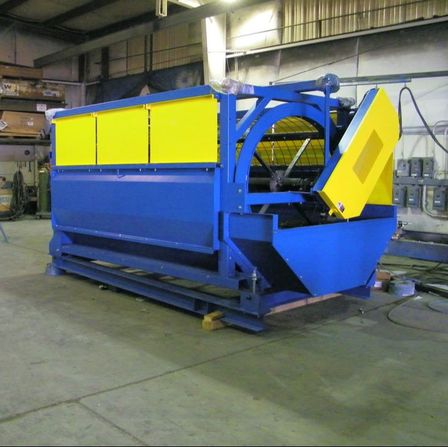
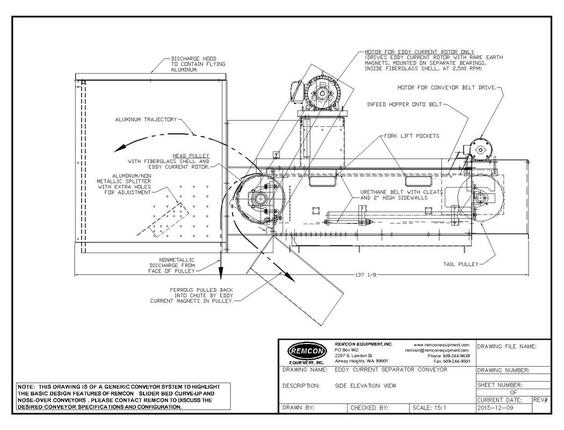
Choose an eddy current separator when aluminum is the target commodity. Spinning rare earth magnets in the head pulley fling aluminum forward into its own chute, draw ferrous back behind the pulley, and let everything else fall to a center chute — one pass, three product streams. It earns its place near the back of the line, after screening and ferrous removal, since aluminum recovery is only as clean as the feed reaching the rotor; and because the Remcon unit is built on a conveyor, it is specified, supported, and installed like the rest of the line.
Overhead Magnetic Separators
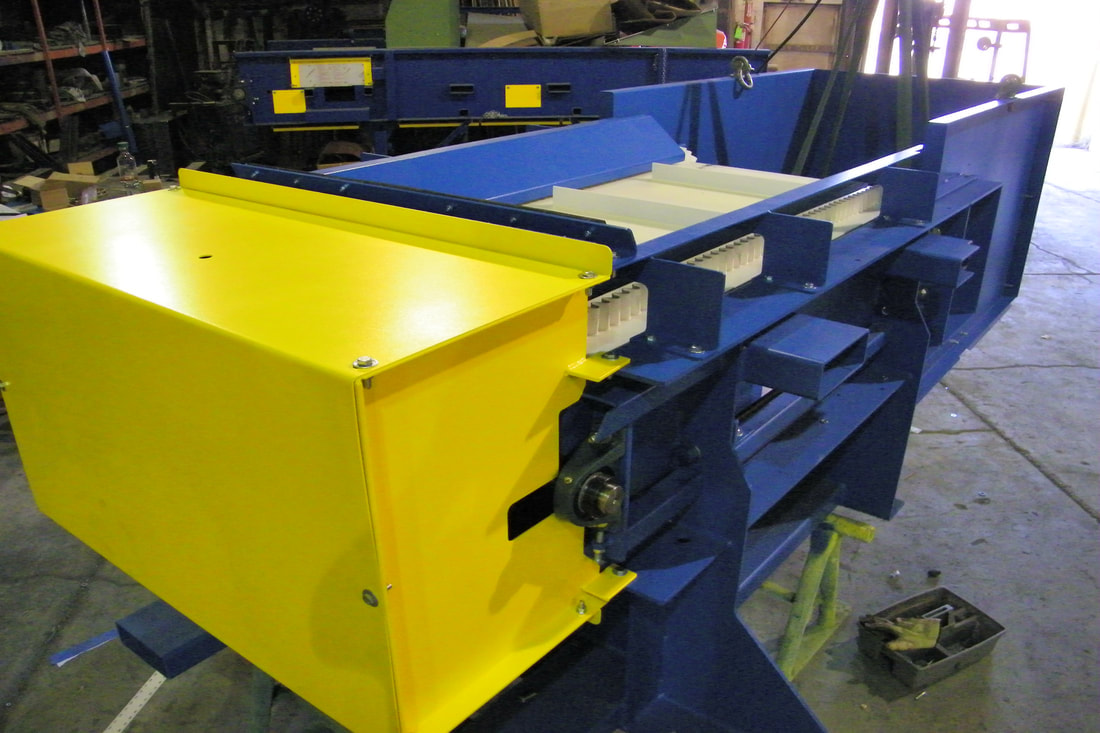
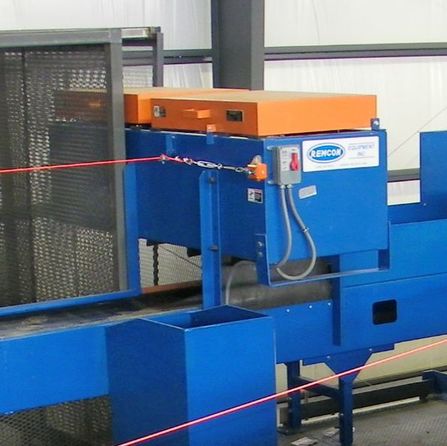
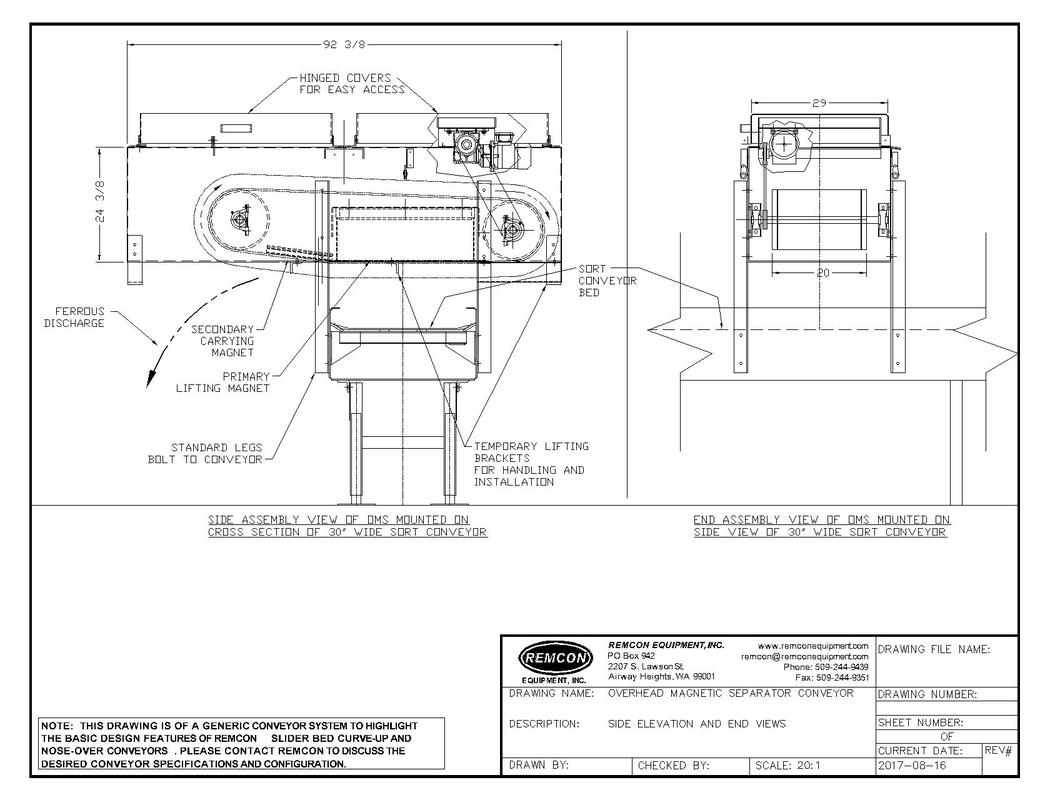
Choose an overhead magnetic separator when there is real ferrous tonnage to move and you want the machine to discharge it on its own. Suspended above the belt in a crossbelt or inline orientation, the OMS pulls steel up through the burden and carries it clear on its own cleated belt — nobody stops the line to pick a magnet clean. It handles bulk ferrous removal upstream of the eddy current, and it can be built with permanent magnets or electromagnets to suit the mounting height and burden depth.
Magnetic Head Pulley
Choose a magnetic head pulley when you want ferrous protection without adding a machine to the floor. It stands in for the standard pulley at a conveyor's discharge end, holding steel to the belt past the drop point and shedding it into a chute underneath — no separate drive, frame, or footprint. It is the usual pick for retrofits, for tight headroom, and as a final check downstream of an overhead magnet.
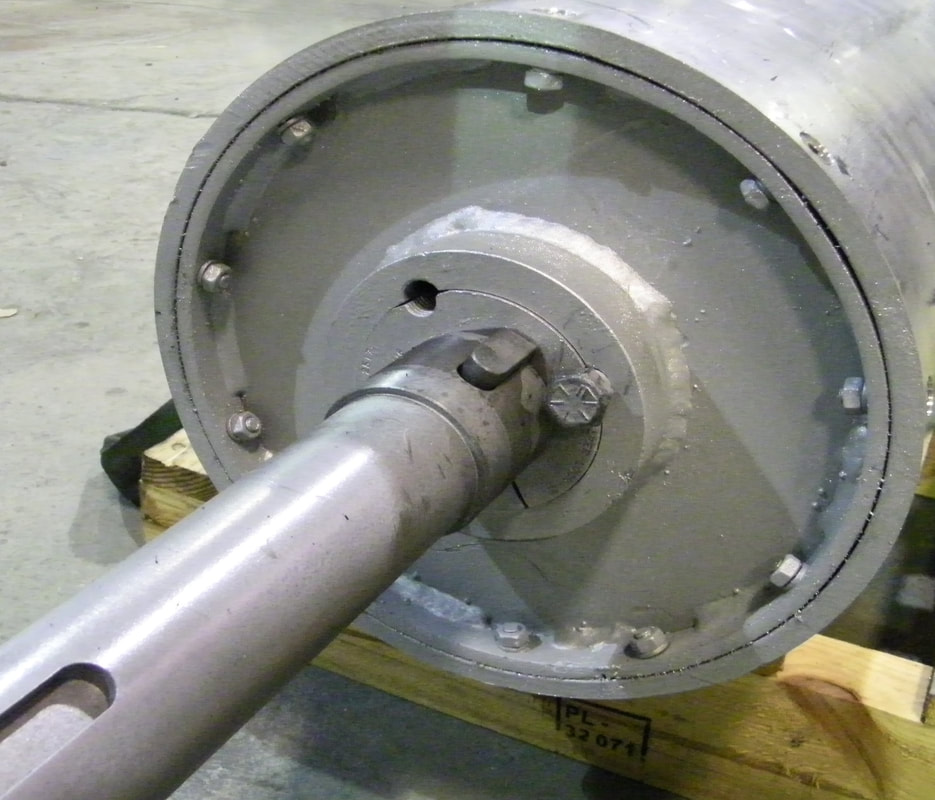
Contact us today to discuss adding a Magnetic Head Pulley to a new or existing conveyor.
Contact us →Screens, Feeders & Dumpers
Choose a disc screen or vibratory screen when the sizing job calls for a machine Remcon sources rather than builds — we buy the screen from the manufacturers who specialize in them and supply the supports, chute work, and conveyors that make it part of a working line. A vibratory feeder is the pick when downstream equipment needs a metered, even feed instead of surges. And when material arrives in totes or bulk boxes, a custom-built dumper is how it gets onto the line in the first place.
Sorting & Separation Equipment FAQ
What equipment removes ferrous metal from recyclables?
Ferrous is removed magnetically, by an overhead magnetic separator, a magnetic head pulley, or both. The overhead unit hangs above the belt and continuously conveys captured steel away, which suits heavier ferrous volume and deeper burdens; the head pulley replaces the conveyor's existing pulley and drops steel into a chute at discharge, which suits retrofits and simpler duty. Many plants run the overhead magnet upstream for the bulk of the steel and a head pulley downstream as a final check.
What removes aluminum cans from a commingled stream?
An eddy current separator removes aluminum from commingled recyclables. Magnets spinning inside its head pulley induce currents in conductive metal that push aluminum forward into its own chute, while the remaining stream drops on a normal path. Whole cans are the classic duty; recovering fine aluminum such as foil or shredded pieces comes down to rotor selection.
What is the difference between a trommel and a disc screen?
Both size material by dimension; they do it with different geometry. A trommel is a rotating drum — material tumbles inside and undersize drops through the screen openings, and one drum can carry several opening sizes for graduated cuts. A disc screen passes material over banks of rotating discs, with undersize falling between them. Remcon builds trommels in-house and sources disc screens, integrating both with the same chute work and conveyors.
Does Remcon build all of this equipment in-house?
Remcon builds most of it and integrates the rest. Trommels, overhead magnetic separators, magnetic head pulleys, dumpers, and the eddy current separator conveyor (built around a purchased rotor) come out of Remcon's own shop; disc screens, vibratory screens, and vibratory feeders are sourced from specialist manufacturers, with Remcon supplying the supports, chutes, and conveyors around them.
What order should separation equipment go in on a sort line?
A common single-stream order is screens first, ferrous second, aluminum last. Sizing equipment up front takes out fiber and off-size material, an overhead magnet then strips the bulk of the steel, and the eddy current separator recovers aluminum near the back of the line where the feed reaching it is cleanest. Every plant differs — describe your stream and Remcon will lay out the machines and the conveyors between them.
How much does sorting and separation equipment cost?
Every machine is quoted to the application rather than priced from a catalog. Cost drivers include the machine type, width and magnet or rotor sizing, permanent versus electromagnetic construction, and the supports, chutes, and conveyors that tie it into the line. Tell us the material and what has to come out of it and we will quote the machine — or the whole line. Call (509) 244-9439.
Building a Sort Line?
A separator only performs as well as the conveyors feeding it — burden depth, belt speed, and metering all set how clean each product stream comes off. Remcon designs the separation equipment and the conveyors around it together, as complete turn-key conveyor systems built around the sorting conveyors your crew works on. The equipment is designed and fabricated at the Airway Heights (Spokane), Washington shop, then shipped and installed nationwide.
Discuss your sort line →