
Remcon can fabricate custom storage bins, bunkers, and hoppers for holding and storing sorted materials until they are needed for baling or other processing. The bins, bunkers, and hoppers can be added to an existing system if more storage is needed, or incorporated into a new system.
The bins, bunkers, and hoppers are built for recycling and processing plants. So the typical contents are sorted commodities. The sorted commodities are polyethylene terephthalate (PET) bottles, aluminum and tin cans, mixed paper, cardboard, film plastic, glass, and general solid waste and construction debris.
What Bins, Bunkers & Hoppers Each Do in a Plant
The three terms are used loosely in the trade, but in a plant layout each has its own job. All of them are surge storage: a place for material to accumulate so the sort line never has to wait for the baler.
Storage Bins
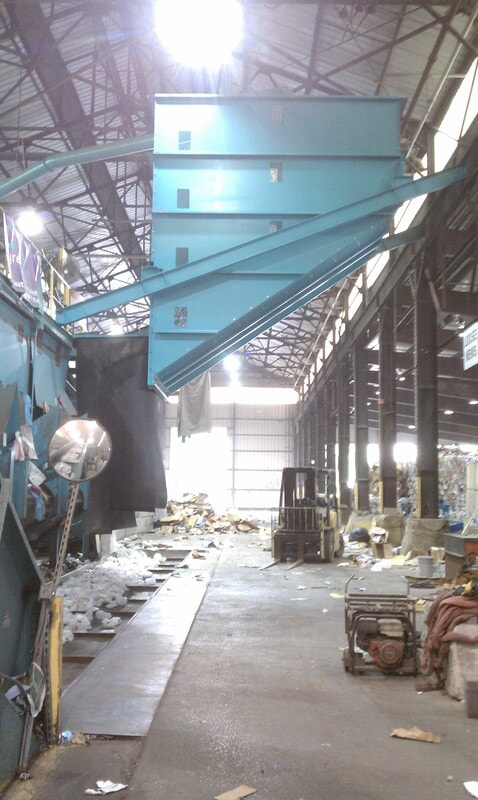
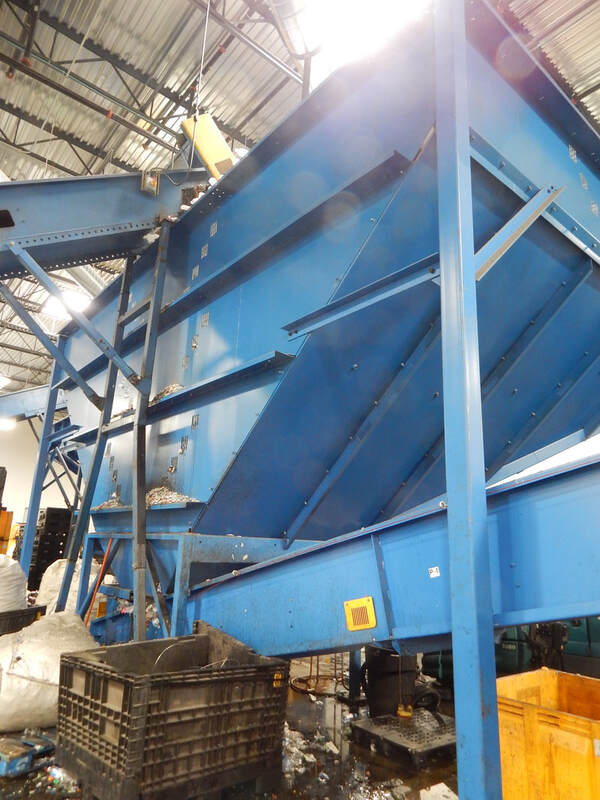
Steel storage bins hold a single sorted material, such as bottles, cans, or paper. The bins hold the material until there is enough of it to justify a baler run or a truckload. Bins can sit on the floor or be elevated on engineered supports. The silo-style bin in FIG. 01 was supported to leave clear drive-thru space underneath it.
Storage Bunkers
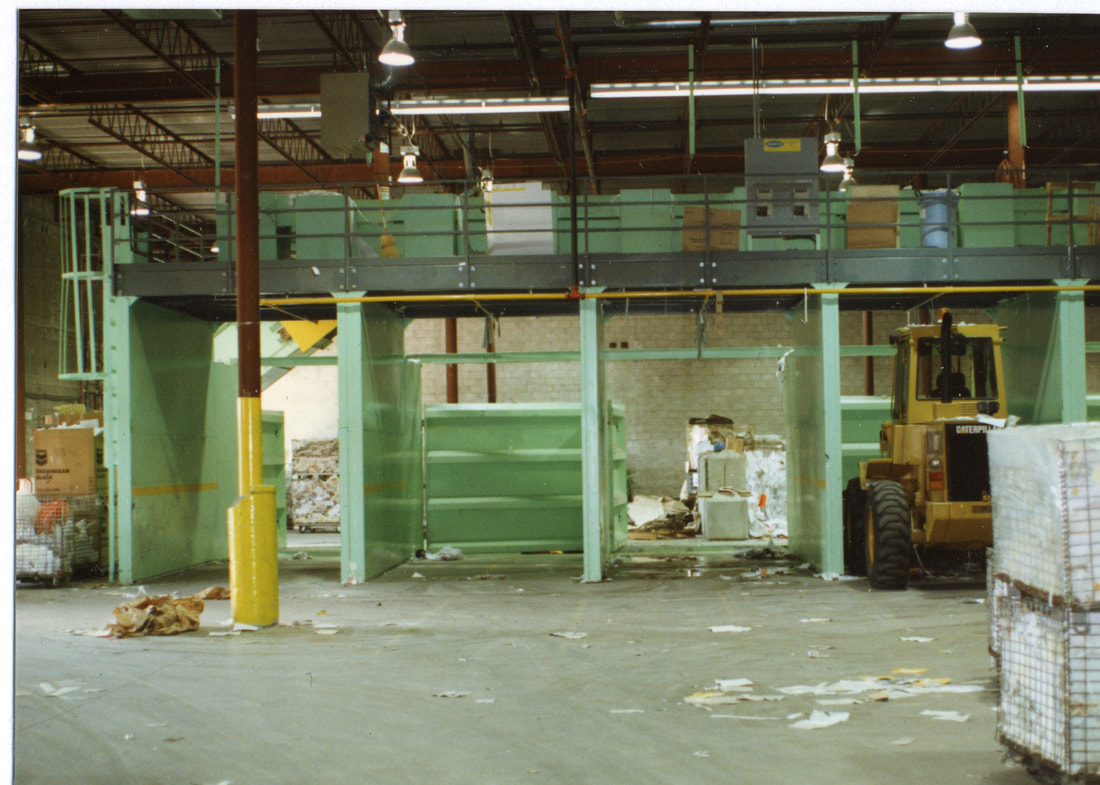
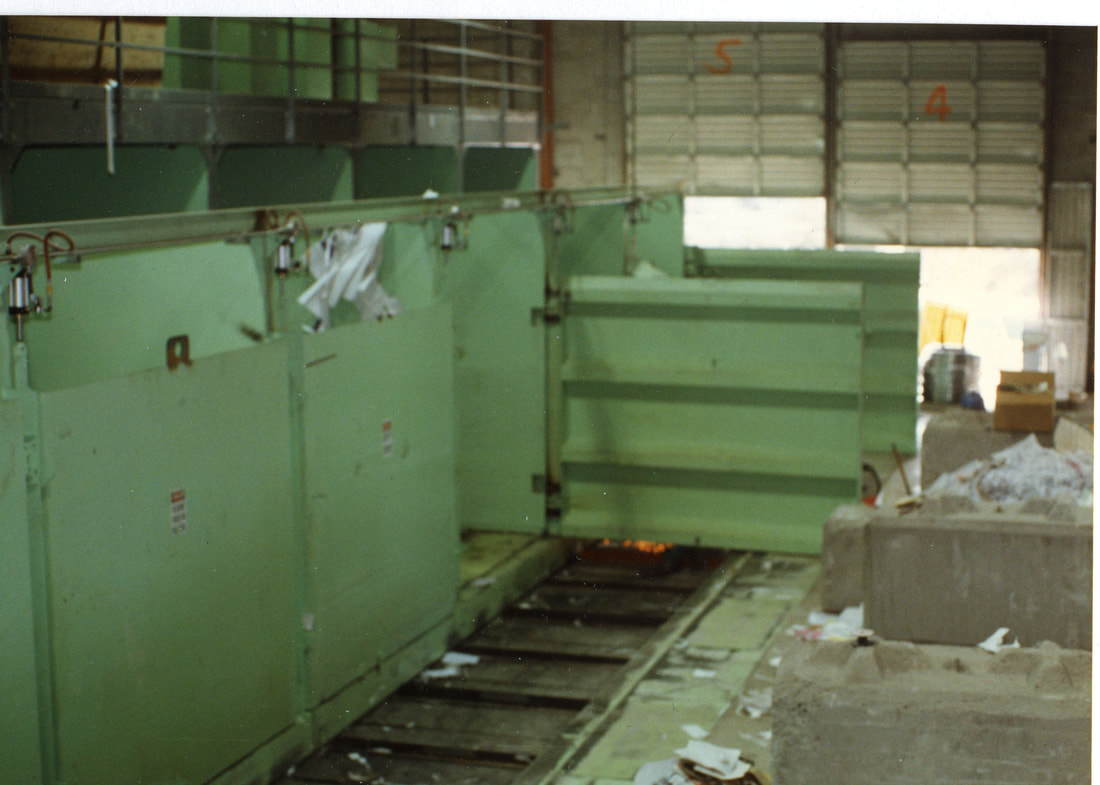
Storage bunkers are floor-level bays built from heavy steel walls. The bunkers are usually open on one side, so a bucket loader can push material in and carry it back out. Under a sort line, bunker walls divide the floor. Each material then drops into its own bay instead of mixing back together. Doors in the walls can open to discharge directly onto an in-ground baler feed conveyor. The walls are structural steel, so they can also be built to carry a sorting platform and conveyor overhead. The same steel does two jobs.
Hoppers
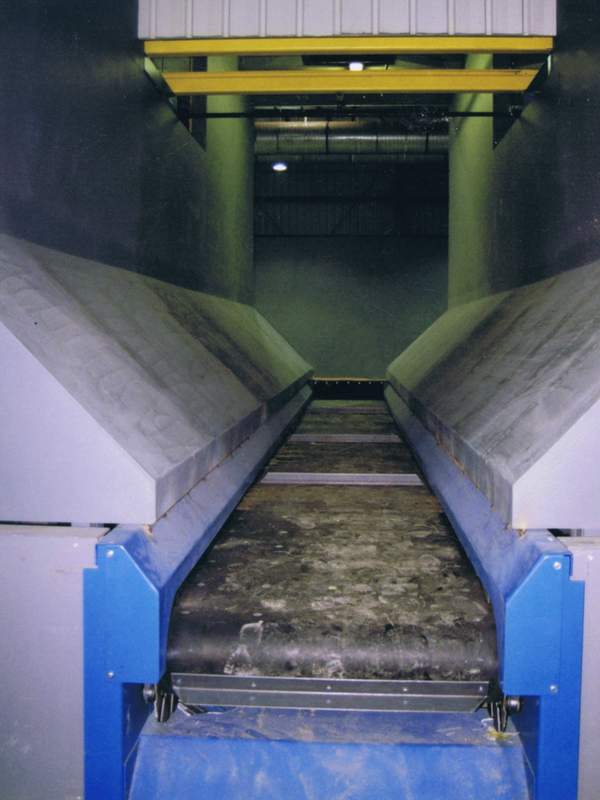
A hopper is a funnel. It has sloped steel sides that converge on an opening, so everything loaded in the top leaves through one controlled discharge point. Custom hoppers are found at both ends of a system. Receiving hoppers catch material from a dumper or loader and center it onto a conveyor. Discharge hoppers direct stored material into a baler, a container, or the next machine.
Options for Storage of Recyclables and Other Materials
There are many options for the design of storage structures. We can work with you to develop the best design that will work with your system.
- Custom live floor bins
- Sloping floor, gravity outfeed
- Self-emptying, walking floor outfeed
- Self-emptying, conveyor outfeed
- Bunker walls and doors, which can also be built to support a sorting platform and conveyor
Sizing & Capacity: Matched to the Material and the Layout
There is no catalog capacity for these structures. Every bin, bunker, and hopper we build is sized to the application and quoted per job. The sizing questions are practical ones. One is what the material is and how it flows. Another is how fast the sort line produces it and how often the baler or the truck takes it away. A third is what the building allows: ceiling height, column spacing, and the turning room a loader needs. The discharge method affects the structure too. A gravity outfeed needs floor slopes steep enough to keep the material moving. A walking floor or conveyor outfeed lets the bin stay long and low.
Getting Material Back Out: Metered Discharge and Feeding
Storage is only half the job. The other half is feeding material out at the rate that the next machine needs. When downstream equipment needs a steady, controlled feed, a live floor bin is the usual answer. A baler is the most common example. The bottom of a live floor bin moves slowly and meters material onto the take-away or baler feed conveyor at a controlled rate. The live floor bin does this in either a walking floor or a conveyor-style design. Sloping-floor gravity bins and bunker doors discharge in batches instead. Batch discharge suits materials handled by loader or dumped a bay at a time. Custom tote & container dumpers sit at the front end of a system. They empty tote bins and bulk boxes into a receiving hopper or onto a conveyor for feeding the sort line.
Materials These Structures Are Built For
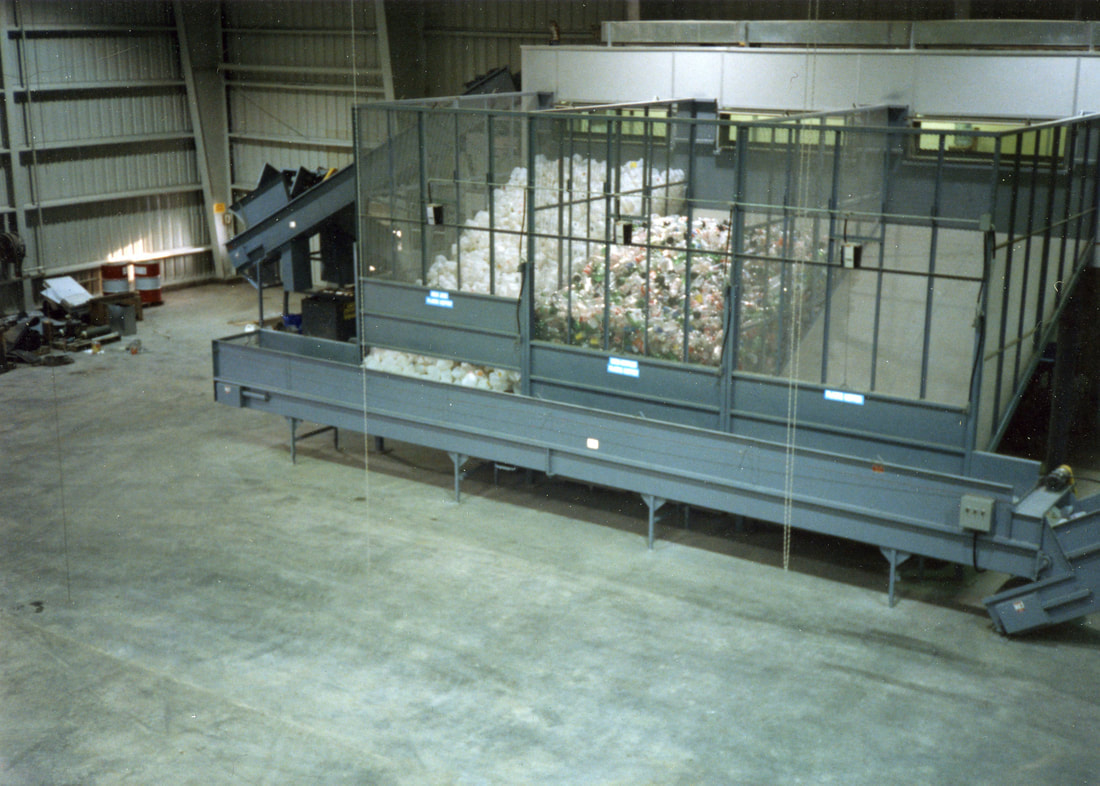
Remcon storage structures serve recycling and processing plants. So the typical contents are sorted commodities. The sorted commodities are PET bottles and aluminum cans (as in FIG. 02), tin cans, mixed paper, cardboard, film plastic, glass, and general solid waste and construction debris. The material determines the design. Light, springy materials need volume more than strength. Dense or abrasive materials need heavier walls and floors. Materials that bridge or pack need steeper slopes or a live floor to keep flowing. So the material list is the first thing we ask for on a quote.
Installation Options from DIY to Let Us Do the Work
Remcon offers custom designed storage bins partially or fully assembled (if feasible) for easy customer installation. We also offer structures that are shop-fabricated in practical sections for shipping. Our experienced installation crew does the custom installation.
About our installation services →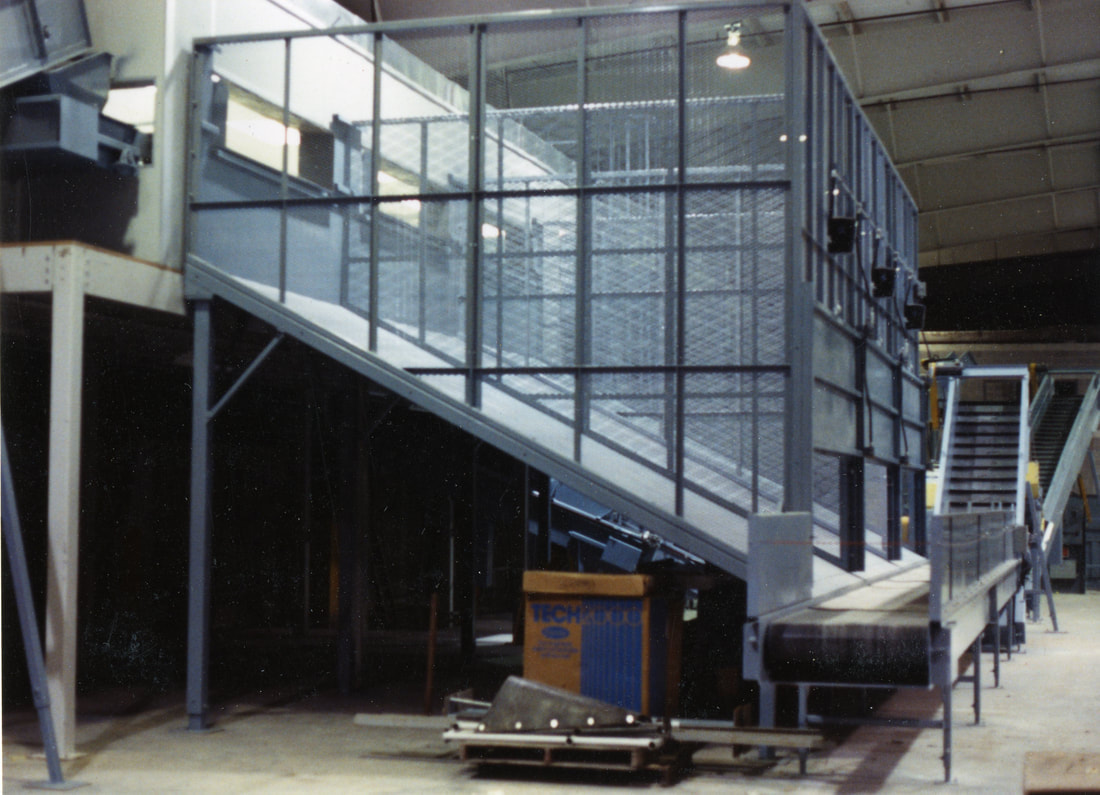
Storage Bins, Bunkers & Hoppers FAQ
What is the difference between a storage bin, a bunker, and a hopper?
A storage bin is an enclosed steel container that holds one sorted material until it is baled or shipped. A bunker is floor-level storage built from heavy steel walls, usually loader-accessible from one side. A hopper is a funnel that channels material down to one controlled discharge opening. Many real structures combine them. Examples are a bin with a hoppered bottom, or bunker walls with discharge doors.
How much material can a Remcon storage bin hold?
There is no standard capacity. Every bin, bunker, and hopper is custom-sized to the material and the layout, and quoted per job. Sizing depends on how fast the sort line fills the storage and how often it is emptied. Sizing also depends on what the height, columns, and loader access of the building allow.
How does material get out of a storage bin or bunker?
There are three ways. The first is gravity outfeed through a sloping floor. The second is doors that open to discharge onto a conveyor. The third is a self-emptying live floor, in a walking floor or conveyor-style design, that meters material out at a controlled rate. The right choice depends on whether the next machine needs a steady feed or a batch.
Does Remcon install storage bins and bunkers nationwide?
Yes. Structures are shop-fabricated in practical sections for shipping. Our experienced crews install them anywhere in the country. Another option is to supply them partially or fully assembled, where feasible, for customer installation.
We design and fabricate every bin, bunker, and hopper at our Airway Heights (Spokane), Washington shop, and each is then shipped and installed nationwide.
We specialize in custom designed and fabricated equipment. We can work with you to design equipment that will work well for your needs. Contact us to discuss options or to get a quote.
Contact us for more information →