
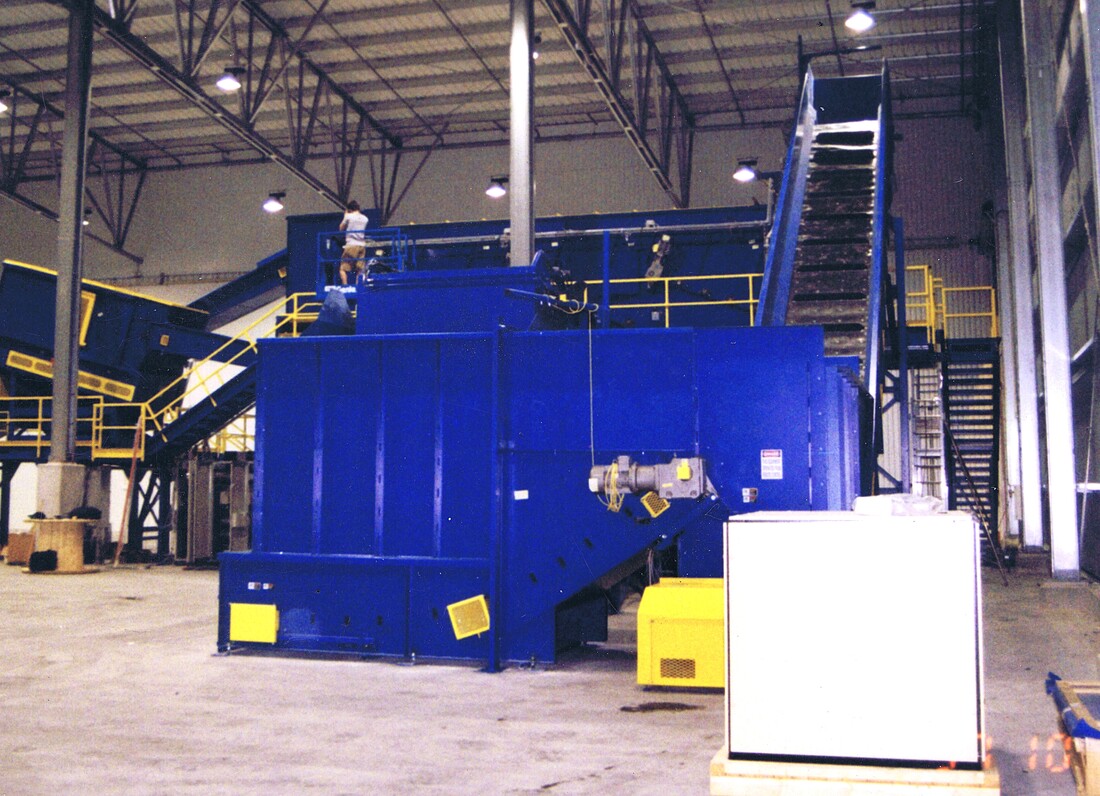
A live floor bin is typically used to store material and meter it onto a conveyor system or baler feed conveyor. A bucket loader, a conveyor, or other machinery loads material into the bin. The bottom of the bin is "live". "Live" means that the bottom moves slowly to discharge a controlled amount of material out of the end of the bin.
Remcon Equipment provides efficient live floor bins in both walking floor and conveyor-style designs, suited to a wide range of bulk materials. Our live floor bins offer the flexibility and performance to meet your material handling needs across various industries. The bins give this flexibility and performance whether you need continuous, controlled feeding or smooth unloading.
Live Bottom Bins
Live floor bins are also called live bottom bins. The two terms describe the same machine, and the trade uses them interchangeably. Whichever name your industry uses, the defining feature is the same. The bottom of the bin is a moving surface, not static steel. So the bin empties itself at a controlled rate. The bin does not depend on gravity or a loader operator. If you have been quoted a live bottom bin elsewhere, the walking floor and conveyor-style designs below are the same class of equipment.
Walking Live Floor Bins
Walking live floor bins use a series of hydraulically operated slats. The slats move forward and backward to "walk" material toward the discharge point. This system is ideal for handling heavy, bulky materials such as waste, recyclables, and construction debris. The walking floor design offers reliable and even material flow without the risk of jamming or clogging.
Benefits of Walking Live Floor Bins
- Non-stop material flow: ideal for high-volume operations where consistent material movement is essential.
- Durability: heavy-duty construction to handle tough materials in challenging environments.
- Low maintenance: simple design with fewer moving parts, which reduces wear and tear.
Conveyor-Style Live Bins
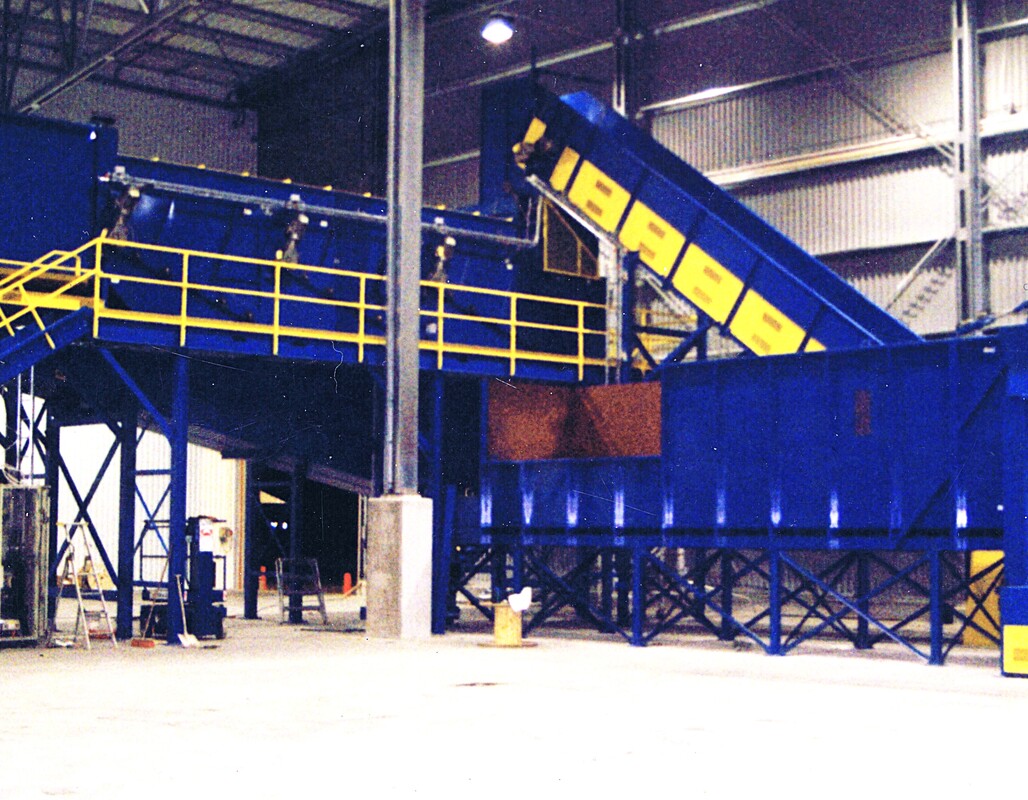
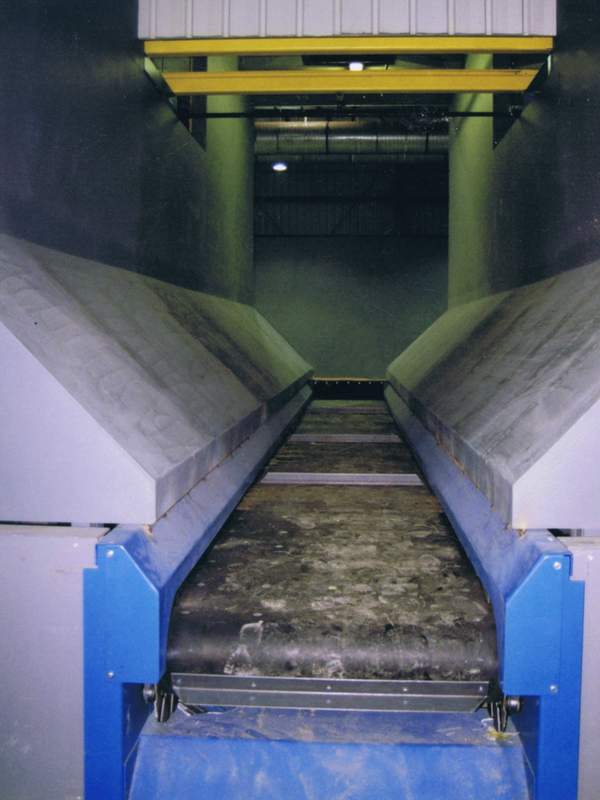
Our conveyor-style live floor bins use a chain or belt conveyor system to move material steadily to downstream processes or discharge points. The conveyor-style bin is a lower-cost alternative to the walking floor design and is effective for medium to more lightweight materials. Examples are paper, recycled containers, biomass, agricultural products, and other medium to finely sized bulk items. Conveyor-style bins offer controlled, adjustable flow to fit a variety of production needs.
The floor conveyor can be a combination drag chain belt. For a wide bin or a heavy load, it can be a roller chain belt conveyor. In a roller chain belt conveyor, the chain rolls on rails instead of sliding. One Remcon drawing of that arrangement shows a 72" wide roller chain belt that runs the length of a storage bunker as its floor. The belt drops into a short pit section at the discharge end. The drawing also shows a tail-drive option.
Roller chain belt conveyor in a live floor bin (PDF) →Benefits of Conveyor-Style Live Bins
- Precise control: adjustable conveyor speed allows for customized material flow based on your specific needs.
- Range of materials: can handle many types of material.
- Efficient material movement: prevents blockages or material buildup, ensuring continuous operation.
Walking Floor vs. Chain-Belt: Choosing a Style
Both styles do the same job. They store material, then move it out the discharge end at a controlled rate. The choice depends on the material and the budget.
| Factor | Walking floor | Conveyor-style (chain-belt) |
|---|---|---|
| Moving floor | Hydraulically operated slats that walk material toward the discharge | Chain or belt conveyor forms the bin floor and discharge |
| Best for | Heavy, bulky material: waste, recyclables, construction debris | Medium to lightweight material: paper, recycled containers, biomass, agricultural products |
| Flow character | Reliable, even flow without jamming or clogging | Adjustable conveyor speed for precise, controlled metering |
| Relative cost | Higher: hydraulic slat floor | Lower-cost alternative to the walking floor design |
| Capacity | Sized to the application, quoted per job | Sized to the application, quoted per job |
If you are not sure which style fits, tell us the material and how the bin will be loaded. If the lower-cost chain belt design can do the job, we will tell you.
Metering Bins for MRF and Recycling Infeed
In materials recovery facilities (MRFs) and recycling plants, this machine often has a third name: the metering bin. The name describes the job. A bucket loader dumps material in surges: a full bucket in seconds, then nothing while the loader turns around. The downstream equipment needs the opposite: a steady, controlled flow that it can process continuously. A metering bin sits between the two and absorbs the surges. It discharges material at whatever rate the floor is set to run.
The most common arrangement is a metering bin that feeds a baler feed conveyor. The bin buffers the loader's deliveries while the conveyor delivers a steady charge to the baler. The same pattern works ahead of a sort line. There, the bin meters material onto an infeed conveyor, so sorters and downstream machinery receive an even stream of material, not piles and gaps. If you speed up or slow down the floor, the discharge rate changes with it. Controlled flow is the purpose of the metering bin.
Options for Elevated Discharge Heights
Our low-profile elbow-up conveyors can be used as the outfeed for live floor bins. The low profile of the horizontal infeed portion of this conveyor allows the bin height to be reduced by as much as 3 feet. The elbow-up portion of the conveyor provides an elevated discharge height to feed any downstream equipment without the need for an additional inclined conveyor.
Remcon live floor bins can be equipped with low-profile, heavy-duty elbow-up conveyors. Low-profile means less than 14" from the floor. At the outfeed end of the bin, the conveyors rise at an angle as steep as 35 degrees to heights of more than 20 feet.
Elbow-up slider bed conveyors →Live Floor Bin FAQ
What is a live floor bin?
A live floor bin is a storage bin whose floor moves to discharge a controlled amount of material out the end of the bin. The floor is made of hydraulically operated walking slats or a chain belt conveyor. The bin stores surge loads from a bucket loader or conveyor and meters them onto downstream equipment at a steady, adjustable rate.
Are live floor bins and live bottom bins the same thing?
Yes. Live floor bin and live bottom bin are two names for the same machine. A live floor bin is a storage bin with a moving bottom that discharges material at a controlled rate. In MRFs and recycling plants, the same equipment is also called a metering bin. The name comes from the job the bin does.
How does a live floor bin meter material onto a conveyor?
The floor moves slowly toward the discharge end and carries the stored material with it. So material leaves the bin at the rate that the floor moves, not all at once. Adjusting the floor speed adjusts the discharge rate. The bin gives the conveyor a steady, controlled flow instead of the surges that a bucket loader delivers.
Walking floor or chain belt conveyor style: which do I need?
For heavy, bulky material such as waste, recyclables, and construction debris, choose a walking floor bin. The hydraulically operated slats move dense loads without jamming. For medium to lightweight material such as paper, recycled containers, biomass, and agricultural products, choose the conveyor-style chain belt bin as a lower-cost alternative. Remcon builds both and will recommend the style that fits your material and budget.
What are live floor bins typically used for?
The most common use is storing and metering material onto a conveyor. This conveyor is typically a baler feed conveyor or the infeed conveyor of a sort line at an MRF or recycling plant. The bin buffers loads from a bucket loader or upstream conveyor and discharges them at a controlled rate. So downstream equipment is fed steadily, not in surges.
Can the floor of a live floor bin be a roller chain belt conveyor?
Yes. Conveyor-style live floor bins use a combination drag chain belt or a roller chain belt conveyor as the moving floor. A roller chain belt suits a wide bin or a heavy load because the chain rolls on rails instead of sliding. One Remcon drawing of that arrangement shows a 72" wide roller chain belt that runs the length of a storage bunker as its floor. The belt drops into a short pit section at the discharge end. The drawing also shows a tail-drive option.
Custom Designed for Your Line
We specialize in custom designed and fabricated equipment, and we can work with you to design a system that will work well for your needs. We design and fabricate every live floor bin at our Airway Heights (Spokane), Washington shop, then ship and install it nationwide. Contact us to discuss options or to get a quote.
Custom Live Floor Bins
Our live floor bins, whether walking floor or conveyor-style, are fully customizable to fit your specific application. We tailor the size, flow rate, and material-handling features to match the demands of your operation. A bin tailored to your operation ensures maximum efficiency and performance.
Get a quote for a live floor bin →