
What "Turn-Key" Actually Means on a Conveyor System
Turnkey is a delivery model, not a product. One provider takes responsibility for every phase needed to bring the thing into operation and hands it over ready to run, so the buyer has a single point of responsibility instead of a list of suppliers. That is what the word means on a construction or industrial project, and it is how Remcon works.
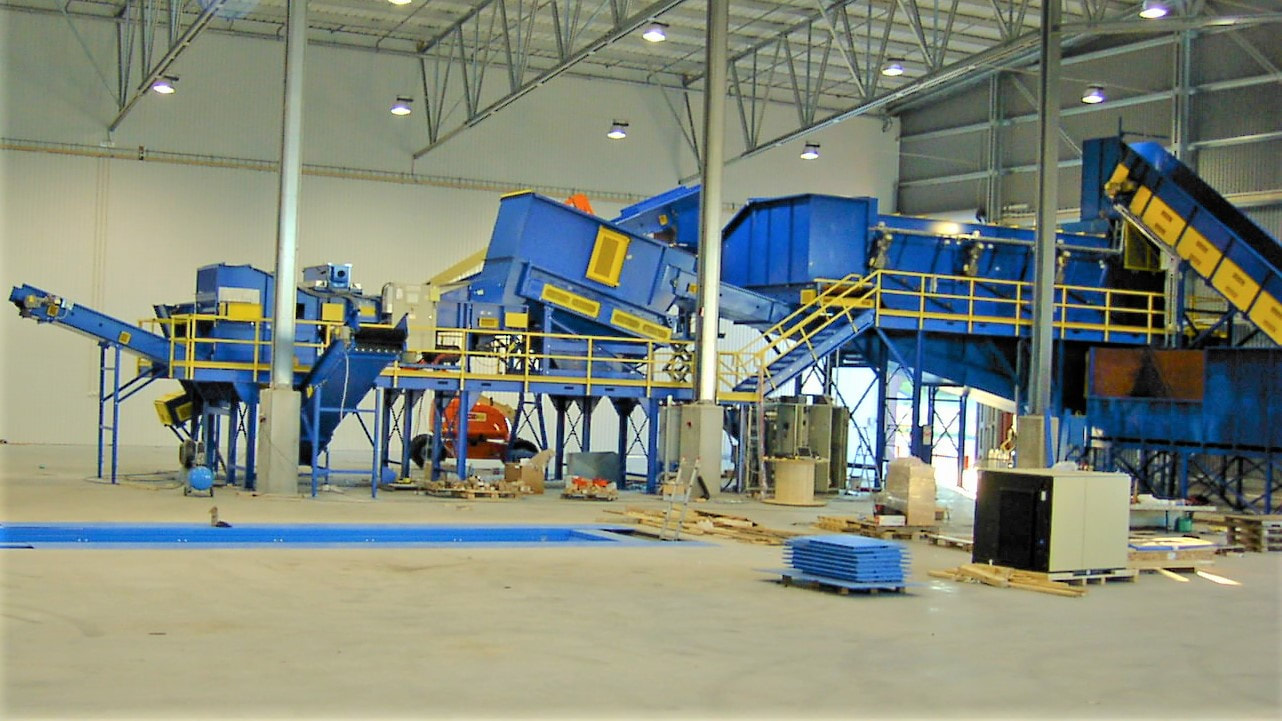
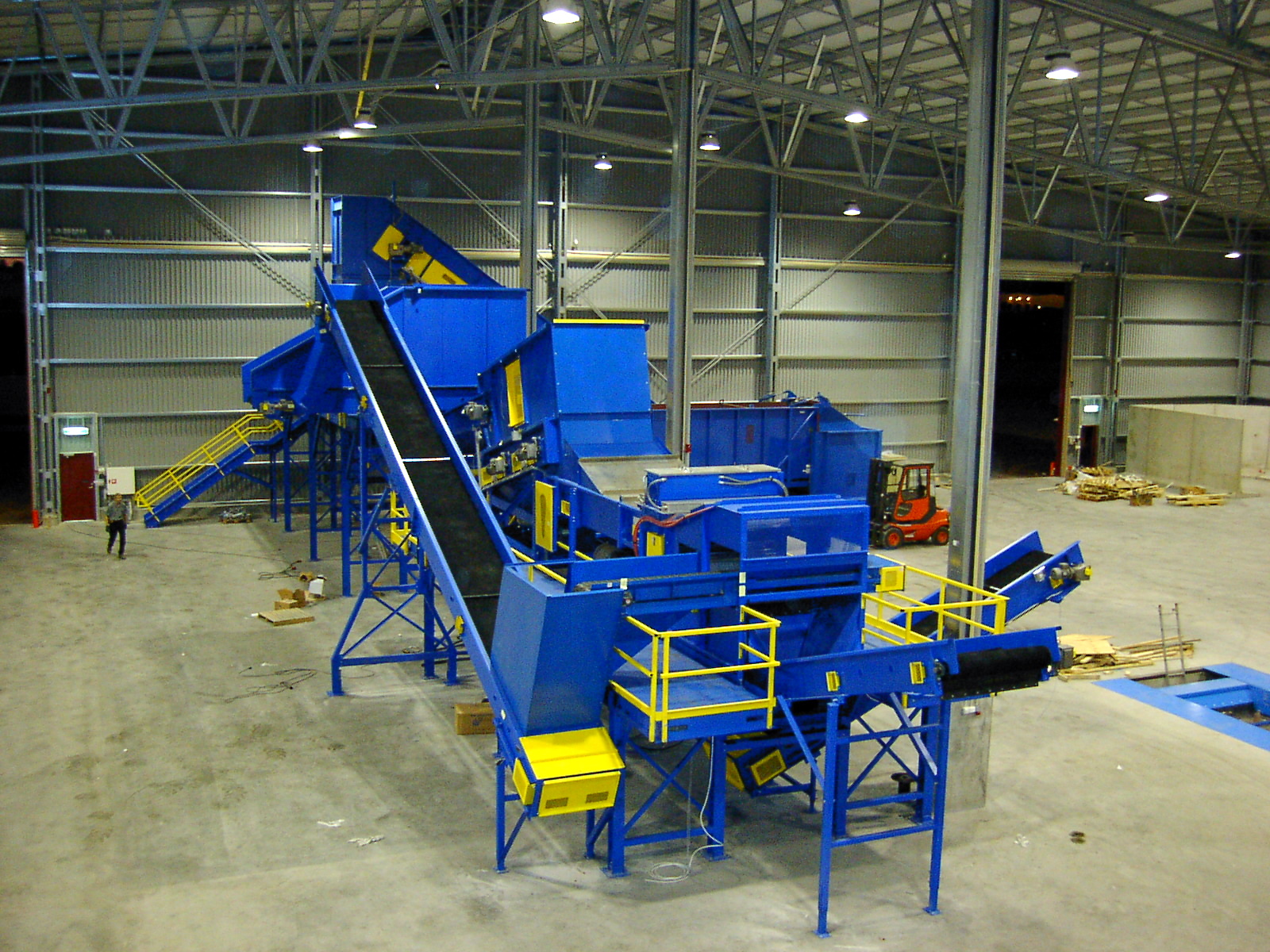
On a conveyor system the scope covers four things: design, fabrication, shipping, and installation. We lay out the line, engineer the equipment, write the control logic, build the steel, hire the haulers and design the loads, and send our own crew to erect it in your plant.
What turn-key does not mean is that every piece is welded in Airway Heights. Remcon's specialty is conveyors and their related products. Where a line needs a shredder, a walking floor, a modular roller section, or a disc screen, we buy the machine from the manufacturer that builds it best and integrate it into the system. The equipment comes from more than one place. The accountability does not.
What a Complete System Includes
Ask for a conveyor system and much of what arrives is not conveyor. A complete Remcon line is built out of five parts.
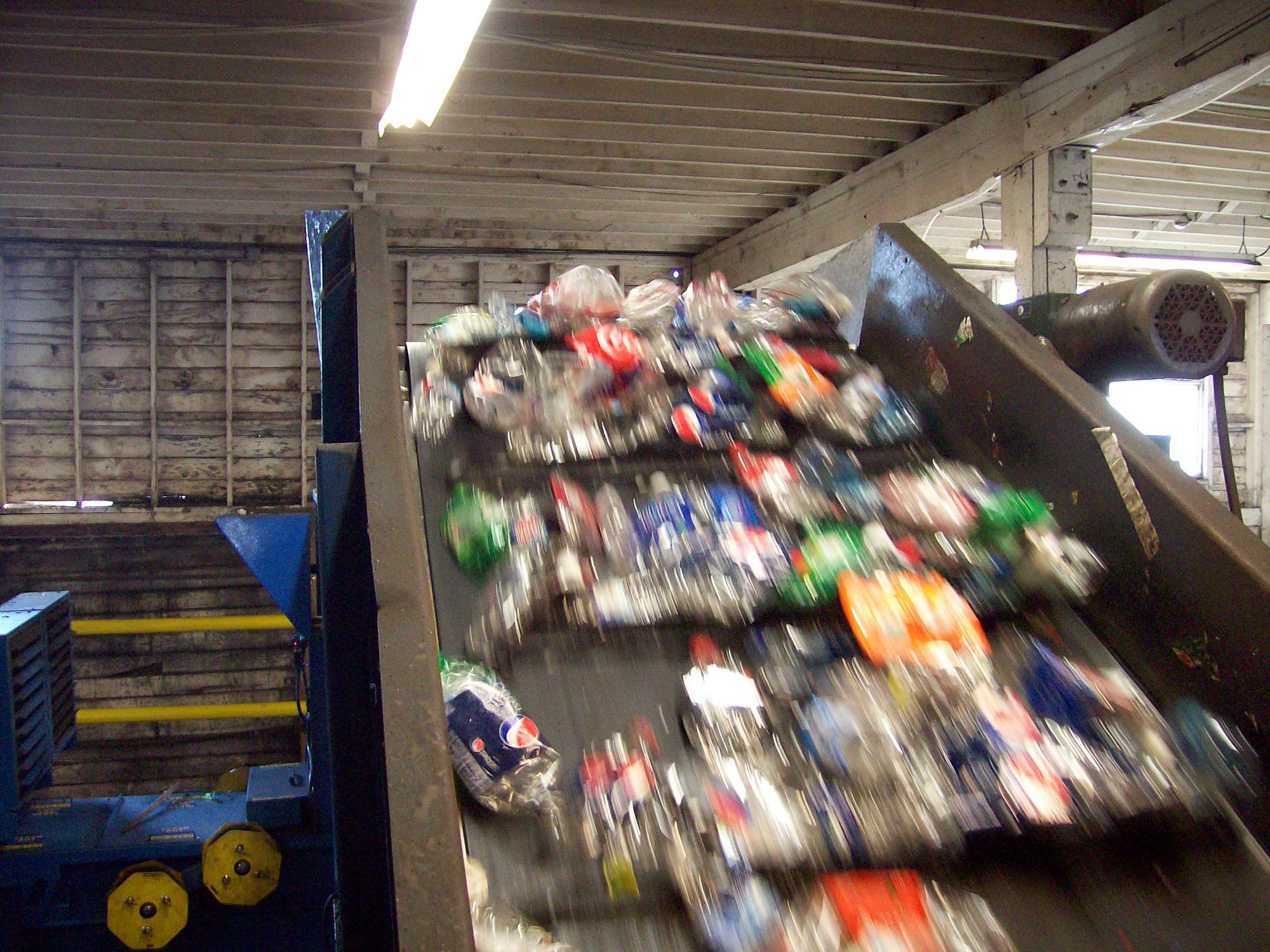
- Conveyors — the moving spine of the plant: infeed and sort line feed runs, sorting conveyors, transfers, shuttles, and baler feed, in slider bed, chain, roller chain belt, troughing idler, and elbow-up construction. Belts run 12 to 72 inches wide.
- Sorting & separation — trommels, disc screens, vibratory screens, eddy current separators, overhead magnets, and magnetic head pulleys, plus the high-speed conveyors and containment hoods that optical sorting equipment needs.
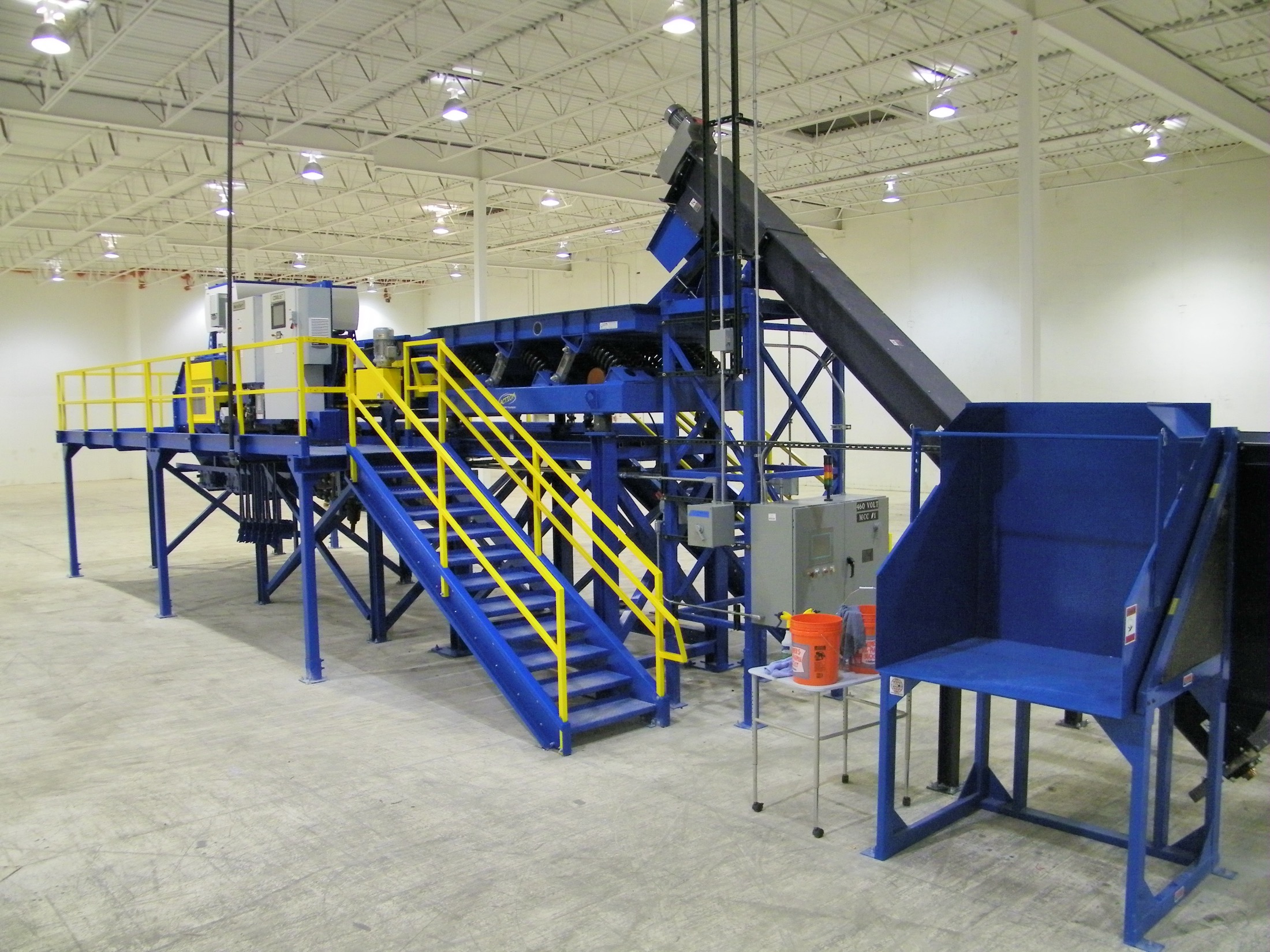
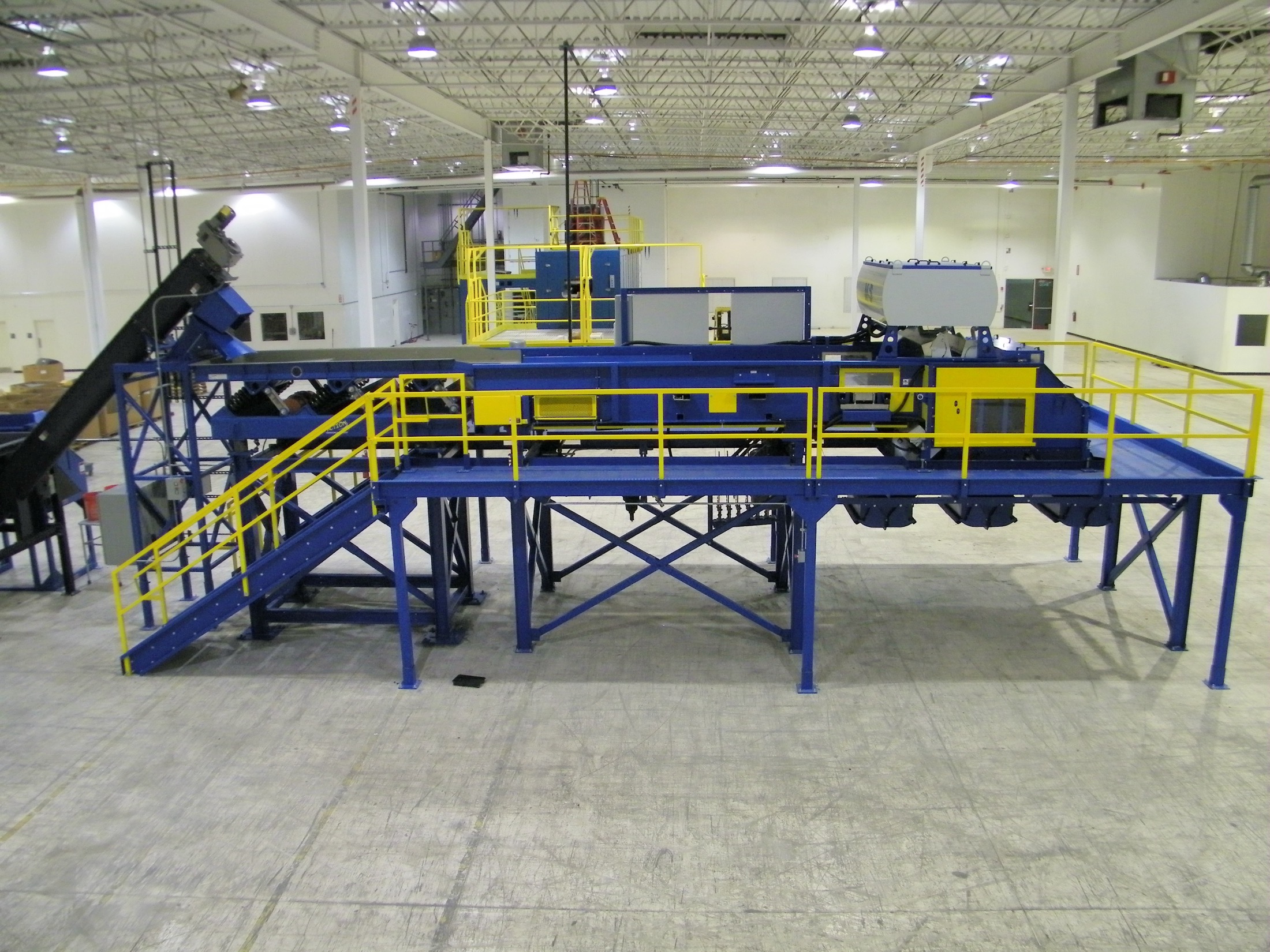
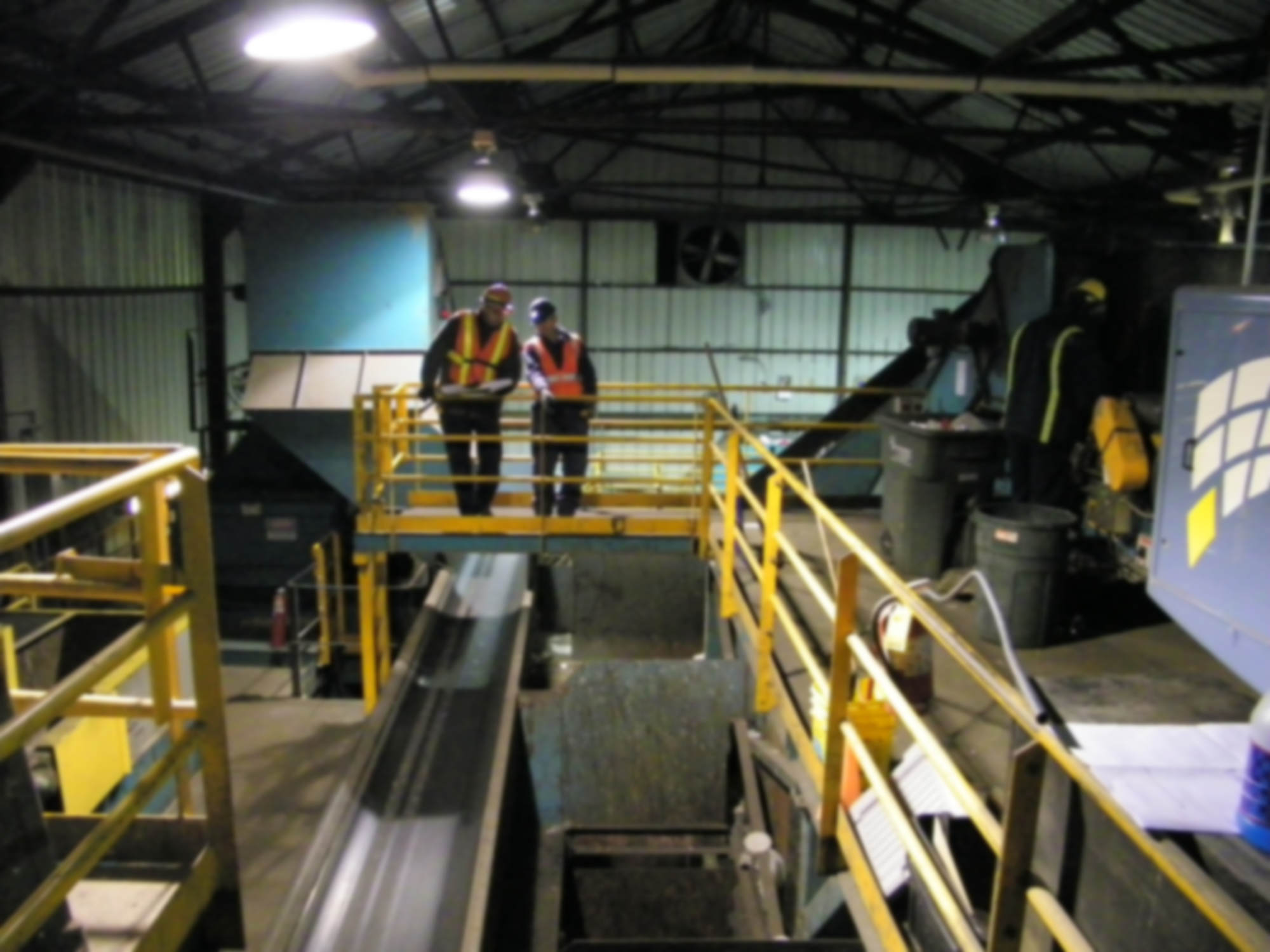
- Platforms & catwalks — sort platforms, maintenance catwalks, guardrail, stairs, and ladders. Guardrail is not trim: OSHA's general industry rule puts the top rail 42 inches above the walking surface, plus or minus 3 inches, and requires the system to withstand a 200-pound force applied downward or outward within 2 inches of the top edge.
- Bins, bunkers & hoppers — surge and storage: bunker walls, storage hoppers, live floor bins, and self-emptying bins with take-away conveyors.
- Everything between them — support structure, chutework and transitions, and the electrical controls.
That last one is what gets underestimated. Chutework carries material out of one manufacturer's machine and into the next, and it is nobody's catalog item; it gets drawn for the specific pair of machines it sits between. Support structure has to hold equipment at the working heights the layout needs and still leave a forklift a way through. And the controls have to run all of it as one machine.
The controls are specified for the line as a whole, and the panel itself goes to a UL listed panel shop. That phrase means something specific: a shop UL has authorized, after training and with a qualified technical representative on staff, to build industrial control panels to the UL 508A standard and apply the UL Mark to them, with follow-up factory inspections to confirm it keeps doing so. It is worth asking any vendor whether the panel in their number carries that mark.
Scope, Shipping, and What Happens After Startup
Design, controls, fabrication, coordination, shipping, and installation are the stages of the job. Three parts of it are worth spelling out.
- What to send before anyone quotes. What the material is, how much of it, what the building will allow, and which existing equipment stays. Photographs and a floor plan are usually enough to start. Everything is built to order and quoted per job, so this conversation is where the price comes from.
- Shipping, which is a design constraint and not a last step. The federal width limit on the National Network is 102 inches, or 8 feet 6 inches, and anything wider moves as an oversize load on permits issued state by state. That is why platforms and catwalks get shop-fabricated in practical sections for shipping, and why where a long run gets split is settled on the drawing rather than on the loading dock.
- What happens after startup. Remcon trains plant maintenance crews in the maintenance procedures specific to each machine, and can supervise or perform the more specialized ones later. Replacement parts come from the same shop for the life of the machine, and so do repair, refurbishing, and belt replacement.
The guide on how to buy a conveyor covers what to ask for and which quotes to distrust.
Turn-Key vs. Buying the Equipment Piecemeal
The alternative to a turn-key system is buying the pieces separately: conveyors from one supplier, screens from another, structure from a steel fabricator, controls from an integrator, and installation from a local contractor. That is a legitimate way to build a plant, and for a small addition it is often the right one. What changes as the system gets larger is who owns the space between the pieces.
Nothing in a processing line works alone. The discharge height of one machine is the infeed height of the next, and the chute between them belongs to neither purchase order until somebody says so.
| Factor | One turn-key vendor | Several vendors, bought separately |
|---|---|---|
| Layout | One party lays out the whole line and owns the elevations | Each supplier designs to its own scope; reconciling them falls to the buyer |
| Chutework and transitions | Drawn as part of the system, for the machines they sit between | Belong to no purchase order unless a scope names them |
| Drawings | One set, checked against each other before anything is cut | Separate sets on separate schedules; conflicts surface later |
| Controls | One operating logic covering the whole line | Interlocks between different makers' machines still have to be specified by someone |
| Shipping | Loads designed and sequenced to match the install order | Separate shipments, separate arrival dates, separate unloading |
| Installation | A crew that already knows the equipment, on one schedule | Coordinated by the buyer or a general contractor across trades |
| When it does not run right | One number to call | Diagnosis first, then a conversation about whose part it is |
| Later changes and parts | Parts and later changes come from the shop that built it | Depends what each supplier still stocks and still supports |
Remcon has worked both sides of that line, managing whole turn-key systems and supplying one part of somebody else's. Either is workable. It is worth deciding which one you are buying before steel is ordered, because interfaces are cheap to settle on a drawing and expensive to settle in a finished building.
How to Compare Turn-Key Firms on a Conveyor Plant
Every firm that will quote a conveyor-based plant calls itself turn-key. The word is not regulated, and the scopes behind it are not the same size. Four questions sort them, and they are worth asking before the quotes come back, while the answers can still be laid side by side.
- Where does their turn-key stop? Get the boundary in writing. Does the number carry the support structure, the platforms and guardrail, the chutework between machines, the control panel, the freight, and the erection? A quote that covers the machines and leaves the rest “by others” is a shorter number, not a turn-key one, and the difference shows up later as change orders.
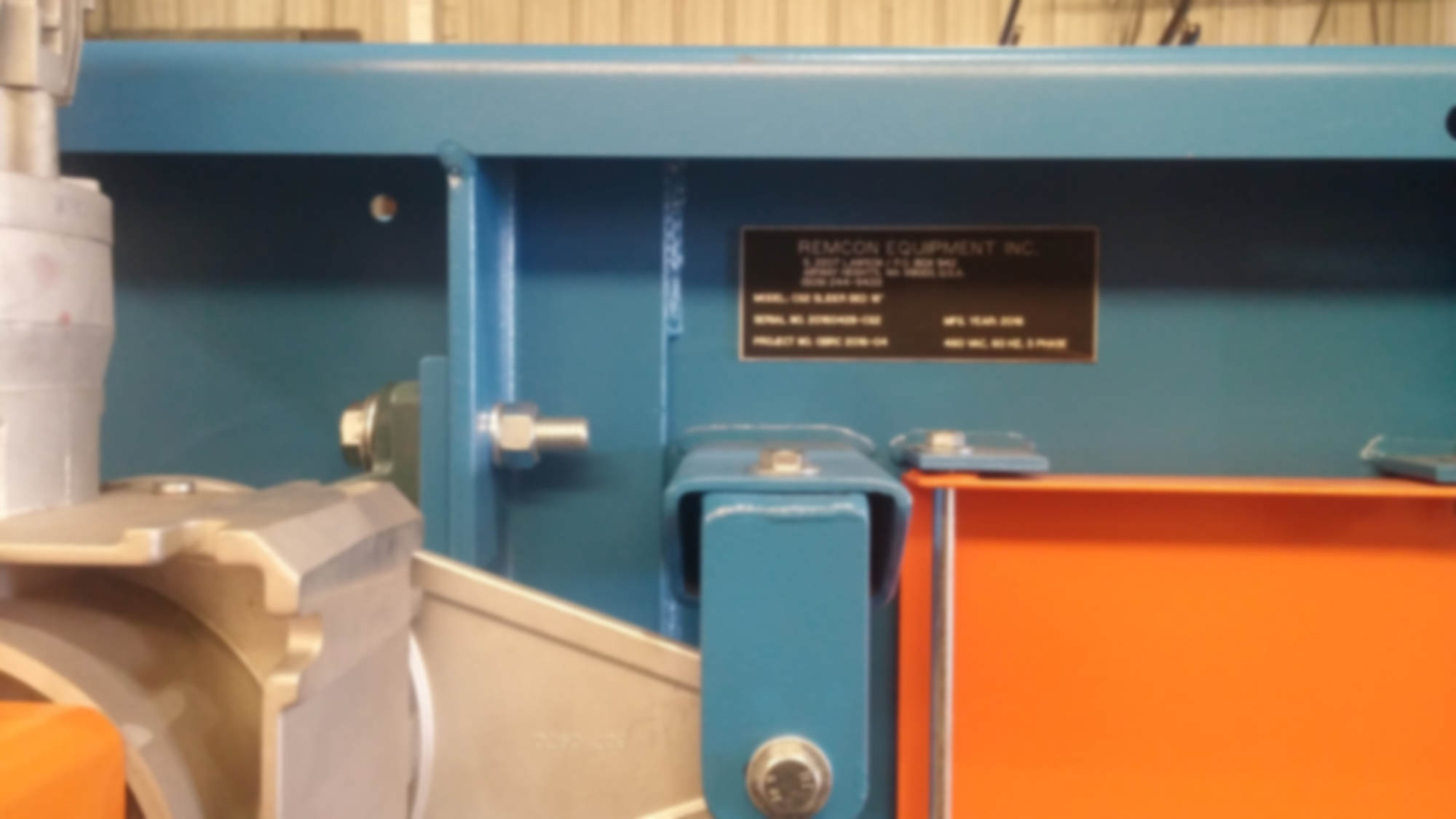
- What do they build, and what do they buy? A firm that claims to manufacture every machine in a modern MRF is either enormous or being loose with you. The useful answer is a specific one: here is what we fabricate, here is what we buy and integrate, and here is who makes it. Remcon fabricates conveyors and their related products — support structure, platforms and catwalks, chutework, bins, and hoppers — and names the manufacturer behind everything else.
- Whose crew erects it? A shop that fabricates but subcontracts erection is selling coordination rather than accountability. Ask who employs the crew, how many of them there will be, and whether they have put up this equipment before. Remcon's crews work for the shop that designed and built the steel.
- What happens in year ten? The machine outlives the project. Ask who trains the maintenance crew at startup, where a replacement belt or pulley comes from once the job is closed out, and who to call for a later change to the line. Remcon: the same shop, for the life of the machine.
Track record is the fifth question and the hardest one to dress up. Remcon has been building this equipment since 1977 and has produced more than 1,500 complete systems, including more than 150 high-speed optical sorting conveyors.
Turn-Key Conveyor Installation, Nationwide
A system is not finished when it ships. The crew that erects it works for the shop that designed and built it, which is the part of turn-key that is hardest to buy any other way.
There is one shop, at 2207 S. Lawson St. in Airway Heights, Washington, outside Spokane, and crews travel from there to the job. Distance from Spokane changes the travel and freight arrangements, not whether the work gets done: low overhead is what makes that work, and crews go to practically anywhere in the United States and Canada. Remcon has also completed projects in Europe, Canada, Sweden, and Australia.
Crews run 2 to 4 people. That size has proven the most efficient use of time and resources, and a small crew also means less disruption in plants that have to keep running while the work goes on. Where a changeover forces downtime, the shutdown gets planned in advance rather than discovered on site — on a retrofit across three facilities in two states, Remcon installed around production wherever it could and scheduled the shutdowns needed to cut over from the old system. We will often ask about borrowing your forklift rather than renting one, to hold the installed cost down, but the crew arrives fully equipped with the tools the job needs.
Remcon has filled about every role there is on an installation: one crew member working alongside a plant maintenance crew on a belt replacement, supervision of an install done with customer-supplied workers, the conveyor installer hired by a general contractor on a new building, and full management of a turn-key recycling system installation. On new construction that last distinction matters, because the general contractor holds the schedule and the conveyor scope has to land inside it.
More on field work: installation services, including past projects, and repair, refurbishing, belt replacement, and system moves. To start a system, request a quote or call (509) 244-9439.
Turn-Key Conveyor System FAQ
What is a turn-key conveyor system?
A turn-key conveyor system is a complete material handling line delivered by one provider and handed over ready to run: all the conveyors, structures, equipment, and accessories the application needs, designed, fabricated, shipped, and installed by one shop. The point is single vendor accountability. Concretely, that means one party owns the layout and the elevations, the chutework between machines, the control logic, the freight, and the erection, so the buyer is not left reconciling suppliers. Remcon has produced more than 1,500 complete systems since 1977.
Does Remcon do turn-key conveyor installation outside the Northwest?
Yes. Remcon fabricates in Airway Heights, Washington, near Spokane, and ships and installs nationwide with its own crews, so distance from the shop changes the travel and freight arrangements rather than whether the work gets done. Low overhead and crews of 2 to 4 are what make travel practical, and crews go to practically anywhere in the United States and Canada. Freight is designed into the job from the start, because anything wider than 102 inches moves on state-by-state oversize permits, and that is what decides where a long run gets split for shipping.
Does Remcon build every piece of the system itself?
No, and no honest turn-key vendor does. Remcon fabricates conveyors and their related products, including support structure, platforms, chutework, bins, and hoppers, in its own shop. Specialized equipment is bought from the manufacturers that build it best and integrated into the system: shredders, walking floors, modular roller conveyors, disc screens, vibratory screens and feeders, the magnet in an overhead separator, the rotor in an eddy current separator, and the blower on a pneumatic run. Remcon has occasionally built screening equipment outright, including glass breaker and roller screen units, but that is the exception rather than how these machines are normally supplied. Ask any vendor which is which on your job. What should not be split is the accountability: one party still owns the layout, the interfaces, and the result.
Can Remcon work under a general contractor on a new plant build?
Yes. On new construction Remcon has been hired as the conveyor installer by the general contractor holding the building, and prefers direct contact with the other contractors and equipment suppliers so information moves both ways and problems get caught on paper. Remcon has also managed whole turn-key recycling systems with no general contractor above it. Either arrangement works. What matters is that the conveyor scope, the chutework, and the interfaces to other manufacturers' machines are named in writing before steel is ordered.
How long does a turn-key conveyor project take?
There is no catalog answer, because everything is built to order and quoted per job. The schedule follows the size of the system, how much of it is sourced from other manufacturers, and whether the plant has to keep running during installation, which is usually the constraint that sets the shutdown windows. Send the material, the volume, and the building, and we will put a schedule and a price against it.