
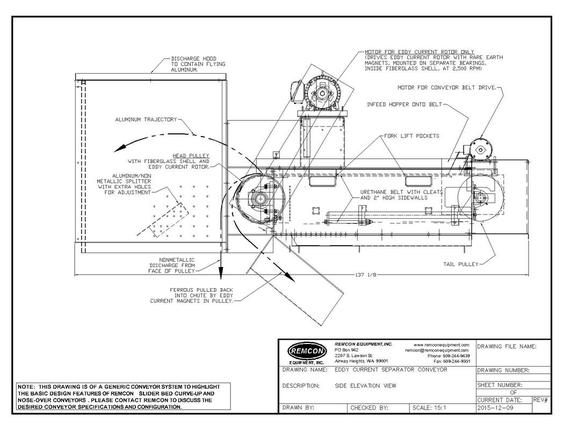
The Remcon eddy current separation conveyor uses rare earth magnets to remove both aluminum and ferrous materials from commingled recyclables. The magnets are specially arranged inside the conveyor head pulley. Aluminum is repelled into a chute ahead of the pulley. Ferrous is attracted back to a chute behind the pulley. Other materials are dropped straight down into a third chute.
What Does an Eddy Current Separator Do?
An eddy current separator for aluminum recycling uses a fast-spinning rotor of rare earth magnets inside the head pulley of a conveyor. The alternating magnetic field induces eddy currents in any conductive non-ferrous metal on the belt. Those currents generate an opposing magnetic field of their own. So aluminum is thrown forward off the end of the belt, while glass, plastic, and paper fall away on a normal ballistic path. The same rotor attracts ferrous metal back under the pulley. One machine gives three clean streams: aluminum forward, ferrous back, everything else straight down.
Concentric & Eccentric Rotors
Remcon supplies two types of eddy current separators (ECS): concentric rotor and eccentric rotor separators. The rotor is essentially the conveyor pulley at the discharge end of the ECS that contains the rotating ECS magnets. Concentric rotor separators have rotors with magnets that rotate around an inner shaft. The shaft is positioned concentrically (evenly spaced) around the center of the outer pulley shell.
The concentric rotor separator is simpler in design and less costly than eccentric rotors. It is an effective option for medium and smaller volume operations that separate primarily aluminum cans.
Eccentric rotor separators mount the magnet assembly off-center inside the pulley shell, which concentrates the magnetic field in the zone where material leaves the belt. The field is focused at the throw point, not spread around the full circumference. So ferrous that reaches the rotor sheds quickly instead of being dragged around the shell. This design is the usual specification for fine aluminum and for higher-volume lines.
We buy the rotor and build the remainder of the separator conveyor around it. We often add custom design modifications to fit certain applications better. The modifications include custom support stands, infeed conveyors, outfeed conveyors and blowers, transitions and chutes, and other equipment.
Infeed conveyors for separator lines →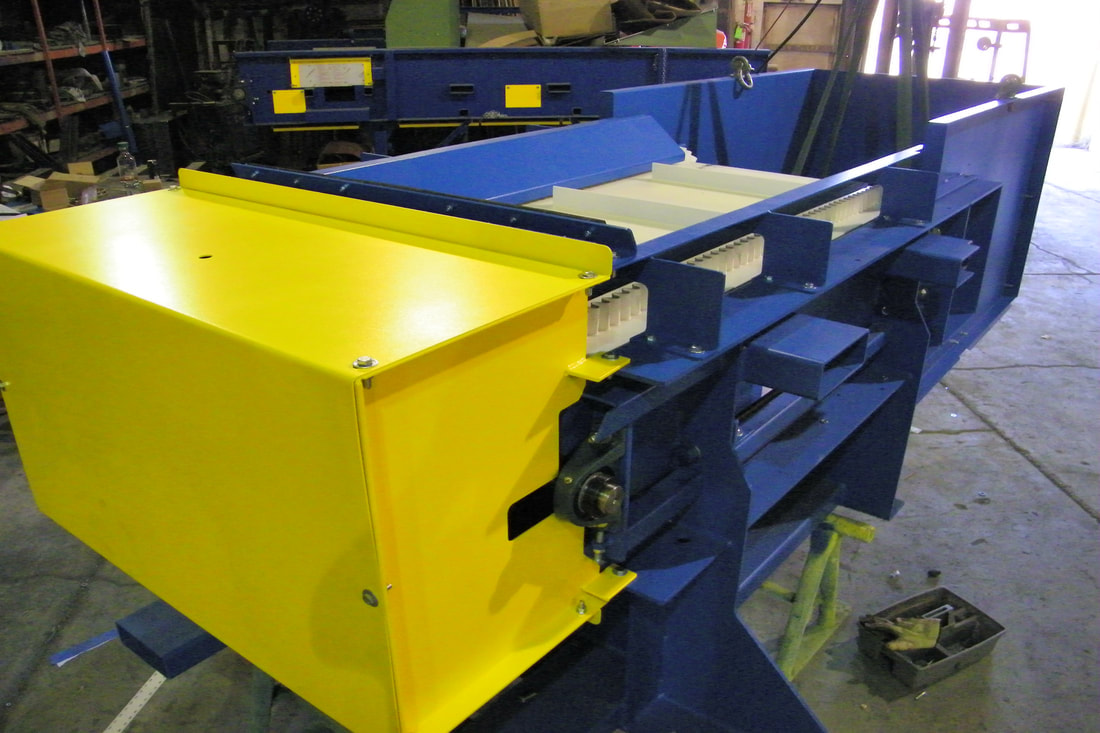
Aluminum Recovery in Single-Stream MRFs
In a single-stream materials recovery facility (MRF), fiber and containers arrive commingled. By the time the container line reaches the back of the plant, it is carrying steel cans, aluminum cans, plastics, and broken glass together. Aluminum is one of the highest-value commodities on that line. It is usually recovered last, after the screens have taken out the fiber and an overhead magnetic separator has pulled the bulk of the ferrous. Removing ferrous upstream matters. The less tramp iron that reaches the rotor, the cleaner the aluminum product and the easier the rotor's job.
Because the Remcon separator is built on a conveyor, it installs in a plant like a conveyor. We build the support stands to match your line heights. We also build the infeed and outfeed conveyors around the separator. We build the transitions and chutes that carry each of the three product streams to where it needs to go. You get one builder who is responsible for the whole run, not a bare machine on a skid.
UBC (Used Beverage Can) Recovery
UBC recovery (pulling used beverage cans out of a commingled stream) is the classic eddy current application. It is also the application that the concentric rotor suits best. Whole and flattened aluminum cans have a large conductive surface, so the rotor throws them strongly without the concentrated field of an eccentric machine. For this reason, the simpler concentric rotor is usually the right choice for a can-focused operation.
On the Remcon separator, the 2" belt cleats on 18" spacing present the cans to the rotor in an even layer rather than a surge. The hood splitter keeps the thrown aluminum cleanly divided from the non-metallic stream dropping below it. The separator conveyor shown in FIG. 01 above was built for this duty.
Fine Aluminum Recovery
Fine aluminum (foil, shredded pieces, caps and rings, and the small aluminum left in glass cullet) is a harder separation than whole cans. A small piece of aluminum has less conductive mass. So the rotor induces weaker eddy currents in it and gets less throw. Recovering fines takes a stronger or more concentrated field, so rotor selection matters. The rotors that we buy come in 12", 14", and 16" diameters, chosen by the size and density of the aluminum being removed. The eccentric rotor puts the field at the throw point where fine particles need it.
Belt construction matters as much as rotor selection on fines. The Remcon separator runs a thin polyurethane belt because a thicker belt holds the material farther from the rotor and dampens the eddy current effect. For glass recycling lines, that combination lets the separator pull residual aluminum out of cullet before the glass ships. Remcon has also built complete tote bin conveying and dumping systems for broken glass. So the separator arrives already matched to the abuse that cullet causes.
Features & Specifications
Standard Specifications
| Specification | Remcon standard |
|---|---|
| Overall width | 66" with a 30" rotor |
| Overall length | 137" standard, other lengths available as needed |
| Belt speed | 200 FPM, fixed speed |
| Rotor diameter | 12", 14", or 16", selected by the size and density of the aluminum being removed |
| Rotor construction | Rare-earth permanent magnets, balanced, inside a replaceable fiberglass wear drum |
| Frame | Formed 3/8" plate steel with guarded access holes |
| Bed | 3/8" flat bar slats, slider style, with sealed belt edges |
| Belt | Polyurethane, hot-bonded endless, with 2" cleats on 18" spacing |
| Tail pulley | 14" diameter, crowned for belt tracking |
| Bearings | Dodge SXR pillow block with eccentric locking collar |
| Rotor drive motor | TECO-Westinghouse 10 HP, severe duty, totally enclosed fan-cooled (TEFC) |
| Conveyor belt drive motor | TECO-Westinghouse 3/4 HP, severe duty, TEFC |
Conveyor Construction
- Frame: Formed 3/8" plate steel dampens vibrations, with guarded access holes in the sides of the conveyor.
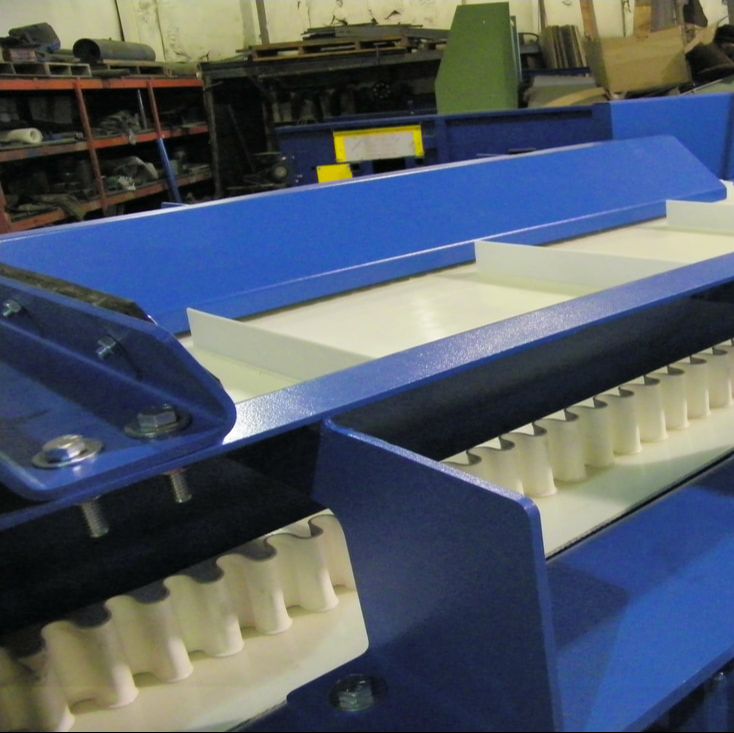
- Bed: 3/8" thick flat bar slat construction, slider style with sealed belt edges for reduced belt wear and safety. Slat bed construction decreases friction and drag from moisture on the belt and prevents abrasive debris from accumulating underneath the belt.
- Belt: Polyurethane provides the greatest strength with the least thickness, to avoid dampening the effect of the eddy current. The belt connection and sidewalls are permanently hot bonded at the factory. The design of the conveyor structure allows endless belts to be installed and removed with minimal disassembly.
- Belt cleats: 2" tall on 18" spacing, high radio frequency welded to the top surface of the belt. The cleats move product efficiently, which reduces belt wear.
- Belt edge seals: A 2" tall PVC side wall is hot air welded to the surface of the belt. Steel skirting hangs over the belt sidewall to prevent glass and metal debris from getting under the belt edge and causing premature belt wear.
- Belt speed: 200 feet per minute, fixed speed.
- Bearings: Dodge SXR pillow block with eccentric locking collar for better grip on the shaft.
- Tail pulley: 14" diameter, driven by a shaft-mount gear reducer and conveyor motor, crowned for belt tracking.
- Belt take-up: Remcon conveyors have extra-long belt take-up devices, which allow more than enough adjustment for the maximum guaranteed belt stretch.
- Hood: Splitter included to separate the metallic stream from the non-metallic stream.
- Legs: Custom built to support each eddy current separator as needed for each location.
Eddy Current Rotor (Conveyor Head Pulley)
- Rotor construction: Contains rare-earth permanent magnets that are balanced for low vibration and long life.
- Rotor shell: A replaceable fiberglass wear drum covers and protects the inner rotor and supports the conveyor belt.
- Rotor diameter: Available in 12", 14", or 16", depending on the strength needed for the size and density of the aluminum objects being removed.
- Rotor width: The extra-wide rotor design positions the bearings out of the magnetic field. It also keeps the product away from the edges of the belt to prolong belt and rotor life.
Drive Options
- Dodge Torque Arm II, parallel gear, shaft mounted gear reducer, sized to meet the American Gear Manufacturers Association class 2 rating.
- Nord Flexbloc™ worm-gear style shaft-mounted gearmotor, sized to meet the American Gear Manufacturers Association class 2 rating.
- Conveyor belt drive motor: TECO-Westinghouse 3/4 HP, severe duty, TEFC, 1.15 service factor, class F insulation for long motor life.
- Rotor drive motor: TECO-Westinghouse 10 HP, severe duty, TEFC, 1.15 service factor, class F insulation for long motor life.
Safety Features
- Emergency stop system: Cable-pull switch with cable and rigging as required by OSHA.
- Guards: All drive components guarded with hinged covers.
Eddy Current Separator FAQ
What does an eddy current separator do?
An eddy current separator removes aluminum and other non-ferrous metal from a mixed material stream. A rotor of rare earth magnets spins inside the conveyor head pulley. The rotor induces eddy currents in conductive metals. So aluminum is repelled into a chute ahead of the pulley. Ferrous is attracted back to a chute behind the pulley. Everything else drops straight down into a third chute.
What is the difference between a concentric and an eccentric rotor?
On a concentric rotor, the magnets rotate around a shaft centered inside the outer pulley shell. The concentric rotor separator is simpler and less costly, and it works well for medium and smaller volume operations separating primarily aluminum cans. On an eccentric rotor, the magnet assembly is mounted off-center, so the field concentrates where material leaves the belt. The eccentric rotor separator is the usual choice for fine aluminum and higher-volume lines. Remcon supplies both types.
Can an eddy current separator be retrofitted into an existing line?
Yes. Remcon builds each separator conveyor to fit the application, including custom support stands, infeed and outfeed conveyors, transitions, and chutes. So the separator can fit into an existing sort line as well as a new system. Tell us your line heights and layout. We will design the separator to fit them.
What material streams can an eddy current separator handle?
Common streams include used beverage cans (UBC), commingled single-stream containers, and glass cullet carrying residual aluminum. Rotor diameter (12", 14", or 16") is selected by the size and density of the aluminum being removed from the stream.
Does Remcon build the whole separator conveyor?
Yes. Remcon buys the rotor and builds the remainder of the separator conveyor (the plate steel frame, slider bed, polyurethane belt system, stands, hood, and chutes). We also build the infeed and outfeed conveyors and blowers around it. One builder is responsible for the whole line.
What equipment separates aluminum cans from the rest of a recycling stream?
An eddy current separator. The rare-earth rotor in its head pulley throws non-ferrous metal, especially aluminum cans, forward off the belt. The rotor pulls ferrous back and lets everything else drop straight down. So one machine splits a commingled stream three ways. Remcon builds the separator conveyor around the rotor and the infeed and outfeed conveyors that feed it.
Custom Designed for Your Operation
We specialize in custom designed and fabricated equipment. We can work with you to design a separator that will meet your needs. We design and fabricate every separator conveyor at our Airway Heights (Spokane), Washington shop, then ship and install it nationwide. Contact us to discuss options or to get a quote.
Get a quote for an eddy current separator →