
At Remcon Equipment, we specialize in integrating vibratory screens into complete material processing systems. We do not manufacture vibratory screens ourselves. We have extensive experience sourcing them from top manufacturers and incorporating them into custom systems. We handle all the additional components needed to integrate the screen, including support structures, infeed and outfeed conveyors, and transition chutes. This integration ensures that the vibratory screen performs reliably as part of a working system.
What a Vibratory Screen Does in a Recycling Plant
A vibratory screen is a sloped deck of punched plate, wire mesh, or urethane panels that vibrates as material flows across it. The vibration conveys material down the deck and stratifies the bed. Small pieces sink, reach the openings, and fall through. Oversize carries over the end. Every vibratory screen for recycling does some version of that one job. The job can be scalping oversize ahead of a sort line or removing abrasive fines early. The job can also be sizing a finished product to spec or spreading material a single layer deep ahead of optical sorters. The screen itself has few wear parts. But it only performs when the equipment around it presents material correctly. We provide that equipment.
Remcon's Part of a Vibratory Screen Installation
Full-Service System Design
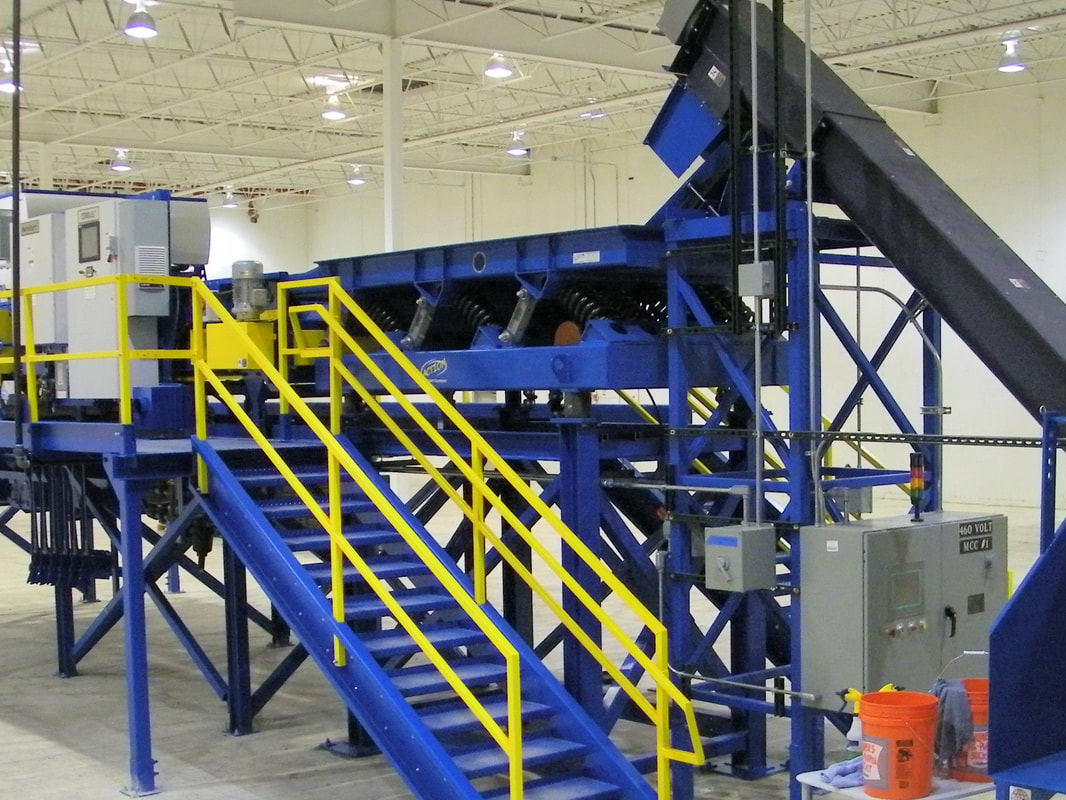
You can buy a vibratory screen through us or directly from the manufacturer. If you buy through us, we help you select the right model. Either way, Remcon provides everything else to make it part of an efficient system. Our team designs and builds custom support frames, conveyors, and chutes. We design each component to fit your vibratory screen and the requirements of your operation.
That division of labor is deliberate. The screen arrives from its manufacturer as a machine. The structure carries the vibrating load of the screen. The infeed conveyor meters material onto the deck. The takeaway conveyors carry away each sized fraction. The chutes connect everything without spillage. All of this is steel fabrication work. We have done this work since 1977. One shop stays responsible for the complete working system.
How our turn-key systems come together →Precision Sorting for Enhanced Productivity
Vibratory screens are essential for separating and sorting materials of different sizes. Our custom-designed infeed and outfeed conveyors support smooth material flow and prevent blockages. They ensure consistent sorting and reduce downtime. Our experience ensures that each component works well with the others, which improves overall workflow and productivity.
Infeed conveyors we build →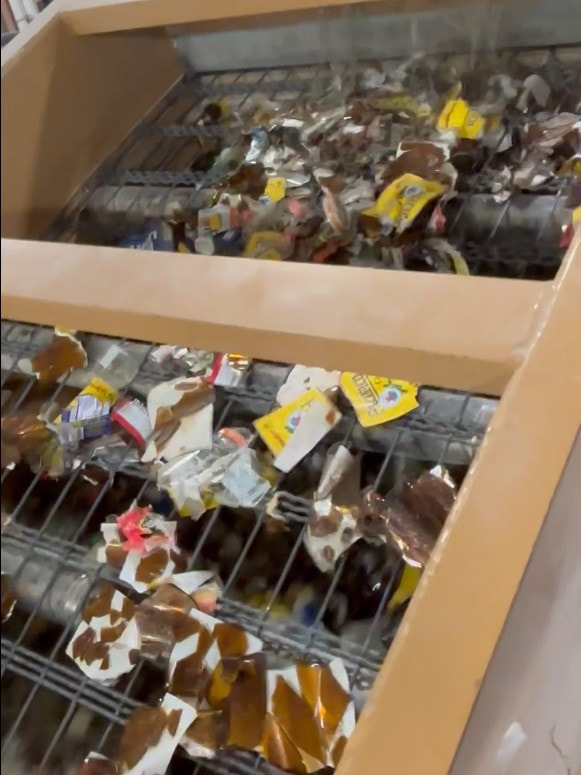
Selection, Installation, and Support
We help select the screen. We install it with the conveyors and chutes around it. Afterward, we handle maintenance and support for the screen and the rest of the working system.
Installation services →Screening by Material Stream
What a screen contributes, and what has to be built around it, depends on the material. The streams below are where vibratory screening is most often worth using in a recycling or waste processing line.
Glass Cullet
Screening cullet sizes the glass for market and removes the fines, labels, and cap fragments that lower its value. Glass is also the hardest stream on the chutes and conveyors around the screen. It is abrasive, prone to packing, and quick to work under belt edges. Remcon has experience with cullet. Our cullet dumping systems use 1/4" plate steel wherever glass touches the machine. The screen in FIG. 01 above was integrated into a glass and PET separation system. The chutes and conveyors around a glass screen get the same detailing.
Compost & Organics
For compost and ground organics, screening produces a finished product from a pile of material. The deck passes finished compost at the specified particle size. Overs, uncomposted wood, and contaminants such as film plastic carry over for reprocessing or disposal. Organics are heavy, wet, and hard on light-gauge equipment. So the infeed and takeaway conveyors around the screen matter as much as the screen itself.
C&D Fines
In construction and demolition (C&D) processing, a screen removes the fines fraction from the mixed stream early. The fines fraction is soil, gravel, gypsum dust, and small aggregate. The screen does this before those abrasive fines ride through the plant and grind on belts and bearings. Screening first also leaves cleaner oversize for the pickers and separators downstream. So the sort line works on material worth sorting.
Scrap
On shredded scrap, screening separates fines from the sized fraction ahead of magnetic and eddy current separation. Each separator then receives material in the size range it handles best. We build the conveyors that connect the machines in this line. See our overhead magnetic separators and eddy current separators for the steps that commonly follow a screen.
Adding a Screen to an Existing Line
A vibratory screen can usually be retrofitted into a line that is already running. Three things have to be engineered. The first is drop height, because material needs room to stratify and discharge into the next piece of equipment. The second is structure, because a vibrating machine cannot be placed directly on the existing floor steel. The third is material flow, because the conveyors that feed and follow the screen usually need rework so each fraction has a place to go. We measure the line and design the structure and transitions to fit the building. We install everything with our own crews, including the platforms and catwalks that keep an elevated screen serviceable.
Remcon serves Pacific Northwest recyclers from our Airway Heights (Spokane), Washington shop. We ship and install vibratory screen systems nationwide.
Vibratory Screen FAQ
Do I buy the vibratory screen through Remcon?
Either way works. Remcon does not manufacture vibratory screens. We source them from established screen manufacturers and help you select the right model. You can also buy the screen directly. In that case, we build everything around it: support structure, infeed and outfeed conveyors, and transition chutes. Either way, one shop is responsible for the complete working system.
What does Remcon build around a vibratory screen?
Remcon designs and fabricates the support structure that the screen mounts on and the infeed conveyor that meters material onto the deck. We also design and fabricate the outfeed and transfer conveyors that carry away each sized fraction, and the transition chutes between them. We also handle installation and provide ongoing maintenance and support for the complete working system.
Which materials screen well on a vibratory screen?
Vibratory screens work best on free-flowing material where particle size separates the product. Common materials are glass cullet, mixed container streams, compost and ground organics, C&D fines, and shredded scrap. Material that mats, tangles, or wraps, such as film-heavy single stream, can blind a vibrating deck. This material may be better handled by a disc screen or another separation step. Tell us the material. We will help pick the right screening technology.
Can a vibratory screen be added to an existing line?
Yes. Retrofitting a screen into a running line is common. The screen needs drop height for material to stratify. It needs a structure to carry its vibrating load. It also needs conveyors reworked to feed the deck and take away each fraction. We measure the existing line and design the structure and transitions to fit the building. We install the screen and surrounding equipment with our own crews.
Talk Through Your Screening Setup
We specialize in custom designed and fabricated equipment. We can work with you to design equipment that will work well for your needs. Contact us to discuss options or to get a quote.
Contact us about vibratory screen integration →