
Transfer conveyors move material from point A to point B. But often that is not as simple as it sounds. Remcon specializes in designing transfer conveyors. These conveyors move material safely and efficiently to where it needs to go, without creating a mess or a safety hazard. Some projects connect the main components of a new system. Other projects add single transfer conveyors to redirect material in an existing system. In both cases, Remcon can design properly sized conveyors that go exactly where you need them, without unnecessary transfer points or wasted floor space.
What Is a Transfer Conveyor?
A transfer conveyor is a conveyor that moves material from one point in a plant to the next. Examples are machine to machine, line to line, or discharge to storage. Remcon builds custom transfer conveyors as heavy-duty slider bed or roller chain belt units. The conveyors are sized to the layout, so material arrives where it should without spillage or wasted floor space.
Design Considerations
Remcon considers all aspects when designing transfer conveyors, including:
- What type of conveyor is the most practical and economical for each application
- How to contain the material as it transfers to and from each conveyor
- How to properly feed each conveyor to minimize damage to the belt or bed of the conveyor
- How to use transfer points, belt speeds, and incline angles to meter, spread out, or remove clumps from the material, if necessary
Custom Transfer Conveyor Manufacturer
Remcon is a custom transfer conveyor manufacturer. We design, weld, and assemble every conveyor at our Airway Heights (Spokane), Washington shop. We then ship and install it nationwide. We have built recycling equipment since 1977. We build each transfer conveyor to order. So we match the width, length, orientation, hoppers, and hoods to your building and your material stream, not to a catalog page.
Configuration Options
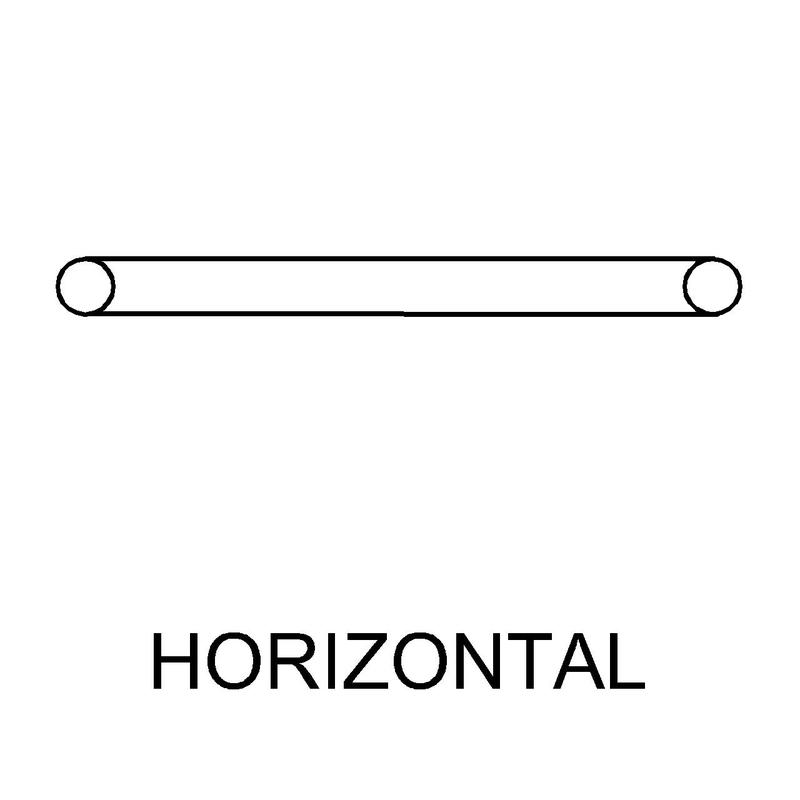
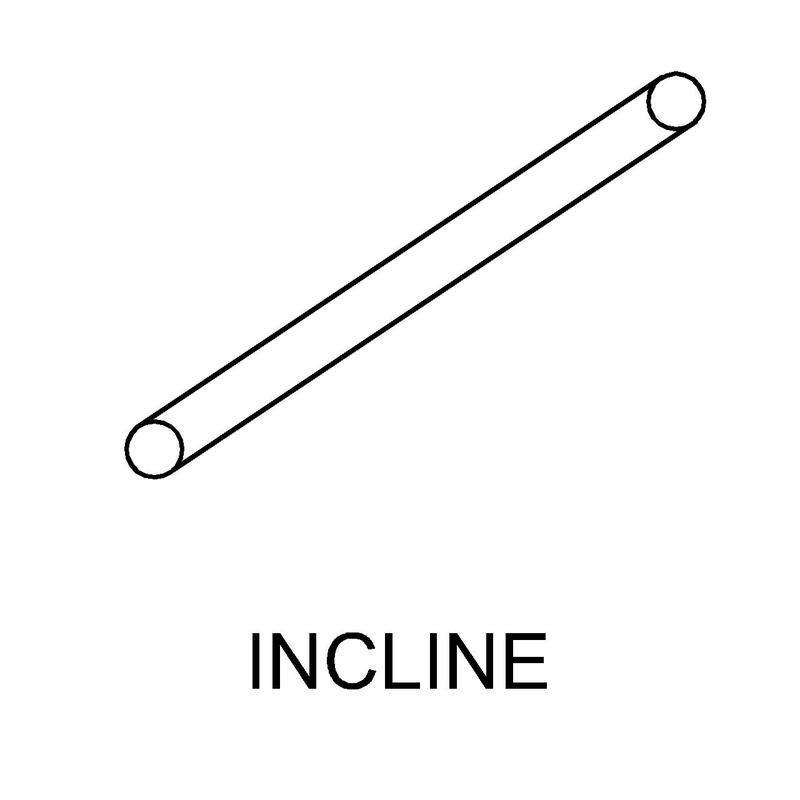
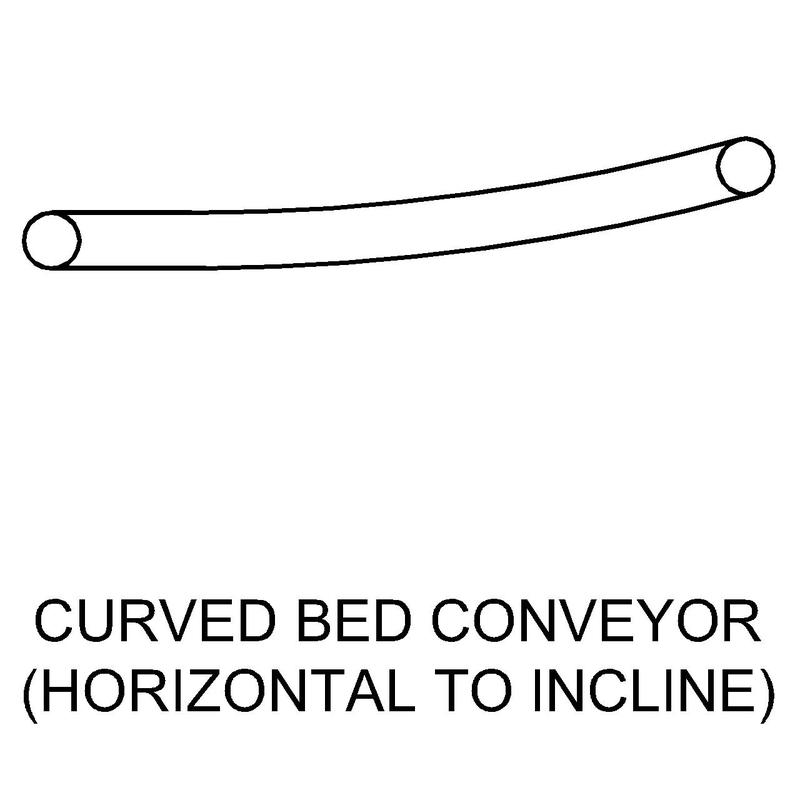
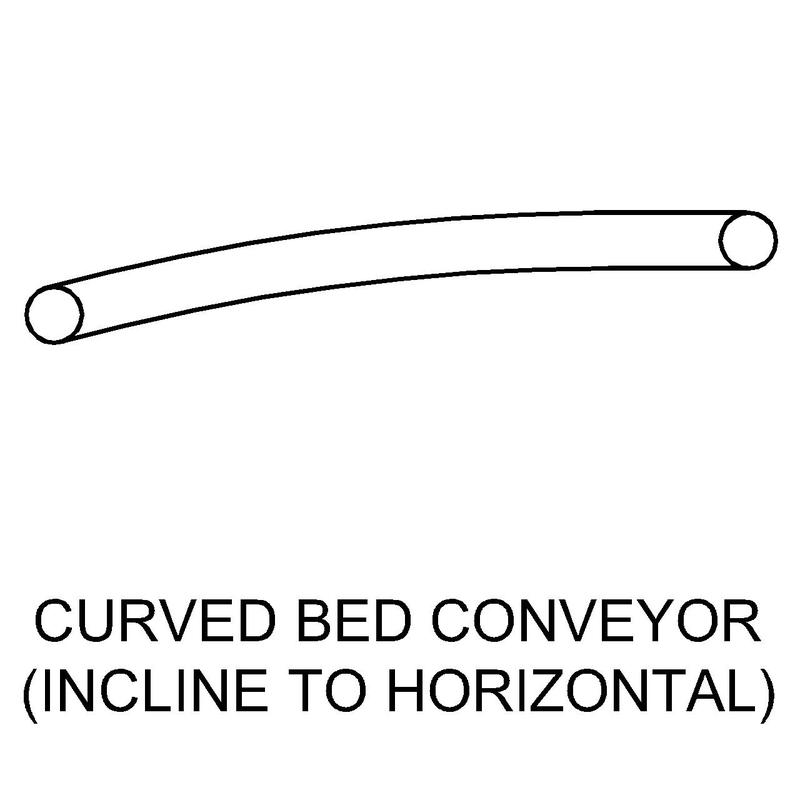
Remcon can build transfer conveyors in many different orientations. The orientation depends on the layout requirements. We can also build two separate conveyors that run in series. This arrangement can make installation simpler or separate clumps better. It can also let you use two different types of conveyors (for example, a roller chain feeding a slider bed). All of these options can also be installed in the ground or partly in the ground (for inclined conveyors). Common orientations include:
Other options may also be available, depending on the application.
Contact us to discuss what might work for your situation →Special Features and Options
Because we are a custom conveyor builder, we can design each conveyor with the specific features that are needed to achieve the best result. Here are a few examples of features and options we can build into a transfer conveyor. If you have any questions or have a specific conveyor need, we would be happy to discuss it with you.
Incline angle changes can allow one conveyor to be used where two separate conveyors might otherwise be required. Incline angle changes apply when an obstruction in the way needs to be avoided.
Rain / dust covers can be added to conveyors that are outdoors, or that transport dusty material that needs to be contained.
Custom mounting brackets (for example, hanger brackets and offset leg mounts) allow conveyors to be installed in difficult locations.
Integrated catwalks or catwalk supports can be included. Either option allows a maintenance catwalk to be installed alongside the conveyor, or alongside a portion of the conveyor that needs to be accessed.
Multi-lane conveyor options can be built with either belt sidewalls or steel dividers mounted above the belt. Either option allows multiple types of sorted materials to be conveyed at the same time on the same conveyor. The materials go into a split discharge chute.
Transfer Conveyor Projects
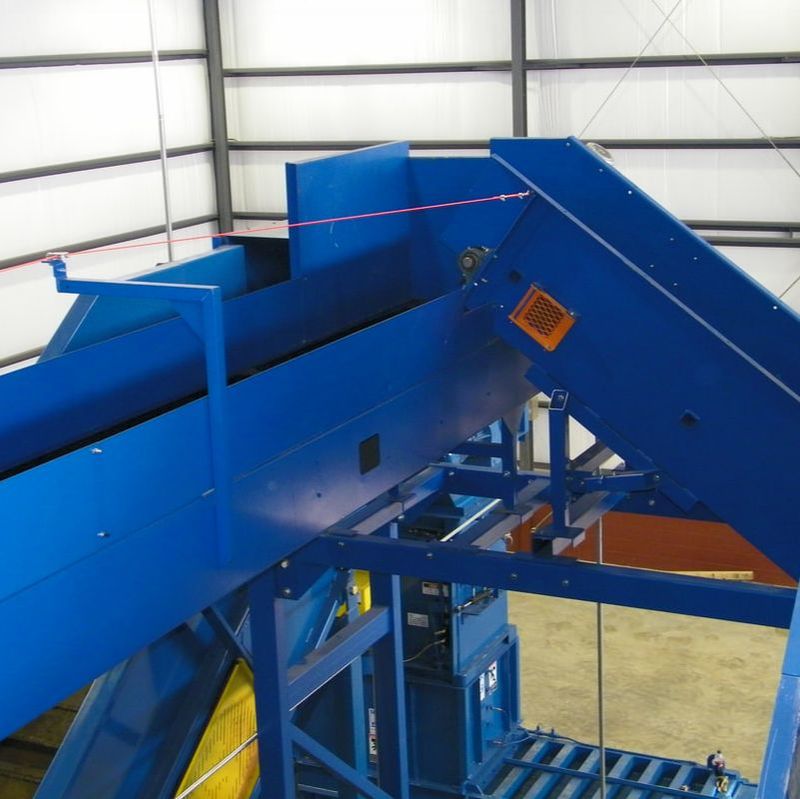
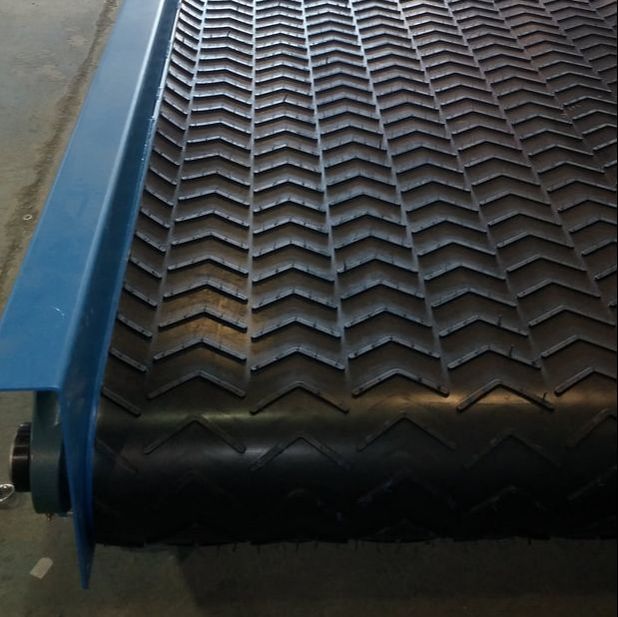
Two examples from past Remcon builds, pictured below:
- A run of transfer conveyors feeding material to a sorting line (FIG. 01).
- A transfer conveyor built with a chevron rubber cleated belt. The cleats grip the material to help carry it up an incline without rollback (FIG. 02).
Standard Features
Slat Bed Design
The belt slides on the conveyor bed. The bed is made of slats, not solid steel. A solid bed traps both small debris and moisture underneath the belt. The debris causes increased friction and wear on both the belt and the bed. The moisture, which can include sticky liquid from containers, causes suction and drag on the belt. The slat design lets this debris and moisture escape from between the belt and the bed. The debris and moisture fall between the top and return belts, off the edges of the return belt, and into the return pan. The slat design prevents these problems.
Replaceable Bed Slats
The bed slats on Remcon conveyors are designed to be easily replaceable if they do eventually wear out or get damaged.
Belt Edge Seal
Raised (troughed) side bed slats seal the edges of the belt. Their purpose is to prevent glass and metal debris from getting under the belt edge and causing premature belt wear.
Self-Cleaning Return Pans
Remcon conveyors are designed with a pan that fully encloses the return belt for safety and to collect debris that clings to the belt. The debris is pulled to clean-out openings along the length of the conveyor or to a collection area at the infeed end of the conveyor. Collecting the debris this way gives a clean, safe floor area under the conveyor.
Clean-Out Areas
Return pans contain the debris that falls off the return side of the belt, to prevent material spillage. The conveyor "self cleans" the debris to different clean-out locations. The location depends on where on the conveyor the debris falls off and what type of conveyor it is:
For inclined conveyors. Debris that falls off the return belt slides down the enclosed return pan (or is dragged down by cleats) to the bottom of the incline. The debris goes to a guarded clean-out area. Removing the debris this way prevents the unsafe buildup of material underneath the inclined portion of the conveyor.
For horizontal conveyors. Cleats drag the debris that falls off the return belt in the horizontal section toward the tail end of the conveyor. If there are no other cleats, a wiper cleat drags the debris. The debris goes to a clean-out area at the tail end of the conveyor. Removing the debris this way prevents the unsafe buildup of material underneath the horizontal portion of the conveyor (or in a pit or similar area).
For longer horizontal conveyors. Wiper cleats drag the debris that falls off the return belt toward the tail of the conveyor. Openings in the pan bottom are spaced along the length of the conveyor. The openings let this debris fall out of the return pan into a removable clean-out tray. Removing the debris this way prevents the material from dragging through the entire length of the return pan and causing wear or excessive buildup.
Remcon Belt Take-Ups
Remcon's cantilevered, telescoping tube style take-ups with manual screw adjustment offer the following advantages:
Cleaning access. The take-up frame is positioned to provide access to the area between the upper and lower belts. The access makes it easier to clean and inspect the tail pulley.
Replaceable parts. Remcon take-ups consist of separate, individual components that can be easily replaced as they wear out. The bearings bolt on separately and are the commonly available pillow block style. The threaded working parts of the take-up are separate and easily removed, and are commonly available from local fastener or hardware stores.
Take-up travel: The take-up travel is 10" on the shorter conveyors and up to 18" on the longest conveyors. On slider bed style conveyors, the belt is cut so that most of the take-up travel is used to make the belt looser. A looser belt is easier to install, repair, and replace. Good-quality belts with polyester carcasses have almost no stretch after initial tensioning. In some cases they shrink slightly. So not much take-up travel is needed to make the belt tighter as the belt is used.
Ease of adjustment. Belt tracking and tension adjustments are made with one wrench, with no need to loosen and re-tighten the bearing attachment bolts. The moving parts of the take-up have generous clearance. This clearance is there to prevent binding in the frame or against the bearings (side load) as the take-up moves through its full range.
Bearing brands. Remcon take-ups accept almost any brand of pillow block bearing (the most common style of bearing).
Belt Tracking
Adjustment for centering the conveyor belt is provided on both ends of the conveyor.
Drive Method: Parallel Gear, Shaft-Mounted, Torque Arm Gear Reducers (Dodge Torque Arm II)
These reducers have been used almost exclusively in sand, rock, gravel, mining, and similar industries for many years and are well proven. We have used them since 1990, with good success. The new generation has been re-engineered throughout with features designed to improve performance, extend service life, and reduce maintenance. We normally configure these reducers so that a separate motor drives them by v-belts. We use different combinations of sheaves for additional speed reduction. Using the Dodge Torque Arm II shaft mount reducer with v-belt drive has these advantages:
Low maintenance. There are no drive chains to oil, tension, or shorten and reconnect.
Ease of adjustment. With the Dodge Torque Arm II reducer, you do not need to move the entire gearbox and motor to adjust the chain tension. To adjust the reducer, you only open the hinged door on the belt guard, loosen the two lock nuts, and turn the turnbuckle by hand.
Fewer wear parts. There are no sprockets or chain to wear out. V-belts do wear out. However, they commonly do not wear out until they are protecting the conveyor from jamming, if it jams (see the next item). V-belts are inexpensive and easy to replace. V-belt sheaves last much longer than drive chain sprockets and drive chain.
Jamming protection. The need for mechanical shear pins is eliminated. The motor drives the reducer by v-belt(s). If the conveyor jams, the v-belt slips. The slipping v-belt prevents the jam from causing damage to the conveyor. As the v-belt is slipping, it typically makes a loud squealing noise that draws attention to the problem. If the conveyor is not turned off, the v-belt is eventually ruined. Then nothing drives the jammed conveyor. The v-belt is the cheapest part in the drive to replace. Replacing the v-belt involves opening the hinged belt guard door, loosening the turnbuckle and slipping the new v-belt on. If the conveyor is prone to jamming (for example wrong product, or too much product), the v-belt can be kept looser than normal. The purpose is to minimize the potential for damage. We are unaware of any Remcon conveyor equipped with these reducers that suffered damage resulting from jamming. An electronic shear pin may be added to the electrical system for additional jamming protection.
Parallel gears. The gears are parallel, rather than right angle. Parallel gears are more efficient and produce less friction.
Operating and maintenance convenience. When you work on a conveyor, you often need to move the belt a short distance forward or backward. Examples of this work are maintenance, clearing jammed product, and diagnosing problems. You cannot move the belt electrically, because the power should be locked out during this work. With a shaft-mounted reducer, you can move the belt easily and safely without power, by turning the spokes on the input sheave by hand.
Availability. Unlike other reducers, Dodge Torque Arm II reducers are so commonly used in other industries that they are often in stock at many local dealers. Dodge Torque Arm II reducers are almost always available somewhere in the country. Other brands (for example Link and Browning) may also be substituted without modification.
Separate motor. The motor is mounted separately from the reducer. Only v-belts connect them. So any brand of motor can be used. A motor breakdown does not affect the reducer, and a reducer breakdown does not affect the motor.
Ease of changing reduction ratios. The motor-to-reducer v-belts and sheaves easily give reduction ratios of up to 5 to 1. These ratios are easily changed by swapping out sheaves. Changing the ratios is more difficult and more expensive with a drive chain and sprockets.
Standard Specifications
The following specifications are standard on nearly all Remcon slider bed conveyors, unless a different specification is requested or the special application requires it:
- Bearings: Dodge SXR pillow block with eccentric locking collar for better grip on shaft.
- Bed: 3/8" thick flat-bar slat construction. The slat construction decreases friction and drag from moisture on the belt and prevents abrasive dust from accumulating.
- Disconnect switch: A lockable disconnect switch is included for conveyor maintenance.
- Emergency stop system: A cable-pull switch with cable and rigging, as required by OSHA.
- Frame: Formed 3/16" plate steel with guarded access holes.
- Guards: All drive components are guarded with hinged covers. Guards in the sorting area are flat and smooth for sorters to lean against.
- Legs: Adjustable steel tube construction for accurate leveling.
Options
- Belt lacing: Multiple options are available if the customer already has a preference. The options depend on belt width, type, and thickness. Common types used are Flexco Alligator® Staple Hinge lacing for thinner belts, or Flexco® R2 Rivet Hinge lacing for thicker belts. Most fastener types are available in galvanized steel, stainless steel, or MegAlloy®.
- Belt sidewalls and/or conveyor lane dividers. Sidewalls and dividers can be added to help contain material on the belt. They can also be added to divide the belt into different "lanes" for carrying different types of material separately at the same time. Belt sidewalls come in many styles and height options. Conveyor dividers can be used instead of belt sidewalls, or together with them. The aim is to keep material separated on the belt, with little or no cross-contamination from infeed to discharge.
- Bolt joints: Bolt joints are included at the approximate midpoint of the conveyor length. They allow the conveyor to be separated into two pieces for shipping, installation, or both.
- Drive styles. Options include v-belt driven, shaft-mounted gear reducer, shaft-mounted gearmotor, or direct drive by motor and v-belt (sheave reduction only as needed).
- Hood. Custom built to feed machinery or containers that come next, as needed. Splitters, redirection chutes, and other parts are also available as needed.
- Infeed hopper. Custom built to receive material from the previous conveyor or other feed method.
- Self-cleaning tail pulley. On conveyors that handle glass or other materials that cause excessive wear or buildup, a self-cleaning tail pulley can be used. The self-cleaning pulley can help to eject material that gets between the belt and the tail pulley.
- Skirting. Several styles are available, depending on the application (brush strip style, rubber belt style, steel only, skirtboard, and other styles).
- VFD (variable frequency drive). Commonly available drives, by U.S. manufacturer, with easy-to-use controls, rugged enclosures, and options for locating various controls inside or outside of control panels.
Transfer Conveyor FAQ
What is a transfer conveyor?
A transfer conveyor is a conveyor that moves material from one point in a plant to the next. Examples are machine to machine, line to line, or discharge to storage. Remcon builds custom transfer conveyors as heavy-duty slider bed or roller chain belt units. The conveyors are sized to the layout, so material arrives where it should without spillage or wasted floor space.
What type of conveyor is used as a transfer conveyor?
Most Remcon transfer conveyors are slider bed or roller chain belt conveyors. We can also build two conveyors that run in series. The purpose is to simplify installation, to separate clumps better, or to combine two conveyor types, such as a roller chain feeding a slider bed. The material and the layout determine which type fits best.
How much does a custom transfer conveyor cost?
The price depends on belt width, length, orientation, hoppers, hoods, and drive options, so Remcon quotes each transfer conveyor individually. Tell us where the material starts, where it needs to go, and what is in the way. Then we will quote a conveyor sized to fit, without unnecessary transfer points. Call (509) 244-9439 for a quote.
Does Remcon install transfer conveyors nationwide?
Yes. We design and fabricate every transfer conveyor at our Airway Heights (Spokane), Washington shop. We then ship and install it nationwide with our own installation crews. We also repair, rebuild, and supply replacement belts and parts for the life of the conveyor.
We specialize in custom designed and fabricated equipment. We can work with you to design equipment that will work well for your needs.
Contact us to discuss options or get a quote →