
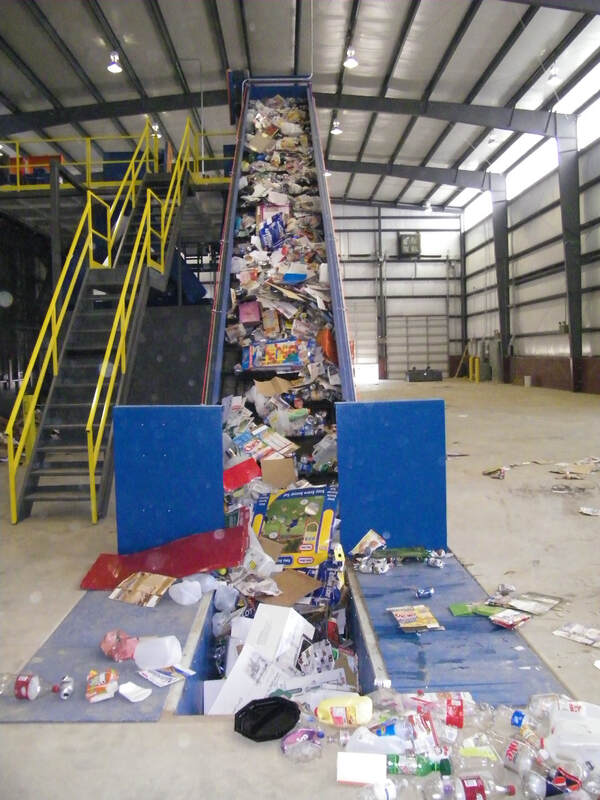
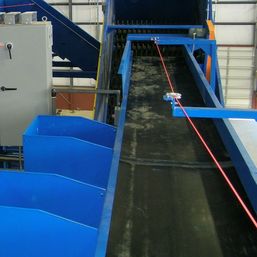
The Remcon infeed conveyor feeds cans, glass, newspaper, and cardboard at a desired rate of flow onto a sorting conveyor, screen, or other machinery. It is the machine that turns a loader bucket into a stream: a cleated belt on an incline doles the pile out of the hopper, a variable speed drive sets the rate, and optional automated feed control varies belt speed from 20% to 200% of normal to flatten the surges and dry spots that interfere with sorting. Built to order at our Airway Heights (Spokane) shop and installed nationwide.
Most Remcon infeeds are built on our slider bed conveyor platform. These conveyors can be built with above-ground or in-ground hoppers, custom built for each application for best capacity and feeding of material. In a materials recovery facility (MRF), the infeed sets the pace for the whole sort line — an even, metered feed keeps sorters and screens productive instead of alternating between surges and dry spots.
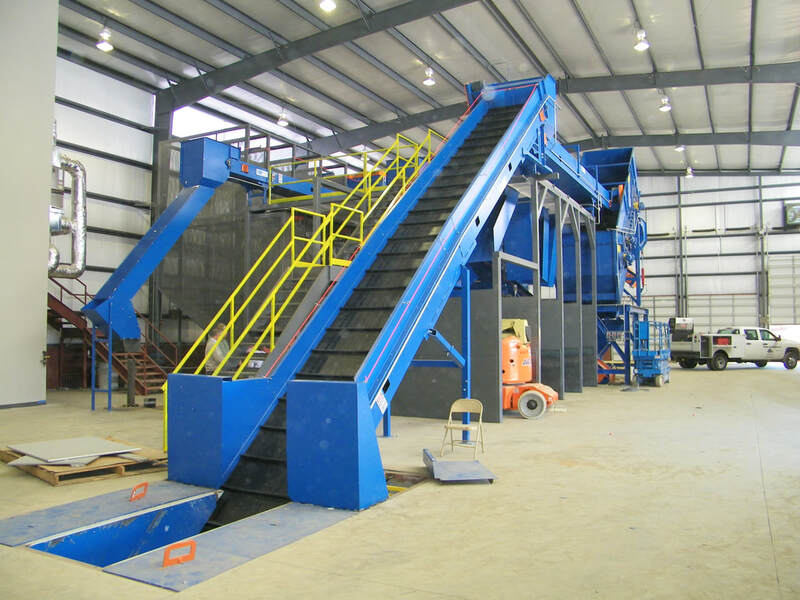
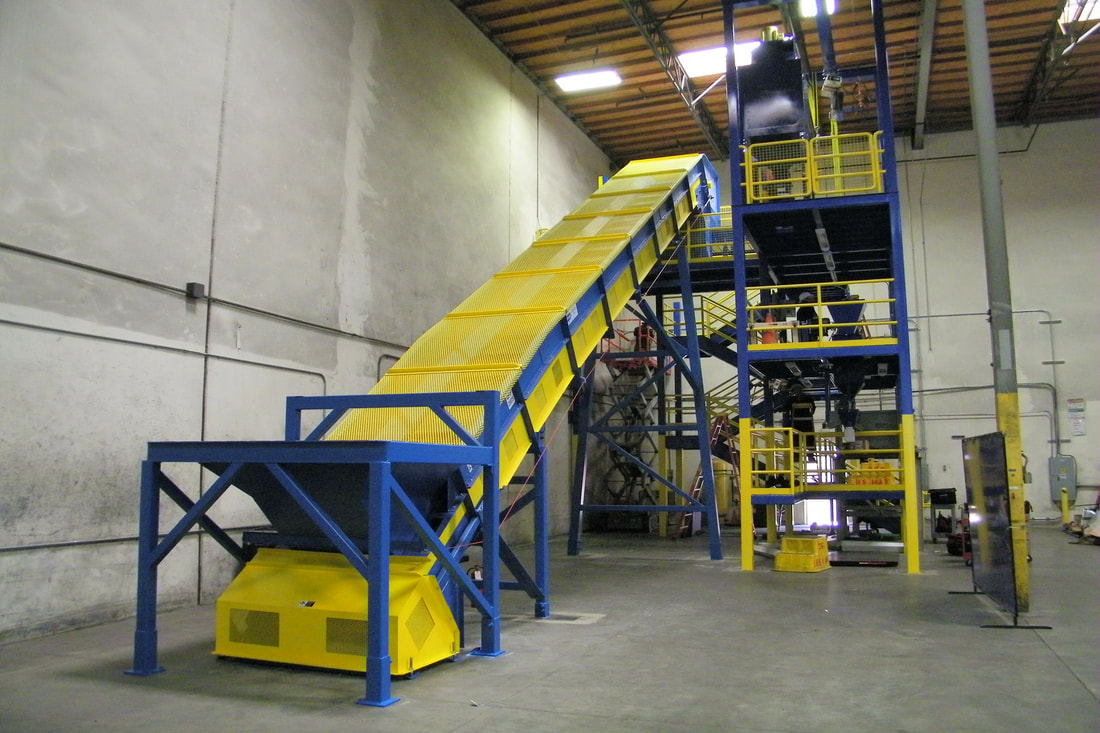
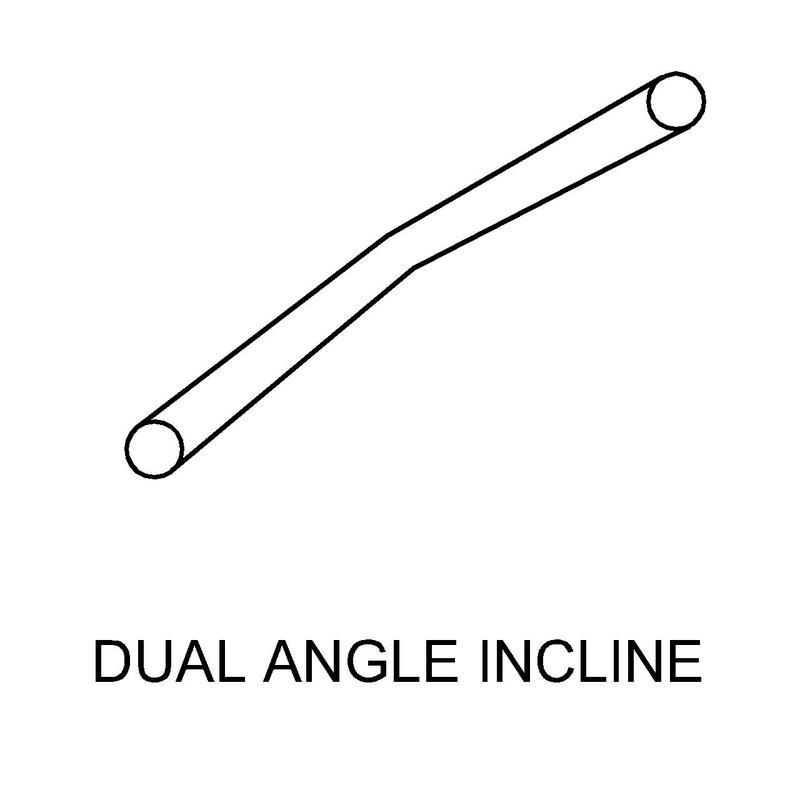
Available Configurations
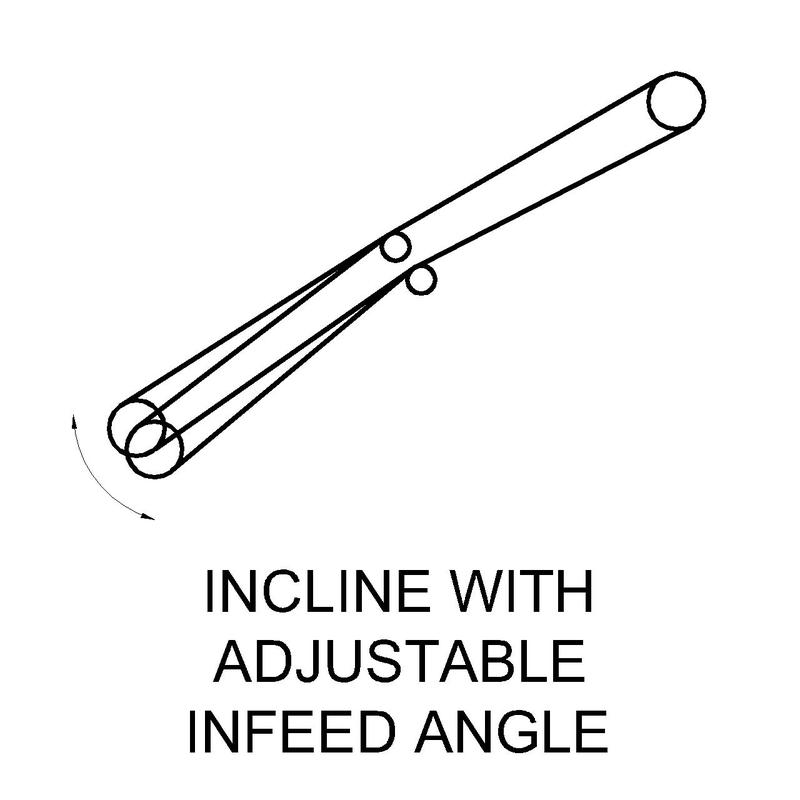
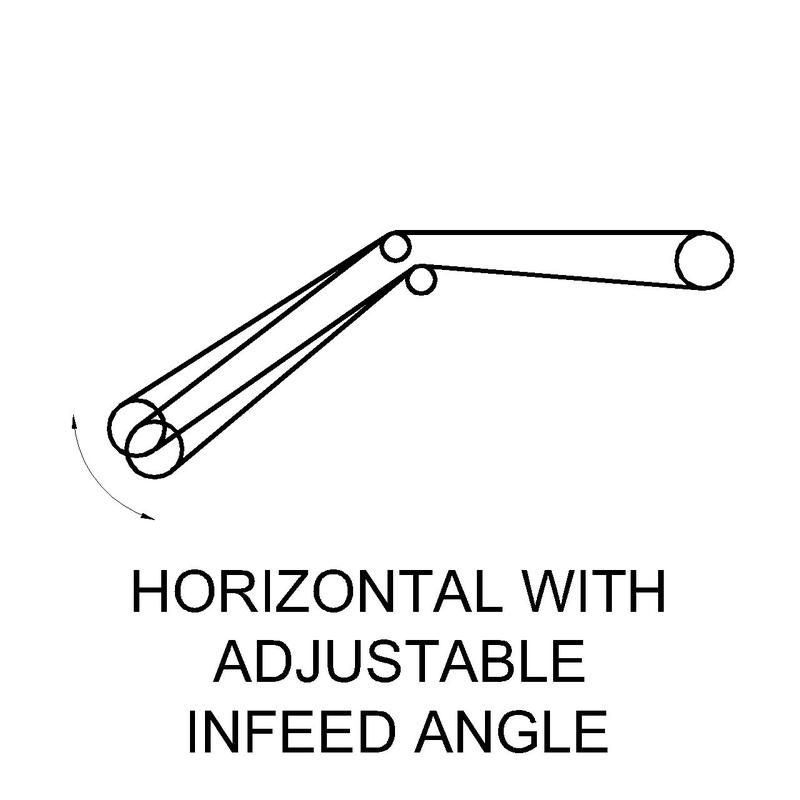
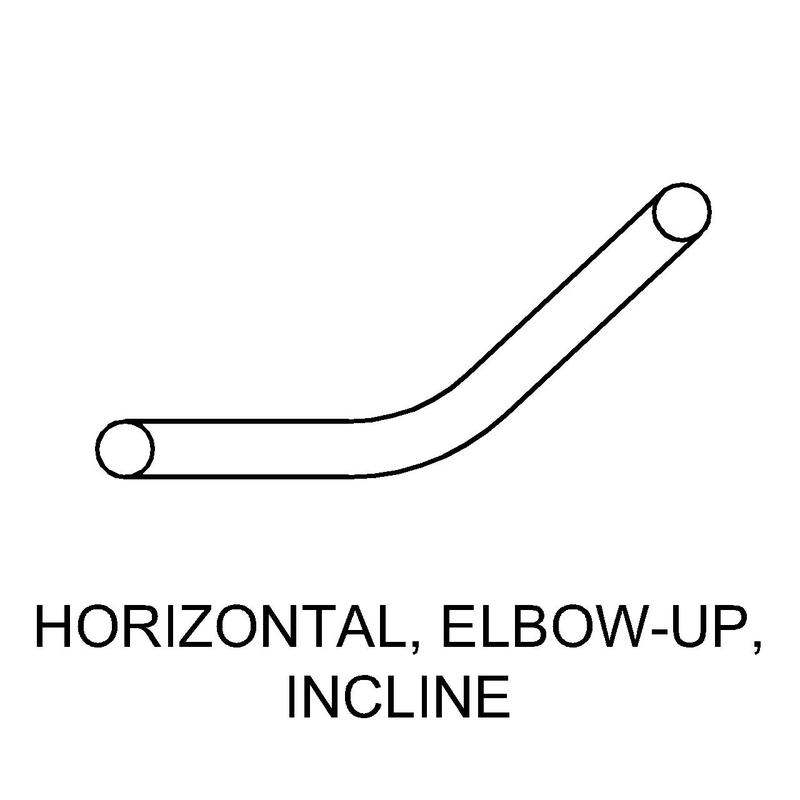
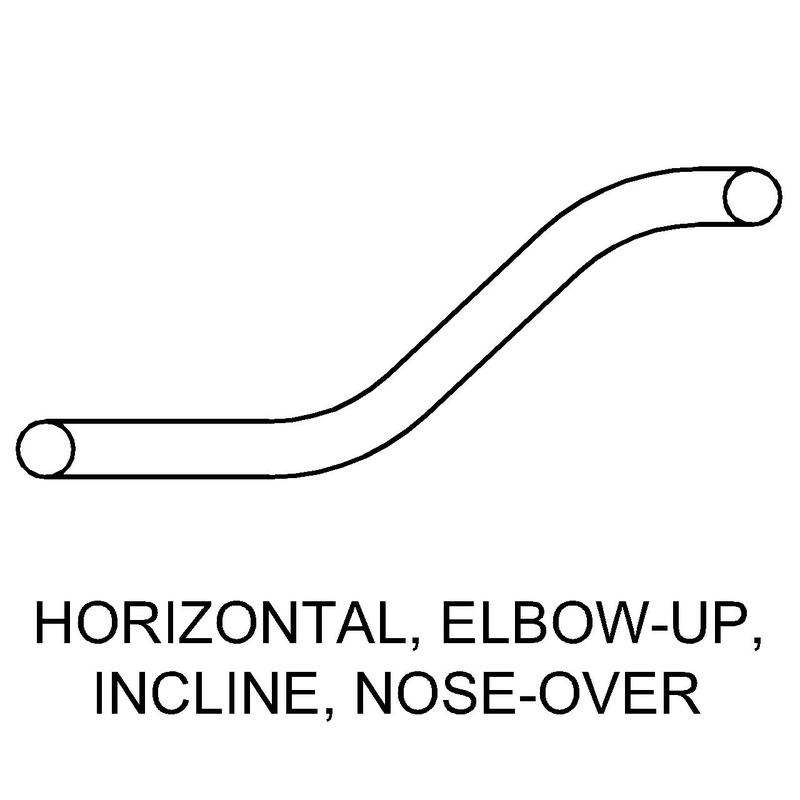
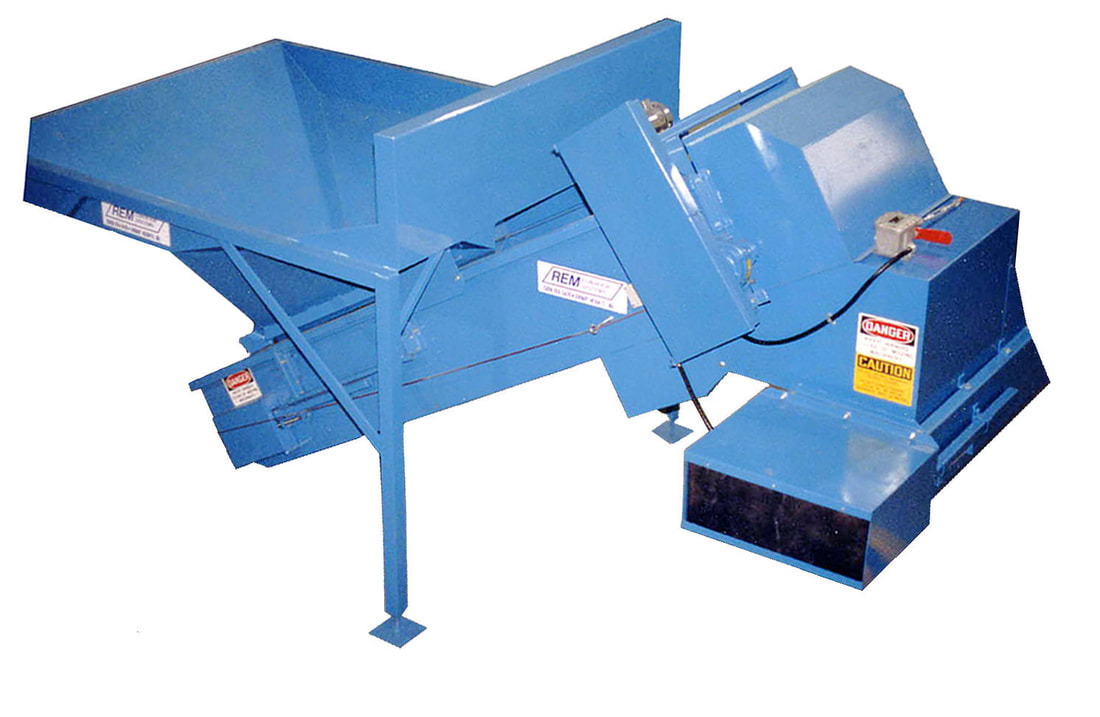
Remcon can build infeed conveyors in many different orientations, depending on the layout requirements. We also can build two separate conveyors that run in series, to simplify installation, separate clumps better, or to be able to use two different types of conveyors (e.g. a roller chain feeding a slider bed). Other options may also be available, depending on the application.
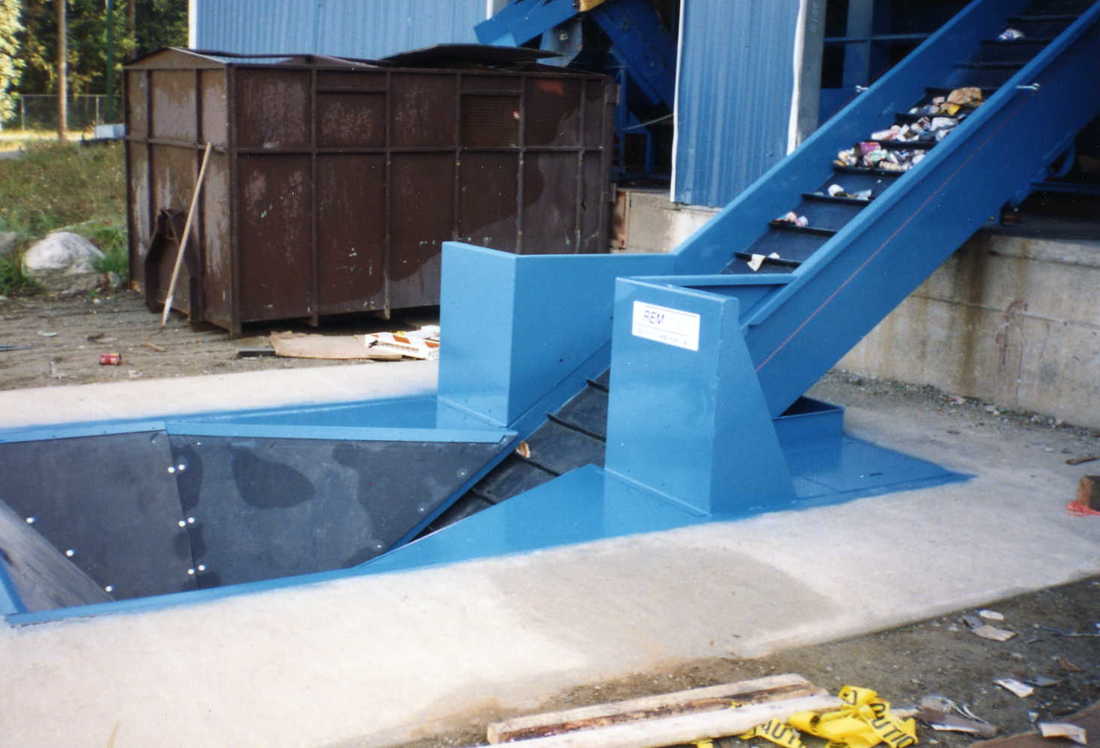
All of these orientation options can be installed both in-ground (in a pit) or above ground.
Contact us to discuss what layout works best for your site →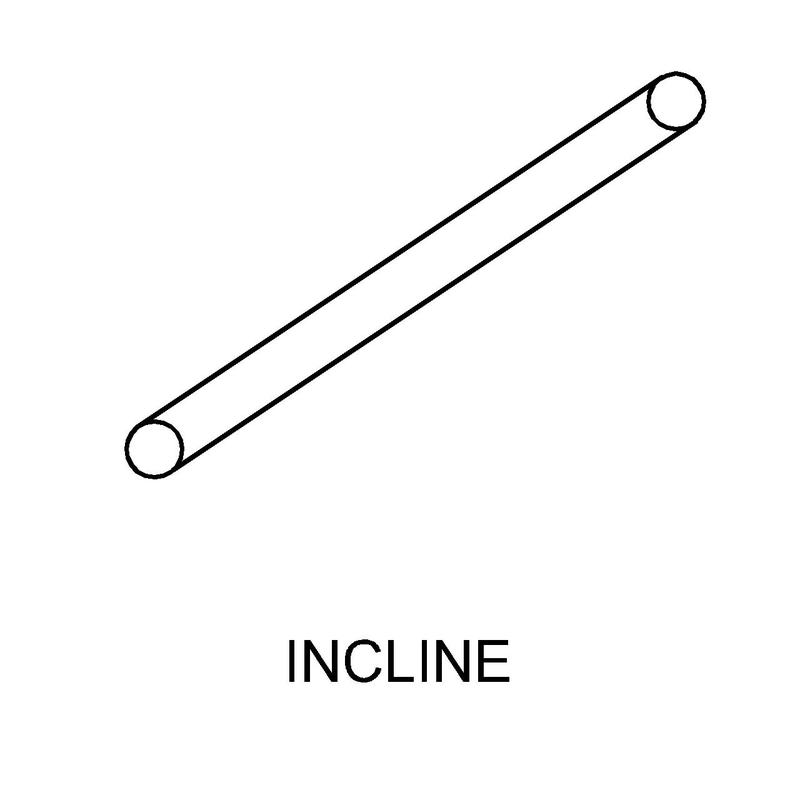
How an Infeed Conveyor Works
An infeed conveyor takes material that arrives in dumps and hands it downstream as a stream. Every part of the machine follows from that one job.
The loading point
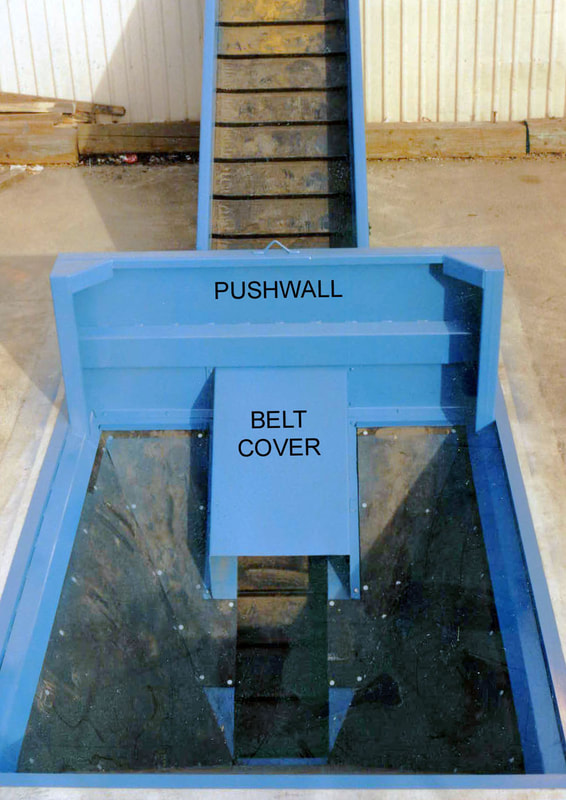
Material enters at the conveyor infeed — the pit or hopper at the tail where a loader, a tipping floor, or a truck puts it. A bucket empties all at once; the line downstream wants those tons spread across minutes. That is what surge hoppers do anywhere in bulk handling: they let a loader dump a full bucket and get back to digging instead of trickle-feeding the equipment. Remcon builds this end above ground or in ground, custom built for each application for best capacity and feeding of material, and a pushwall can be added for the loader to push against.
The infeed belt
What climbs out of the hopper is a cleated rubber belt riding on a slat bed. The cleats do the lifting: on an incline they carry material up instead of relying on friction, which is why an infeed belt conveyor on a recycling line is normally cleated rather than smooth. Load depth is the other half of it. The same tonnage spread wide and shallow rides better than a thick bed, which rolls off its own top surface long before the bottom layer loses grip, and it presents better to whatever reads the belt downstream. Belt width, cover, cleat height, and carcass are in the specification table below. When the belt on a machine already in service is simply worn out, Remcon supplies replacement conveyor belts — for our own conveyors and for other brands.
Belt or chain
Most Remcon infeeds are built on the slider bed platform, which is the cleated rubber belt described above. The alternative is chain: a roller chain belt conveyor runs steel-rollered chain on rail tracks rather than rubber on a slat bed, which is how it carries a heavy load with less power. A chain belt conveyor infeed is often paired rather than used alone. Remcon can build two separate conveyors running in series instead of one long machine — a roller chain feeding a slider bed, for instance — which simplifies installation and separates clumps better. Which platform a given line wants is a material question, so tell us what you are feeding.
The incline
The angle is a metering device, not just a way to gain height: gravity works against the pile and doles it out. It gets picked per material, and loose mixed recyclables tolerate less incline than tidy dry bulk does. Our guide to maximum conveyor incline angle covers where the limits sit.
The discharge
At the top, material leaves through a hood onto whatever it feeds: a sorting conveyor, a disc screen, or other machinery. How far material falls at that handoff, and how the drop is hooded, decides how much of the glass survives it.
Special Features
Automated Feed Control
This optional feature electronically monitors the amount of material on the belt, and varies the belt speed as needed, from a low of 20% of normal, up to a maximum of 200% of normal speed. This significantly reduces both surges and dry spots on belts that interfere with sorting and decrease throughput.
Variable Speed
The drive system speed control allows adjustment to the rate of flow onto the sorting conveyor or other machinery for the most efficiency under a wide range of conditions.
Incline Angle
Remcon feed conveyors use the optimum angle for feeding the consistently correct amount of material onto the cleated conveyor belt without rollback. Conveyors can also be built as "dual angle," with a steeper angle used in the lower portion to help with metering, and a shallower angle used in the upper portion to prevent roll-back.
Belt Width
The 36-inch (or more for higher volumes) cleated belt carries a high volume of material at a shallow depth, preventing rollback and jamming.
Fully Enclosed Return Pan
The return belt is completely enclosed for safety and to collect debris that clings to the belt. The belt cleats remove the debris from the pan. The debris is then deposited into a clean-out spout or collection area. The result is a completely clean and safe floor space under the conveyor.
Clean-Out Spout
On conveyors that carry broken glass and other debris that clings to the belt, the clean-out spout collects debris from the return pan and deposits it into a built-in, removable tray.
One-Piece Conveyor Body
The conveyor body, including the return belt chute, is formed from one piece of 3/16-inch steel plate. This extra strong tubular construction minimizes the need for support legs which interfere with bins, additional machinery, and walkways.
Transition Hoppers and Hoods
Hoods and hoppers are provided at transition points for safety, to contain material, and to keep debris out of the mechanical components. They also cushion the fall of material, reducing glass breakage and noise.
Belt Cover
The belt cover reduces the dead weight on the belt at the bottom of the feed hopper and prevents broken glass and metal debris from damaging the belt edges.
Slat Bed Design
The conveyor bed, which the belt slides on, is constructed of slats, rather than solid steel. A solid bed traps both small debris and moisture underneath the belt. The debris causes increased friction and wear on both the belt and the bed. The moisture, which can include sticky liquid from containers, causes suction and drag on the belt. The slat design allows this debris and moisture to escape, thus preventing these problems.
Belt Edge Seals
These seals are part of the bed, underneath the edges of the belt. They minimize the amount of debris that works itself underneath the belt to cause excessive wear on both the belt and the pan.
Conveyor Alignment
Remcon conveyors are shop fabricated in the longest sections practical (up to 40 ft.). Adjoining sections are aligned accurately with each other in the shop as they are fabricated. The entire conveyor is aligned again (and leveled) during installation, to prevent the belt from wandering and wearing into the side of the conveyor. Built-in leveling devices make the leveling and alignment procedure quicker and more accurate.
Parallel Gear, Shaft-Mounted, Torque Arm Reducers (Dodge "Torque-Arm 2")
These reducers have been used almost exclusively in sand, rock, gravel, mining, and similar industries for many years, and are well proven. Remcon has used them since 1990, with good success. Advantages include low maintenance, ease of adjustment, fewer wear parts, no shear pins, efficient parallel gears, operating and maintenance convenience, excellent availability, separate motor for ease of replacement, and ease of changing reduction ratios.
Remcon Belt Take-Ups and Tracking
Remcon cantilevered telescoping tube style, with manual screw adjustment, offers the following advantages:
- Cleaning access — The support tubes are positioned to provide access to the area between the upper and lower belts, for cleaning and inspection of the tail pulley.
- Replaceable parts — The bearings are commonly available pillow block style. The threaded working parts of the take-up are commonly available from local fastener or hardware stores, and replaced easily.
- Take-up travel — Generous length of take-up travel: 10" on the shorter conveyors, up to 18" on the longest. On slider bed conveyors, the belt will be cut so that the majority of the take-up is used for ease of belt installation, repair and replacement, since good quality belts with polyester carcasses have virtually no stretch after initial tensioning, and in some cases will shrink slightly.
- Ease of adjustment — Belt tracking and tension adjustments are made at the tail pulley with one wrench, with no need to loosen and re-tighten the bearing attachment bolts. The moving parts of the take-up have generous amounts of clearance, to prevent binding in the frame or against the bearings (side load) as the take-up moves through its full range. The head pulley is equipped with additional tracking adjusters.
- Versatility — Remcon take-ups will accommodate almost any brand of bearing, in the most common, pillow block style.
Support Legs
Steel tube construction, with height adjusting devices that also provide accurate leveling.
Metering and Feed Control
Feeding at a set rate is the whole job, so it is worth being specific about how the rate gets held.
Three things set it. The incline meters material out of the hopper. The cleated belt spreads the load at a shallow depth instead of letting it ride in clumps. And the variable speed drive sets the rate of flow onto the sorting conveyor or other machinery.
The optional automated feed control, listed under Special Features above, does that job without anyone watching it. It reads how much material is on the belt and moves the speed itself: when a bucket lands in the hopper and the belt loads up, the conveyor slows and doles the material out; when the hopper runs thin, it speeds up and closes the gap. That is why conveyors built with the automatic speed control system carry a wider speed range than standard controls give.
The payoff is downstream. A sensor-based sorter's published throughput assumes material arriving evenly metered at a steady depth, close to a single layer. Feed it slugs and the machine sees a pile and guesses. Dry spots cost you the other half: bare belt going past a pick station or an optical sorter is capacity you already paid for and did not use. That is the case for the automated feed control. Our guide to feed presentation ahead of an optical sorter works through the rest of it.
Mechanical Specifications
The table below summarizes the standard build on a Remcon metered infeed conveyor — the sections that follow cover each component in more detail.
| Specification | Remcon standard |
|---|---|
| Belt width | 36" cleated belt — wider for higher volumes |
| Belt cleats | 2" high (or higher if needed) "beefy" style, hot vulcanized to the belt |
| Belt construction | Moderately oil resistant (MOR) rubber, 1/8" or thicker top cover, 330 lb per inch of width tensile rating, 3-ply polyester carcass |
| Belt speed | 4 to 150 feet per minute; 80% variable speed range with standard controls, 180% with optional automatic speed control |
| Automated feed control | Optional — monitors material on the belt and varies speed from 20% to 200% of normal |
| Conveyor body | Formed from one piece of 3/16" steel plate, including the return belt chute |
| Drive | Dodge Torque-Arm 2 shaft-mounted, parallel gear reducer — AGMA class 2 rating |
| Motor | Teco-Westinghouse severe duty, TEFC, 1.15 service factor, class F insulation |
| Bearings | Dodge SXR pillow block with eccentric locking collar; sealed and self-aligning |
| Shop sections | Fabricated in the longest sections practical — up to 40 ft. |
| Loading | In-ground pit or above-ground hopper, custom built for each application |
| Capacity & length | Sized to the application — quoted per job |
Common Components
Remcon conveyors are all built from components widely distributed throughout the USA, providing quick and easy service if needed from just about anywhere in the country.
Variable Speed Drive
Remcon feed conveyors are equipped with totally enclosed, fan-cooled motors with variable speed drives.
Gear Reducer
Dodge "Torque-Arm 2", parallel gear, shaft-mounted speed reducer meets American Gear Manufacturers Association class 2 rating.
Pulleys
- Crowning — The pulley crowning keeps belt tracking true, minimizing time-consuming adjustments.
- Self-cleaning — For tail pulleys on conveyors that will be carrying glass. This wing style pulley is designed to expel broken glass and other debris from between the belt and the pulley. This prevents premature belt wear and jamming.
- Lagging — For head (drive) pulleys, on conveyors with heavy loads, for better traction. This heavy duty rubber layer is permanently hot-vulcanized to the pulley.
Bearings
Dodge SXR pillow block with eccentric locking collar for better grip on shaft. All bearings are self-aligning, pillow-block style sealed units, requiring grease only bi-annually.
Belt Construction
High strength, moderately oil resistant rubber (MOR), 1/8" or thicker top cover with slider surface bottom cover, tensile rating of 330 pounds per inch of belt width. 3-ply woven polyester carcass prevents future stretching after belt is first tensioned.
Belt Cleats
2-inch high (or higher if needed) "beefy" style, hot vulcanized to belt. These cleats are highly resistant to coming off, and if cut by sharp objects, the cuts do not spread further in the cleat.
Belt Lacing
- Flexco R2 — A very common heavy-duty rivet style lacing. Available in galvanized steel or MegAlloy®. This lacing is long-lasting and resists damage.
- Flexco 375 — An alternative heavy-duty lacing option that is attached with bolts, rather than staples or rivets.
Belt Speed
4 feet per minute minimum, 150 maximum, with a variable speed range of 80% for standard controls, and a range of 180% for conveyors equipped with optional automatic speed control systems.
Motor
Teco-Westinghouse, severe duty, TEFC, 1.15 service factor, class F insulation for long motor life.
In-Ground Pit vs. Above-Ground Hopper
Remcon builds infeed conveyors both ways — every orientation shown above can be installed in a pit or above ground — which makes this a building question more than a conveyor question.
An in-ground pit puts the top of the hopper at floor level. A wheel loader drives up and pushes material straight in, and nothing has to be lifted first. The price is civil work: excavation, a concrete pit, and drainage. A pit collects water and debris and usually needs an active sump pump, and on a wet site or a high water table, dewatering and waterproofing add to that bill.
An above-ground hopper skips the excavation. The trade is elevation — the loading edge now sits above the floor, so something has to get material up to it: a ramp for the loader, a dumper, or upstream equipment discharging into it. It also leaves the tail of the conveyor at floor level, where a person can reach it.
| Factor | In-ground pit | Above-ground hopper |
|---|---|---|
| Loading point | At floor level — a loader pushes straight in, against a pushwall if one is fitted | Above floor level — needs a ramp, a dumper, or an upstream discharge |
| Civil work | Excavation, concrete pit, drainage | Slab and anchors — plus a ramp or approach if a loader has to reach the lip |
| Water and debris | A pit collects both; usually an active sump pump | Drains and sweeps with the rest of the floor |
| Wet site or high water table | Dewatering and waterproofing add cost | Not a factor at the loading point |
| Access to the tail | Below floor level — design the cleanout access in from the start | At floor level, reachable on foot |
| Usual fit | Loader-fed lines where nothing else lifts the material | Buildings where cutting the floor is impractical, or lines fed from above |
| Remcon build | All orientations available in-ground | All orientations available above ground |
Retrofits usually decide themselves: if the floor is already cut, use it. New buildings get a real choice, and it should be made early, because the pit has to be on the drawings before the slab is poured.
Safety Features
Emergency Stop System
Remcon provides an emergency stop system, such as cable pull cords and emergency stop buttons as needed according to the system layout.
Hooded Pulleys
Both ends of the conveyor are guarded by hoods to protect personnel from possible hazards.
Fully Enclosed Return Pan
A completely enclosed belt return pan from head to tail eliminates hazards from all moving components, and prevents debris and liquid from falling on people underneath the conveyor.
Hinged Guards for Drive Components
Remcon's standard guards are hinged to provide convenient access for inspection and maintenance without removing a guard. For conveyors that have insufficient clearance for a hinging door at the drive, the door, rather than the entire guard, is unbolted to gain access.
Infeed Conveyor Systems
The belt is the part people picture, but an infeed conveyor system is the whole front end of the line: what holds the material, what meters it, the conveyor itself, and what it hands off to. Those four have to agree with each other, or the metering does not survive the trip.
- Storage and surge — the pit or hopper that absorbs the dump. Where a line needs more buffer than a hopper gives, a live floor bin holds the load and discharges at a controlled rate, and a vibratory feeder under it evens the flow out further.
- The infeed conveyor — slider bed or roller chain belt, in whichever orientation fits the building, in a pit or above ground.
- Feed control — the variable speed drive as standard, the automated feed control as the option that holds the rate on its own.
- The handoff — a sorting conveyor, a disc screen, a sort line feed conveyor, or whatever else the line starts with.
Remcon designs, fabricates, and installs infeed and conveying systems as one job: the loading pit or hopper, the infeed itself, and the sorting, transfer, and baler feed conveyors behind it, with sourced equipment integrated where the line calls for it. See turn-key conveyor systems for how a whole line gets quoted and installation services for the crew that sets it.
Infeed Transition Systems
Transitions are the places where material changes machines or changes elevation, and they are where the trouble lives: dust, spillage, and belt damage start at drop points, and excessive drop height is a main driver.
An infeed has two of them. At the tail, material drops into the pit or hopper. At the head, it drops off the belt onto the next machine. Remcon puts hardware at both: hoods and transition hoppers that contain the material, keep debris out of the mechanical components, and cushion the fall, which reduces glass breakage and noise.
A transition can also sit inside the machine rather than between two of them. Two of the orientations shown above work that way: the horizontal elbow-up incline changes angle partway along, so the loading end can stay flat while the rest climbs, and the nose-over version changes it a second time at the head. Either one gets material between two elevations without adding a second conveyor.
When a second conveyor is the better answer, Remcon builds the two in series and treats the seam between them as the transition — see Belt or chain above. Tell us the material, the tons per hour, and how it arrives at the building, and we will spec the infeed and the transitions around it.
Infeed Conveyor FAQ
What is an infeed conveyor?
An infeed conveyor is the first conveyor in a processing line — it receives loose material from a loader, pit, or tipping floor and feeds it onto a sorting conveyor, screen, or other machinery at a controlled rate. Remcon infeed conveyors are designed to feed cans, glass, newspaper, and cardboard, and most are built on our slider bed conveyor platform.
How is the feed rate metered?
Feed rate is metered by the incline angle, the cleated belt, and a variable speed drive that sets the rate of flow onto the machinery downstream. Standard controls give an 80% variable speed range. The optional automated feed control goes further — it electronically monitors the amount of material on the belt and varies belt speed from 20% to 200% of normal, smoothing out the surges and dry spots that interfere with sorting.
Should the loading hopper be in-ground or above ground?
Either arrangement works — Remcon builds infeed conveyors with in-ground pits or above-ground hoppers, custom built for each application. An in-ground pit puts the loading point at floor level, so a wheel loader can push material straight onto the belt, and a pushwall can be added for loader feeding. An above-ground hopper avoids excavating a pit and suits buildings where cutting into the floor is not practical. Every orientation option can be installed either way.
What materials does an infeed conveyor handle?
Remcon infeed conveyors are designed to feed cans, glass, newspaper, and cardboard — the common curbside recyclables a MRF processes. Glass is the punishing one, and the design accounts for it: self-cleaning wing-style tail pulleys expel broken glass from between the belt and the pulley, the slat bed lets fines and moisture escape, and a clean-out spout collects debris that clings to the belt into a removable tray.
What is an infeed conveyor system?
The conveyor is one part of it. An infeed conveyor system is that machine plus everything that makes it meter: the in-ground pit or above-ground hopper that absorbs the loader dump, the variable speed drive and optional automated feed control that set the rate of flow, and the sorting conveyor, screen, or other machinery it feeds. Remcon designs those pieces to work together and builds the conveyor, its hopper, and its hoods, integrating sourced equipment such as the drive and controls where the line calls for it.
What is an infeed transition system?
Transitions are the points where material changes machines or changes elevation at the head of a line — the drop into the pit or hopper, and the drop off the infeed onto whatever it feeds. Remcon handles them with hoods and transition hoppers that contain material, keep debris out of the mechanical components, and cushion the fall to reduce glass breakage and noise. A transition can also sit inside one machine: the horizontal elbow-up incline and the nose-over orientations change the belt's angle partway along instead of using a second conveyor.
What kind of belt does an infeed conveyor use?
The infeed conveyor belt is cleated rubber running on a slat bed. Standard is a 36-inch belt, wider for higher volumes, with 2-inch or higher beefy-style cleats hot vulcanized on, a moderately oil resistant cover 1/8 inch or thicker, and a 3-ply woven polyester carcass so it does not stretch after first tensioning. The cleats are what let the infeed belt climb an incline without material rolling back. Remcon supplies the same belting as a replacement belt, for our own conveyors and for other brands.
Can an infeed conveyor use a chain belt instead of a rubber belt?
Most Remcon infeeds are built on the slider bed platform, with a cleated rubber belt. A roller chain belt conveyor can serve as the infeed instead — its chain runs on steel rollers riding rail tracks, which carries a heavy load with less power. Remcon can also build two separate conveyors running in series rather than one long machine, a roller chain infeed feeding a slider bed for example, which simplifies installation and separates clumps better. Which way to go depends on the material and the layout.
Custom Built for Your System
We specialize in custom designed and fabricated equipment and can work with you to design a solution that will work well for your needs. Every infeed conveyor is designed and fabricated at our Airway Heights (Spokane), Washington shop, then shipped and installed nationwide. Contact us to discuss options or to get a quote.
Get a quote for an infeed conveyor →You May Also Be Interested In
Further Reading
Guides from the people who design and weld this equipment:
- Why Your Optical Sorter Underperforms: Feed Presentation — singulation and burden depth ahead of the sorter