
Remcon does not directly manufacture vibratory feeders. We have significant experience in selecting and sourcing vibratory feeders from trusted manufacturers. We also design and build the additional components necessary to integrate them into your system. We handle every aspect of integration for smooth, efficient operation. The integration work includes support structures, infeed and outfeed conveyors, custom hoppers, and transition chutes.
What Is a Bulk-Material Vibratory Feeder?
A vibratory feeder for recycling and bulk material handling is also called a vibrating pan feeder. The feeder meters material by shaking a steel pan in short, rapid strokes. Each stroke throws the load slightly forward, so the load moves toward the discharge in an even layer. The drive sets the rate. Surging piles go in, and smooth controlled flow comes out.
One note on terms: this page covers industrial bulk-material vibratory feeders for recycling and waste processing lines. This page does not cover the small-parts vibratory bowl feeders that orient screws and fittings for assembly automation. The working principle is the same, but the trade is different.
Remcon's Part of a Vibratory Feeder Installation
Complete System Design
You can purchase a vibratory feeder through Remcon, with our guidance in selecting the best option. You can also buy directly from a manufacturer. In either case, we provide everything else to create a fully operational system. We have expertise in building custom support frames, conveyors, and transition chutes. This expertise ensures that each component integrates into the vibratory feeder system and provides steady, reliable material flow for your operation.
How our turn-key systems come together →Even Material Distribution
One of the main advantages of vibratory feeders is that they can maintain a consistent, even distribution of materials. This distribution reduces blockages and improves the efficiency of downstream processes. We make sure that each element works together to avoid bottlenecks, so your feeders and related equipment operate smoothly and reliably.
Infeed conveyors we pair with feeders →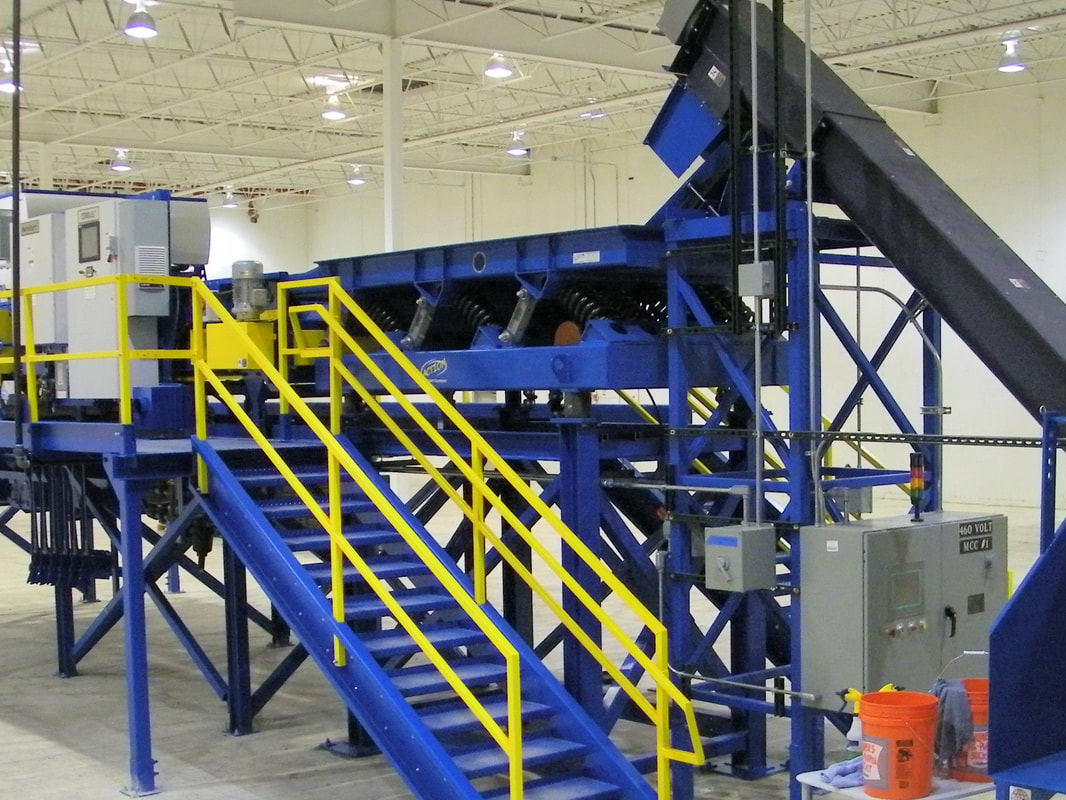

Materials Vibratory Feeders Handle
The pan has no belt to slice, snag, or track. So vibratory feeders are found wherever the material is hard on belts:
- Glass and glass fines: broken container glass is sharp and abrasive. A steel pan handles material that would damage a belt.
- Construction and demolition (C&D) fines: the screened-out fraction of C&D debris, metered ahead of screens and density separators.
- Scrap metal: shredded scrap and turnings that would gouge a belted conveyor.
- Wood waste: ground wood and hog fuel fed to grinders, screens, or fuel lines.
- Single-stream recyclables: mixed containers spread into an even layer ahead of optical sorters, as in the installation pictured above.
Where the Feeder Sits in the Line
A vibratory feeder nearly always sits between storage and transport. Upstream, a live floor bin or custom hopper absorbs surge loads from a bucket loader. Downstream, the feeder delivers an even, metered flow onto an infeed conveyor, a vibratory screen, or an optical sorter. The bin handles storage and rough metering. The feeder evens out the burden depth where it matters. Our work is everything on both sides of the pan. That work is the hopper above the pan, the frame under it, the chute at its discharge, and the conveyors that feed and receive it.
Key Benefits and Features
- Custom support structures: Remcon designs and builds support frames and platforms tailored to your space and system requirements.
- Smooth flow design: we integrate feeders with infeed and outfeed conveyors to ensure steady, even material flow.
- Durable construction: we build structures that withstand demanding environments.
- Low maintenance: we design our integrated systems for easy access, so routine inspections and adjustments can be performed quickly and cost-effectively.
One Shop for the Surrounding Equipment
With Remcon, you have an experienced team that is dedicated to providing a complete, fully functional system. We support you at every step, from selecting the best vibratory feeder to installing conveyors, hoppers, and transition chutes. Our goal is to streamline your material handling process. This streamlined process ensures efficiency, reduced downtime, and long-lasting equipment performance. We design and fabricate all of that surrounding equipment at our Airway Heights (Spokane), Washington shop, and it is then shipped and installed nationwide.
Vibratory Feeder FAQ
What is a vibratory feeder?
A vibratory feeder is a machine that meters bulk material at a controlled rate by vibrating a steel pan. Each stroke throws the material slightly forward, so the load moves toward the discharge in a steady, even layer. The feed rate follows the drive setting.
Is this the same as a vibratory bowl feeder?
No. A bulk-material vibratory feeder is a heavy steel pan that meters recyclables, glass, scrap, or wood waste through a processing line. A vibratory bowl feeder is a small-parts machine that orients screws and components for assembly automation. The bowl feeder belongs to a different trade. Remcon works with the bulk-material type.
Does Remcon manufacture vibratory feeders?
No. Remcon sources the feeder from trusted manufacturers. We build everything around it: support structures, custom hoppers, transition chutes, and the infeed and outfeed conveyors that connect it to the line. We install and support the complete system.
Where does a vibratory feeder go in a recycling line?
A vibratory feeder goes between storage and processing. A live floor bin or hopper upstream absorbs surge loads. Downstream, the feeder delivers material in an even, metered layer onto a conveyor, screen, or optical sorter. This layer gives steady flow instead of clumps and gaps.
We specialize in custom designed and fabricated equipment. We can work with you to design equipment that will work well for your needs. Contact us to discuss options or to get a quote.
Get a quote for vibratory feeder integration →Further Reading
Guides from the people who design and weld conveyors:
- Why Your Optical Sorter Underperforms: Feed Presentation. Singulation and burden depth ahead of the sorter.