
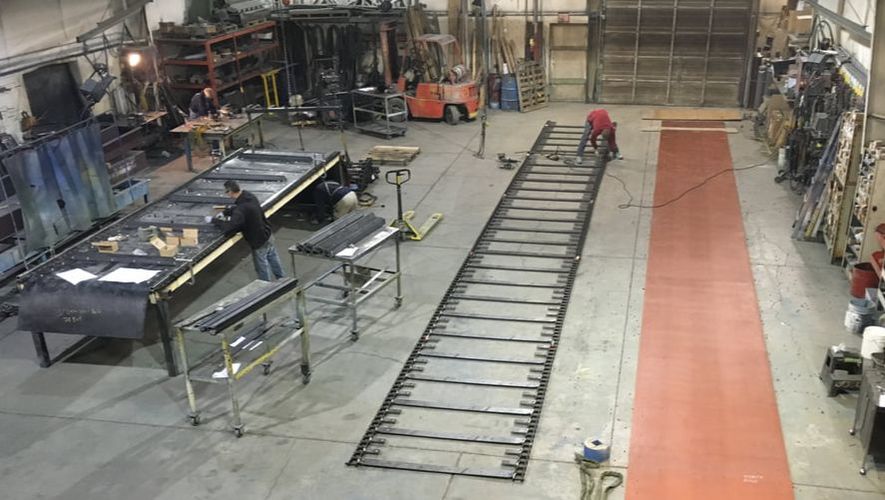
Remcon can supply replacement conveyor belts for our own conveyors and for other brands. The belts range from flat or cleated belting to fabricated belts that include cleats, steel cross members, sidewalls, chain attachments, and other custom features.
Remcon maintains relationships with multiple belting suppliers, so we know where to get belt products at competitive prices. If you need help ordering the right type of replacement belt, or if you need custom fabrication work done, Remcon can help.
Rubber & PVC Replacement Belts
Rubber or PVC replacement belts for slider bed and idler conveyors.
- Available in a variety of materials, widths, and thicknesses
- Various options for cleats and/or sidewalls
Endlessly Spliced Belts
An endless spliced conveyor belt is joined into one continuous loop, hot vulcanized or cold bonded. As a result, there is no mechanical lacing to catch material or wear out. Remcon can supply and prepare belts to be hot or cold-bonded endlessly on site. We developed our own special process to bond belts endlessly onto high-speed conveyors for optical sorting. These conveyors are up to 112" wide and only 16 to 20 feet long. On these conveyors, alignment is critical for proper tracking because of their speed, wide width, and short length. Because of this, we typically pay more attention to splicing accuracy than local belt suppliers do.
Delamination of Plies
Our delamination methods remove the layers of carcass and cover accurately and completely, so that the mating surfaces are completely smooth. The smooth mating surfaces provide full bonding contact. The plies are removed gently, without the strong pulling forces commonly applied to belts. These forces can distort the fabric and cause a crooked connection. The area of bonded overlap is greater than what is common for the industry. The greater overlap produces a stronger bond.
Cold-Bonded Belts
To get the strongest bond, the initial coats of glue need to be applied ahead of time. The glue needs to dry thoroughly between coats. When Remcon provides a replacement cold-glue bonded belt, we will apply the first coats of glue in our shop before shipping. We will allow plenty of cure time. We will ship the belt with enough glue to do the final coat. The final coat is applied when the belt is bonded on the conveyor. When the belt is installed in the field, it is ready for a final coat of glue without any waiting. Remcon can also come on site to perform or supervise the belt installation.
Hot-Bonded Belts
Remcon can order the belts with fingers cut by the belt company. Remcon can also accurately cut different styles of fingers into the belt. When the belt is installed on the conveyor, the ends only need to be aligned in the belt press and hot vulcanized together. These belts are ready to run as soon as they cool down.
Replacement Belt Options
Every replacement belt is specified for the conveyor it will run on. The belt options we work with most often are the same belting and hardware we use on new Remcon conveyors:
| Option | What it is | Typical use |
|---|---|---|
| Belt material | Rubber or PVC, in a variety of materials, widths, and thicknesses | Slider bed and troughing idler conveyors |
| Cleats | Raised profiles on the belt surface, in various options | Carrying material up inclines without rollback |
| Belt sidewalls | Flexible walls at the belt edges, in multiple styles and heights | Containing material on the belt; dividing it into lanes |
| Steel cross members & chain attachments | Fabricated combination belts with cleats, sidewalls, and chain attachments | Drag chain and roller chain belt conveyors |
| Endless splice | Hot vulcanized or cold bonded into a continuous loop, with no mechanical joint | High-speed and optical-sorting conveyors where tracking is critical |
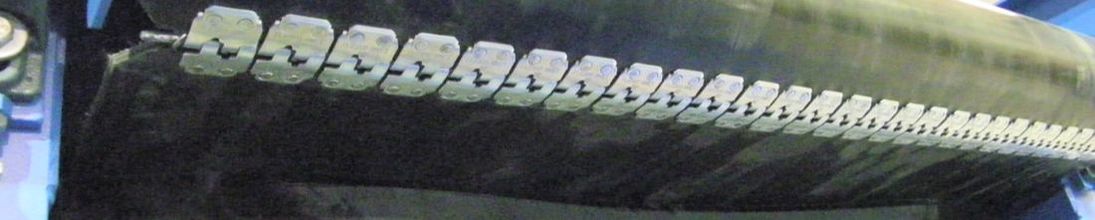
| Mechanical lacing | Flexco Alligator® Staple Hinge for thinner belts or Flexco® R2 Rivet Hinge for thicker belts; galvanized, stainless, or MegAlloy® | Belts that need quick field installation or opening for maintenance |
Chain Belt Replacement
Complete design, fabrication, and installation. Various options for all components, including cross members and cleats.
- Drag Chain with Rubber Belting
- Roller Chain with Rubber Belting
- Roller Chain with Steel Belting
Replacement of Chain Belt Parts
Most brands and styles available. Parts can be ordered and replaced individually as needed.
- Cross members
- Impact shoes
- Wear strips
- Cleats
- Tracks (for both drag and roller chain)
Belt Repair & On-Site Replacement Service
Damaged sections of rubber belt, steel belt, chain, and mechanical splicing can often be repaired or replaced individually instead of replacing the whole belt. For change-out planning, downtime windows, and on-site crews, see our conveyor belt replacement and repair service.
Belt replacement & repair service →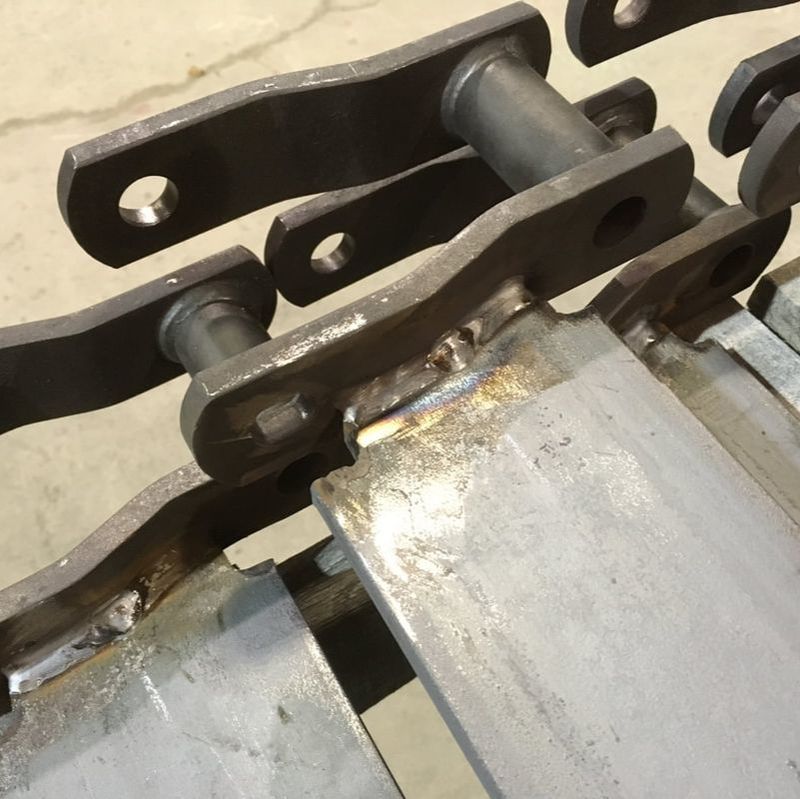
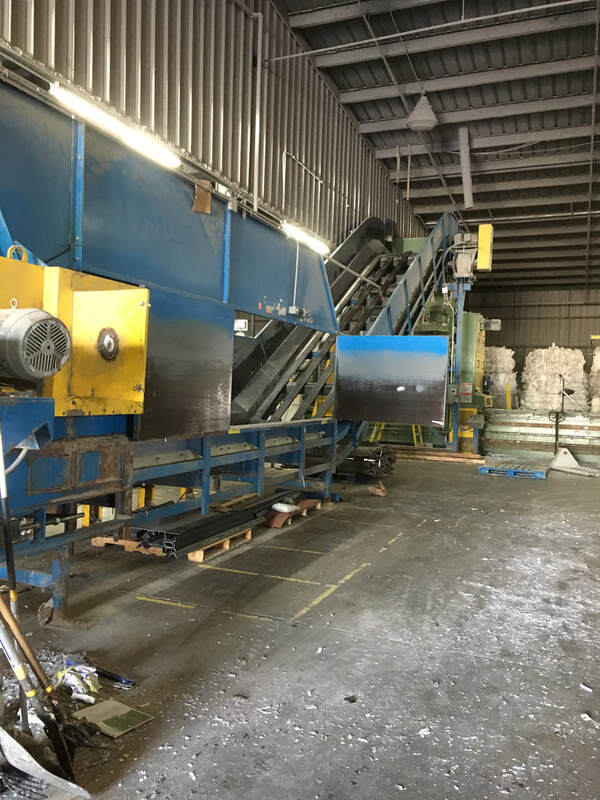
Working & Custom Replacement Parts
Bearings, sprockets, pulleys, motors, reducers, and v-belts often need attention at the same time as the belt. We supply them for our own conveyors and for other brands. We also supply custom fabricated parts and on-site installation. See our conveyor replacement parts page for the full list.
Replacement parts →How to Measure a Conveyor Belt for Replacement
The old belt is the best template. To quote a replacement belt, we need:
- Belt width: measured edge to edge across the belt.
- Belt length: the overall endless length if the belt is spliced, or end to end if it is laced. If the old belt is gone, the pulley center-to-center distance and the pulley diameters let us calculate the length.
- Thickness & construction: overall belt thickness, usually easiest to measure at a cut end or at the lacing.
- Cleats & sidewalls: pattern, height, and spacing, if the belt has them.
- Splice type: endless bonded or mechanical lacing, and the lacing style if known.
If any of this is hard to determine, contact us. Helping you order the right type of replacement belt is part of the job.
Replacement Conveyor Belt FAQ
Can Remcon match a replacement belt for any brand of conveyor?
Yes. Remcon supplies replacement conveyor belts for our own machines and for other manufacturers' conveyors. We maintain relationships with multiple belting suppliers, so we know where to get belt products at competitive prices. If the belt needs cleats, sidewalls, steel cross members, or chain attachments, we fabricate that work in our shop.
Should my replacement belt be spliced endless or laced?
The choice of splice type depends on the conveyor. Endless splicing suits high-speed conveyors where tracking is critical. Mechanical lacing installs faster in the field and lets the belt be opened for maintenance. Remcon hot vulcanizes or cold bonds belts endlessly, including optical sorting belts up to 112" wide. Remcon also offers lacing options such as Flexco Alligator® Staple Hinge for thinner belts and Flexco® R2 Rivet Hinge for thicker belts. Tell us the conveyor. We will recommend a splice type.
How do I measure my conveyor belt for a replacement?
Measure the belt width edge to edge, the overall belt length, and the belt thickness. Note any cleats, sidewalls, and the splice or lacing type. If the old belt is gone, the pulley center-to-center distance and the pulley diameters let us calculate the length. Send us what you have. We will help you specify the right belt.
What is the lead time on a replacement conveyor belt?
Lead time depends on the belt, so it is quoted per job. The main factors are belt availability from our suppliers and the fabrication work required (cleats, sidewalls, cross members, and splice preparation). Cold-bonded belts ship with the initial glue coats already applied and cured in our shop, so the field installation can proceed without waiting. Call (509) 244-9439 for a quote.
We cut, build, and prepare every fabricated replacement belt for splicing at our Airway Heights (Spokane), Washington shop, then ship it nationwide. On-site installation is available if you want us there for the change-out.
Get a quote for a replacement belt →Further Reading
Guides from the people who design and weld conveyors:
- How to Read a Conveyor Belt Spec. Pounds per inch of width (PIW), cover thickness, and ARPM belt grades explained.