
Troughing idler conveyors carry the belt on rotating idler rollers instead of a solid bed. The rollers are mounted in a "U" shape. The "U" shape curves the edges of the belt up into a trough that keeps loose material from spilling over the sides. The belt rides on rollers and does not slide, so friction stays low. The low friction makes the troughing idler conveyor the standard conveyor for moving bulk material over long distances.
Remcon builds them for mining and quarry work, aggregate pits and processing plants, earthwork, and wood products. The materials are ore, crushed rock, sand and gravel, soil, and wood chips. We build them alongside our recycling and solid waste lines.
What Is a Troughing Idler Conveyor?
A troughing idler conveyor is a belt conveyor whose rubber or PVC belt rides on sets of idler rollers. The rollers are angled to form the belt into a trough. The troughing idler conveyor is also called a trough idler conveyor or troughed belt conveyor. The trough does two jobs. It contains loose material that would spill off a flat belt. The trough also centers the load, so the belt tracks straight. Because each idler roller turns with the belt, the drive works against far less friction than on a slider bed conveyor. The lower friction is why the troughing idler conveyor is typically used to carry gravel, dirt, ore, and other bulk material. The conveyor is used especially over long distances, where efficiency matters most. Remcon fabricates custom heavy-duty troughing idler conveyors designed for the specific application, not catalog conveyors.
Parts of a Trough Idler Conveyor
Much of the vocabulary for this conveyor type comes from the Conveyor Equipment Manufacturers Association (CEMA). CEMA standards define idler classes, trough angles, and load ratings. When Remcon designs a trough idler conveyor, these are the components that we select based on your material, your tonnage, and your run:
Trough Angles: 20, 35, and 45 Degrees
The trough angle is the angle of the outer (wing) rollers relative to horizontal. The common industry angles are 20, 35, and 45 degrees. A deeper trough carries more material for a given belt width and contains it better. But it requires a more flexible belt that can form the trough without stressing at the idler junctions. A shallower trough suits stiffer, heavier belts. Trough angle, belt construction, and capacity are selected together. Changing one changes the others.
Three-Roll Idler Sets
The standard carrying idler is a 3-roll set: a horizontal center roll with an angled wing roll on each side. Sets are spaced along the carrying side of the conveyor. Belt width, material weight, and the acceptable belt sag between sets set the spacing. Heavier material and wider belts need closer spacing and heavier idler classes. On a Remcon conveyor, idler diameter, class, and spacing are sized to the application and quoted per job.
Impact Idlers at the Load Zone
The load zone is where material drops onto the belt from a hopper, chute, or crusher discharge. This zone takes the worst abuse on the whole conveyor. Impact idlers replace the steel rolls there with rubber cushion-disc rolls, typically spaced closer together. The belt is then supported, and the shock of falling lumps is absorbed. The shock does not hammer the belt cover and the idler bearings.
Return Idlers
Return idlers are flat rolls mounted under the frame that carry the empty belt back to the tail. They keep the return run from sagging or dragging. Return idlers are a normal wear and inspection item over the life of the conveyor.
Belt Training
Belt training is keeping the belt running centered on the idlers and pulleys. Training starts with square, aligned idler sets and properly set take-up tension. Tracking adjustment at the pulleys then sets the belt position exactly. On long runs, self-aligning (training) idlers can be added to steer the belt back to center automatically. A troughed belt helps with training. The trough centers the load, and a centered load keeps the belt tracking straight.
Custom Heavy-Duty Troughing Idler Conveyors
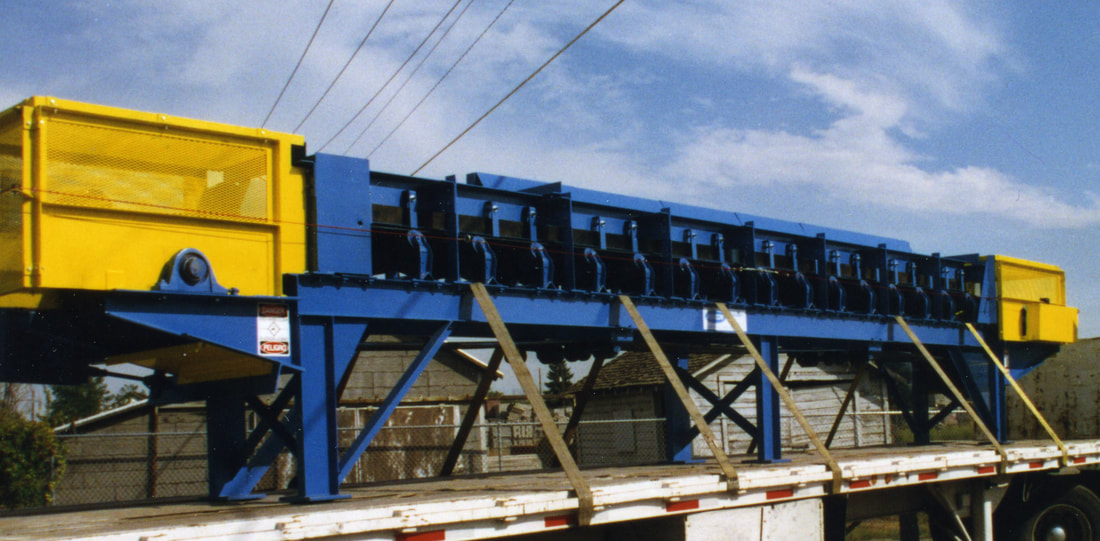
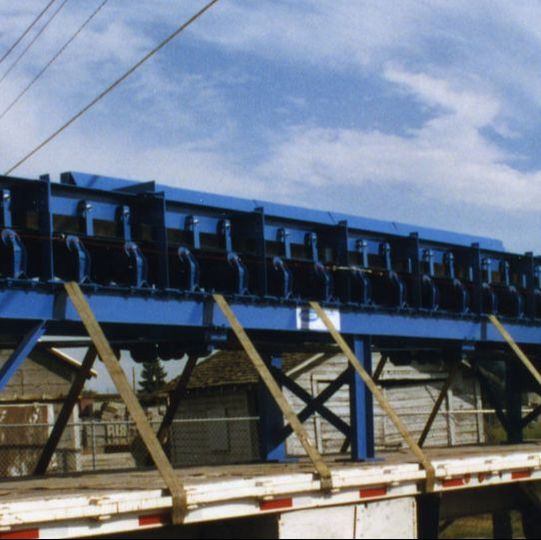
Remcon can fabricate custom heavy-duty troughing idler conveyors specifically designed for your application. The photos below show a heavy-duty troughing idler conveyor that we fabricated for a silver mine.
Built for Mining Service
Mining is about the hardest duty for a belt conveyor. Ore is heavy, sharp, and abrasive. It lands on the belt in lumps and not in a gentle stream. The conveyor is expected to run shift after shift, because a stopped conveyor stops the production behind it. The heavy-duty troughing idler conveyor shown above was built for mining service. Remcon comes to this work from the recycling industry. Our recycling equipment handles materials that are rough on machines, such as whole and broken glass and tin and aluminum cans. We have built machinery for mining, construction, and manufacturing alongside our recycling and solid waste lines since 1977.
Materials & Industries
Troughing idler conveyors are the standard machine for loose bulk material. Anywhere a flat belt would spill its load, a troughed belt contains it. Typical applications for this conveyor type include:
- Mining & quarry: ore and crushed rock, from crusher discharge to stockpile and load-out.
- Aggregate: sand and gravel, crushed stone, and screened products at pits and processing plants.
- Earthwork: dirt and soil, especially where a long conveying run is better than truck hauling.
- Wood products: wood chips and similar loose organics that pile and spill on a flat belt.
Tell us the material and the tonnage. We select the belt, trough angle, and idlers based on them.
Troughing Idler or Slider Bed?
Remcon's specialty is building slider bed conveyors. We can often apply this specialty to design a slider bed style conveyor. This conveyor can be easier to maintain and less expensive than a troughing idler conveyor. In some circumstances, a troughing idler conveyor is a better choice. In other circumstances, the end user prefers it. We can work with you to design the best conveyor for your needs.
In short, rollers have lower friction, and slats are simpler. A troughing idler conveyor pulls heavy bulk material over long runs with less drive load. A slider bed has no idler bearings to seize, inspect, or replace. An idler set every few feet is a recurring maintenance item. A slat bed does not have this item. Many systems use both types in series.
Compare slider bed conveyors →Troughing Idler Conveyor Specifications
Every Remcon conveyor is built to order. So a trough idler conveyor is specified based on the material and the run, not from a catalog page. The table below shows how the major items are typically specified:
| Item | How Remcon specifies it |
|---|---|
| Belt | Rubber or PVC, in a variety of materials, widths, and thicknesses (matched to the material carried and the trough angle) |
| Trough angle | Selected per application. The common industry angles are 20, 35, and 45 degrees |
| Carrying idlers | Three-roll troughing idler sets. Diameter, class, and spacing are sized to the application and quoted per job |
| Impact idlers | Rubber cushion-disc sets at the load zone, as the loading conditions require |
| Return idlers | Flat return rolls carrying the empty belt beneath the frame |
| Frame | Heavy-duty welded steel, custom fabricated for the site and the load |
| Drive | Sized to the belt pull. Remcon has used shaft-mounted, v-belt-driven reducers since 1990. This drive family is proven in sand, rock, gravel, and mining service |
| Length & lift | Sized to the application, quoted per job |
| Options | Cleats, belt sidewalls, hoppers, chutes, and hoods as the layout requires |
| Installation | Shipped and installed nationwide from Airway Heights, WA, with Remcon's own installation crews |
Troughing Idler Conveyor FAQ
What is a troughing idler conveyor?
A troughing idler conveyor is a belt conveyor whose belt rides on sets of idler rollers mounted in a "U" shape. The edges of the belt curve up into a trough that contains loose material. Riding on rollers keeps belt friction low. For this reason, this conveyor type is the standard for carrying bulk material (gravel, dirt, ore, aggregate) over long distances.
What trough angle do I need: 20, 35, or 45 degrees?
Common trough angles are 20, 35, and 45 degrees. The right angle depends on the material and the capacity required. A deeper trough carries more material for a given belt width and contains it better. But it requires a more flexible belt. We select the trough angle, idler sets, and belt together when we design the conveyor for your application.
Troughing idler or slider bed: which do I need?
Choose a troughing idler conveyor for long runs and heavy bulk material such as ore or aggregate, where lower belt friction matters most. Choose a slider bed conveyor for light to medium loads, small or irregular material, and low-maintenance service. Remcon builds both. Our slider bed specialty often lets us design a conveyor that is easier to maintain and less expensive. When a troughing idler is the better choice, we will say so and build it heavy-duty.
What are impact idlers and do I need them?
Impact idlers are cushioned idler sets, typically rubber disc rolls. They are installed at the load zone to absorb the shock of material dropping onto the belt. If your conveyor is loaded with heavy lumps from a hopper, chute, or crusher discharge, impact idlers protect the belt cover and the idler bearings. Impact idlers give this protection at the point that takes the worst abuse.
What materials do troughing idler conveyors handle?
Troughing idler conveyors handle loose bulk materials: ore, aggregate, sand and gravel, crushed rock, dirt, and wood chips. The troughed belt contains material that would spill off a flat belt. Containing the material is why the troughing idler conveyor is the main type used in mining, quarry, and aggregate service. We have built machinery for mining, construction, and manufacturing alongside our recycling lines. That machinery includes a heavy-duty troughing idler conveyor for a silver mine.
How much does a custom troughing idler conveyor cost?
Price depends on belt width, length, trough angle, idler selection, drive size, and options such as impact idlers, hoppers, and hoods. So Remcon quotes each conveyor individually. Tell us the material, the tonnage, and the run. We will quote the conveyor. If a simpler, less expensive conveyor can do the job, we will also tell you that. Call (509) 244-9439 for a quote.
Designed Around Your Application
We specialize in custom designed and fabricated equipment. We can work with you to design equipment that will meet your needs. We design and fabricate every troughing idler conveyor at our Airway Heights (Spokane), Washington shop. We then ship and install it nationwide. We also supply replacement belts and parts for the life of the conveyor. Contact us to discuss options or to get a quote.
Get a quote for a troughing idler conveyor →Further Reading
Guides from the people who design and weld conveyors:
- Slider Bed vs Roller Bed Conveyor: How to Choose. Friction, maintenance, and which bed suits your material.
Quarry, Aggregate & Crushed Stone
Most quarry and aggregate work uses the troughing idler conveyor. The specification changes for that duty: the belt cover grade, the idler class, and how the load zone is protected. The load zone is where material lands off a crusher or a chute.
Quarry & aggregate conveyors → Crusher discharge conveyors → Guide: choosing troughing idlers →