
Chain can be used as a means of conveying products in many different ways. There are almost endless styles of chains made specifically for use on conveyors, and the possibilities for chain attachments are practically unlimited. Chain is easy to drive with the appropriately sized sprocket, can be repaired by replacing individual links, and is strong and hard to damage.
What Is a Chain Belt Conveyor?
A chain belt conveyor is a conveyor whose carrying surface — rubber or PVC belting, steel flights, or steel pans — is bolted to strands of steel chain and pulled by sprockets rather than driven by friction on a pulley. The sprockets at the discharge end grab the chain as the shaft is turned by a motor with a reducer, so the drive is positive: the belt cannot slip the way a friction-driven belt can. Where a slider bed conveyor depends on friction between the belt and the drive pulley, a chain belt keeps pulling as long as the chain is intact — and the chain itself can be repaired link by link. That combination of positive drive and simple repair is why chain conveyors handle the hardest duty in recycling, scrap, and solid waste plants.
Remcon builds every style described below to order, and each has its own entry with full construction details. If you're weighing the drag chain variants against each other, see all drag chain styles compared.
Common Types in the Recycling Industry
Drag Chain with Rubber or PVC Belting
Rubber or PVC belting bolted to steel cross members between two strands of chain. The general-purpose chain belt for mixed recyclables and MRF feed duty, where a continuous surface holds material better than open flights do.
More on drag chain belt conveyors → More on drag chain belt conveyors →Roller Chain with Rubber or PVC Combination Belt
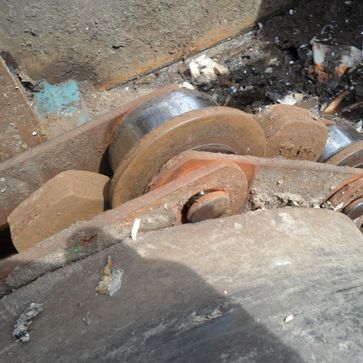
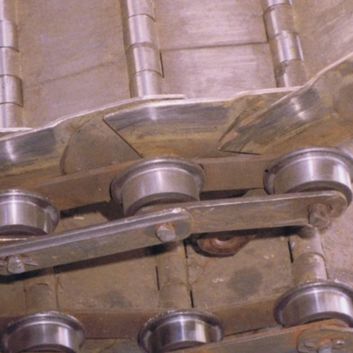
The same combination belt, carried on chain with a steel roller in every link running on rail. Rolling instead of sliding is what lets these move the heaviest loads in the plant on the least drive power.
Roller chain belt conveyor details → Roller chain belt conveyor details →Roller Chain with Steel Pans (Steel Belt)
The same as the roller chain with rubber belt, except steel panels are substituted for the rubber belting. Remcon offers a variety of steel belt options — contact us to discuss which configuration works best for your needs.
Other Chain Conveyors We Build
Drag Chain with Steel Flights (Beltless)
No belt at all. Steel cleats bolted between the chains carry, push, and meter the material along a replaceable steel bed. This is the build for metal, scrap, and anything else that opens a belt.
More on beltless drag chain conveyors → More on beltless drag chain conveyors →Chain Conveyors for Bins or Pallets
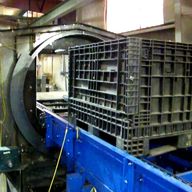
A uniformly shaped object such as a bin or pallet sits on two strands of heavy-duty chain riding edge-on over ultra-high molecular weight (UHMW) polyethylene wear surfaces. The strands aren't connected to each other, but are pulled simultaneously by the drive shaft at the discharge end. With sensors, these can be arranged for automatic staging, conveying, dumping, raising, and lowering of bins throughout a plant.
More on bulk container conveyors →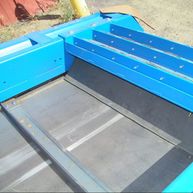
Single-Strand Drag Chain for Bulk Materials
The simplest form of drag chain conveyor: a single, wide strand of chain slides along a flat wear surface, dragging loose material with it. Depending on the design, the chain moves only the material sitting inside the links — or both inside and on top of the chain, sometimes called "en-mass conveying." Paddle or wing attachments can help move material along, but aren't always required.
Contact us to discuss →Chain Conveyor Styles Compared
The right chain belt depends on the material, the load, and how the conveyor will be fed. The table below compares the four styles we build most, drawn from the individual product entries — follow the links above for the full construction details of each.
| Style | Belt type | Best for | Wear characteristics |
|---|---|---|---|
| Drag chain + rubber/PVC belt | Rubber or PVC belting bolted to steel cross members between two chain strands | The most basic chain belt — baler feed, infeed, and sort line feed duty | Chain slides flat on angle-iron tracks with bolt-on, replaceable UHMW wear surfaces; chain repairable link by link |
| Drag chain + steel flights (beltless) | None — steel cross angles drag material along a solid steel bed | Metering material out of a hopper; conveying metal — no belt to puncture or bend | Replaceable bed sections in 1/4" steel plate (hardened plate or UHMW-covered optional); chain slides on UHMW tracks |
| Roller chain belt | Combo belt (rubber or PVC on cross members) or steel pans (steel belt) | The hardest-working conveyors in the plant — heavy loads moved with less power | Rollers roll on replaceable 30 lb. ASCE rail instead of sliding; shaped rail transitions reduce chordal wear at the head sprockets |
| Bulk container conveyor | None — the bin or pallet sits directly on two independent chain strands | Staging, conveying, and dumping tote bins, pallet bins, and pallets | Chain rides edge-on over UHMW wear surfaces; no belt surface to puncture or tear |
Positive Drive: What Changes When Sprockets Do the Pulling
The part everybody notices is that a chain belt cannot slip. The parts that matter to the rest of the machine are quieter than that.
A friction-driven belt has to be pretensioned hard enough for the drive pulley to grip it, and that tension sits there all the time: in the carcass, in the shafts, in the bearings, in the frame holding the take-up apart. A chain belt only needs enough tension to keep the chain seated on the sprockets, so the take-up on one of these machines is set for chain slack and tracking rather than for grip.
The failure mode moves as well. Overload a friction belt and it slips: it squeals, it polishes, and eventually it stops moving, which is annoying but is also a kind of protection. Overload a chain belt and it keeps pulling until something gives. That is why the drive is built with a deliberate weak point ahead of the chain, and why a variable frequency drive earns its place on this style of machine. Both are covered in the drive section of this page.
Welded Chain and Roller Chain Are Different Components
Welded steel chain, the drag chain in this family, is built by welding the barrels straight to the sidebars instead of press-fitting them. Heavy, simple, forgiving. It lies flat on its side and slides, so the whole strand is a bearing surface and the track under it is the wear item.
Engineering-class roller chain is an assembly instead: hardened bushings press-fit into inner sidebars, headed pins locked into the outer sidebars, and a steel roller on every link. Nothing about it wants to slide. It rides on rail, and that rolling contact is what lets the same motor move a heavier load.
What decides between them is drag. Sliding chain takes power on every foot of the run, every hour the plant is open, and it takes more of it as the load, the length, and the incline go up. Below a certain amount of work, living with that buys the simpler machine: fewer precision parts, tracks you re-face with a wrench. Above it, the rollers earn their place. Remcon specifies and installs both. The chain comes from chain manufacturers; we build the conveyor around it.
The Chain Has a Part Number, and It Is Not Ours
Welded steel mill chain is not a proprietary part. The designations are national standard numbers. ASME B29.200, Welded-Steel-Type Mill Chains, Welded-Steel-Type Drag Chains, Attachments, and Sprocket Teeth, fixes the chain dimensions, the attachment styles, and the sprocket tooth form that belong to each number. WR78 therefore means the same chain whoever rolled the steel: Webster Industries publishes it at a 2.609" pitch, and so does PEER Chain, in a different catalog, in a different state.
That is worth more to the person buying the conveyor than it is to us. It means the wear part at the middle of the machine is a catalog item with more than one source, and that a replacement strand does not have to come back through the company whose name is on the frame.
What Remcon specifies is Webster Industries welded steel mill chain, and has done since the early 2000s. These are the designations that recur on our drawings, with the pitch each one carries in Webster's published catalog:
- WR78 — 2.609" pitch. The finest pitch we use regularly, and it turns up on bin dumpers, tote tippers, and container handling rather than on belt machines.
- WR78-4 — 4.000" pitch. Chain belt work.
- WH124 and WHX124 — 4.000" pitch.
- WH111+ — 4.760" pitch. The heavy end, under wide belts.
Pitch is the distance from one barrel centre to the next, and it sets most of what follows: how the strand wraps a sprocket, how many teeth that sprocket wants, and how often an attachment can be bolted to the chain. It is the first number to know about any chain conveyor.
Combination chains are the other branch. Cast blocks carried on steel sidebars rather than an all-welded strand, they show up when we are matching an existing belt rather than building a new machine. The two we have drawn most are N102B at 4.000" and N131 at 3.075".
None of that is a house standard and it would be overselling to present it as one. Chain is picked per job, against the load, the width, and whatever is already turning on the shafts when there is an existing machine involved. A note that recurs across our belt drawings is not a designation at all. It says the chain is Webster, 4" pitch, and stops there.
We are not a chain dealer and are not affiliated with any chain manufacturer. We buy chain and build the conveyor around it, and we name the chain so you can source the wear part yourself.
Two Wear Systems: UHMW-Faced Track and Steel Rail
Every conveyor in this family is a decision about which part you are willing to wear out.
Drag chain runs on angle iron faced with black reprocessed UHMW polyethylene. UHMW slides on steel at a coefficient of friction of roughly one to two tenths, resists abrasion far better than plastic has any right to, and needs no lubrication. It is also, deliberately, softer than the chain. Wear lands on the plastic, and the plastic is a bolt-on strip.
Roller chain runs on 30 lb. ASCE rail: a standard American section weighing thirty pounds to the yard, the same stock light industrial track is built from, so it is an off-the-shelf item rather than something proprietary. Remcon installs it as a replaceable part and not as a structural member, so a worn rail is a rail change and not a frame repair.
The rule under both is the same. Put the sacrificial part where somebody with hand tools can reach it, and keep it off the drawing of the frame.
What "Combination Belt" Means
The trade calls a chain belt with rubber or PVC on it a combination belt, and the name is literal. It combines two things that are normally alternatives: chain, which pulls and cannot slip, and belting, which carries and keeps material from dropping between the links.
The assembly is always the same three parts. Two strands of chain set at the belt width. Steel cross members bolted between them at regular intervals. Belting bolted down on top, in sections, with cleats and side wings where the material needs holding in. Swap the belting for die-formed steel pans and the same assembly becomes a steel belt.
Because it is bolted rather than vulcanized, a combination belt is a made-to-order item with a parts list rather than a mystery. Remcon fabricates combination belting as a replacement item for conveyors it did not build, as well as building the conveyors themselves.
When a Chain Conveyor Is the Wrong Answer
Chain is not free of consequences. A chain conveyor arrives with sprockets at both ends, tracks down both sides, hold-down guides at every angle change, and more moving steel to keep adjusted and oiled. If the job does not need what chain gives, that is a machine maintained for nothing.
The honest test is what lands on the belt. If the material is light to medium, arrives without being dropped from height, and holds nothing that will cut a belt, a slider bed conveyor does the same job with a fraction of the parts: one belt, one bed, two pulleys. It is quieter, and there is no chain to elongate.
Chain earns its keep when the loading is violent, when the material is abrasive or sharp, when the conveyor sits under a hopper and has to meter, or when the load is heavy enough that a friction drive would want more tension than anybody should stand next to. If it is close, tell us the material and we will say which one we would build.
We Measure the Chain Rather Than Trust the Nominal Pitch
New chain does not arrive at its nominal length, and a shop that assumes it does builds belts that do not fit. Remcon measures instead, and has the numbers written on the drawings.
Ten-foot lengths of chain, nominally 120", have measured anywhere from 120 1/8" to 120 3/8" long. Against fifteen 8" sections in a ten-foot length that is about 0.025" of extra length in every section. Another note on another job puts the shop average at roughly 5/16" extra per 120", which works out to about 0.021" per 8" of chain. Small numbers, until every section in the belt has one.
So the fabrication fixtures are built to the measured chain and not to the drawing. On one belt fixture the locating stops were deliberately spaced 1/32" further apart than the as-drawn chain, because the chain being used averaged 120 5/16" over ten feet. The note explaining why is on the fixture drawing, so the next person to use it knows it was not a mistake.
The same discipline applies to replacement work, in both directions. On a 2025 chain belt job the new strands were measured before the layout was drawn: each averaged about 119.5" over 53 links, which is 2.255" per pitch, and the note records that the layout below it was adjusted to that as-measured pitch instead of the nominal one. The old chain was measured too, and it did not hold still. With the worn belt still bolted to it, it came to one length; with the belt off and the strand pulled tight, it measured 3 1/4" longer. A replacement belt laid out to nominal pitch has to line up with whichever of those the chain is actually doing.
Even the CAD blocks went through this. The chain views in our library were originally drawn from published catalog dimensions. They were re-drawn from as-measured dimensions and saved separately, so that a drafter picking a chain view off the shelf is picking the one that matches the steel in the building.
The habit is worth stating plainly because it is unglamorous and it is the whole difference between a replacement belt that drops on and one that has to be persuaded. Nominal pitch is what the chain is called. Measured pitch is what is in the building.
Chain Wear, Re-Chaining, and Where "Repairable Link by Link" Stops
Chain does not stretch. Steel sidebars do not lengthen under normal load. The pin turns inside the bushing every time a link wraps a sprocket, metal comes off both surfaces, and the joint gets loose. The pitch grows because the slop grows.
A chain and its sprockets are a matched pair. As the pitch grows the chain rides higher on the teeth, contact moves toward the tips, and the last teeth in the wrap take load they were never shaped for. Left long enough, the chain climbs and jumps. Chain suppliers publish an elongation limit for this reason, commonly in the two to three percent range, and standard practice is to fit new sprockets with new chain rather than hang new chain on worn teeth.
So the family's best feature has an end point. Replacing links is the right repair for damage: a bent sidebar, a broken pin, whatever a loader did on a Tuesday. It is the wrong repair for age. New links in a uniformly worn strand sit short next to the old ones and take a load share they should not. At that point the machine wants a re-chain, and a conveyor with a sound frame is almost always worth it. See conveyor repair and refurbishing.
Conveyor Orientation Options
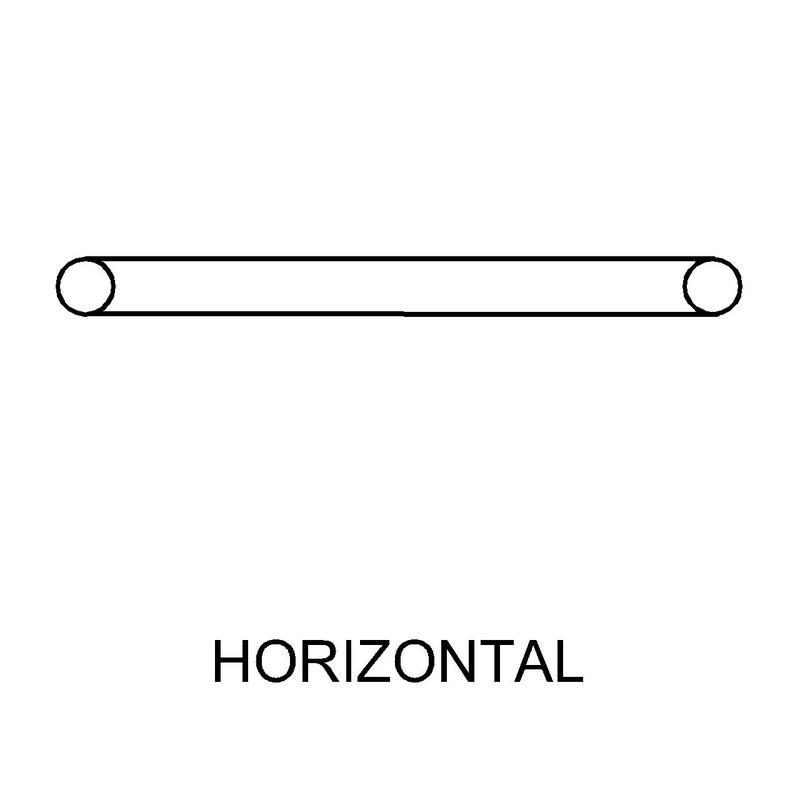
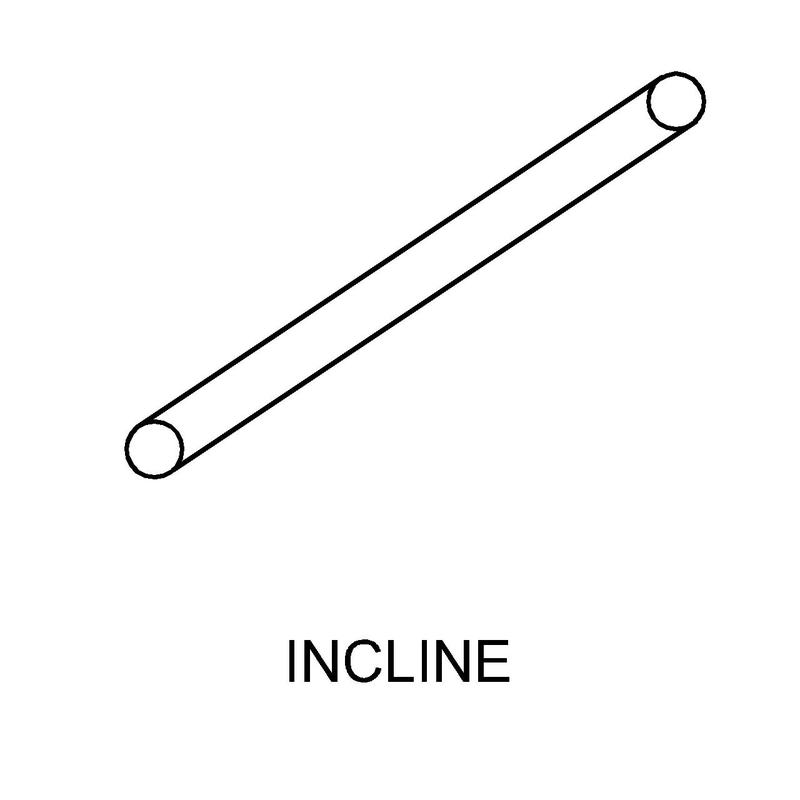
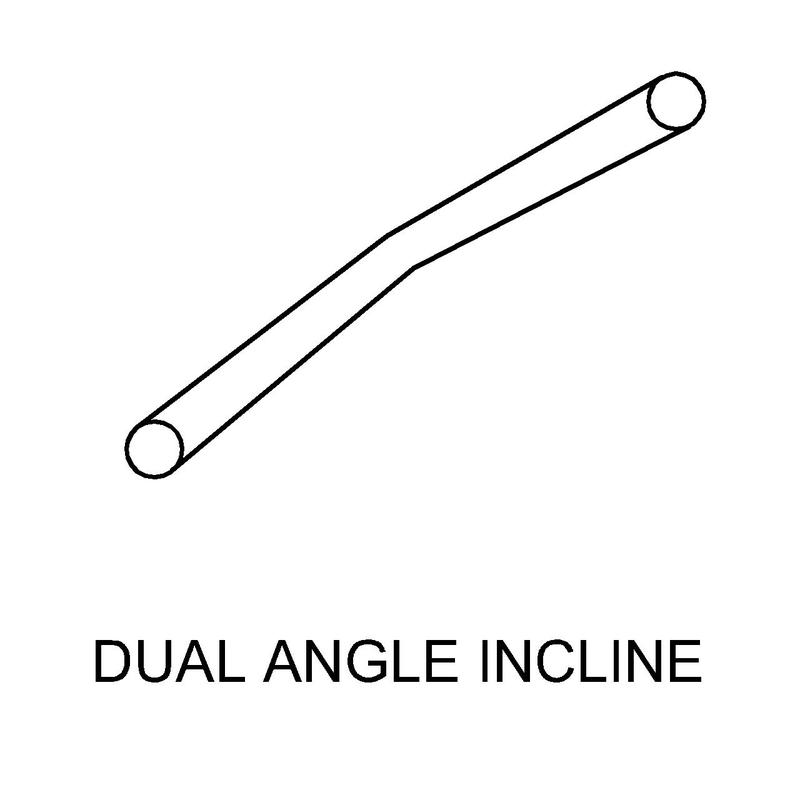
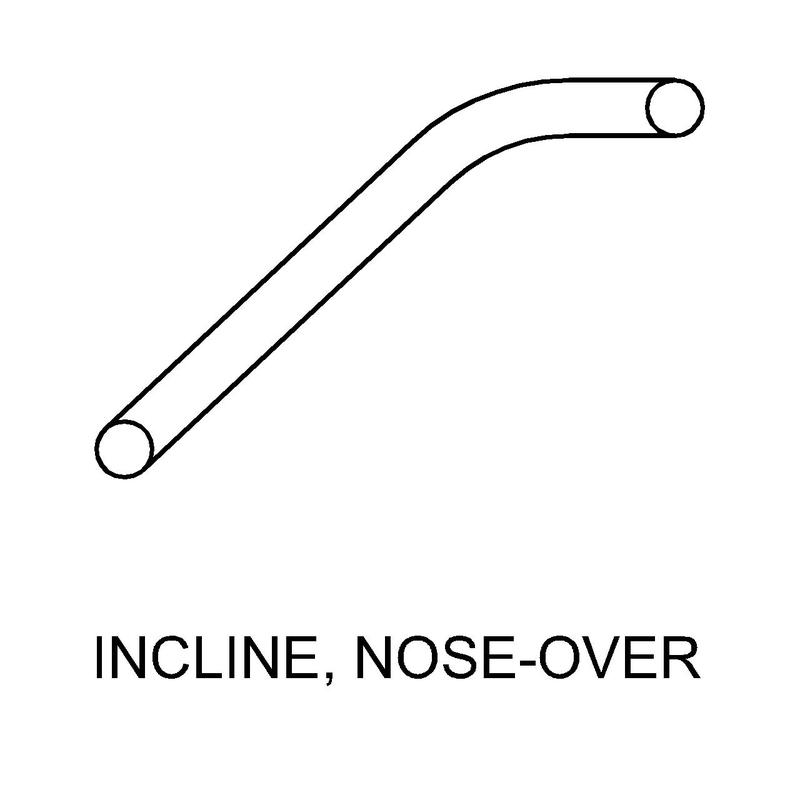
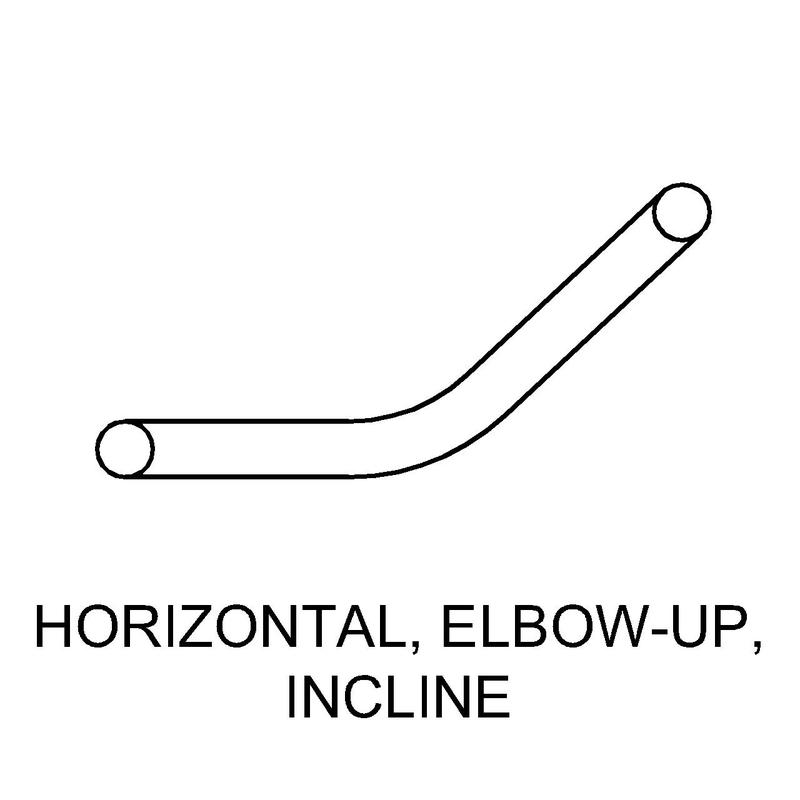
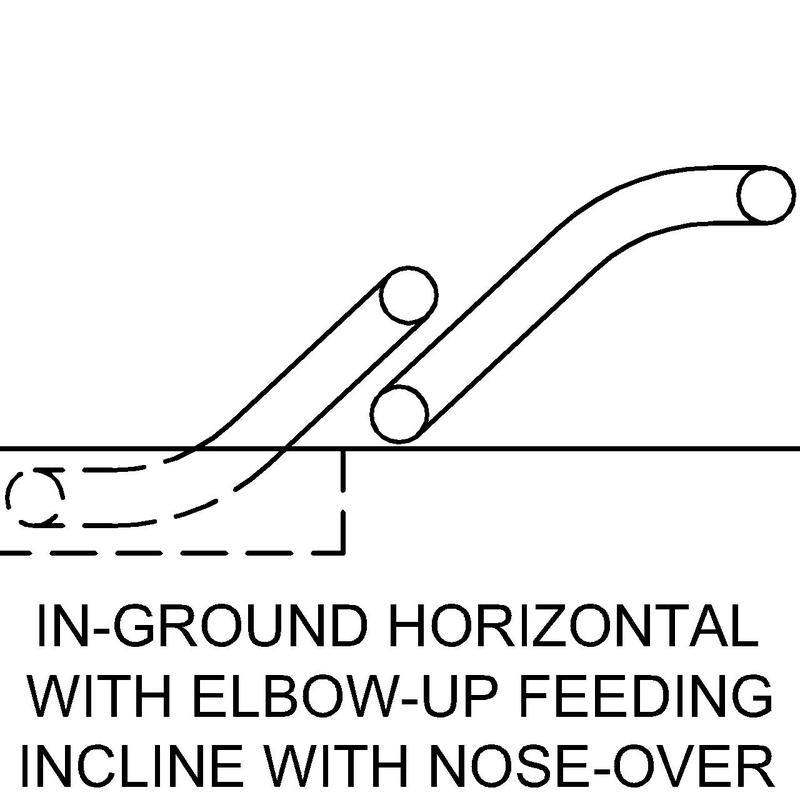
Remcon can build drag chain conveyors in many different orientations, depending on the layout requirements. We can also build two separate conveyors that run in series — to simplify installation, separate clumps better, or use two different types of conveyors (for example, a roller chain feeding a slider bed). Other options may be available, depending on the application.
All of these orientation options can be installed both in-ground (in a pit) or above ground.
Conveyor Features
Structural Steel Conveyor Frame
Heavy-duty open frame construction from structural shapes and formed plate at elbows, braced and reinforced for rigidity in all places and completely shop fitted and welded. The conveyor frame is specially designed to allow more access between upper and lower belts and includes special expanded maintenance openings.
Conveyor Alignment
Remcon conveyors are shop fabricated in the longest sections practical (up to 40 ft.). Adjoining sections are aligned accurately with each other in the shop as they are fabricated. The entire conveyor is aligned (and leveled) a second time during installation, to prevent the belt from wandering and wearing into the side of the conveyor.
UHMW Plastic Wear Surfaces on Impact Beams
1/2" thick x 6" wide black reprocessed UHMW polyethylene plastic is attached to the conveyor impact beams. (Reprocessed UHMW is used due to the improved wear properties achieved by the cross-linking that happens during the production process.) When sufficient load is applied to the belt to cause the impact channels to flex, the impact shoes ride on the UHMW wear strips rather than directly on the steel impact beams. The plastic is attached with bolts, is easily replaced, and has slotted holes that allow for thermal expansion to prevent buckling in warm weather.
Drag Chain Tracks
Steel angle iron with 1/2" thick x 6" wide black reprocessed UHMW polyethylene plastic wear surface provides a smooth, low-friction, wear-resistant surface for the drag chain to slide on. The plastic is attached with bolts, is easily replaced, and has slotted holes that allow for thermal expansion to prevent buckling in warm weather.
Hold-Down Guides
Remcon's special UHMW hold-down guides guide the drag chain up or over curves (if there are angle changes in the conveyor) and are built to be easily replaced if needed.
Leg Height and Leveling Adjusters
Conveyor legs are equipped with threaded height adjusters for fine-tuning the height and for leveling the conveyor accurately.
Remcon Belt Take-Ups
Remcon's cantilevered telescoping tube style take-ups, with manual screw adjustment, offer the following advantages:
- Cleaning access. The support tubes are positioned to provide access to the area between the upper and lower belts, for cleaning and inspection of the tail pulley on slider bed conveyors, or the tail sprockets and shaft of chain belt conveyors.
- Replaceable parts. The bearings are commonly available pillow block style. The threaded working parts of the take-up are commonly available from local fastener or hardware stores, and are replaced easily.
- Take-up travel. Generous length of take-up travel: 12" on the shorter conveyors and up to 18" on the longest. On slider bed conveyors, the belt is cut so that the majority of the take-up is used for ease of belt installation, repair, and replacement, since good quality belts with polyester carcasses have virtually no stretch after initial tensioning, and in some cases will shrink slightly.
- Ease of adjustment. Tracking and tension adjustments are made with one wrench, with no need to loosen and re-tighten the bearing attachment bolts. The moving parts of the take-up have generous amounts of clearance, to prevent binding in the frame or against the bearings (side load) as the take-up moves through its full range.
- Versatility. Remcon take-ups will accommodate almost any brand of bearing, in the most common pillow block style.
Tracking Adjustments on Both Ends of Conveyor
Additional belt tracking adjustments are provided for the non-take-up end of each conveyor, for ease of tracking adjustments.
Drive Method: Parallel Gear, Shaft-Mounted, Torque Arm Gear Reducers (Dodge Torque Arm II)
These reducers have been used almost exclusively in the sand, rock, gravel, and mining industries for many years, and are well proven. Remcon has used them since 1990, with good success. The new generation has been re-engineered throughout with features designed to improve performance, extend service life, and reduce maintenance. Remcon normally configures these reducers to be driven by a separate motor by v-belts, using different combinations of sheaves for additional speed reduction.
The advantages of the Dodge Torque Arm II shaft mount reducer with v-belt drive:
- Low maintenance. There are no chains to oil, tension, or shorten and reconnect.
- Ease of adjustment. Rather than moving the entire gearbox and motor to adjust chain tension, adjusting the Dodge Torque Arm II reducer only requires opening the hinged door on the belt guard, loosening the two lock nuts, and turning the turnbuckle by hand.
- Fewer wear parts. There are no sprockets or chain to wear out. Although v-belts will wear out, they commonly do not wear out until they are protecting the conveyor from jamming, if it jams (see the following item). They are inexpensive and easy to replace. V-belt sheaves last much longer than drive chain sprockets and drive chain.
- Jamming protection. The need for mechanical shear pins is eliminated. The motor drives the reducer by v-belt(s). If the conveyor jams, the v-belt slips, preventing the jam from causing damage to the conveyor. As the v-belt is slipping, it typically makes a loud squealing noise that draws attention to the problem. If the conveyor is not turned off, the v-belt will eventually be ruined, and there will be nothing driving the jammed conveyor. The v-belt is the cheapest part in the drive to replace. Replacing the belt involves opening the hinged belt guard door, loosening the turnbuckle, and slipping the new belt on. If the conveyor is prone to jamming (for example, wrong product or too much product), the v-belt can be kept looser than normal to minimize the potential for damage. In the past 12 years that we have used these reducers, we are unaware of any Remcon conveyor equipped with them that suffered damage resulting from jamming. As additional jamming protection, an electronic shear pin may be added to the electrical system.
- Parallel gears. The gears are parallel, rather than right angle. Parallel gears are more efficient and produce less friction.
- Operating and maintenance convenience. When working on a conveyor — doing maintenance, un-jamming product, or diagnosing problems — there is often a need to move the belt a short distance forward or backward. This is impossible electrically, since the power should be locked out at this time. But it can be accomplished easily and safely without power when using a shaft-mounted reducer, by turning the spokes on the input sheave by hand.
- Excellent availability. Unlike other reducers, Dodge Torque Arm II reducers are so commonly used in other industries that they are quite often in stock at many local dealers, and are almost always available somewhere in the country. Other brands (Link, Browning, etc.) may also be substituted without modification.
- Separate motor. The motor is mounted separately from the reducer, and is connected only by v-belts. Therefore, any brand of motor can be used, and a motor breakdown does not affect the reducer, or vice-versa.
- Ease of changing reduction ratios. Reduction ratios of up to 5 to 1 are easily obtained from the motor-to-reducer v-belts and sheaves. These ratios are easily changed by swapping out sheaves, which is more difficult and expensive with a drive chain and sprockets.
Variable Frequency Drive (VFD)
A VFD can be a very worthwhile component to have on a conveyor, and is especially recommended on chain belt conveyors. VFDs offer:
- Soft start — decreases wear and tear on the motor and other drive parts
- Jam protection — replaces old technology (shear pins, clutches, etc.) and works better
- Many other programmable settings for speed, acceleration, deceleration, and more
Maintenance & Safety Features
Remcon's drag chain conveyors are designed to allow the safest and easiest access to maintenance areas, to ensure a smooth running operation.
Enlarged Maintenance Access
Special open frame design maximizes access between the upper and lower belts and includes special expanded maintenance openings.
Hinged Guards for Drive Components
Remcon's standard guards include a hinged door that provides convenient access for inspection and maintenance without removing a guard. For conveyors that have insufficient clearance for a hinging door at the drive, the door — rather than the entire guard — is unbolted to gain access.
Self-Cleaning Belt Return Chutes & Guarding
The entire underside of the conveyor, from the discharge to the floor, is guarded for safety and cleanliness. Debris that clings to the belt falls into the chutes (rather than onto the floor), then slides down the chutes, which are free of catch-points. It then collects in a guarded collection point at floor level (and outside of the pit, if there is one). The chutes are easily removed for maintenance.
Debris Clean-Out Door
Debris that slides down the return belt chutes is collected in this guarded area. The door provides convenient cleaning access.
Emergency Stop System
Cable-pull switch with required cable and rigging.
Pit Deckplate Features
Remcon also manufactures deck plates and supporting framework custom designed to fit each pit conveyor. We offer a system that allows the easiest access to the inside of the pit for maintenance, while keeping the loading floor safe and secure during operation.
Deck Plates
1/2" thick plate, with 3 x 3 x 3/8" angle stiffeners, 5 feet typical length. Pit deck stops are welded to the underside of the deck plates to prevent the plates from being slid apart by a skid steer machine. They also act as guides to allow removal and re-installation of the plates by one person on a forklift, using the lift-out deck plate handles.
Lift-Out Deck Plate Handles
These heavy-duty handles are inserted into special holes in the center of the plates. A forklift is then used to remove and re-install the plate, all by one person.
Deck Plate Supports
Steel tube, 3 x 3 x 1/4" or larger, with one end welded to the steel embedded in the top of the concrete pit wall (curbing angle) and the other end welded to the conveyor. These tubes are installed underneath the 1/8" gaps between all the deck plates, and are spaced 4 to 5 feet apart. The deck support tubes serve the following functions:
- Provide additional support for the deck plates, to bear the load of bucket loaders, etc.
- Block small debris from falling through the small gaps between plates and into the pit
- Act as strong stops to keep the removable pit plates locked into place
- Protect the conveyor from damage by bucket loaders, by tying the conveyor into the concrete pit wall every 5 feet
- Provide a positive means of locking the conveyor into very accurate alignment despite all the abuse it normally receives — a misaligned conveyor results in excessive wear to both the belt and the rails that the belt rides on
We specialize in custom designed and fabricated equipment and can work with you to design a solution that will work well for your needs. Contact us to discuss options or to get a quote.
Get a quote for a beltless drag chain conveyor →Chain Belt Conveyor FAQ
What is a chain belt conveyor?
A chain belt conveyor is a conveyor whose carrying surface — rubber or PVC belting, steel flights, or steel pans — is bolted to strands of steel chain and pulled by sprockets rather than driven by friction on a pulley. Because the sprockets grab the chain directly, the drive is positive and the belt cannot slip, and the chain can be repaired by replacing individual links. It is the workhorse design of recycling and heavy-duty material handling.
What is the difference between a drag chain and a roller chain belt conveyor?
A drag chain conveyor slides its chain flat along low-friction UHMW tracks, while a roller chain belt has steel rollers built into each link that roll on rail tracks instead of sliding. Rolling reduces the drag of the belt as it travels, so a roller chain conveyor can move a heavier load with less power — which is why roller chain belts carry the hardest-working conveyors in a recycling plant.
Can a chain conveyor be repaired instead of replaced?
Yes — chain can be repaired by replacing individual links, which is one of the main reasons to choose a chain conveyor. The wear surfaces are designed the same way: UHMW track covers bolt on and off, bed sections are replaceable, and roller chain rail is a separate, replaceable item rather than part of the conveyor frame. Remcon supplies replacement parts for the life of the machine.
How much does a chain belt conveyor cost?
Price depends on the chain style, belt type, width, length, orientation, hoppers, and drive options, so Remcon quotes each chain belt conveyor individually. Tell us the material, the load, and the layout and we will quote it — and if a simpler conveyor such as a slider bed can do the job for less, we will tell you that too. Call (509) 244-9439 for a quote.
What chain does a Remcon chain conveyor use?
Welded steel mill chain, from Webster Industries. The designations that recur on our drawings are WR78 at 2.609" pitch, WR78-4 and WH124/WHX124 at 4.000", and WH111+ at 4.760", plus the N102B and N131 combination chains when we are matching an existing belt. Chain is selected per job against the load and the width rather than fixed as a house standard, and the drag chain belt family runs 4" pitch or larger.
Is the chain a proprietary part I have to buy from Remcon?
No. Welded steel mill chain designations are standardized under ASME B29.200, which covers the chain dimensions, the attachments, and the sprocket tooth form, so the same number is made by more than one chain manufacturer. We name the chain in the machine so it can be sourced independently. Remcon does supply replacement chain and parts for the life of the machine, and fabricates replacement chain belts for conveyors we did not build.
Every Remcon chain conveyor is designed and fabricated at our Airway Heights (Spokane), Washington shop, then shipped and installed nationwide — with replacement chain, belting, and parts supplied for the life of the machine. Contact us to discuss which style fits your material and your layout.
Get a quote for a chain belt conveyor →