
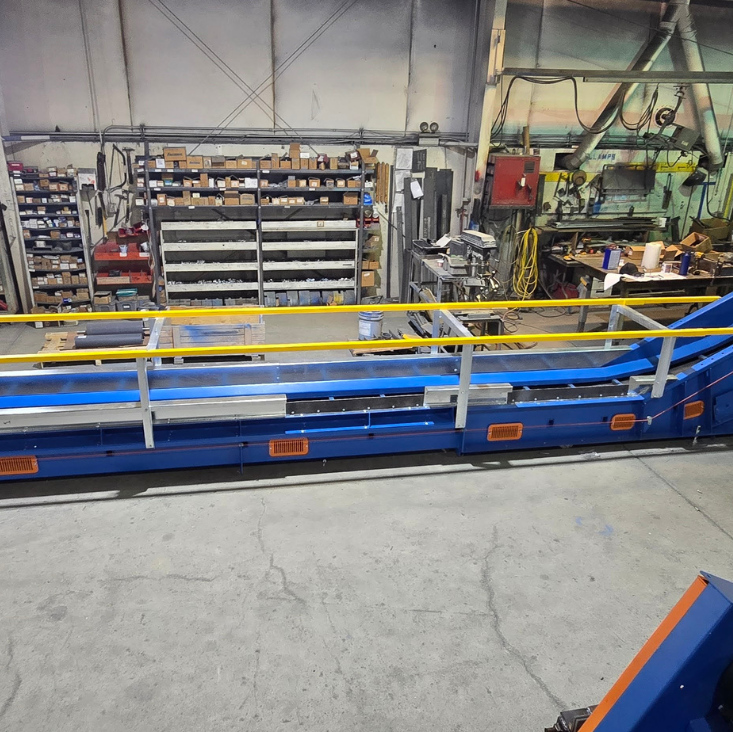
Elbow-up (bend-up) slider bed conveyors handle material in tight spaces. Unlike elbow-up drag chain or roller chain belt conveyors, they have a profile as low as 12" above the floor in the loading area. In the incline section, the conveyor elbows up to any angle up to 40 degrees.
What Is an Elbow-Up Conveyor?
These conveyors let you load material from trucks, bins, and other conveyors without additional lifting equipment. These conveyors also have a lower profile. The slider bed conveyor is simple, so its purchase cost and future maintenance cost are lower than for chain belt conveyors. These conveyors typically have less downtime than chain belt conveyors. If a section of the heavy-duty belt is damaged, a typical plant's maintenance personnel can quickly lace and splice in a new piece of belt. This belt is commonly available. The belt's cleats are bolted on and can be transferred to the replacement belt.
The loading length, incline angle, and discharge height of the slider bed elbow-up conveyor are customizable. This customization and the low profile let the conveyor fit your facility's layout and handle large volumes of material. If you work in manufacturing, distribution, or recycling, elbow-up conveyors can meet your needs.
These conveyors are available in widths from 12" to 72" and in designs from medium-duty to heavy-duty.
These conveyors have an elevated discharge section that transports materials to a higher point. The elevated discharge section helps the material move on to downstream processing or storage areas. This design reduces the risk of spillage or blockages.
Elbow-up conveyors can handle different materials. Their ability to operate in limited spaces helps increase productivity and operational efficiency.
Above-Ground "Pit" Conveyors
The Remcon above-ground "pit" conveyor is a low-profile slider bed conveyor designed as an alternative to costly and hard-to-maintain in-ground pit conveyors. The design of this slider bed conveyor allows it to be built in multiple configurations without hold-down rollers.
These conveyors can be built with above-ground or in-ground hoppers or pushramps. The hoppers or pushramps are custom built for each application, for the best capacity and feeding of material. We can also add steel reinforcement or protection to concrete, block, or brick walls and any building columns in or near the loading area.
Get a quote for an above-ground pit conveyor →Common Configurations
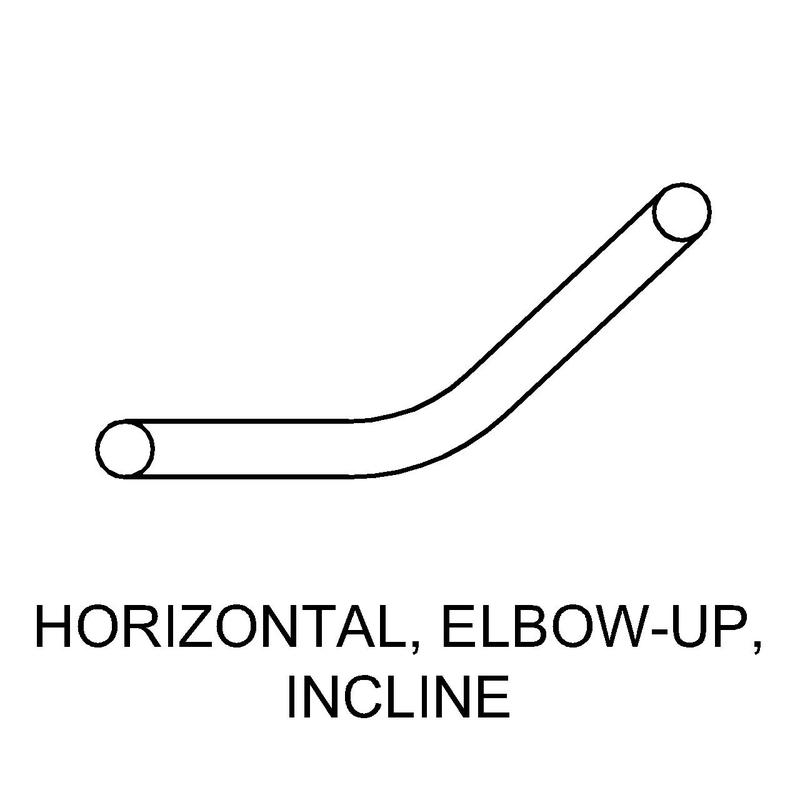
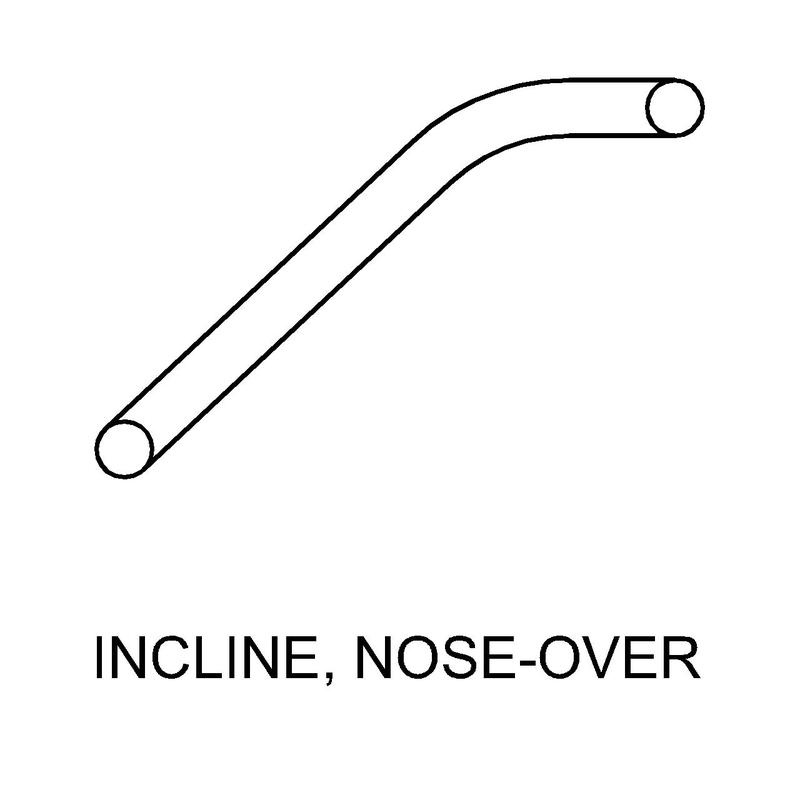
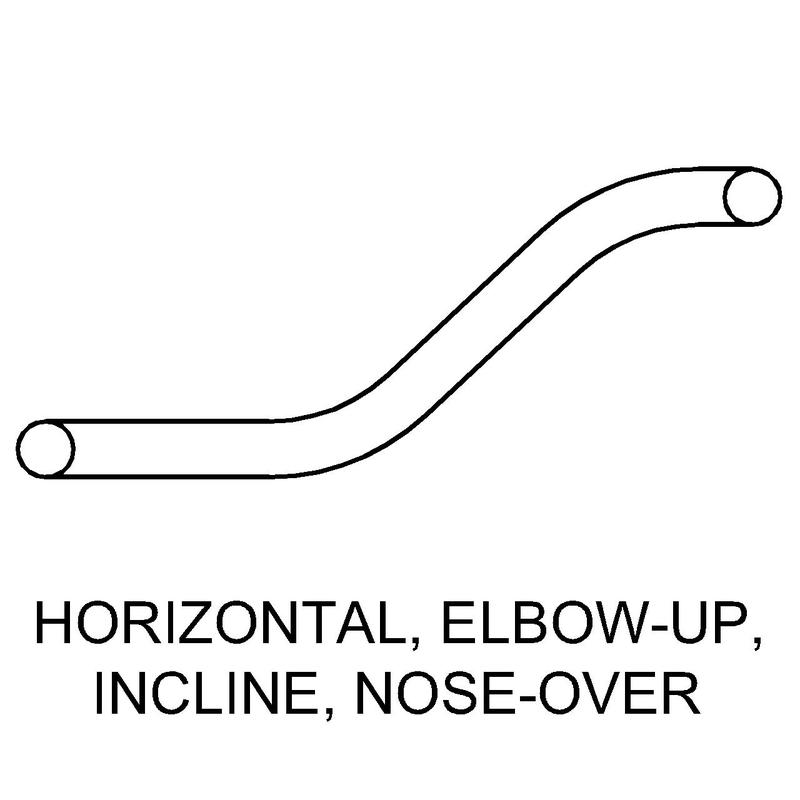
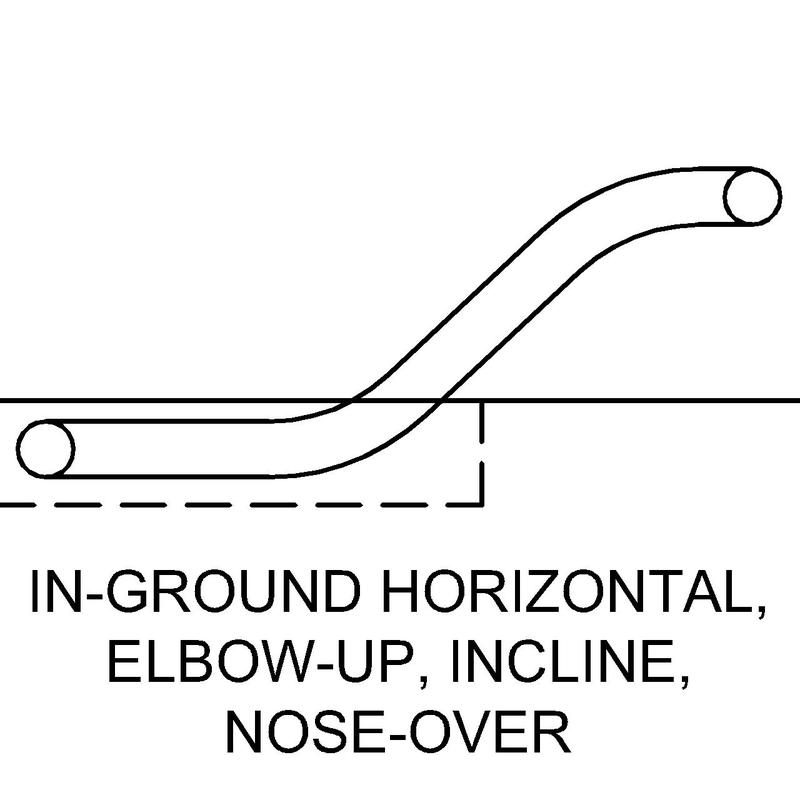
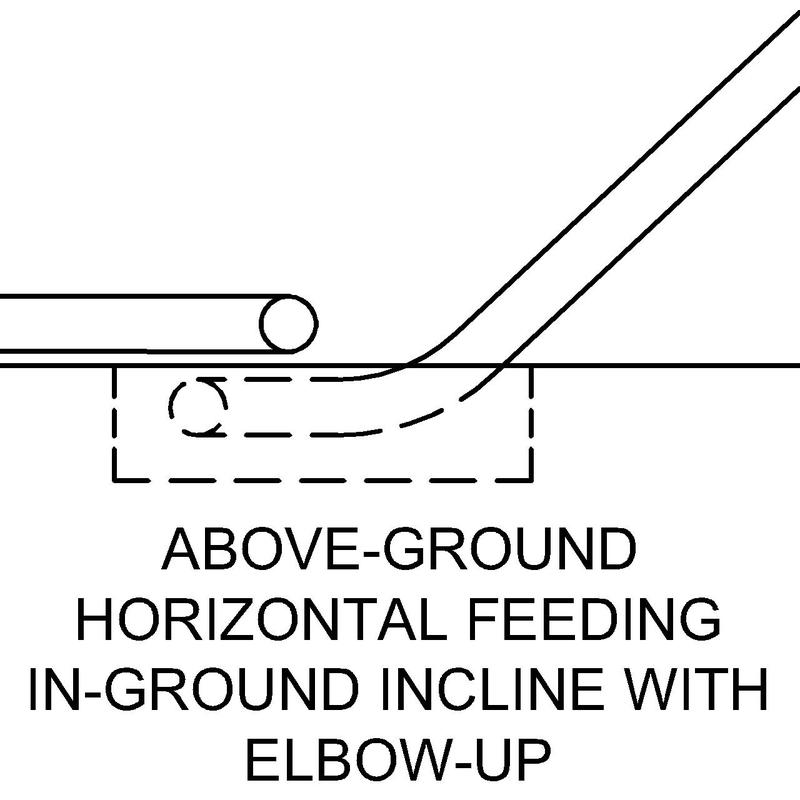
Remcon can build above-ground "pit" conveyors in many orientations. The orientation depends on the layout requirements. We can also build two separate conveyors that run in series. This arrangement makes installation simpler, separates clumps better, or lets you use two different types of conveyors. One example is a roller chain feeding a slider bed. Other options may also be available, depending on the application.
All of these orientation options can be installed in the ground (in a pit) or above ground.
Special Features & Specifications
Special Features
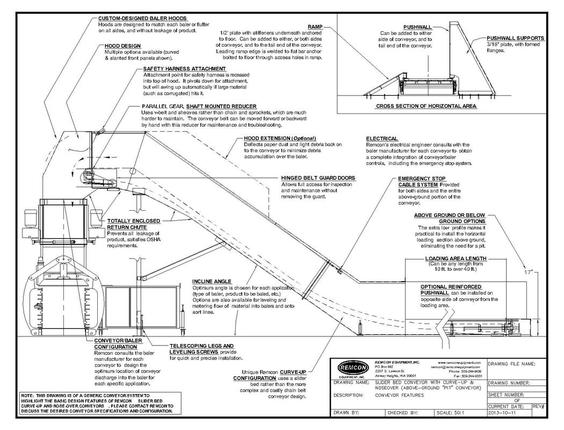
Low-profile body height. The horizontal section can be as low as 17" tall. The low height allows the conveyor to be installed above ground, which avoids the cost and effort of putting the conveyor in a pit. The conveyor can have heavy-duty pushramps and pushwalls to allow loading by skid-steer, or can be fed from self-dumping bins or other equipment. If you prefer, the conveyor can also be installed in a shallow pit with heavy-duty pit decking.
Variable speed. The drive system speed control allows adjustment of the rate of flow onto the sorting conveyor or other machinery. Adjusting the rate of flow gives the best efficiency under a wide range of conditions.
Incline angle. Remcon feed conveyors use the optimum angle to feed the correct amount of material onto the cleated conveyor belt consistently, without rollback. Conveyors can also be built as "dual angle" conveyors. A steeper angle is used in the lower portion to help with metering. A shallower angle is used in the upper portion to prevent rollback.
Belt width. The 36" (or wider for higher volumes) cleated belt carries a high volume of material at a shallow depth. The shallow depth prevents rollback and jamming.
Fully enclosed return pan. The return belt is completely enclosed for safety and to collect debris that clings to the belt. The belt cleats remove the debris from the pan. The debris is then deposited into a clean-out spout or collection area. The result is a clean and safe floor space under the conveyor.
Clean-out spout. On conveyors that carry broken glass and other debris that clings to the belt, the clean-out spout collects debris from the return pan. The clean-out spout deposits the debris into a built-in, removable tray.
One-piece conveyor body. The conveyor body, including the return belt chute, is formed from one piece of 3/16" steel plate. This strong tubular construction minimizes the need for support legs, which interfere with bins, additional machinery, and walkways.
Transition hoppers and hoods. Hoods and hoppers are provided at transition points for safety, to contain material, and to keep debris out of the mechanical components. The hoods and hoppers also cushion the fall of material, reducing glass breakage and noise.
Belt cover. The belt cover reduces the dead weight on the belt at the bottom of the feed hopper. It also prevents broken glass and metal debris from damaging the belt edges.
Slat bed design. The conveyor bed, which the belt slides on, is constructed of slats rather than solid steel. A solid bed traps both small debris and moisture underneath the belt. The debris causes increased friction and wear on both the belt and the bed. The moisture, which can include sticky liquid from containers, causes suction and drag on the belt. The slat design allows this debris and moisture to escape, preventing these problems.
Belt edge seals. These seals are part of the bed, underneath the edges of the belt. The seals minimize the amount of debris that gets underneath the belt and causes excessive wear on both the belt and the pan.
Conveyor alignment. We fabricate Remcon conveyors in our shop, in the longest practical sections (up to 40 feet). We align adjoining sections accurately with each other in the shop as we fabricate them. The entire conveyor is aligned again (and leveled) during installation, to prevent the belt from wandering and wearing into the side of the conveyor. Built-in leveling devices make the leveling and alignment procedure quicker and more accurate.
Parallel gear, shaft-mounted, torque arm reducers (Dodge "Torque-Arm 2"). These reducers have been used almost exclusively in the sand, rock, gravel, and mining industries for many years, and are well proven. We have used them successfully since 1990. Advantages include low maintenance, ease of adjustment, fewer wear parts, no shear pins, and efficient parallel gears. Other advantages are operating and maintenance convenience, excellent availability, a separate motor for ease of replacement, and ease of changing reduction ratios.
Remcon belt take-ups and tracking. Remcon take-ups are a cantilevered telescoping tube style with manual screw adjustment. The take-ups offer the following advantages:
- Cleaning access: The support tubes are positioned to provide access to the area between the upper and lower belts. This access is for cleaning and inspecting the tail pulley.
- Replaceable parts: The bearings are a commonly available pillow block style. The threaded working parts of the take-up are commonly available from local fastener or hardware stores, and are easy to replace.
- Take-up travel: The take-up travel is 10" on the shorter conveyors and up to 18" on the longest. On slider bed conveyors, the belt is cut so that most of the take-up travel is used for ease of belt installation, repair, and replacement. The belt is cut this way because good-quality belts with polyester carcasses have almost no stretch after initial tensioning. In some cases, these belts shrink slightly.
- Ease of adjustment: Belt tracking and tension adjustments are made at the tail pulley with one wrench. There is no need to loosen and re-tighten the bearing attachment bolts. The moving parts of the take-up have enough clearance. The clearance prevents binding in the frame or against the bearings (side load) as the take-up moves through its full range. The head pulley has additional tracking adjusters.
- Bearing brands: Remcon take-ups accommodate almost any brand of pillow block bearing, the most common style.
Support legs. Steel tube construction, with height-adjusting devices that also provide accurate leveling.
Mechanical Specifications
| Specification | Remcon standard |
|---|---|
| Belt widths | 12" to 72" (36" typical for feed duty) |
| Loading profile | As low as 12" above the floor; horizontal body as low as 17" tall |
| Incline angle | Up to 40 degrees; dual-angle geometry available |
| Body | One-piece 3/16" steel plate, tubular construction |
| Shop sections | Fabricated in sections up to 40 feet, shop-aligned |
| Belt | moderately oil resistant (MOR) rubber, 1/8" or thicker top cover, 3-ply polyester carcass, 330 lb/in tensile |
| Cleats | 2" high (or higher) hot-vulcanized style |
| Belt speed | 4 to 150 FPM, variable speed drive |
| Drive | Dodge Torque-Arm 2 shaft-mounted reducer, AGMA class 2; Teco-Westinghouse severe-duty TEFC motor |
| Bearings | Dodge SXR pillow block, eccentric locking collar |
| Belt take-up | Cantilevered telescoping tube, 10" to 18" travel |
Common components. Remcon conveyors are all built from components widely distributed throughout the USA. These components give quick and easy service, if needed, from almost anywhere in the country.
Variable speed drive. Remcon feed conveyors have totally enclosed, fan-cooled (TEFC) motors with variable speed drives.
Gear reducer. Dodge "Torque-Arm 2", parallel gear, shaft-mounted speed reducer sized to meet American Gear Manufacturers Association (AGMA) class 2 rating.
Pulleys.
- Crowning: The pulley crowning keeps belt tracking true and reduces time-consuming adjustments.
- Self-cleaning: This option is for tail pulleys on conveyors that carry glass. This wing-style pulley is designed to expel broken glass and other debris from between the belt and the pulley. Expelling the debris prevents premature belt wear and jamming.
- Lagging: This option is for head (drive) pulleys on conveyors with heavy loads, for better traction. The lagging is a heavy-duty rubber layer that is permanently hot-vulcanized to the pulley.
Bearings. Dodge SXR pillow block with eccentric locking collar for better grip on the shaft. All bearings are self-aligning, pillow block style sealed units. The bearings need grease only bi-annually.
Belt construction. High-strength MOR rubber, 1/8" or thicker top cover with slider surface bottom cover, tensile rating of 330 lb per inch of belt width. 3-ply woven polyester carcass prevents future stretching after the belt is first tensioned.
Belt cleats. 2" high (or higher if needed) "beefy" style, hot-vulcanized to the belt. These cleats resist coming off. If sharp objects cut a cleat, the cuts do not spread further in the cleat.
Belt lacing.
- Flexco R2: This common heavy-duty rivet-style lacing is available in galvanized steel or MegAlloy®. This lacing is long-lasting and resists damage.
- Flexco 375: This alternative heavy-duty lacing option is attached with bolts instead of staples or rivets.
Belt speed. 4 feet per minute minimum, 150 maximum, with a variable speed range of 80% for standard controls, and a range of 180% for conveyors equipped with optional automatic speed control systems.
Motor. Teco-Westinghouse, severe duty, TEFC, 1.15 service factor, class F insulation for long motor life.
Safety Features
Emergency stop system. Remcon provides an emergency stop system, such as cable pull cords and emergency stop buttons, as needed according to the system layout.
Hooded pulleys. Both ends of the conveyor are guarded by hoods to protect personnel from possible hazards.
Fully enclosed return pan. A completely enclosed belt return pan from head to tail eliminates hazards from all moving components. The return pan also prevents debris and liquid from falling on people underneath the conveyor.
Hinged guards for drive components. Remcon's standard guards are hinged to give access for inspection and maintenance without removing a guard. If a conveyor does not have enough clearance for a hinging door at the drive, the door is unbolted to gain access. The entire guard is not unbolted.
Elbow-Up Slider Bed Conveyor FAQ
What is an elbow-up slider bed conveyor?
An elbow-up (bend-up) slider bed conveyor is a single conveyor that starts as a low-profile horizontal loading section and then bends up into an incline. The elbow-up conveyor replaces a separate horizontal conveyor feeding a separate incline conveyor, which lowers both the purchase price and future maintenance cost.
How low is the loading section, and how steep can it climb?
The loading profile can be as low as 12" above the floor, with a horizontal body as low as 17" tall. The incline section can run at any angle up to 40 degrees. That low profile lets the conveyor be loaded by skid-steer, self-dumping bins, or other equipment above ground, without digging a pit.
What belt widths are available?
Remcon builds elbow-up slider bed conveyors in belt widths from 12" to 72". A 36" (or wider) cleated belt is typical for feed duty. The cleated belt carries a high volume of material at a shallow depth to prevent rollback and jamming.
Do I need a pit for an elbow-up conveyor?
Usually not. The above-ground "pit" conveyor version is designed to be loaded at floor level without excavation. The above-ground version avoids the cost and effort of a concrete pit. If the layout requires it, the same conveyor can instead be installed in a shallow pit with heavy-duty pit decking.
Custom Built for Your Layout
We specialize in designing and fabricating custom equipment. We can work with you to design equipment that meets your needs. The elbow-up design shares its slat bed, take-ups, and drive with our heavy-duty slider bed conveyors. Contact us to discuss options or to get a quote.
Get a quote for an elbow-up slider bed conveyor →Further Reading
Guides from the people who design and weld conveyors:
- Maximum Conveyor Incline Angle: How Steep Can a Conveyor Be? How steep a belt can run before material rolls back.