
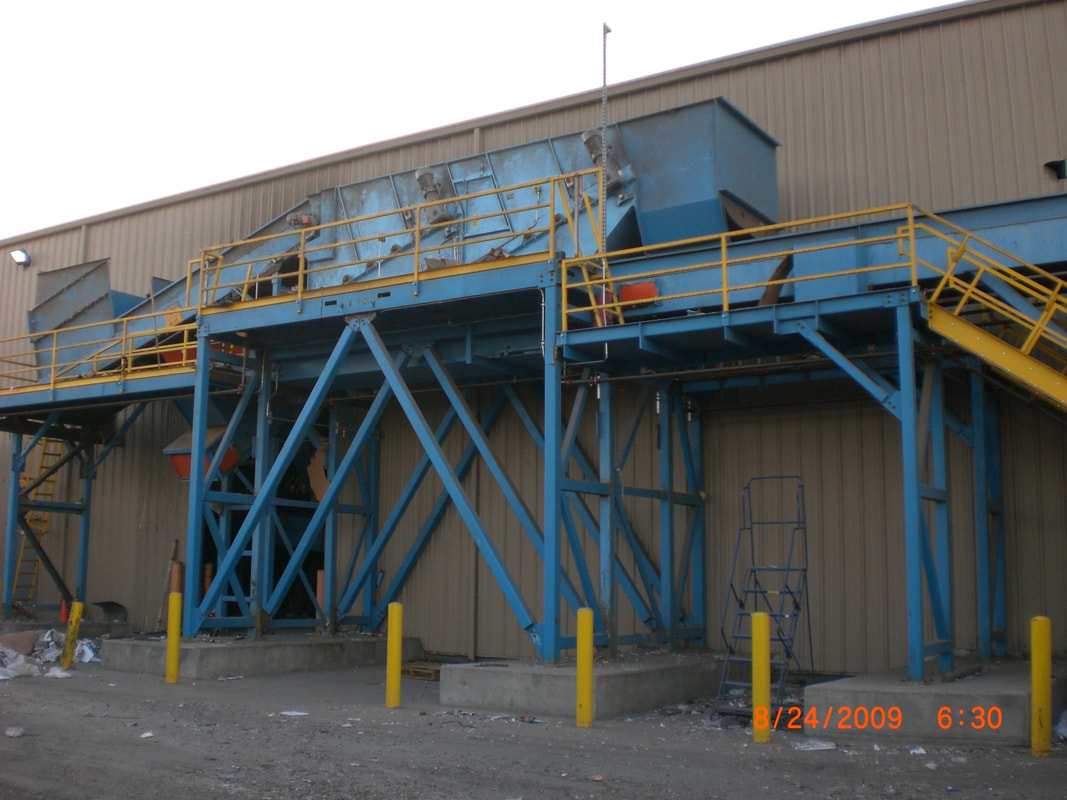
Remcon builds what a disc screen needs to work in a single-stream line: the support structure, infeed and outfeed conveyors, transition chutes, and bunkers. We do not design or build the screens themselves. We have extensive experience purchasing them for customers and incorporating them into custom systems, and we do either.
What a Disc Screen Does in a Single-Stream Line
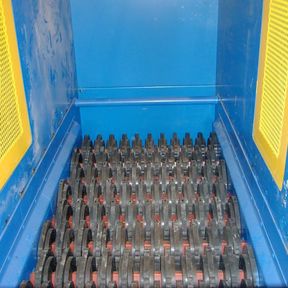
A disc screen is a bank of rotating shafts, each fitted with a row of shaped discs. As the shafts spin in the direction of flow, material moves across the top of the screen. What happens next depends on size and shape. Small, heavy items such as glass, grit, and caps fall through the openings between the discs. Flat, two-dimensional material like paper and cardboard rides across the top. Rounder, three-dimensional containers bounce and roll instead of lying flat. This simple mechanical sort makes disc screens the main separators in single-stream recycling.
In a single-stream materials recovery facility (MRF), disc screens make the first rough separation so the people and machines downstream see a cleaner stream. Fiber that rides over the top goes to quality-control sorting. Containers continue toward magnets, eddy current separators, and the manual sort. Fines drop out early, before broken glass can grind against belts and bearings along the whole length of the plant.
Screen manufacturers each have their own disc profiles, spacings, and drive arrangements, which are their specialty. Our specialty is everything that gets material to the screen and away from it.
OCC Screens, News Screens & Fines Screens
Disc screens are named for what rides over the top of them. The disc spacing and the deck angle change, but the principle stays the same. Overs travel across the discs, and unders fall through. A single-stream line typically runs more than one screen in sequence, coarsest first.
| Screen type | Where it sits in the line | What it separates |
|---|---|---|
| Old corrugated containers (OCC) screen | First screen after the presort | Wide disc spacing carries large corrugated (cardboard) over the top, and everything smaller falls through to the next stage |
| News screen | Mid-line, often steeply inclined | Newspaper and mixed paper climb over the top while containers tumble back down the incline to a separate takeaway |
| Fines screen | Early in the line or under other screens | Tight disc spacing drops glass, grit, caps, and other small fines out of the stream before they wear on downstream equipment |
Which screens a plant needs, and in what order, depends on the material mix and the commodities being recovered. We can help you decide this when you are selecting equipment.
Where the Screen Sits and What Feeds It
A disc screen works only as well as its feed. Screens need an even, metered burden depth. A surge covers the discs, and everything rides over the top, including the unders. So the conveyor ahead of the screen matters as much as the screen itself. A Remcon infeed conveyor meters material onto the discs at a controlled rate of flow.
Downstream, sorting conveyors carry the overs past sorters for quality control, and transfer conveyors collect the unders that fall through. A transition chute sits between every one of those machines. The chute has to land material where the next belt can carry it. If the chute geometry is wrong, even the best screen in the industry will plug.
Remcon's Part of a Disc Screen Installation
Custom System Components
You can buy a disc screen directly from us, with our help in selecting the best model, or from a manufacturer. In both cases, Remcon designs and builds the essential components so that material flows efficiently. Our team specializes in creating custom support structures, mounting platforms, and all the conveying systems that material flow needs. We design each one for the demands of your operation.
Platforms & catwalks we build →Infeed, Outfeed, and Transition Chutes
Our experience with disc screens means we understand the critical requirements for infeed and outfeed conveyors, transition chutes, and structural support. We ensure that each component is designed to work with the others. The result is one efficient system that improves productivity and keeps downtime to a minimum.
Infeed conveyors →Design Through Installation
Remcon's expertise covers more than individual components. We manage the entire integration process, from design through installation. This complete approach ensures that your disc screen functions as part of a complete, working system.
Installation services →What Remcon Builds Around the Screen
The screen is one machine. Disc screen integration is everything else, which is the steel and conveying that turn the screen into a working line:
- Support structures & platforms: steel to hold the screen at the right height and angle, with catwalks and stairs for maintenance access.
- Infeed & outfeed conveyors: a metered feed onto the discs, and takeaway conveyors for the overs and unders coming off.
- Transition chutes: plate steel chute work that guides fiber, containers, and fines from screen to belt without plugging or spillage.
- Bunkers: storage bunkers that hold screened material until the next machine is ready for it.
We also replace, relocate, and re-support existing disc screens as part of our system reconfiguration and moving work. This work includes new support steel, new chutes, and modified conveyors to fit the screen into a new footprint. All of that structure, conveying, and chute work is designed and fabricated at our Airway Heights (Spokane), Washington shop, then shipped and installed nationwide.
Disc Screen Integration FAQ
Do I buy the disc screen or the whole system?
Either way works. You can buy the disc screen through Remcon or directly from the screen manufacturer. We do not build the screens themselves. We help you select the right model. We purchase it for you when you want us to. We design and fabricate the support structure, conveyors, chutes, and bunkers around it either way.
What conveyors feed a disc screen?
An infeed conveyor feeds a disc screen and meters material onto the discs at a controlled rate of flow. Downstream, sorting conveyors carry the overs past sorters for quality control, and transfer conveyors collect the unders that fall through. We build all three conveyor types. We match each one to the screen and the building.
Can Remcon replace or relocate an existing disc screen?
Yes. Replacing or relocating a disc screen is system reconfiguration work. This work includes new support steel, new transition chutes, and modified conveyors to fit the screen into its new position. Our own installation crews handle the move and re-installation as part of our system reconfiguration and moving services.
What does Remcon build around the screen?
Remcon builds everything except the screen itself. Components include support structures and mounting platforms, catwalks and stairs for maintenance access, infeed and outfeed conveyors, transition chutes, and bunkers for the screened material. Each piece is designed for the specific screen and the specific building. So the screen runs as part of one system and not as a separate machine on a frame.
Get a Disc Screen Quote
We specialize in custom designed and fabricated equipment. We can work with you to design equipment that will work well for your needs. Contact us to discuss options or to get a quote.
Contact us →Further Reading
Guides from the people who design and weld conveyors:
- Why Your Optical Sorter Underperforms: Feed Presentation. Singulation and burden depth ahead of the sorter.