
Remcon has built various styles of custom tote & container dumpers to dump tote bins or bulk boxes onto conveyors for feeding onto a sort line and similar applications. Every unit is built around the customer's bins and layout, not a catalog page.
Also called — box dumper, gaylord dumper, bin tipper, container tipper, tote tipper. Different trades use different names for the same class of machine; what matters when specifying one is the bin, the material, and where the material needs to land.
What Is a Tote Dumper?
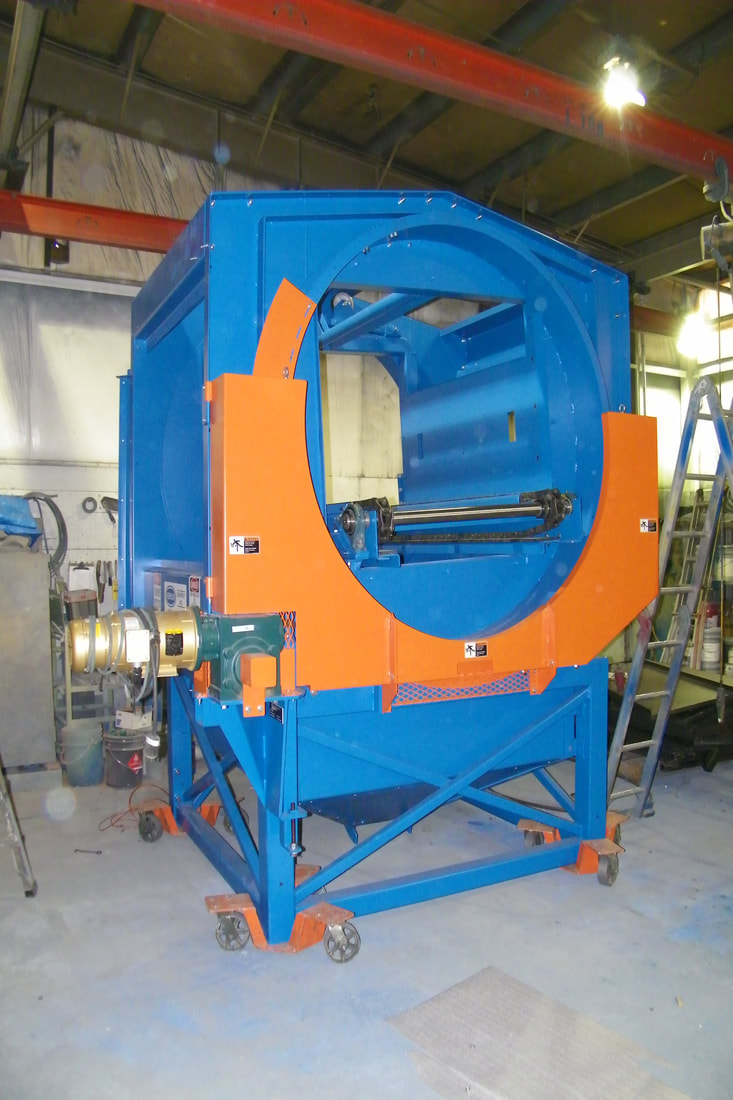
A tote dumper is a machine that holds a filled tote bin or bulk container captive in a steel holder frame, rotates it past the pour angle, and empties the contents into a hopper, onto a conveyor, or into another container. It replaces the slowest and least controlled step in a container-fed plant — a forklift driver shaking a bin out over an open hopper. In Remcon's chain-driven design, the holder frame can tip the bin a full 180 degrees and return to the starting position, so the bin inverts completely rather than stopping at a partial tilt.
Dumpers can be designed to be actuated via hydraulics, pneumatics, a chain-driven motor/reducer, or manually actuated via forklift or trip arm.
Dumper Drive & Actuation Options
The right drive depends on how often the dumper cycles and how much control the plant wants over the pour:
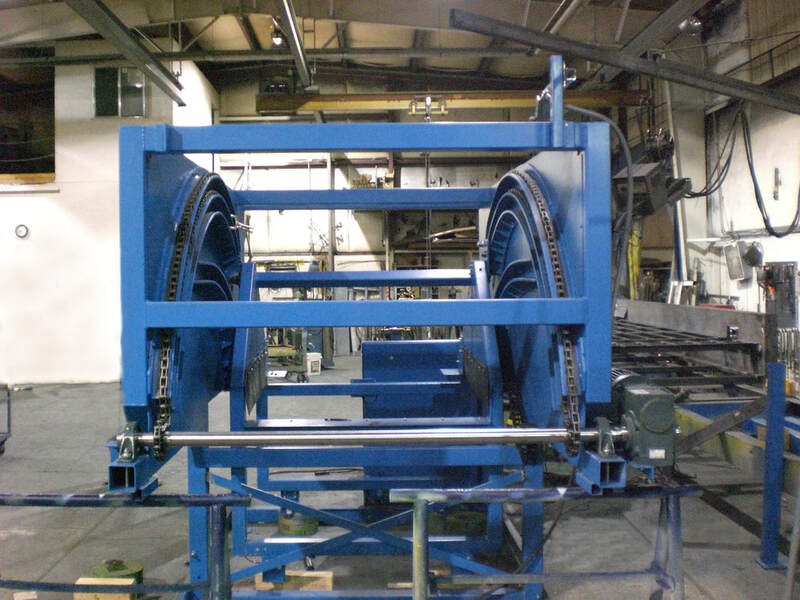
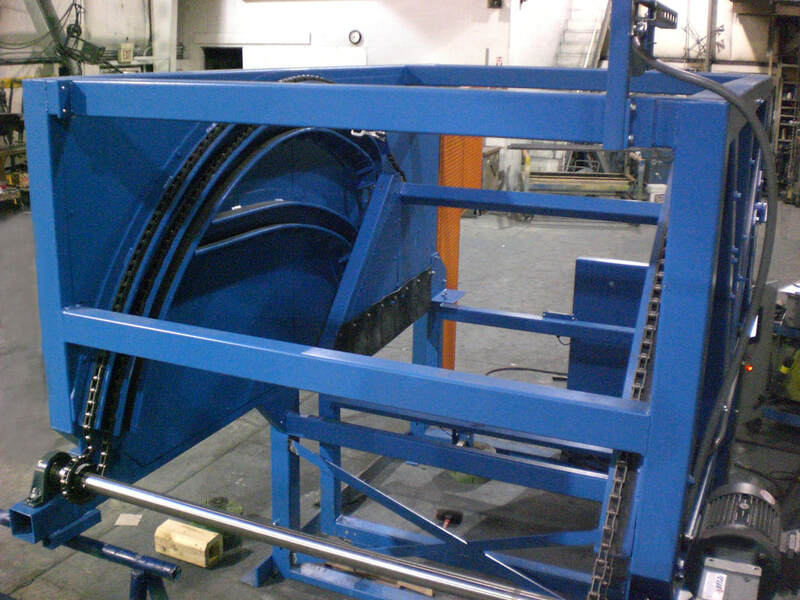
- Chain-driven motor/reducer — in this design the tote bin holder frame has round end rings on both ends, which ride on heavy-duty casters mounted to the frame of the dumper. The chain drive allows the bin to be tipped a full 180 degrees, and then return to the starting position. Dumping rate is fully adjustable via variable-speed motor drive with braking resistor, which can slow or stop the dumper motor several times per dumping cycle, with pauses in between — the length of the pauses and the acceleration time for each start can be changed as needed.
- Hydraulic — cylinders and a power unit deliver high tipping force in a compact package, a common choice for heavier bulk boxes.
- Pneumatic — a good fit for lighter totes in plants that already run compressed air.
- Forklift or trip arm — manually actuated, with no powered drive on the dumper at all. The simplest option where dumping is occasional.
Special Features
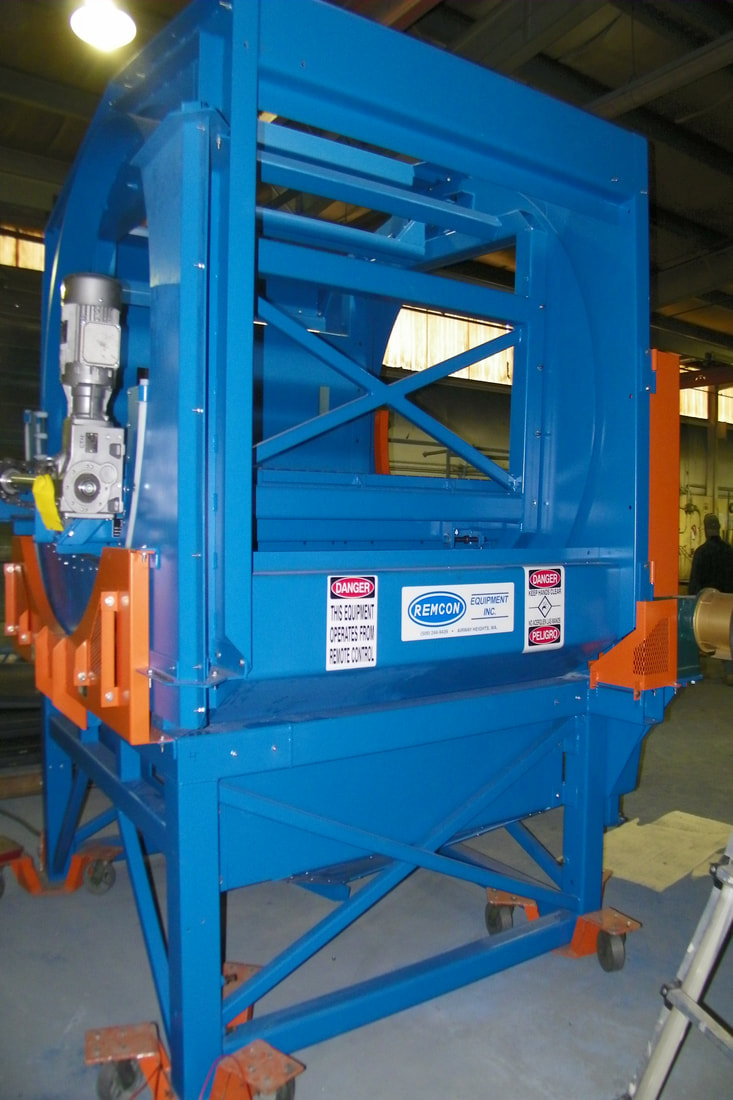
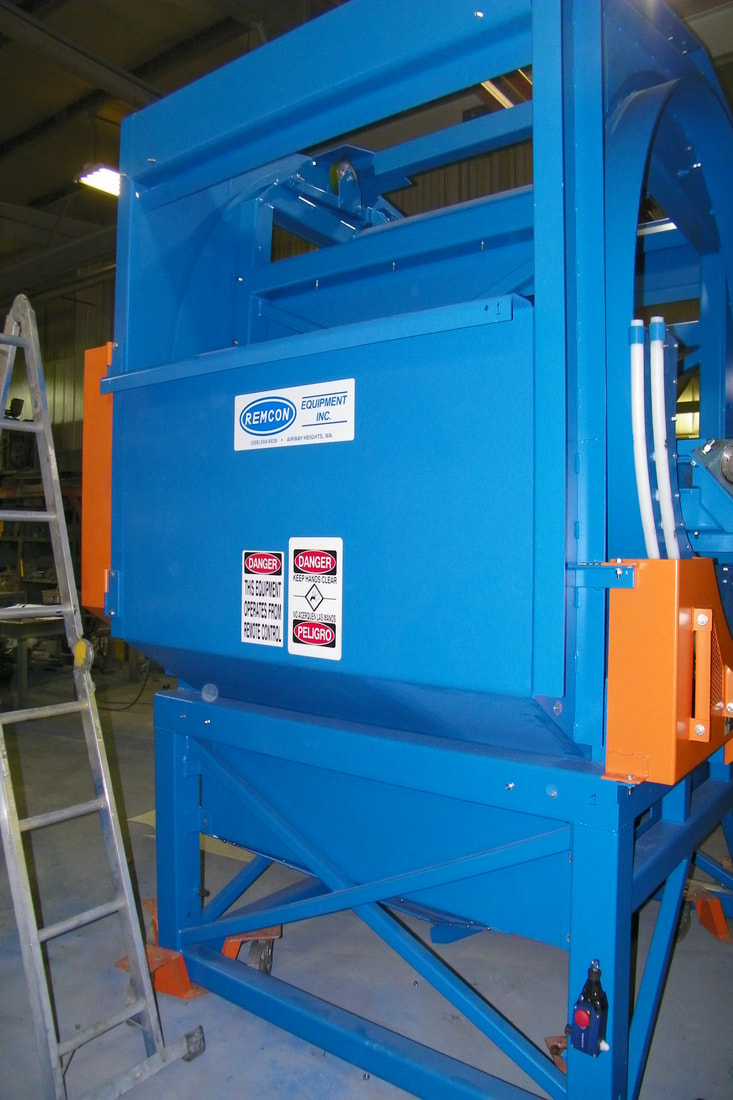
- Fully enclosed housing contains material as it is dumped onto another conveyor or receiving point.
- Hinged or easily removable guards for areas that need to be accessed for maintenance.
- Fully adjustable range and speed of rotation.
- Sensors mounted on the dumper control the starting and stopping of tote infeed/outfeed conveyors, and the forward and reverse rotation of the dumper, via a fully programmed PLC with touchscreen controls.
Materials & Industries
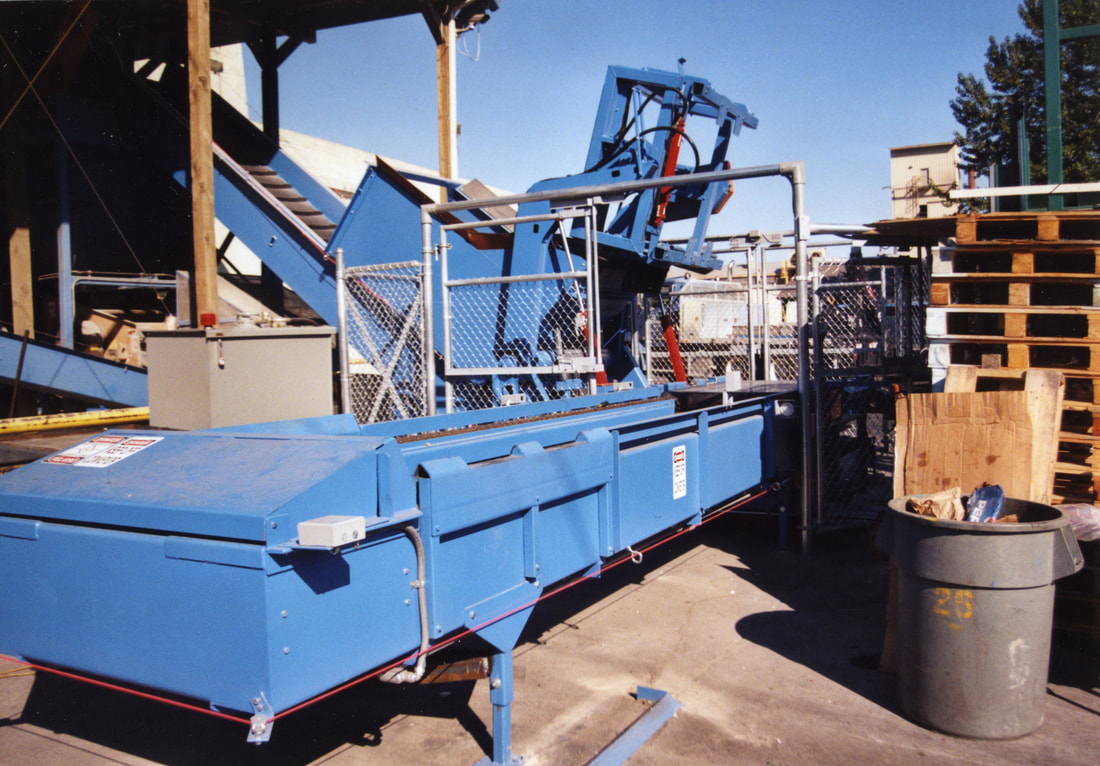
Most Remcon dumpers go into recycling plants and MRFs, where collected material arrives in totes and bulk boxes and has to get onto the sort line at a controlled rate. A typical arrangement: full totes stage on a bulk container conveyor, the dumper empties each one in turn, and the material lands on an infeed conveyor that carries it up to the sort line or the next machine.
Glass is the proving ground for this equipment. Remcon has built complete tote bin conveying and dumping systems for broken glass (cullet) — the frame carries 1/4" plate steel panels anywhere glass will come into contact with the machine, and the fully enclosed housing contains the material as it dumps. A dumper detailed to survive cullet has headroom for most other tote-handled recyclables.
Standard Specifications
The following specifications come from Remcon's chain-driven tote dumper design; other drive styles are specified to match the application.
| Specification | Remcon standard (chain-driven design) |
|---|---|
| Drive method | Multiple available — hydraulic, pneumatic, chain-driven motor/reducer, or manual via forklift or trip arm |
| Rotation | Up to a full 180 degrees, then returns to the starting position; range and speed fully adjustable |
| Dumping rate | Fully adjustable — variable-speed motor drive with braking resistor; programmable pauses and acceleration per cycle |
| Frame | Structural 5" square tube steel; 1/4" plate steel panels anywhere glass will come into contact, 10 ga. steel elsewhere |
| Casters | 8" diameter x 3" wide "Brute" steel casters under the end rings |
| Chain | #80 (1" pitch) roller chain |
| Gear motor | Dodge Tigear II gearmotor, AGMA Class 2 rating, with 3 HP motor |
| Rain covers | 14 ga. galvanized steel |
| Controls | Sensors on the dumper plus fully programmed PLC with touchscreen; runs the infeed/outfeed conveyors and dumper rotation |
| Bin capacity | Sized to the customer's totes or bulk boxes — quoted per job |
| Dump height | Matched to the receiving conveyor or hopper — quoted per job |
What Drives the Cost of a Custom Dumper
Every Remcon dumper is quoted per job, and four things move the number more than anything else:
- Capacity class — a dumper for standard totes is a different machine from one built for loaded bulk boxes. Bin size and weight set the frame, the drive, and the caster and chain sizing.
- Dump height — a floor-level tip into a hopper takes less steel than an elevated discharge into a tall receiving conveyor. The higher the pour point, the more structure under it.
- Drive type — forklift and trip-arm actuation is the simplest; hydraulic and pneumatic drives add a power unit; a chain-driven motor/reducer with variable-speed drive costs the most up front and gives the most control over the pour.
- Controls — a manually cycled dumper needs little more than a starter. Automatic staging — sensors and a programmed PLC running the infeed and outfeed conveyors — adds controls work but takes an operator out of the loop.
Tell us the bin dimensions, the material, and where it has to land, and we will quote the dumper — and the conveyors around it, if you need them.
Tote & Container Dumper FAQ
What is a tote dumper?
A tote dumper is a machine that grips a filled tote bin or bulk box, rotates it, and empties the contents onto a conveyor or into a hopper. Remcon builds custom dumpers for recycling and MRF infeed — the chain-driven design holds the bin in a rotating frame that can tip a full 180 degrees, then return to the starting position for the next bin.
What is the difference between a tote dumper, a box dumper, and a bin tipper?
Mostly the name — they describe the same class of machine. Tote dumper, container dumper, box dumper, gaylord dumper, and bin tipper are all terms for equipment that tips a container to empty it. What matters when specifying one is the bin dimensions and weight, the material, the dump height, and how the dumper should be actuated.
Can a tote dumper load and unload bins automatically?
Yes. Sensors mounted on the dumper control the starting and stopping of the tote infeed and outfeed conveyors, and the forward and reverse rotation of the dumper, through a fully programmed PLC with touchscreen controls. Paired with bulk container conveyors, bins stage, dump, and exit without an operator handling each one.
Can a dumper handle broken glass or abrasive material?
Yes. Remcon has built complete tote bin conveying and dumping systems for broken glass (cullet). Anywhere glass contacts the machine, the panels are 1/4" plate steel, and the fully enclosed housing contains the material as it dumps.
How much does a custom tote dumper cost?
Price depends on the capacity class, the dump height, the drive type, and the level of controls, so Remcon quotes each dumper individually. Tell us the bin size, the material, and where it needs to land and we will quote it — dumper alone or with the conveyors around it. Call (509) 244-9439 for a quote.
Built Around Your Bins
We specialize in custom designed and fabricated equipment and can work with you to design a dumper that will work well for your needs. Every dumper is designed and fabricated at our Airway Heights (Spokane), Washington shop, then shipped and installed nationwide. Contact us to discuss options or to get a quote.
Get a quote for a custom dumper →