
Chain can be used as a means of conveying products in many different ways. There are almost endless styles of chains made specifically for use on conveyors, and the possibilities for chain attachments are practically unlimited. Chain is easy to drive with the appropriately sized sprocket, can be repaired by replacing individual links, and is strong and hard to damage.
What Is a Chain Belt Conveyor?
A chain belt conveyor is a conveyor whose carrying surface — rubber or PVC belting, steel flights, or steel pans — is bolted to strands of steel chain and pulled by sprockets rather than driven by friction on a pulley. The sprockets at the discharge end grab the chain as the shaft is turned by a motor with a reducer, so the drive is positive: the belt cannot slip the way a friction-driven belt can. Where a slider bed conveyor depends on friction between the belt and the drive pulley, a chain belt keeps pulling as long as the chain is intact — and the chain itself can be repaired link by link. That combination of positive drive and simple repair is why chain conveyors handle the hardest duty in recycling, scrap, and solid waste plants.
Remcon builds every style described below to order, and each has its own entry with full construction details. If you're weighing the drag chain variants against each other, see all drag chain styles compared.
Common Types in the Recycling Industry
Drag Chain with Rubber or PVC Belting
The most basic type of chain belt. The chain lies flat on its side as it slides on tracks made of angle iron with UHMW wear surfaces to reduce friction. The chain belt is guided around both ends of the conveyor on sprockets; the sprockets at the discharge end grab the chain as the shaft is turned by a motor with a reducer.
More on drag chain belt conveyors →Roller Chain with Rubber or PVC Combination Belt
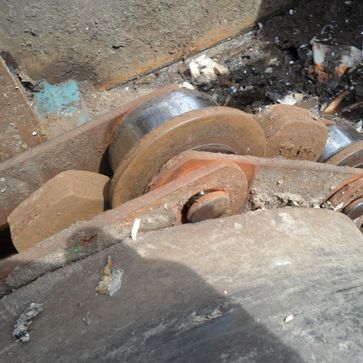
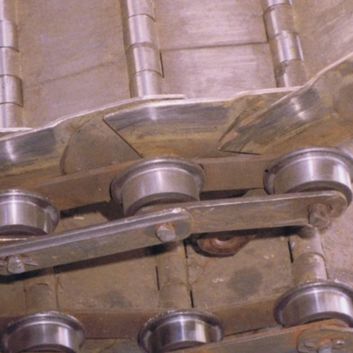
Also called a "combination belt." Similar to a drag chain belt, except the chain has steel rollers built into each link which roll on rail tracks instead of sliding — reducing the drag of the belt as it travels along the conveyor.
Roller chain belt conveyor details →Roller Chain with Steel Pans (Steel Belt)
The same as the roller chain with rubber belt, except steel panels are substituted for the rubber belting. Remcon offers a variety of steel belt options — contact us to discuss which configuration works best for your needs.
Other Chain Conveyors We Build
Drag Chain with Steel Flights (Beltless)
Simple and robust — there is no belt surface to puncture or bend. Two parallel strands of chain are connected with steel cross-members that carry material along a flat steel surface, horizontally or uphill. A common choice for conveying metal.
More on beltless drag chain conveyors →Chain Conveyors for Bins or Pallets
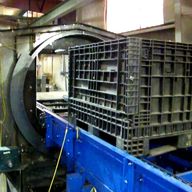
A uniformly shaped object such as a bin or pallet sits on two strands of heavy-duty chain riding edge-on over UHMW wear surfaces. The strands aren't connected to each other, but are pulled simultaneously by the drive shaft at the discharge end. With sensors, these can be arranged for automatic staging, conveying, dumping, raising, and lowering of bins throughout a plant.
More on bulk container conveyors →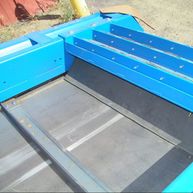
Single-Strand Drag Chain for Bulk Materials
The simplest form of drag chain conveyor: a single, wide strand of chain slides along a flat wear surface, dragging loose material with it. Depending on the design, the chain moves only the material sitting inside the links — or both inside and on top of the chain, sometimes called "en-mass conveying." Paddle or wing attachments can help move material along, but aren't always required.
Contact us to discuss →Chain Conveyor Styles Compared
The right chain belt depends on the material, the load, and how the conveyor will be fed. The table below compares the four styles we build most, drawn from the individual product entries — follow the links above for the full construction details of each.
| Style | Belt type | Best for | Wear characteristics |
|---|---|---|---|
| Drag chain + rubber/PVC belt | Rubber or PVC belting bolted to steel cross members between two chain strands | The most basic chain belt — baler feed, infeed, and sort line feed duty | Chain slides flat on angle-iron tracks with bolt-on, replaceable UHMW wear surfaces; chain repairable link by link |
| Drag chain + steel flights (beltless) | None — steel cross angles drag material along a solid steel bed | Metering material out of a hopper; conveying metal — no belt to puncture or bend | Replaceable bed sections in 1/4" steel plate (hardened plate or UHMW-covered optional); chain slides on UHMW tracks |
| Roller chain belt | Combo belt (rubber or PVC on cross members) or steel pans (steel belt) | The hardest-working conveyors in the plant — heavy loads moved with less power | Rollers roll on replaceable 30 lb. ASCE rail instead of sliding; shaped rail transitions reduce chordal wear at the head sprockets |
| Bulk container conveyor | None — the bin or pallet sits directly on two independent chain strands | Staging, conveying, and dumping tote bins, pallet bins, and pallets | Chain rides edge-on over UHMW wear surfaces; no belt surface to puncture or tear |
Chain Belt Conveyor FAQ
What is a chain belt conveyor?
A chain belt conveyor is a conveyor whose carrying surface — rubber or PVC belting, steel flights, or steel pans — is bolted to strands of steel chain and pulled by sprockets rather than driven by friction on a pulley. Because the sprockets grab the chain directly, the drive is positive and the belt cannot slip, and the chain can be repaired by replacing individual links. It is the workhorse design of recycling and heavy-duty material handling.
What is the difference between a drag chain and a roller chain belt conveyor?
A drag chain conveyor slides its chain flat along low-friction UHMW tracks, while a roller chain belt has steel rollers built into each link that roll on rail tracks instead of sliding. Rolling reduces the drag of the belt as it travels, so a roller chain conveyor can move a heavier load with less power — which is why roller chain belts carry the hardest-working conveyors in a recycling plant.
Can a chain conveyor be repaired instead of replaced?
Yes — chain can be repaired by replacing individual links, which is one of the main reasons to choose a chain conveyor. The wear surfaces are designed the same way: UHMW track covers bolt on and off, bed sections are replaceable, and roller chain rail is a separate, replaceable item rather than part of the conveyor frame. Remcon supplies replacement parts for the life of the machine.
How much does a chain belt conveyor cost?
Price depends on the chain style, belt type, width, length, orientation, hoppers, and drive options, so Remcon quotes each chain belt conveyor individually. Tell us the material, the load, and the layout and we will quote it — and if a simpler conveyor such as a slider bed can do the job for less, we will tell you that too. Call (509) 244-9439 for a quote.
Every Remcon chain conveyor is designed and fabricated at our Airway Heights (Spokane), Washington shop, then shipped and installed nationwide — with replacement chain, belting, and parts supplied for the life of the machine. Contact us to discuss which style fits your material and your layout.
Get a quote for a chain belt conveyor →