
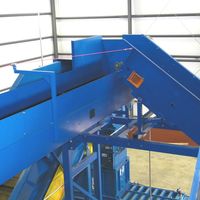
Slider bed conveyors employ a rubber or PVC belt which is driven around the conveyor by the friction of the belt on the drive pulley. The belt slides on steel slats, instead of idler rollers, making for fewer moving parts to wear out and replace. Remcon's simple but versatile slider bed conveyor design often allows this type of conveyor to be used in place of other more complicated or more expensive types of conveyors.
What Is a Slider Bed Conveyor?
A slider bed conveyor is a belt conveyor in which the belt slides over a solid steel bed instead of riding on idler rollers. Remcon builds this style of slider bed belt conveyor with a replaceable 3/8" flat-bar slat bed and a formed 3/16" plate steel frame, in belt widths from 12" to 72", for recycling MRFs, solid waste plants, and OEM production lines. With no idler rollers to fail, there are fewer moving parts to wear out, inspect, or replace.
Advantages of Remcon Slider Bed Conveyors
- An affordable conveyor for light to medium loads
- Low profile loading section works well for above ground installations
- Available in belt widths from 12" to 72" (six feet)
- Simple design is easy and inexpensive to maintain
- Underside of conveyor is enclosed and self-cleaning for safety and cleanliness
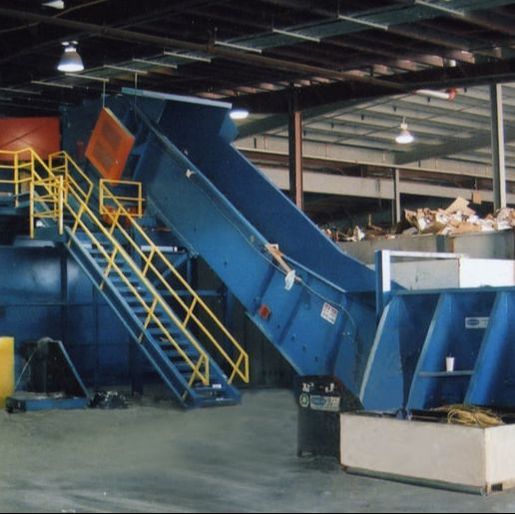
Custom Slider Bed Conveyor Manufacturer
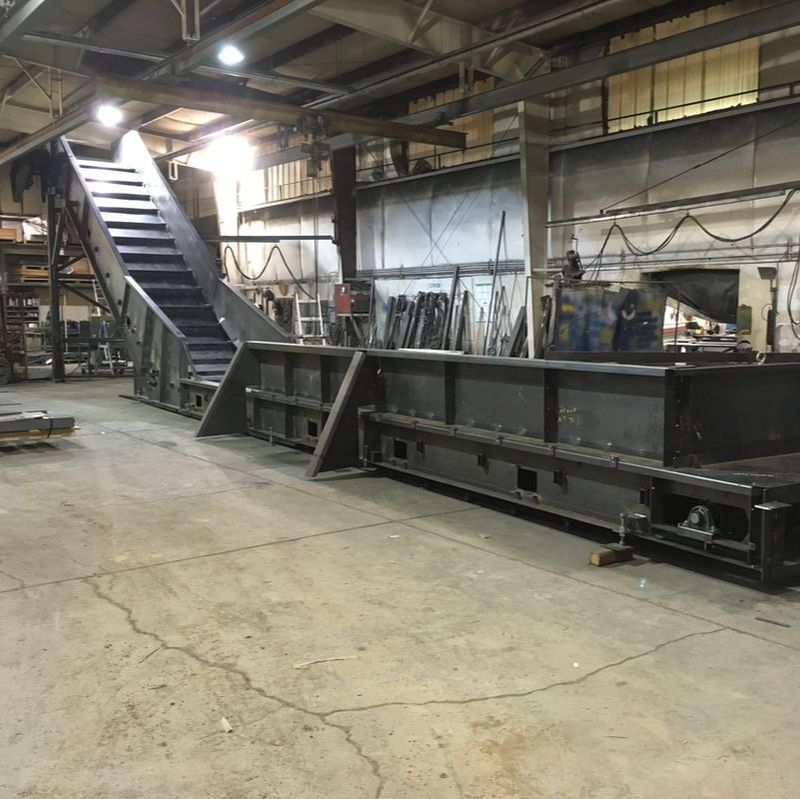
Remcon is a custom slider bed conveyor manufacturer. Every conveyor is designed, welded, and assembled at our Airway Heights (Spokane), Washington shop, then shipped and installed nationwide. We have built recycling equipment since 1977, and roughly 95% of our production is slider bed, drag chain belt, and roller chain belt conveyors. Because each unit is built to order, widths, lengths, orientations, hoppers, and hoods are matched to your building and your material stream rather than to a catalog page.
Common Slider Bed Conveyor Uses
The slider bed is the base design behind many of the conveyors we build. Each use has its own entry:
Conveyor Orientation Options
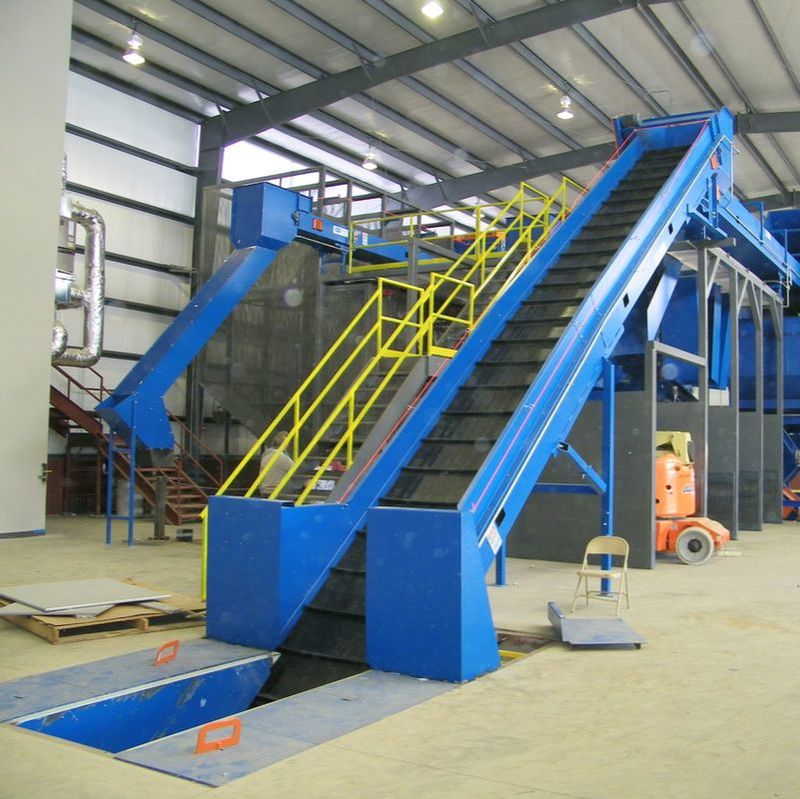
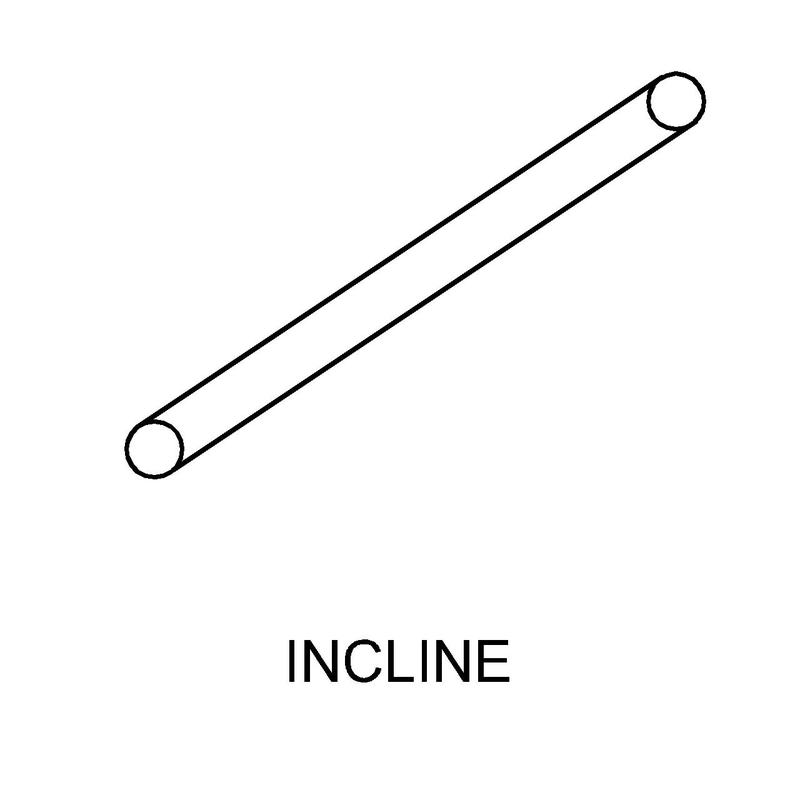
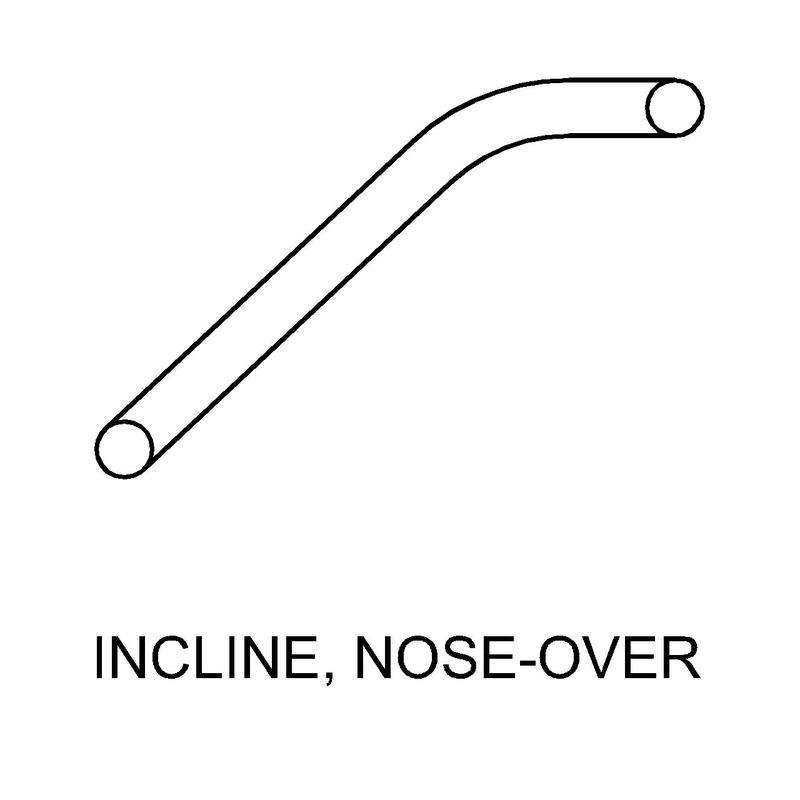
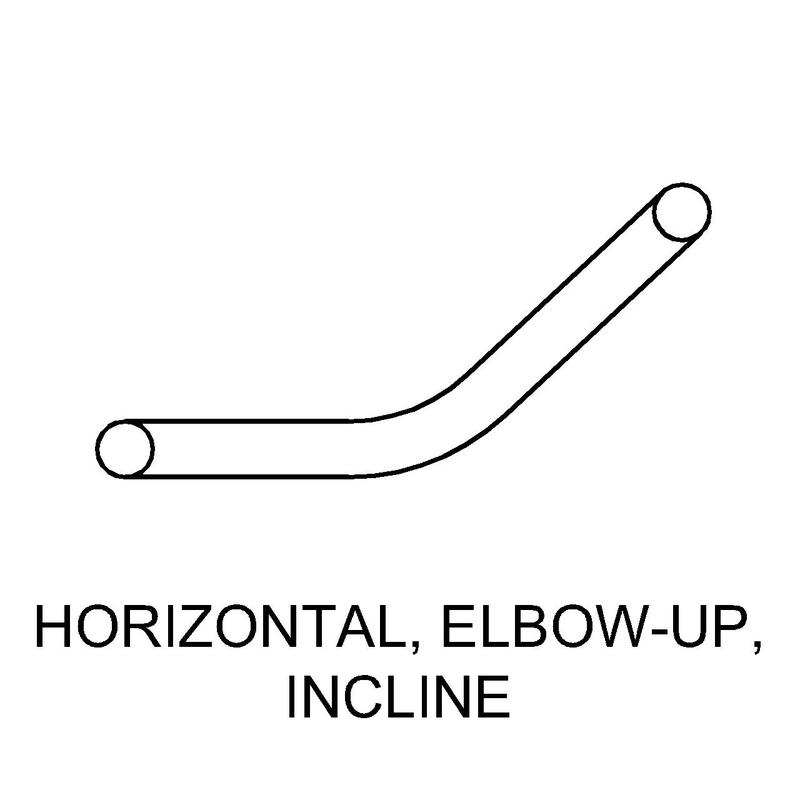
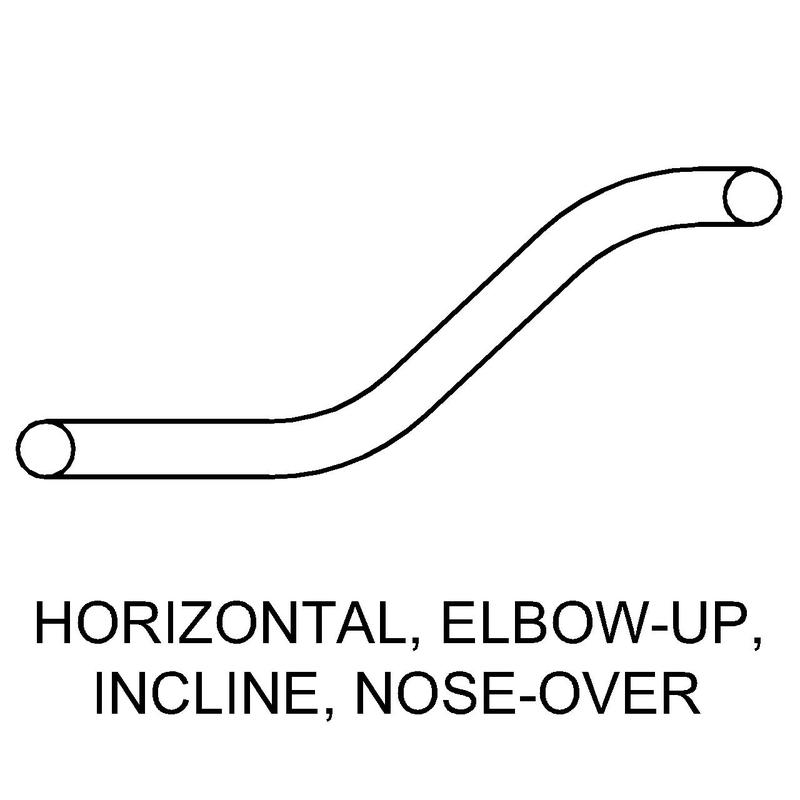
Remcon can build slider bed conveyors in many different orientations, depending on the layout requirements. We also can build two separate conveyors that run in series, to simplify installation, separate clumps better, or to be able to use two different types of conveyors (e.g. a roller chain feeding a slider bed). Other options may also be available, depending on the application.
All of these orientation options can be installed both in-ground (in a pit) or above ground. The horizontal elbow-up incline geometry is common enough in recycling plants that it has its own entry: see our elbow-up slider bed conveyors.
Contact us about layout options for your site →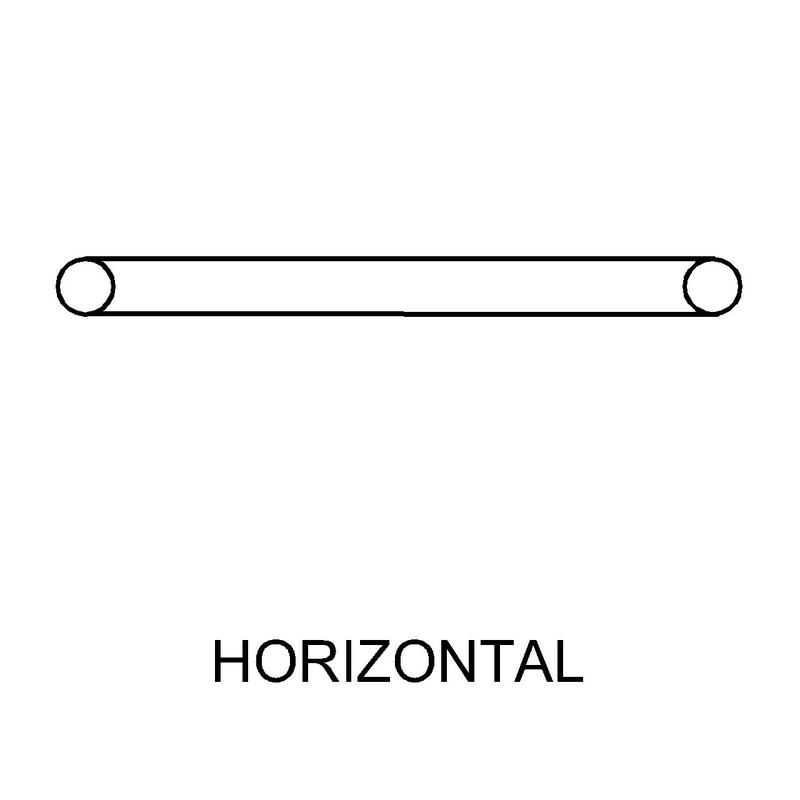
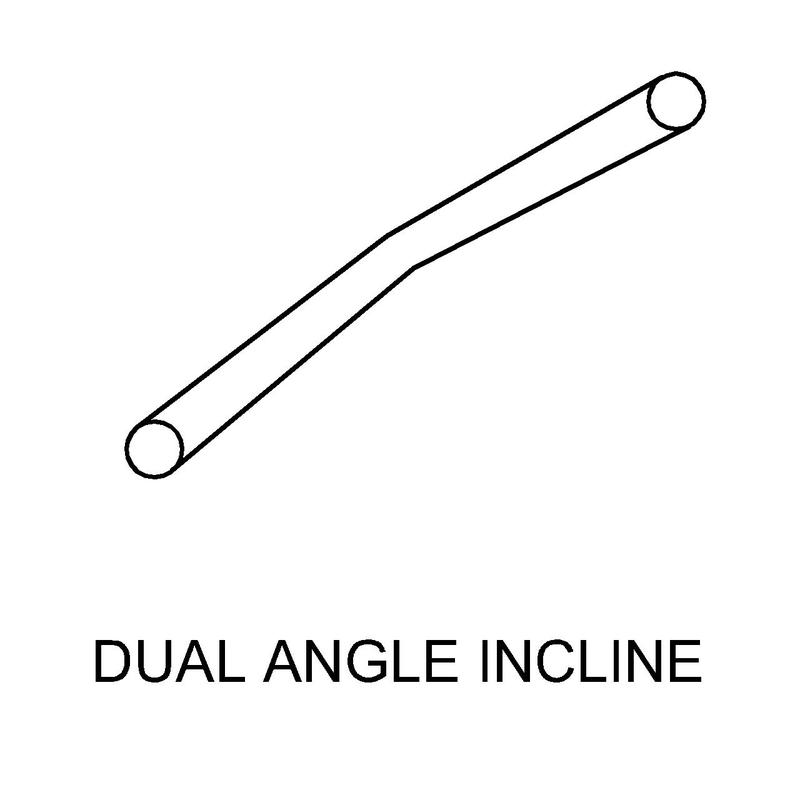
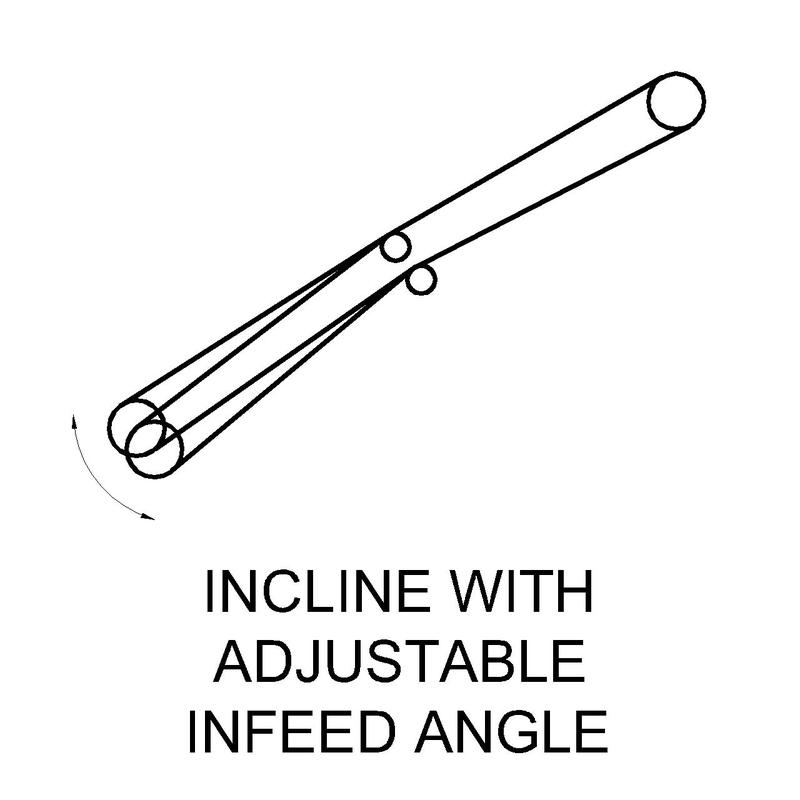
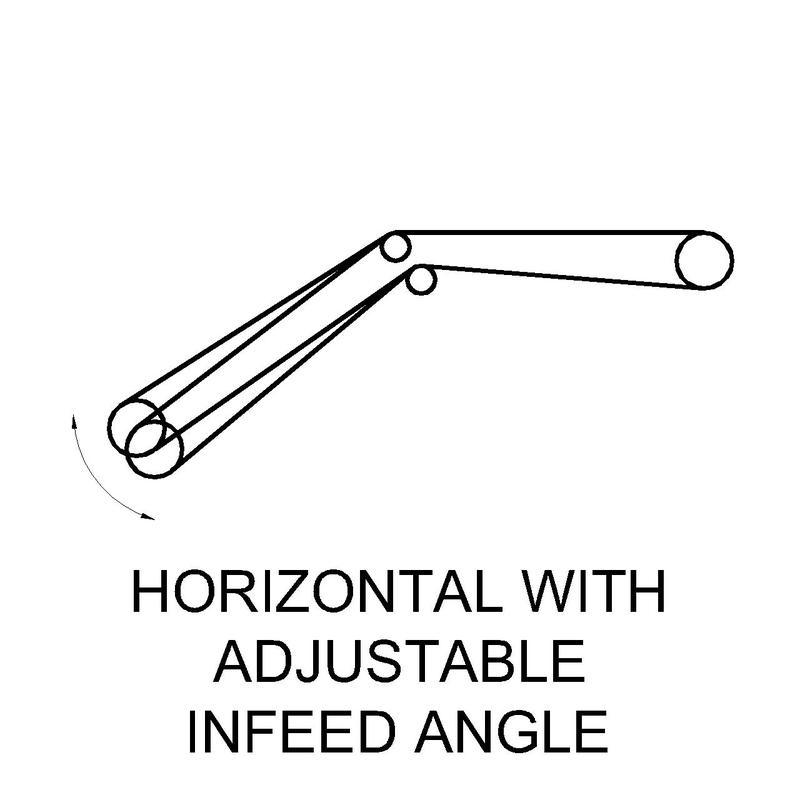
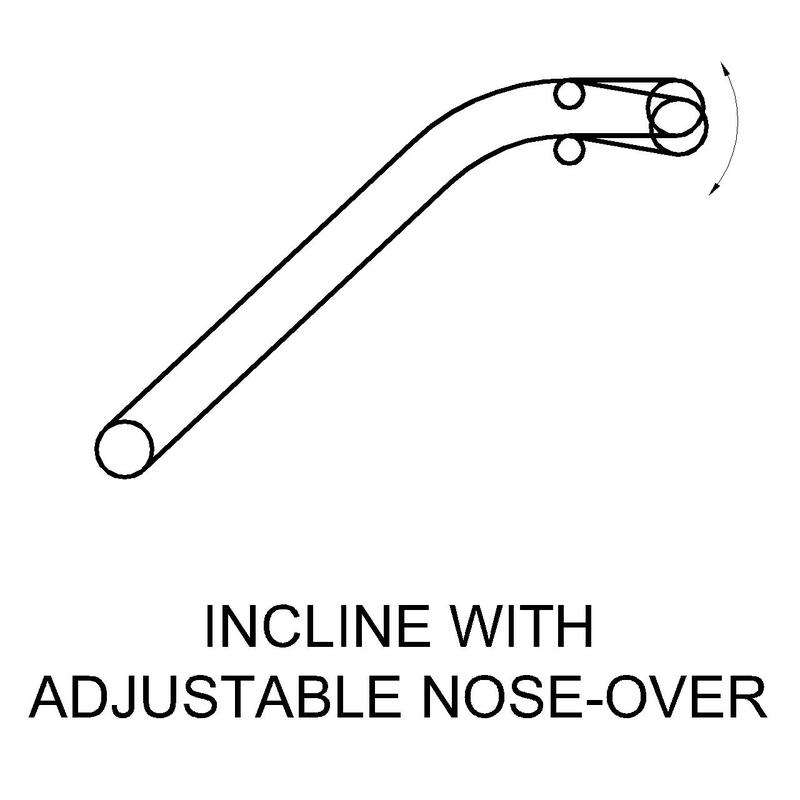
Specialty Orientation Options
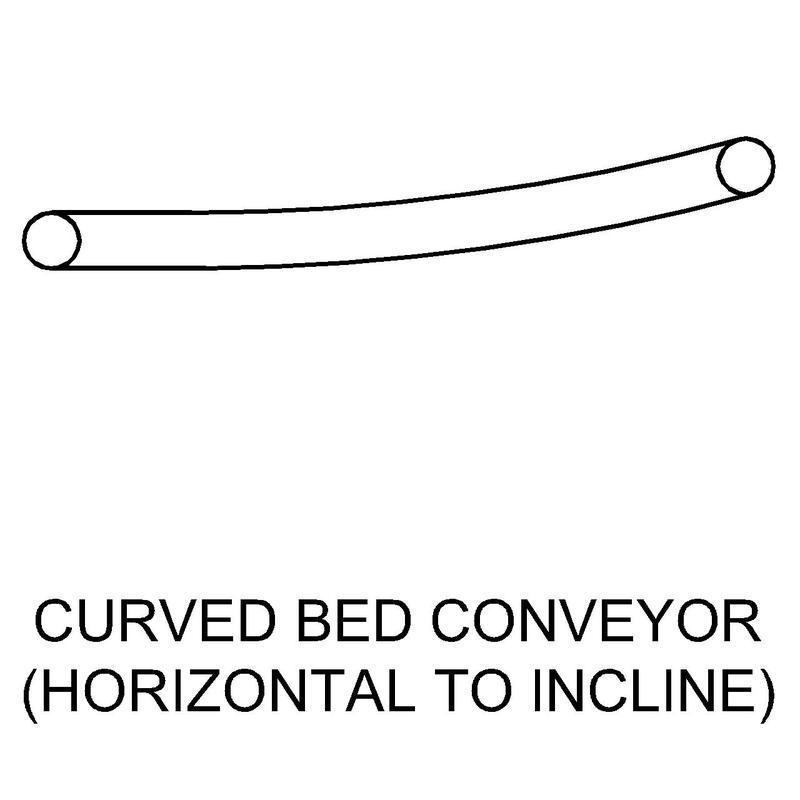
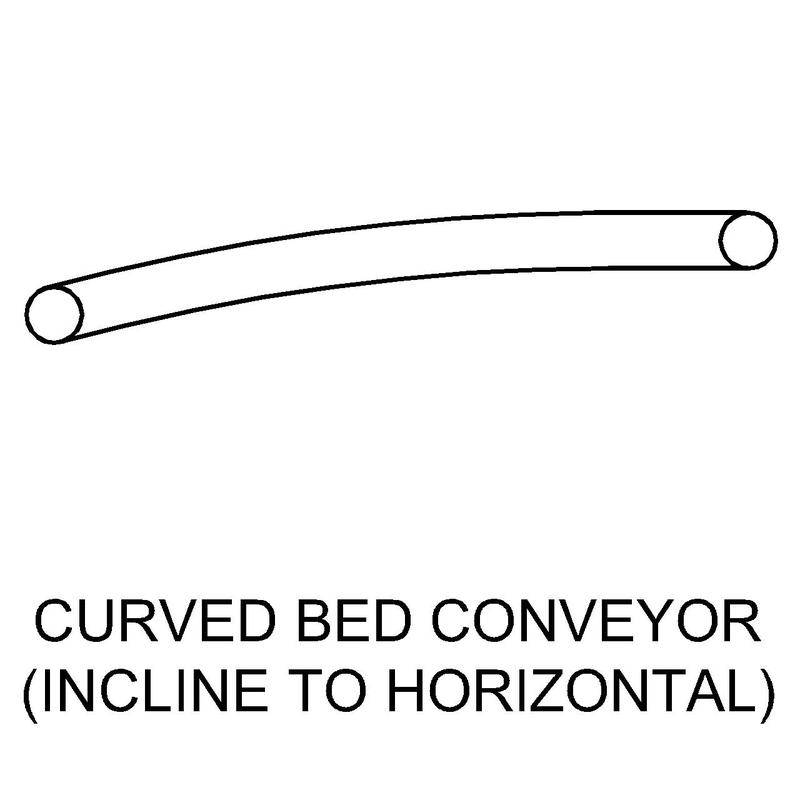
Remcon can also build conveyors in these configurations, if needed, based on site layout and material feeding requirements:
Slider Bed vs. Roller Bed Conveyors
The choice between a slider bed and a roller bed conveyor comes down to the material, the layout, and the maintenance you want to live with. A roller bed (idler) conveyor carries the belt on rotating rollers, so it pulls with less friction over long runs — see our troughing idler conveyors. A slider bed carries the belt on a solid slat bed, so the load rides stable, small and irregular material doesn't bounce, and there are no idler rollers to seize or replace.
| Factor | Slider bed | Roller bed (idler) |
|---|---|---|
| Belt support | Solid steel slat bed — stable, quiet ride | Rotating idler rollers |
| Moving parts | Fewer — no idlers to seize, inspect, or replace | An idler set every few feet |
| Friction & drive load | Higher belt friction; suited to light and medium loads | Lower friction; suited to long runs and heavy bulk loads |
| Small or irregular material | Excellent — glass, cans, film, and fines ride without bouncing | Material can bounce between idler sets |
| Maintenance | Simple — replaceable bed slats, pillow block bearings | Idler bearings are a recurring wear item |
| Typical Remcon use | MRF sort lines, baler feed, infeed, transfer | Mining, aggregate, long-distance bulk |
Many systems use both: a roller conveyor or troughing idler section for the long haul, feeding a slider bed for metering, sorting, or baler feeding.
Heavy-Duty Slider Bed Conveyor Construction
Most catalog units sold as a "heavy duty slider bed conveyor" are formed from 12-gauge sheet steel with a fractional-horsepower drive — fine for parcels, short-lived in a recycling plant. A heavy-duty slider bed conveyor from Remcon is a different weight class: the frame is formed 3/16" plate steel, the bed is 3/8" thick replaceable flat-bar slats, and the drive is a shaft-mounted Dodge Torque Arm II reducer sized for the load. That construction is why our conveyors survive whole and broken glass, tin and aluminum cans, and the daily abuse of MRF and solid waste service.
Special Features
Slat Bed Design
The conveyor bed, which the belt slides on, is constructed of slats, rather than solid steel. A solid bed traps both small debris and moisture underneath the belt. The debris causes increased friction and wear on both the belt and the bed. The moisture, which can include sticky liquid from containers, causes suction and drag on the belt. The slat design allows this debris and moisture to escape from between the belt and the bed, falling between the top and return belts, off the edges of the return belt, and into the return pan, thus preventing these problems.
Replaceable Bed Slats
The bed slats on Remcon conveyors are designed to be easily replaceable if they do eventually wear out or get damaged.
Belt Edge Seal
The edges of the belt are sealed by raised (troughed) side bed slats to prevent glass and metal debris from working under the belt edge and causing premature belt wear.
Self-Cleaning Return Pans
Remcon conveyors are designed with a pan that fully encloses the return belt for safety and to collect debris that clings to the belt. The debris is pulled to clean-out openings along the length of the conveyor or to a collection area at the in-feed end of the conveyor, making for a clean, safe floor area under the conveyor.
Clean-Out Areas
Debris that falls off the return side of the belt is contained in return pans to prevent material spillage. Depending on where on the conveyor the debris falls off and what type of conveyor it is, the conveyor "self cleans" the debris to different clean-out locations:
- For inclined conveyors — debris that falls off the return belt slides down the enclosed return pan (or is dragged down by cleats) to the bottom of the incline to a guarded clean-out area, preventing the unsafe build-up of material underneath the inclined portion of the conveyor.
- For horizontal conveyors — debris that falls off the return belt in the horizontal section is dragged towards the tail end of the conveyor by cleats (or a wiper cleat, if there are no other cleats) to a clean-out area at the tail end of the conveyor, preventing the unsafe build-up of material underneath the horizontal portion of the conveyor (or in a pit, etc.).
- For longer horizontal conveyors — debris that falls off the return belt is dragged towards the tail of the conveyor by wiper cleats. Openings in the pan bottom spaced along the length of the conveyor allow this debris to fall out of the return pan into a removable clean-out tray. This prevents the material from dragging through the entire length of the return pan, causing wear or excessive build-up.
Remcon Belt Take-Ups
Remcon's cantilevered, telescoping tube style take-ups with manual screw adjustment offer the following advantages:
- Cleaning access — the take-up frame is positioned to provide access to the area between the upper and lower belts, for ease of cleaning and inspecting the tail pulley.
- Replaceable parts — Remcon take-ups are comprised of separate, individual components that can be easily replaced as they wear out. The bearings bolt on separately and are the commonly available pillow block style. The threaded working parts of the take-up are separate and easily removed, and are commonly available from local fastener or hardware stores.
- Take-up travel — generous length of take-up travel (10" on the shorter conveyors, up to 18" on the longest). On slider bed style conveyors, the belt will be cut so that the majority of the take-up travel is used to make the belt looser, for ease of belt installation, repair and replacement. Since good quality belts with polyester carcasses have virtually no stretch after initial tensioning (and in some cases will even shrink slightly), not as much take-up travel is needed for making the belt tighter as the belt is used.
- Ease of adjustment — belt tracking and tension adjustments are made with one wrench, with no need to loosen and re-tighten the bearing attachment bolts. The moving parts of the take-up have generous amounts of clearance, to prevent binding in the frame or against the bearings (side load) as the take-up moves through its full range.
- Versatility — Remcon take-ups will accommodate almost any brand of pillow block style bearings (the most common style of bearing).
Belt Tracking
Adjustment for centering the conveyor belt is provided on both ends of the conveyor.
Drive Method — Shaft-Mounted, Parallel Gear, Torque Arm Reducers (Dodge Torque Arm II)
These reducers have been used almost exclusively in sand, rock, gravel, mining, and similar industries for many years, and are well proven. Remcon has used them since 1990, with good success. The new generation has been re-engineered throughout with features designed to improve performance, extend service life, and reduce maintenance. Remcon normally configures these reducers to be driven by a separate motor by v-belts, using different combinations of sheaves for additional speed reduction.
The advantages of using the Dodge Torque Arm II shaft mount reducer with v-belt drive are as follows:
- Low maintenance — there are no chains to oil, tension, or shorten and reconnect.
- Ease of adjustment — rather than moving the entire gearbox and motor to adjust the chain tension, adjusting the Dodge Torque Arm II reducer only requires opening the hinged door on the belt guard, loosening the two lock nuts, and turning the turnbuckle by hand.
- Fewer wear parts — there are no sprockets or chain to wear out. Although v-belts will wear out, they commonly do not wear out until they are protecting the conveyor from jamming, if it jams (see following item). They are inexpensive and easy to replace. V-belt sheaves last much longer than drive chain sprockets and drive chain.
- Jamming protection — the need for mechanical shear pins is eliminated. The motor drives the reducer by v-belt(s). If the conveyor jams, the v-belt slips, preventing the jam from causing damage to the conveyor. As the v-belt is slipping, it typically makes a loud squealing noise that draws attention to the problem. If the conveyor is not turned off, the v-belt will eventually be ruined, and there will be nothing driving the jammed conveyor. The cost of replacing the v-belt is typically $20 or less. Replacing the belt involves opening the hinged belt guard door, loosening the turnbuckle and slipping the new belt on. If the conveyor is prone to jamming (for example wrong product, or too much product), the v-belt can be kept looser than normal to minimize the potential for damage. In the past 12 years that we have used these reducers, we are unaware of any Remcon conveyor equipped with these reducers that suffered damage resulting from jamming. As additional jamming protection an electronic shear pin may be added to the electrical system.
- Parallel gears — the gears are parallel, rather than right angle. Parallel gears are more efficient and produce less friction.
- Operating and maintenance convenience — when working on a conveyor, such as doing maintenance, un-jamming product or diagnosing problems, there is often a need to move the belt a short distance either forward or backward. This is impossible electrically, since the power should be locked out at this time. But this can be accomplished easily and safely without power when using a shaft-mounted reducer, by turning the spokes on the input sheave by hand.
- Excellent availability — unlike other reducers, the Dodge Torque Arm II reducers are so commonly used in other industries that they are quite often in stock at many local dealers, and are almost always available somewhere in the country. Other brands (Link, Browning, etc.) may also be substituted without modification.
- Separate motor — the motor is mounted separately from the reducer, and is connected only by v-belts. Therefore, any brand of motor can be used, and a motor breakdown does not affect the reducer, or vice-versa.
- Ease of changing reduction ratios — reduction ratios of up to 5 to 1 are easily obtained from the motor-to-reducer v-belts and sheaves. These ratios are easily changed by swapping out sheaves, which is more difficult and expensive with a drive chain and sprockets.
Standard Specifications
The following specifications are standard on nearly all Remcon slider bed conveyors, unless otherwise requested or required to be different because of the special application:
| Specification | Remcon standard |
|---|---|
| Belt | Rubber or PVC, widths from 12" to 72" (six feet) |
| Bed | 3/8" thick replaceable flat-bar slats — decreases friction and drag from moisture and prevents abrasive dust from accumulating |
| Frame | Formed 3/16" plate steel with guarded access holes |
| Bearings | Dodge SXR pillow block with eccentric locking collar for better grip on shaft |
| Drive | Shaft-mounted Dodge Torque Arm II reducer, v-belt driven; VFD (variable frequency drive) optional |
| Belt take-up | Cantilevered telescoping tube style, 10" travel on shorter conveyors up to 18" on the longest |
| Disconnect switch | Lockable disconnect switch included for conveyor maintenance |
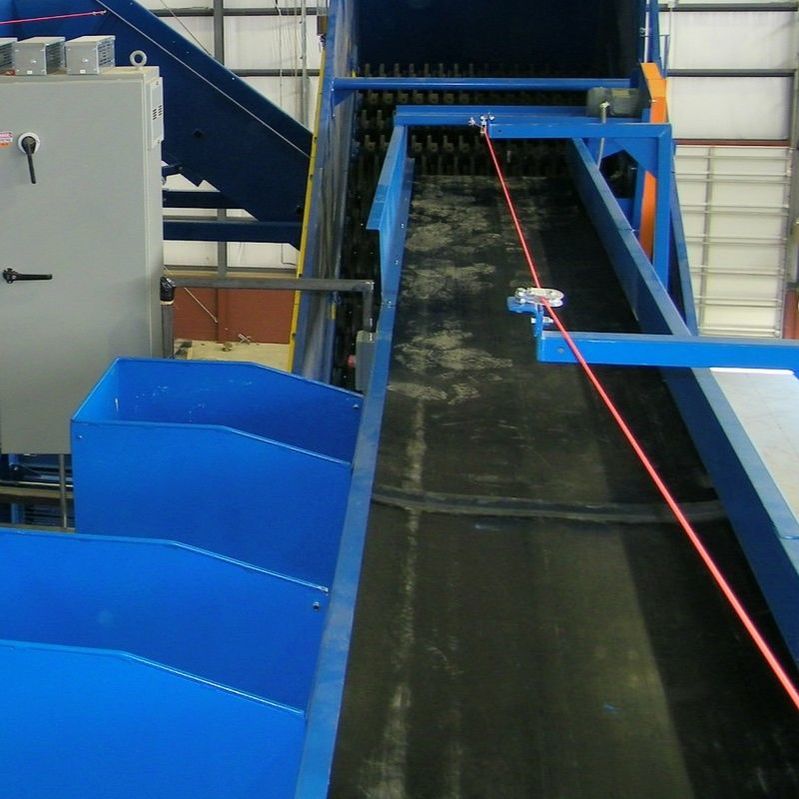
| Emergency stop | Cable-pull switch with cable and rigging as required by OSHA |
| Guards | All drive components guarded with hinged covers; guards in the sorting area are flat and smooth for sorters to lean against |
| Legs | Adjustable steel tube construction for accurate leveling |
| Installation | In-ground (pit) or above ground; shipped and installed nationwide from Airway Heights, WA |
Options
- Belt lacing — multiple options available, if customer already has a preference, depending on belt width, type, and thickness. Common types used are Flexco Alligator® Staple Hinge lacing for thinner belts, or Flexco® R2 Rivet Hinge lacing for thicker belts. Most fastener types are available in galvanized steel, stainless steel, or MegAlloy®.
- Belt sidewalls and/or conveyor lane dividers — can be added to help contain material on the belt, or to divide the belt into different "lanes" for carrying different types of material separately, but at the same time. Belt sidewalls come in multiple different styles and height options. Conveyor dividers can be used in place of or in conjunction with belt sidewalls to keep material separated on the belt with little or no cross-contamination from infeed to discharge.
- Bolt joints — included at the approximate midpoint of conveyor length, to allow for separating the conveyor into two pieces for shipping and/or installation.
- Drive styles — options include v-belt driven, shaft-mounted gear reducer, shaft-mounted gearmotor, or direct drive via motor and v-belt (sheave reduction only as needed).
- Hood — custom built to feed subsequent machinery or containers as needed. Splitters, redirection chutes, etc. are also available as needed.
- Infeed hopper — custom built to receive material from the previous conveyor or other feed method.
- Self-cleaning tail pulley — on conveyors that handle glass or other materials that cause excessive wear or build-up, a self-cleaning tail pulley can be used to help eject material that gets between the belt and the tail pulley.
- Skirting — multiple styles available depending on application (brush strip style, rubber belt style, steel only, skirtboard, etc.).
- VFD (variable frequency drive) — commonly available drives, by U.S. manufacturer, with easy to use controls, rugged enclosures, and options for locating various controls inside or outside of control panels.
Slider Bed Conveyor FAQ
What is a slider bed conveyor?
A slider bed conveyor is a belt conveyor whose belt slides over a solid steel bed instead of riding on idler rollers. Remcon builds the bed from replaceable 3/8" flat-bar slats inside a formed 3/16" plate steel frame, which gives a stable ride for glass, cans, paper, and other recyclables with fewer moving parts to maintain.
How does a slider bed conveyor work?
The belt is driven by friction between the belt and the drive pulley. As the drive pulley turns, it pulls the rubber or PVC belt across the steel slat bed, carrying material from the infeed hopper to the discharge. Belt tension and tracking are set at the take-ups on either end, and a shaft-mounted reducer with v-belt drive turns the drive pulley.
Slider bed or roller bed — which do I need?
Choose a slider bed conveyor for light to medium loads, small or irregular material, sorting and metering duty, and low-maintenance service. Choose a roller bed (troughing idler) conveyor for long runs and heavy bulk material such as ore or aggregate, where lower belt friction matters more. Many Remcon systems combine both types in series.
What belt widths and lengths does Remcon build?
Remcon builds slider bed conveyors with belt widths from 12" to 72" (six feet). Length is set by the layout: conveyors ship in bolted sections, so long runs are split at the approximate midpoint for shipping and installation. Every conveyor is built to order for the site.
Can a slider bed conveyor incline?
Yes. Standard orientations include horizontal, incline, incline with nose-over, and horizontal elbow-up incline, plus specialty geometries such as curve-up, dual-angle incline, and adjustable infeed angles. Cleated belts and belt sidewalls help carry material up steeper inclines without rollback.
How much does a custom slider bed conveyor cost?
Price depends on belt width, length, orientation, hoppers, hoods, and drive options, so Remcon quotes each conveyor individually. Tell us the material, the load, and the layout and we will quote it — and if a simpler, less expensive conveyor can do the job, we will tell you that too. Call (509) 244-9439 for a quote.
Does Remcon install slider bed conveyors nationwide?
Yes. Remcon designs and fabricates every conveyor at our shop in Airway Heights, Washington (Spokane area), then ships and installs nationwide with our own installation crews. We also repair, rebuild, and supply replacement belts and parts for the life of the machine.
We specialize in custom designed and fabricated equipment and can work with you to design a solution that will work well for your needs. Contact us to discuss options or to get a quote.
Get a quote for a slider bed conveyor →