
A live-floor bin is typically used to store and meter material onto a conveyor system or baler-feed conveyor. Material is loaded into the bin via a bucket loader, conveyor, or other machinery. The bottom of the bin is "live" in the sense that it moves slowly to discharge a controlled amount of material out of the end of the bin.
Remcon Equipment provides highly efficient live floor bins in both walking floor and conveyor-style designs, suited to a wide range of bulk materials. Whether you need continuous, controlled feeding or smooth unloading, our live floor bins offer the flexibility and performance to meet your material handling needs across various industries.
Live Bottom Bins
Live floor bins are also called live bottom bins — the two terms describe the same machine, and the trade uses them interchangeably. Whichever name your industry uses, the defining feature is the same: the bottom of the bin is a moving surface rather than static steel, so the bin empties itself at a controlled rate instead of waiting on gravity or a loader operator. If you have been quoted a live bottom bin elsewhere, the walking floor and conveyor-style designs below are the same class of equipment.
Walking Live Floor Bins
Walking live floor bins use a series of hydraulically operated slats that move forward and backward to "walk" material towards the discharge point. This system is ideal for handling heavy, bulky materials like waste, recyclables, and construction debris. The walking floor design offers reliable and even material flow without the risk of jamming or clogging.
Benefits of Walking Live Floor Bins
- Non-stop material flow: ideal for high-volume operations where consistent material movement is essential.
- Durability: heavy-duty construction to handle tough materials in challenging environments.
- Low maintenance: simple, robust design with fewer moving parts, reducing wear and tear.
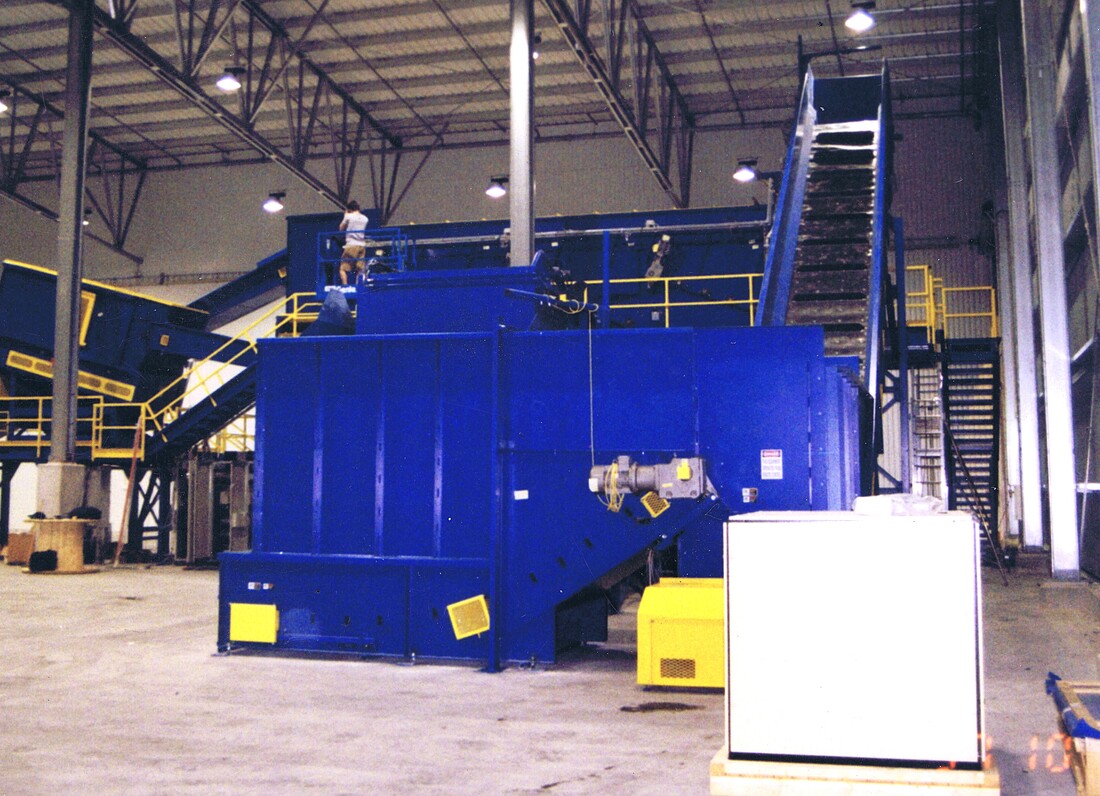
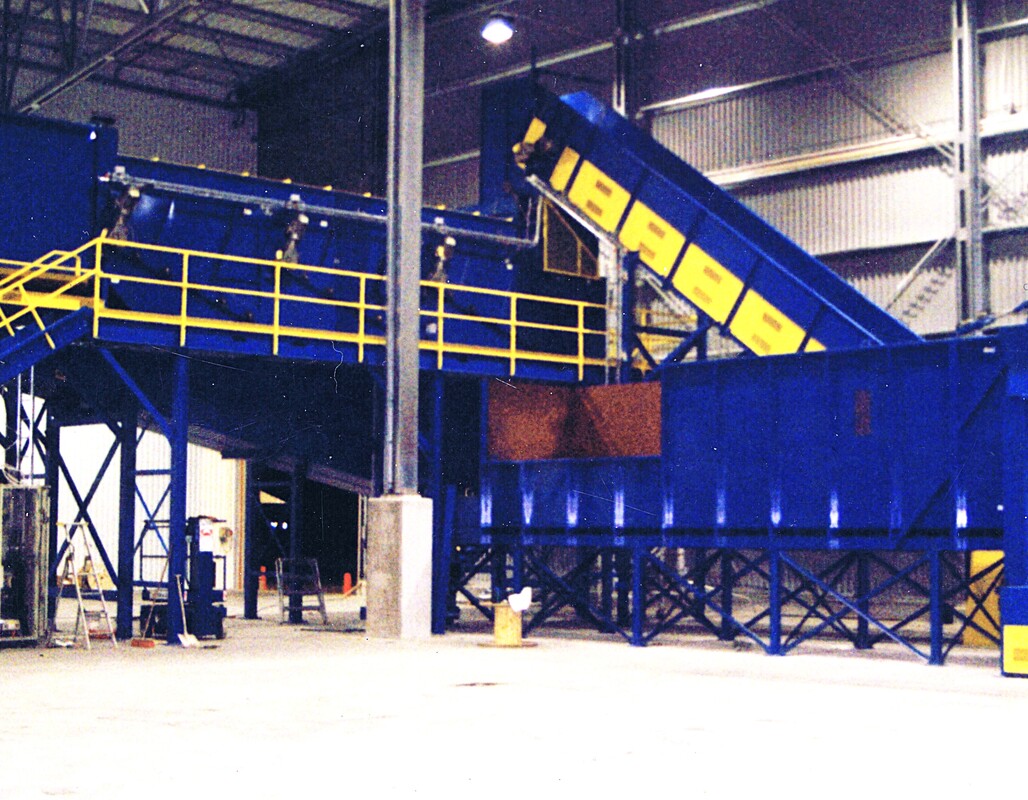
Conveyor-Style Live Bins
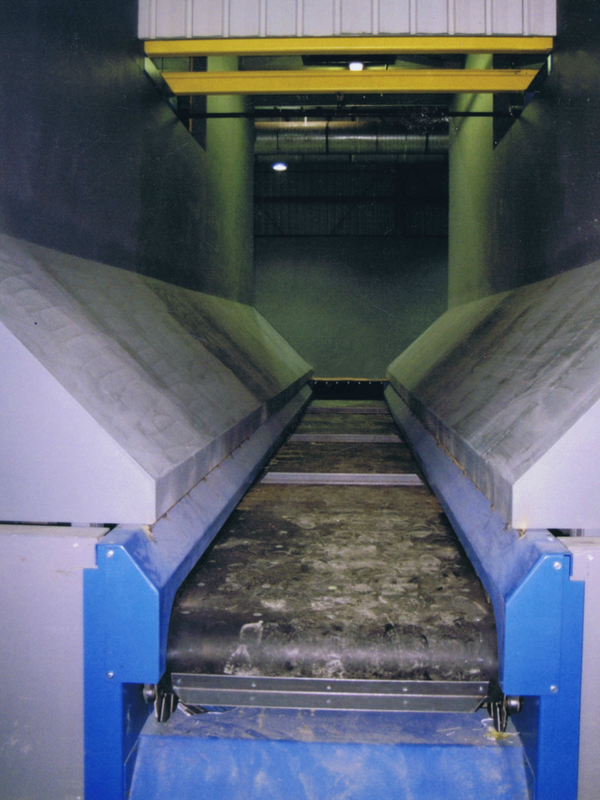
Our conveyor-style live floor bins utilize a chain or belt conveyor system to move material steadily to downstream processes or discharge points. This is a lower cost alternative to the walking floor design, and is effective for medium to more lightweight materials like paper, recycled containers, biomass, agricultural products, and other medium to finely sized bulk items. Conveyor-style bins offer controlled, adjustable flow to fit a variety of production needs.
Benefits of Conveyor-Style Live Bins
- Precise control: adjustable conveyor speed allows for customized material flow based on your specific needs.
- Versatility: can handle a wide range of material types.
- Efficient material movement: prevents blockages or material buildup, ensuring continuous operation.
Walking Floor vs. Chain-Belt: Choosing a Style
Both styles do the same job — store material, then move it out the discharge end at a controlled rate. The choice comes down to the material and the budget.
| Factor | Walking floor | Conveyor-style (chain-belt) |
|---|---|---|
| Moving floor | Hydraulically operated slats that walk material toward the discharge | Chain or belt conveyor forms the bin floor and discharge |
| Best for | Heavy, bulky material — waste, recyclables, construction debris | Medium to lightweight material — paper, recycled containers, biomass, agricultural products |
| Flow character | Reliable, even flow without jamming or clogging | Adjustable conveyor speed for precise, controlled metering |
| Relative cost | Higher — hydraulic slat floor | Lower cost alternative to the walking floor design |
| Capacity | Sized to the application — quoted per job | Sized to the application — quoted per job |
If you are not sure which style fits, tell us the material and how the bin will be loaded — if the lower-cost chain-belt design can do the job, we will tell you.
Metering Bins for MRF and Recycling Infeed
In MRFs and recycling plants this machine often goes by a third name: the metering bin. The name describes the job. A bucket loader dumps material in surges — a full bucket in seconds, then nothing while the loader turns around. The equipment downstream wants the opposite: a steady, controlled flow it can process continuously. A metering bin sits between the two, absorbing the surges and paying material out at whatever rate the floor is set to run.
The most common arrangement is a metering bin feeding a baler feed conveyor — the bin buffers loader traffic while the conveyor delivers a steady charge to the baler. The same pattern works ahead of a sort line, with the bin metering onto an infeed conveyor so sorters and downstream machinery see an even ribbon of material rather than piles and gaps. Speed the floor up or slow it down and the discharge rate follows — controlled flow is the whole point of the machine.
Options for Elevated Discharge Heights
Our low profile elbow-up conveyors can be used as the outfeed for live floor bins. The low profile of the horizontal infeed portion of this conveyor allows for reduced height for the bin — as much as 3 ft. The elbow-up portion of the conveyor provides an elevated discharge height to feed any downstream equipment without the need for an additional inclined conveyor.
Remcon live floor bins can be equipped with low-profile (less than 14" from the floor), heavy-duty conveyors that elbow up — as steep as 35 degrees at the outfeed end of the bin — to heights exceeding 20 feet.
Elbow-up slider bed conveyors →Live Floor Bin FAQ
What is a live floor bin?
A live floor bin is a storage bin whose floor moves — hydraulically operated walking slats or a chain-belt conveyor — to discharge a controlled amount of material out the end of the bin. It stores surge loads from a bucket loader or conveyor and meters them onto downstream equipment at a steady, adjustable rate.
Are live floor bins and live bottom bins the same thing?
Yes. Live floor bin and live bottom bin are two names for the same machine — a storage bin with a moving bottom that discharges material at a controlled rate. In MRFs and recycling plants the same equipment is also called a metering bin, after the job it does.
How does a live floor bin meter material onto a conveyor?
The floor moves slowly toward the discharge end, carrying the stored material with it, so material leaves the bin at the rate the floor moves rather than all at once. Adjusting the floor speed adjusts the discharge rate, giving the conveyor a steady, controlled flow instead of the surges a bucket loader delivers.
Walking floor or chain-belt conveyor style — which do I need?
Choose a walking floor bin for heavy, bulky material such as waste, recyclables, and construction debris — the hydraulically operated slats move dense loads without jamming. Choose the conveyor-style chain-belt bin as a lower-cost alternative for medium to lightweight material such as paper, recycled containers, biomass, and agricultural products. Remcon builds both and will recommend the style that fits your material and budget.
What are live floor bins typically used for?
The most common use is storing and metering material onto a conveyor — typically a baler feed conveyor or the infeed conveyor of a sort line at a MRF or recycling plant. The bin buffers loads from a bucket loader or upstream conveyor and pays them out at a controlled rate, so downstream equipment is fed steadily instead of in surges.
Custom Designed for Your Line
We specialize in custom designed and fabricated equipment and can work with you to design a solution that will work well for your needs. Every live floor bin is designed and fabricated at our Airway Heights (Spokane), Washington shop, then shipped and installed nationwide. Contact us to discuss options or to get a quote.
Custom solutions
Our live floor bins — whether walking-floor or conveyor-style — are fully customizable to fit your specific application. We tailor the size, flow rate, and material-handling features to match the demands of your operation, ensuring maximum efficiency and performance.
Get a quote for a live floor bin →